The processing of the large bulk samples is proceeding. It’s slow going, but we are reducing the overall volume. We have found a few things that are noteworthy.
Claire has found some well-preserved wood that she was able to take samples of for species identification and possible tree-ring dating.
We also found one piece of coal with one flat, highly polished side. The rest of it looks like it broke naturally and got smoothed by being rolled in the water, but the one side looks different. It’s a maybe, but a pretty good one, although we’ll probably never know what it was or was going to be…
There are also a variety of marine worms, shells and what we think are marine plants. I just spoke to a friend of mine, “retired” biologist, Dr. Dave Norton, who used to live in Barrow and is fairly familiar with the contents of modern strand lines here. Claire is going to take the oddities we are sorting out down to Fairbanks (where he lives) tomorrow night, and he will look at the specimens and try to connect with the appropriate curators at the UAF Museum of the North. I’m going to Fairbanks (for shotgun refresher qualifications for a non-archaeology project I manage for Sandia National Labs) the week after next, and will go visiting the curators with him, in hopes of getting good IDs.
One of the great things about doing archaeology in the Arctic is that the preservation can be spectacular. Artifacts often froze the winter after they were abandoned, and only thawed when they were excavated. This means we get to find a lot of the bone, wood ivory and leather items that were undoubtedly part of most precontact people’s tool kits. We don’t have to guess at what people were using or extrapolate from a few stone tools that did manage to be preserved; we can see it firsthand.
This is not always an unmixed blessing. Arctic archaeology sometimes suffers from an embarrassment of riches.
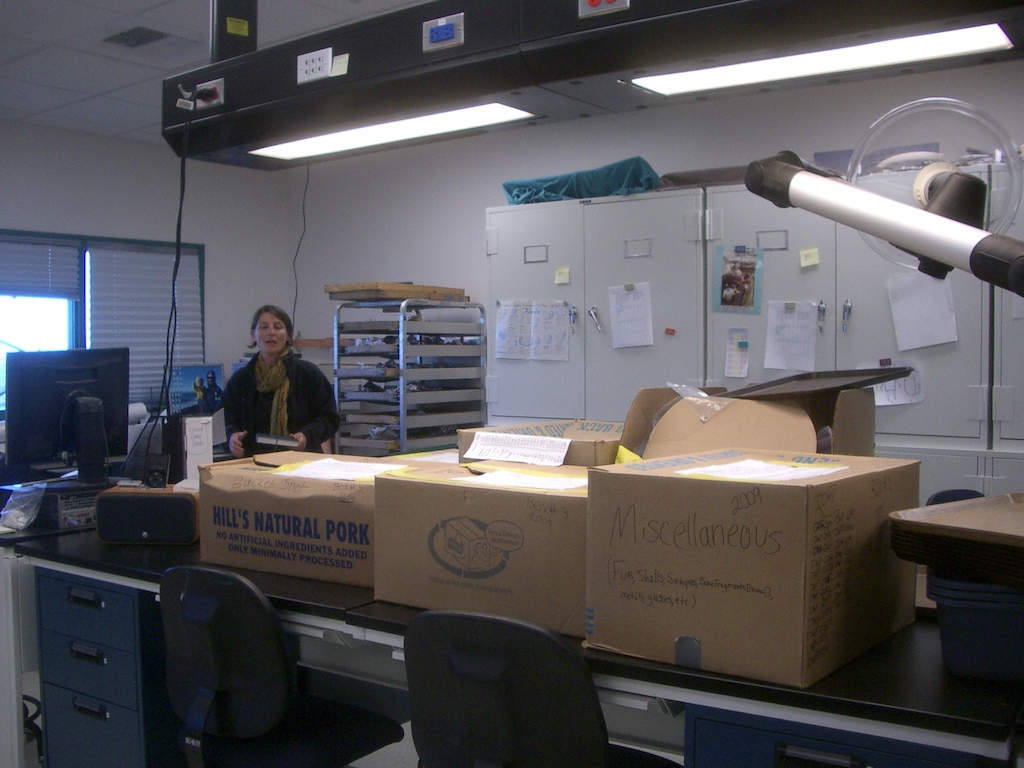
Boxes with wood from the Driftwood Feature (DWF).
In the past, archaeologists generally only saved the artifacts from a site. Animal bones and soil were pretty much ignored, or at best documented in the field (there are a lot of excavated houses in the Arctic where the animal bones are still piled at the edge of the excavation where they were left decades ago). As archaeological science advanced (radiocarbon dating began about 60 years ago) and people began to do more things with faunal (animal) remains and soil samples, people began to collect a lot more, and to bring it back to museums to save, on the assumption that one day someone would be able to do something informative with it. The idea is still a good one in theory, but it is bumping up against various realities. For one thing, in most areas these sorts of things require storage in climate controlled conditions or they will deteriorate and become useless. They are often quite bulky compared to just the artifacts. Most museums simply don’t have any place to put all this stuff! Some of the better-funded places, like the Smithsonian Institution, have built large off-site storage facilities in areas where real estate is a bit less expensive, just to keep all this stuff. But such places require operational funds and new staff, and that costs money too. Most places can’t really afford that. Some institutions have started charging for putting collections there, but there are problems with that as well.
So part of the new reality for archaeology is that we can’t keep everything. The question is how to decide what to keep and what not to keep. In general, the artifacts are kept. No problem there. The issue is how to deal with the other things.
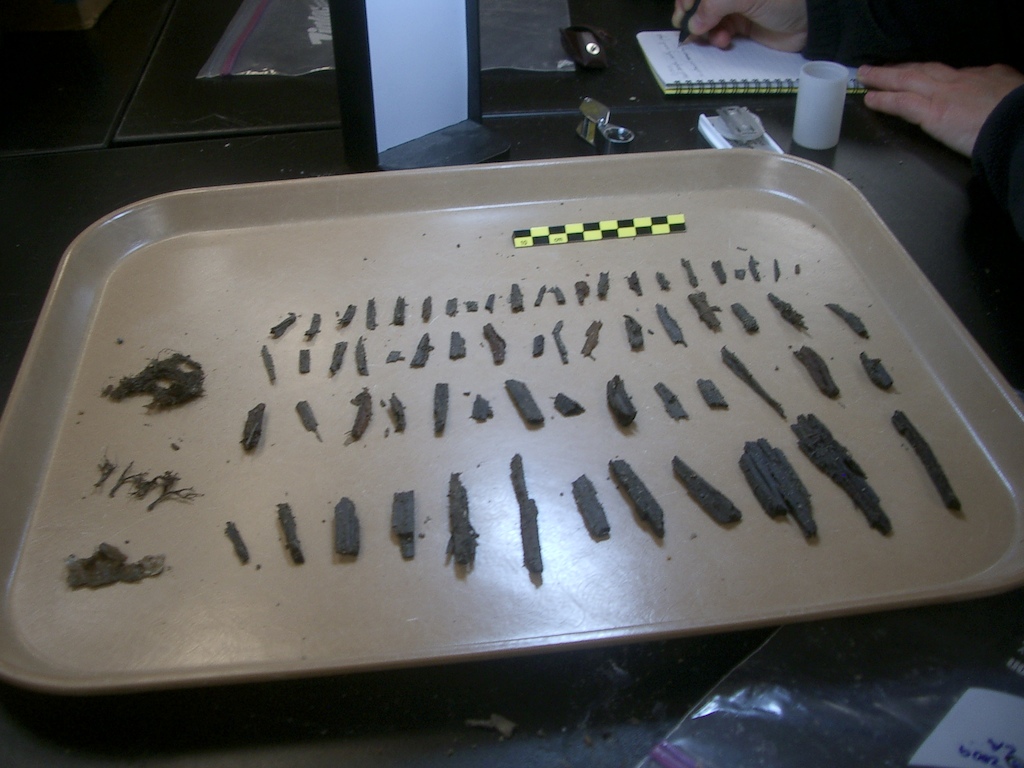
It’s even more complicated for the Nuvuk project. We have had several areas where massive amounts of organic material, with some artifacts and faunal remains mixed in, were encountered. While one might normally choose to excavate this all in the field, in a couple of cases the areas were right at the erosion face, and could literally have vanished overnight. Combine that with a very cold field situation, where mild hypothermia can dull excavators’ thought processes, it didn’t seem like that was the best plan, since it risked data in a variety of ways. I decided to take tightly-provenienced (with very accurate information on where they were from) bulk samples, which can then be processed in the lab, where it is warm and we have good lighting, magnifying lenses and water to wash the dirt and gravel off so we can get a good look at everything. If excavators recognize an artifact in the field, it gets recorded there, but the idea is that we’ll find the less obvious ones in the lab.
Contents of one bucket shot laid out on a tray.A closer look
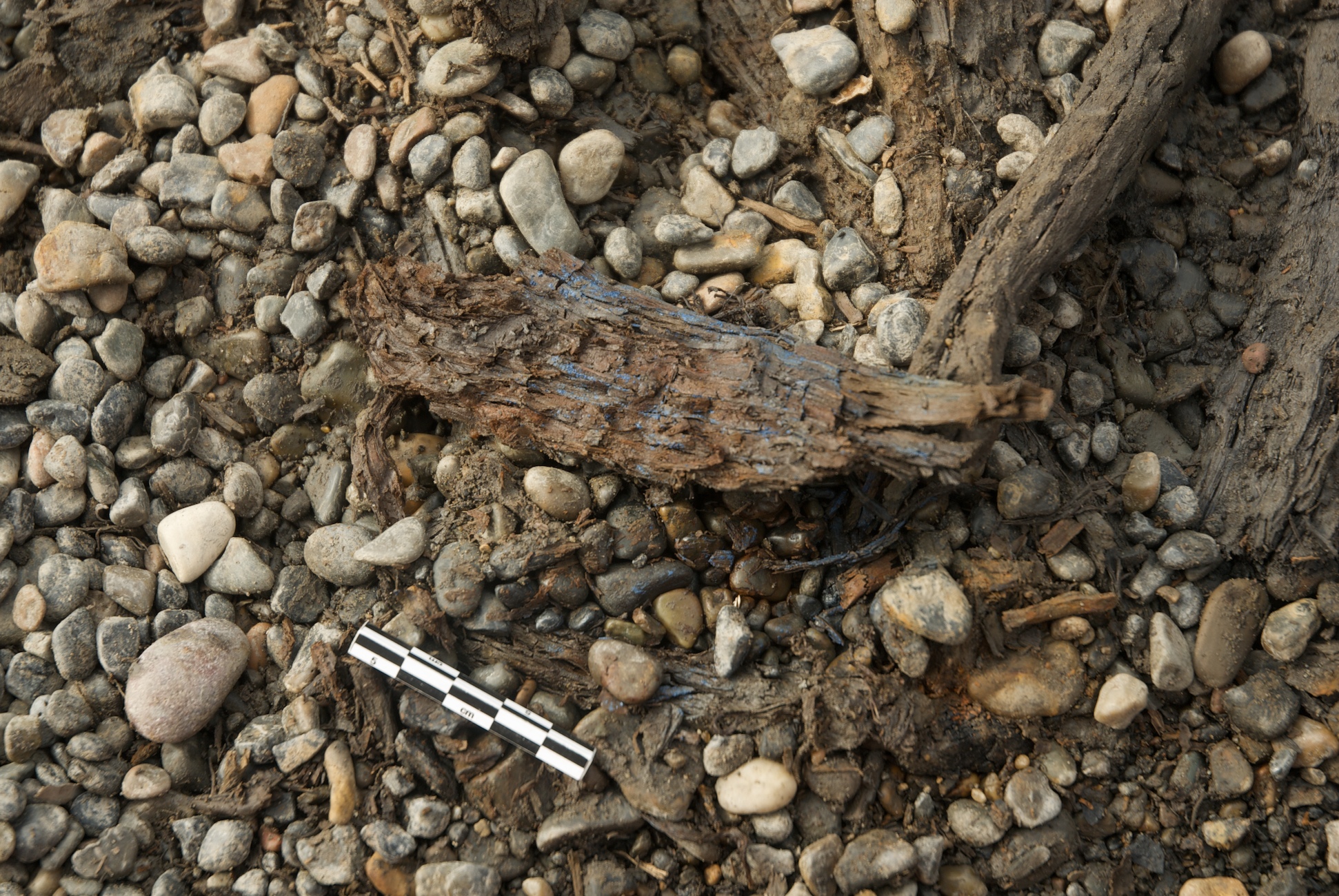
One of the areas with a massive amount of organic material was what we called the Driftwood Feature. This level is about 1 meter (39 inches) below the Thule graves. It was actually permanently frozen, and therefore everything organic was in great shape. It looks like there was an Ipuitak dwelling (maybe there were more that had already eroded–we don’t know) on a ridge near the ocean. Sometime between 300-400 AD there was a huge storm, which washed all sorts of things (driftwood, bark, marine invertebrates, shellfish, peat, etc.) up onto the beach, all the way up to where the people were living. It left what is called a strand-line. It looks like they either left in a hurry and didn’t come back, or didn’t survive, since a number of artifacts were still there. The strand-line continued along what had been the beach ridge, and we wanted to see if there was any evidence of more human activity besides the one dwelling. Because there was so much wood, and a number of the artifacts at the dwelling had been wood, we had a needle in a haystack problem, with the haystack about to fall into the ocean (which it did the next winter). So we bulk sampled.
Close-up of the Ipiutak layer at DWF. We excavated many square meters of this!
Now we are going through some of the bulk samples. I’ve been very lucky to have Dr. Claire Alix, a French scholar who specializes in Arctic driftwood and its use by humans, involved with the project since the very early days. She was based in Fairbanks, Alaska, for many years, but has recently gotten a teaching and research position at the Sorbonne in Paris. This is wonderful, since Claire is a great person & really deserves it, but it certainly complicates the logistics of her research on this wood!
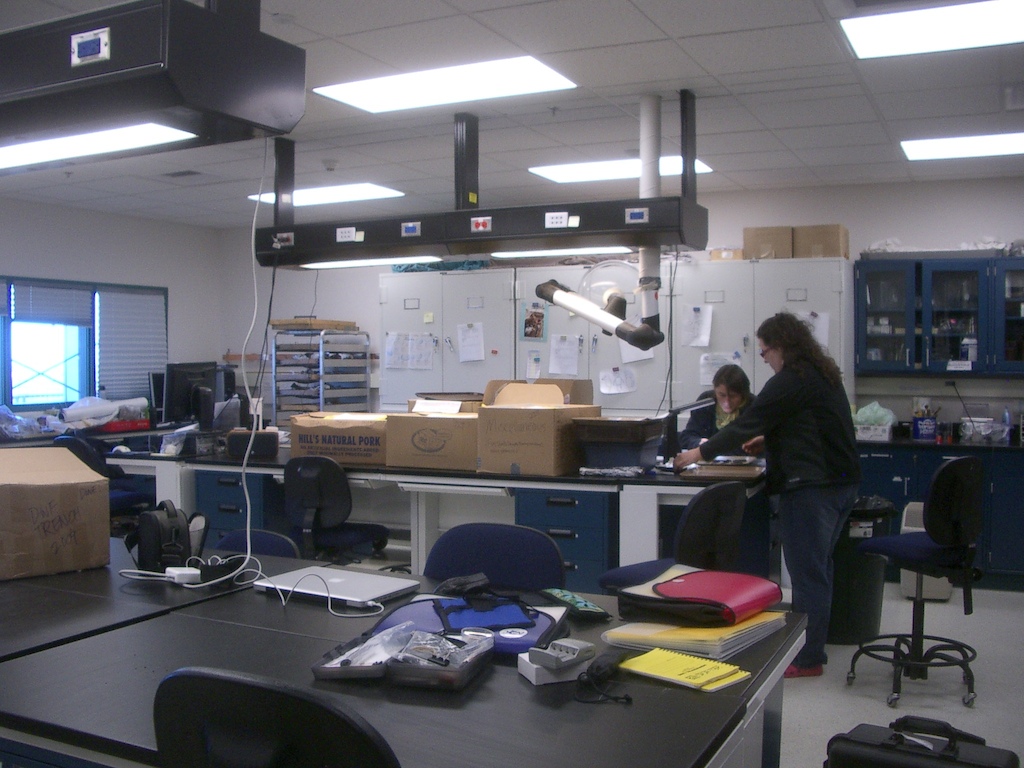
Dr. Claire Alix in the Nuvuk Lab
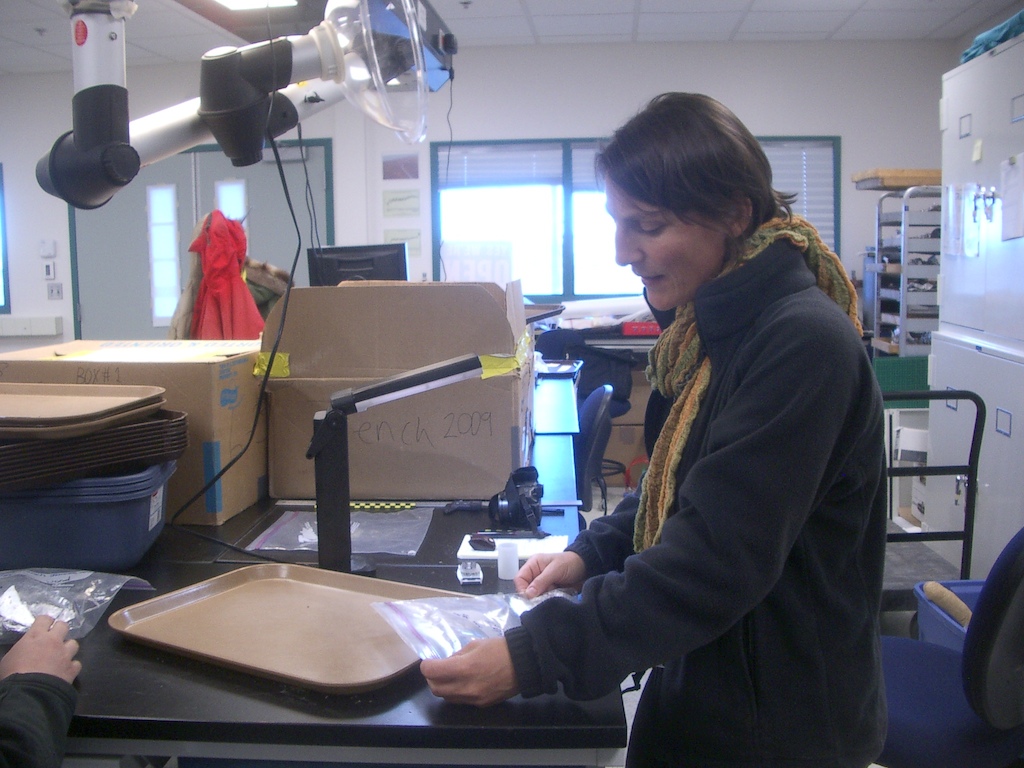
Claire arrived on this morning’s plane, and is already hard at work going through samples from 2009 which were excavated after she left the field. She is looking for all worked (altered by people) items, picking out things that we can’t yet identify for further examination, and recording amounts & types of wood, bark, and other identifiable organics. The non-worked identified material is then being lab discarded. I’ve got the computer map up and color-coded so Claire can look at it when she needs to, Laura is unwrapping the samples, and I’ll probably end up doing the data entry in the catalog. She leaves again on Wednesday night, and won’t be back in the US until sometime after January, so we’ve got a lot to do, and not much time to do it.
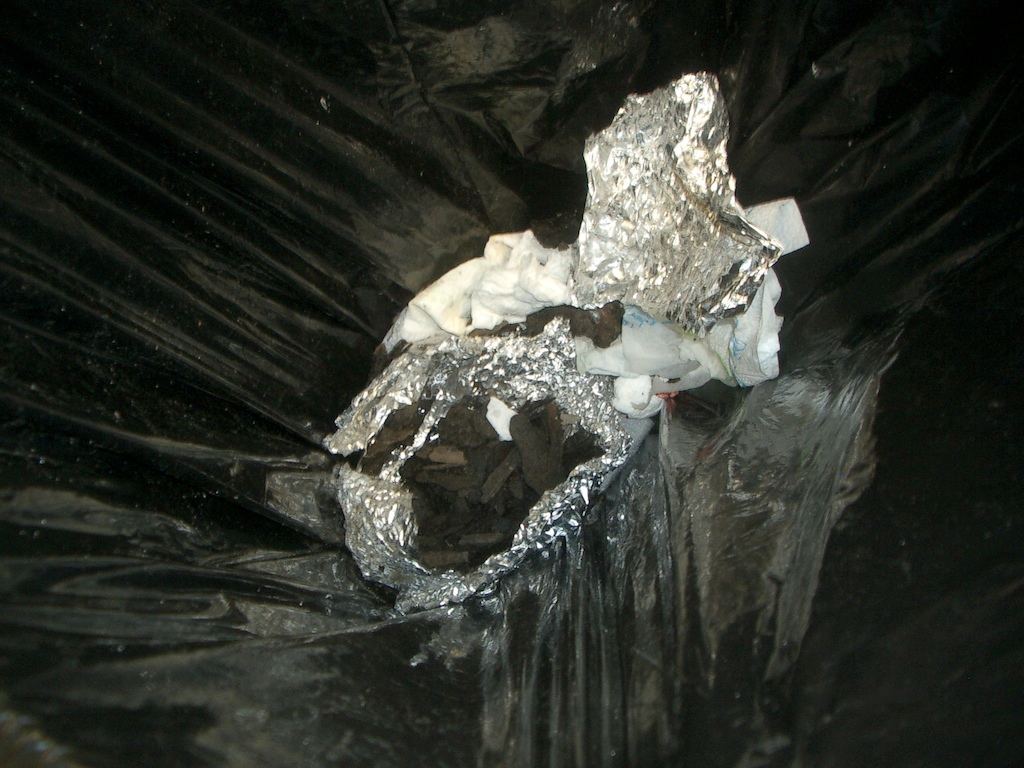
Claire and Laura hard at work.Lab discards--on closer examination they turned out not to be cultural.
Later this fall we are going to start going through soil samples and so forth. We hope to be able to reduce the volume they take up. Some of that will be done by separating the actual sample material of interest from the gravel matrix. Where that isn’t possible (for example with large logs or whalebone) we will have to sub-sample, retaining only a portion of the total sample volume. Otherwise, we’re going to run out of room.
Matt Betts & I decided to go see Notre Dame on Friday morning. We went right after we figured mass would be over, since tromping around during a service would be rude to say the least. We didn’t get to go up the towers, because the lines were already a block long and we did want to get back to the conference to hear some papers. Next time…
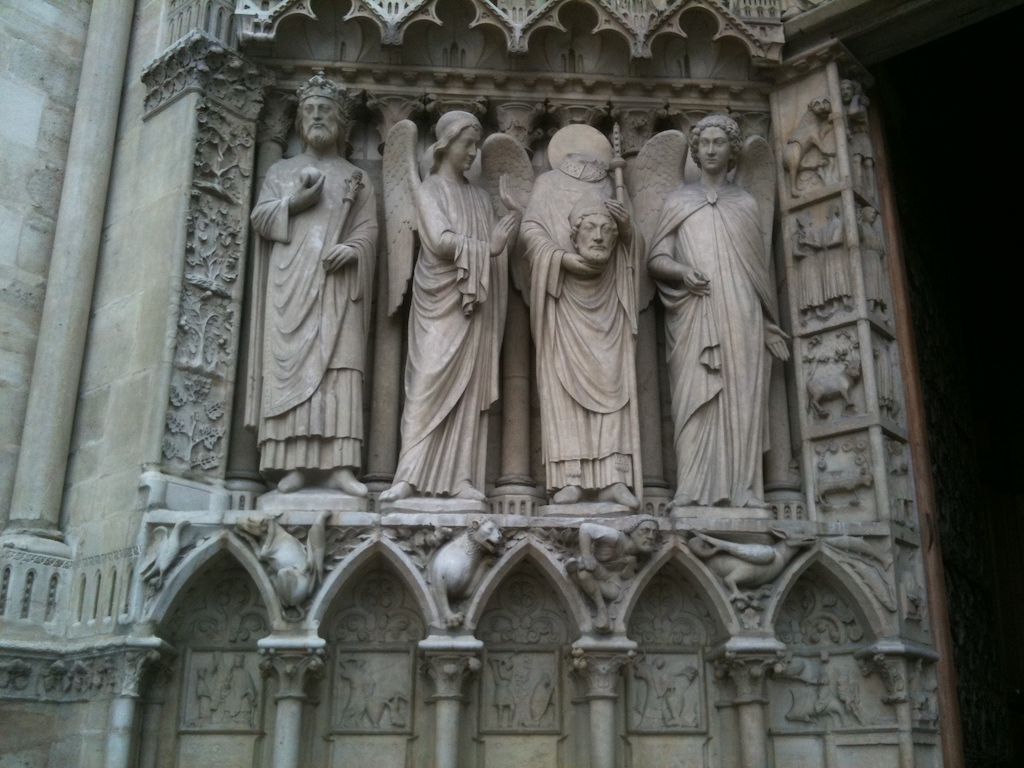
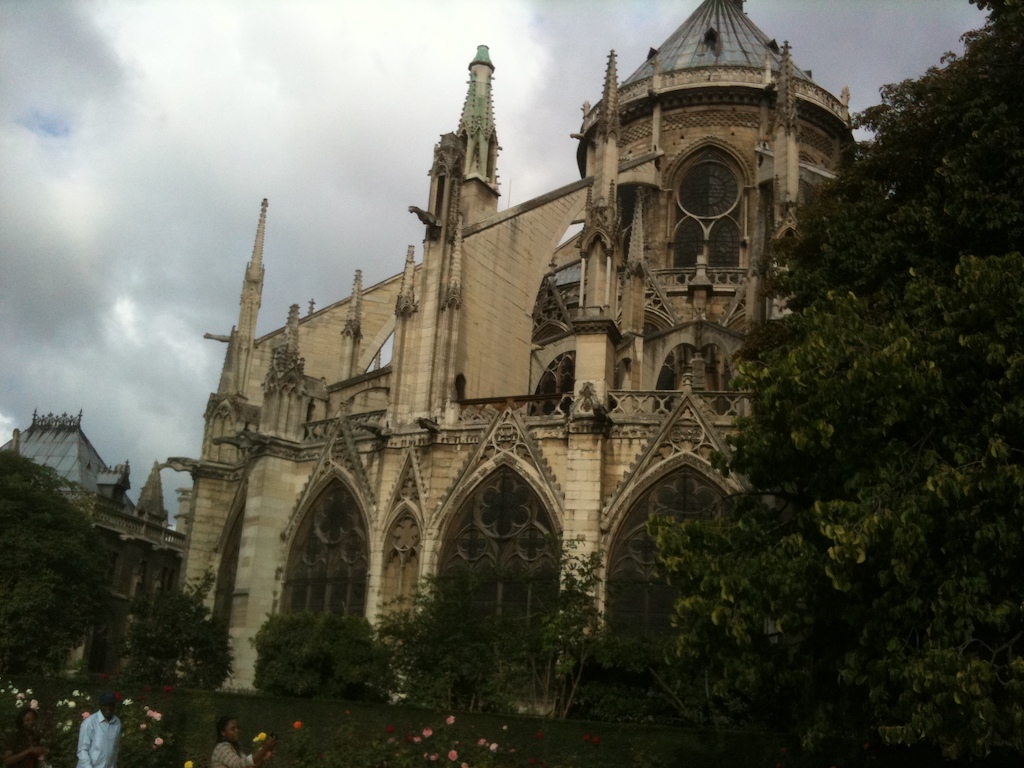
Notre DameNotre Dame de ParisNotre Dame de Paris, Portal of St. Stephen, South Rose Window
Notre Dame is a very old cathedral, construction having started in 1163, finishing some two hundred years later. It had fallen into a state of some disrepair, thanks in part to its conversion to a “Temple of Reason” during the revolution, when Victor Hugo wrote The Hunchback of Notre Dame. That inspired calls for the restoration, which was completed in 1864.
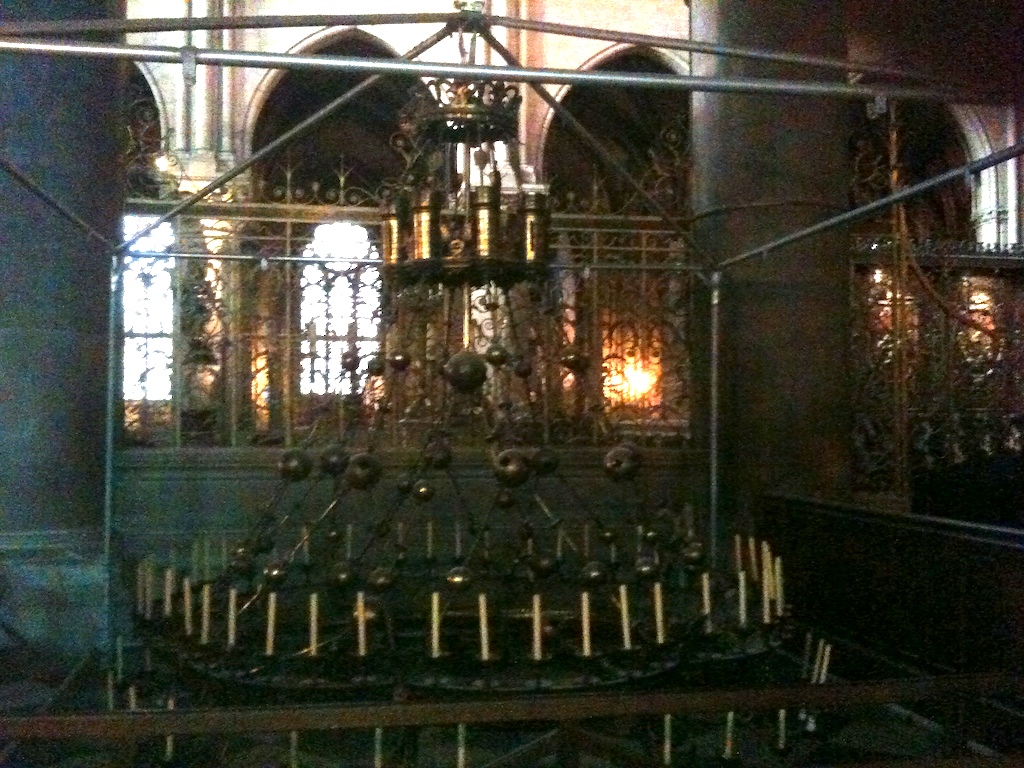
Repair and restoration are ongoing processes here. For example, the huge chandelier which normally hangs in the crossing was on the floor being worked on.
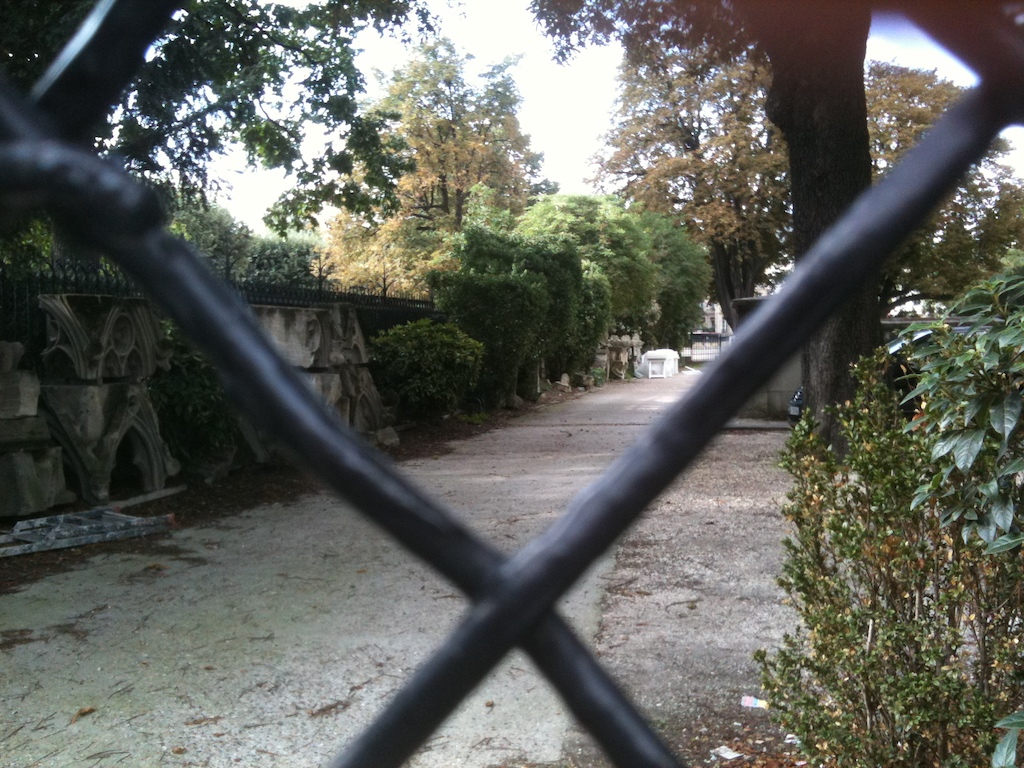
Chandelier on the floor for repairs.Pieces of the cathedral stacked in the back yard.
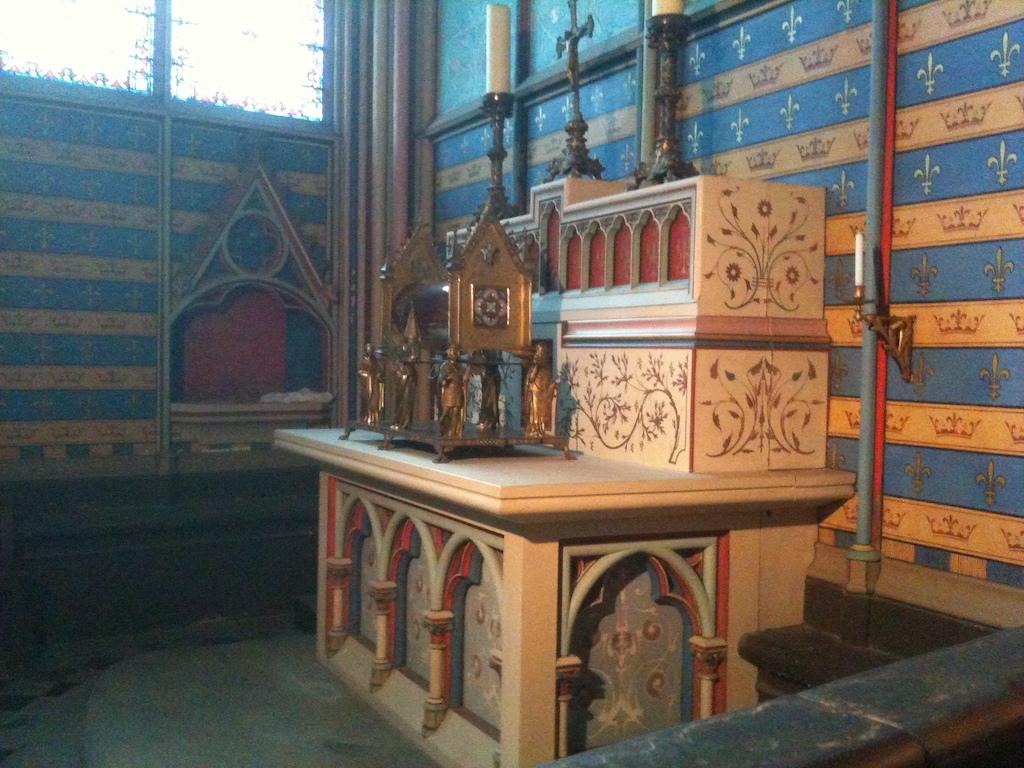
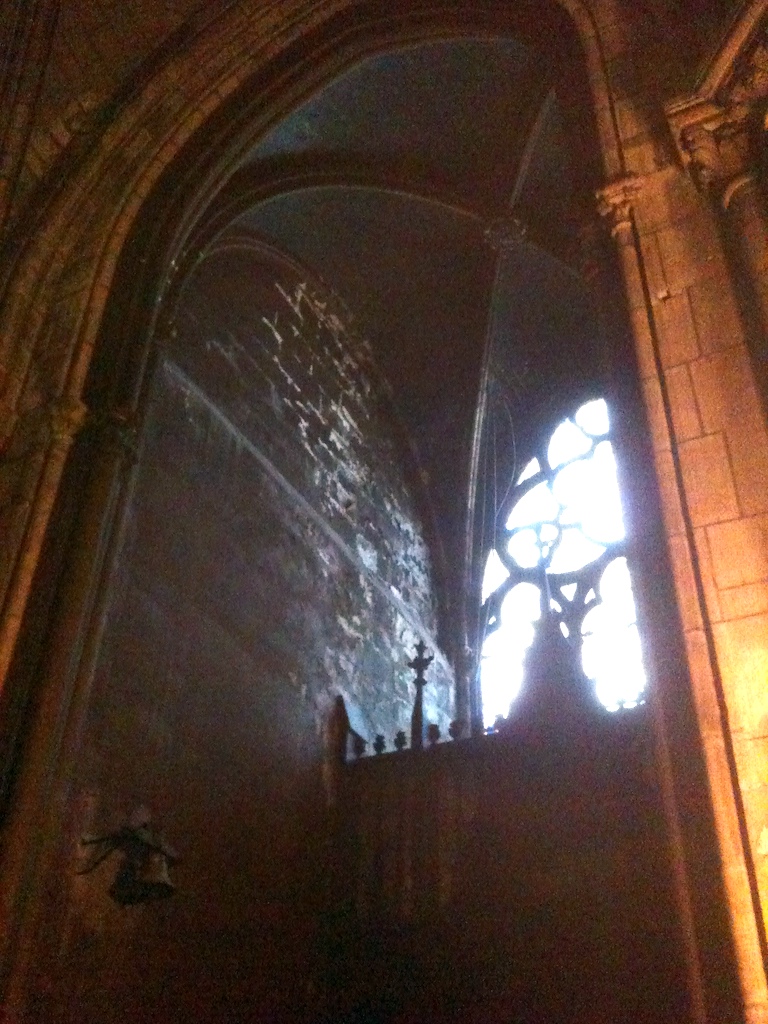
Some of the side chapels had clearly been cleaned and had their painting restored, while others were completely black from the soot given off by candles which had been burned there over the centuries.
Side chapel, Notre Dame de Paris.Soot-covered chapel wall and ceiling.
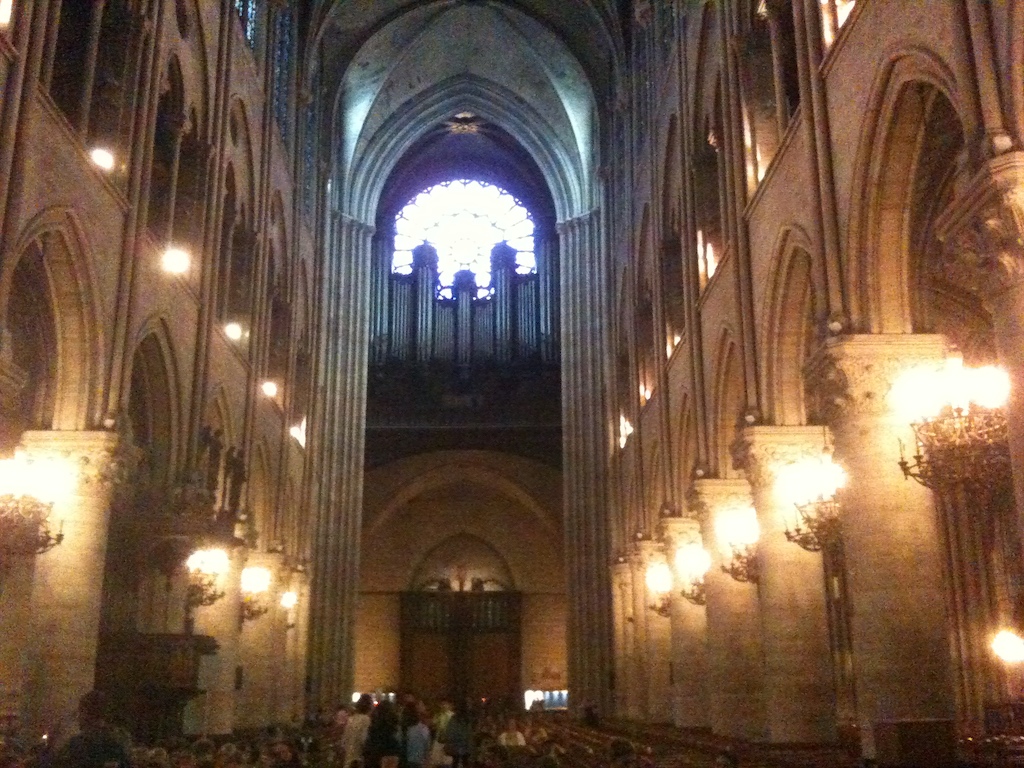
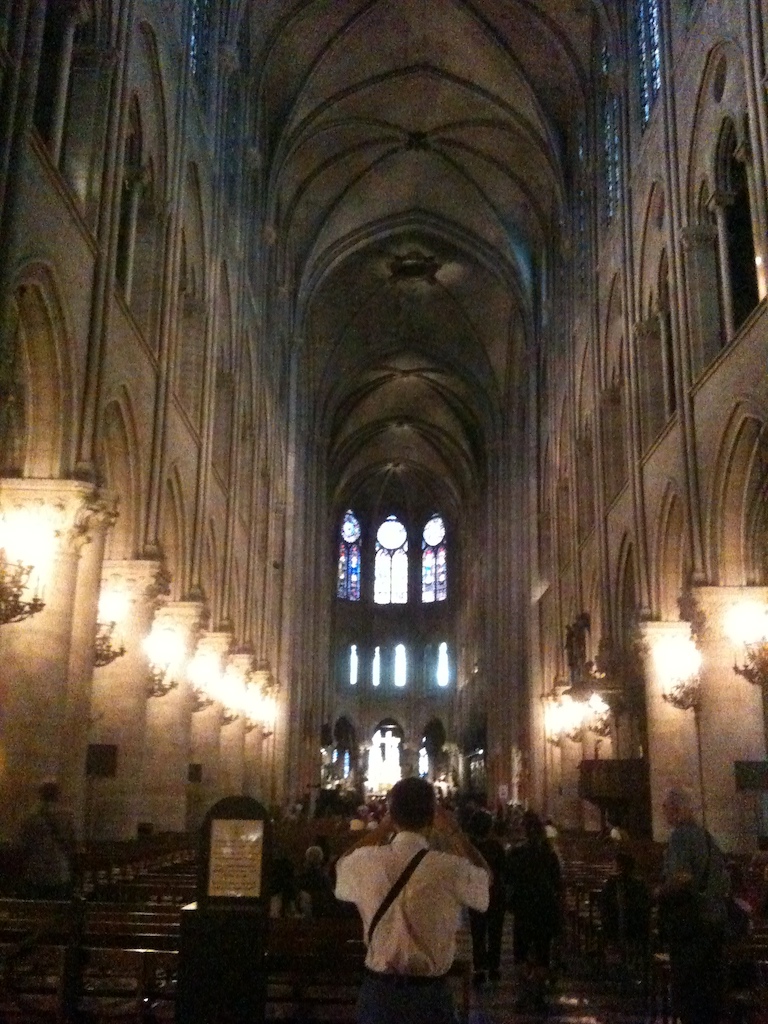
The interior is an amazing space. The architects who first figured out how to build cathedrals were true geniuses.
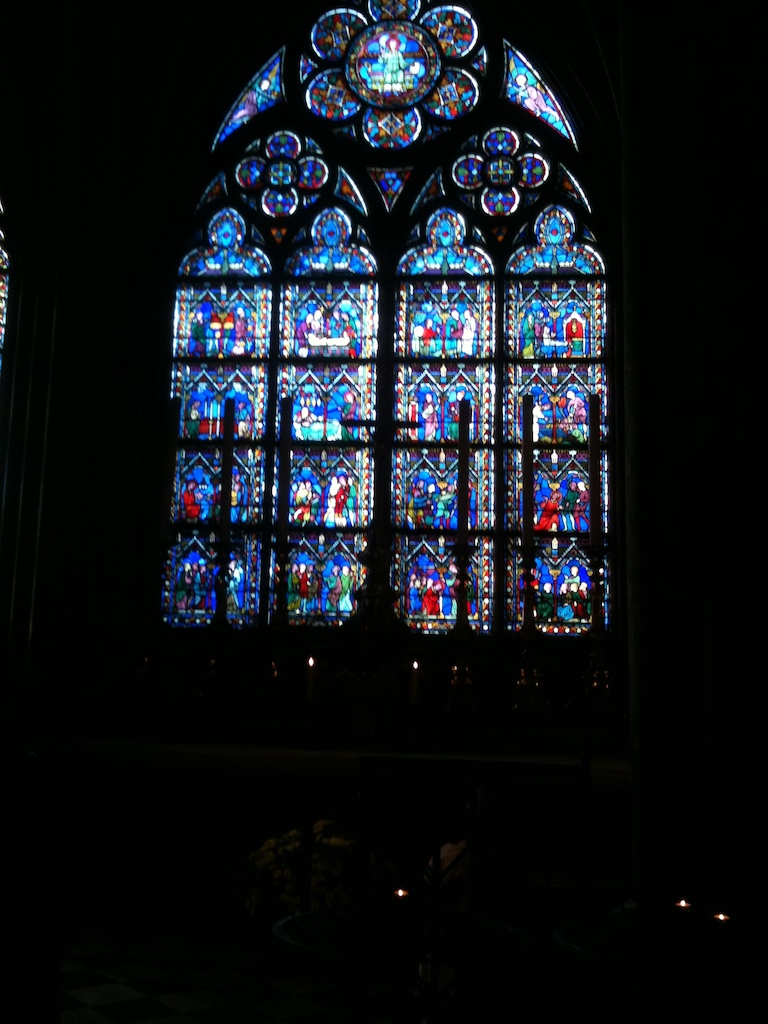
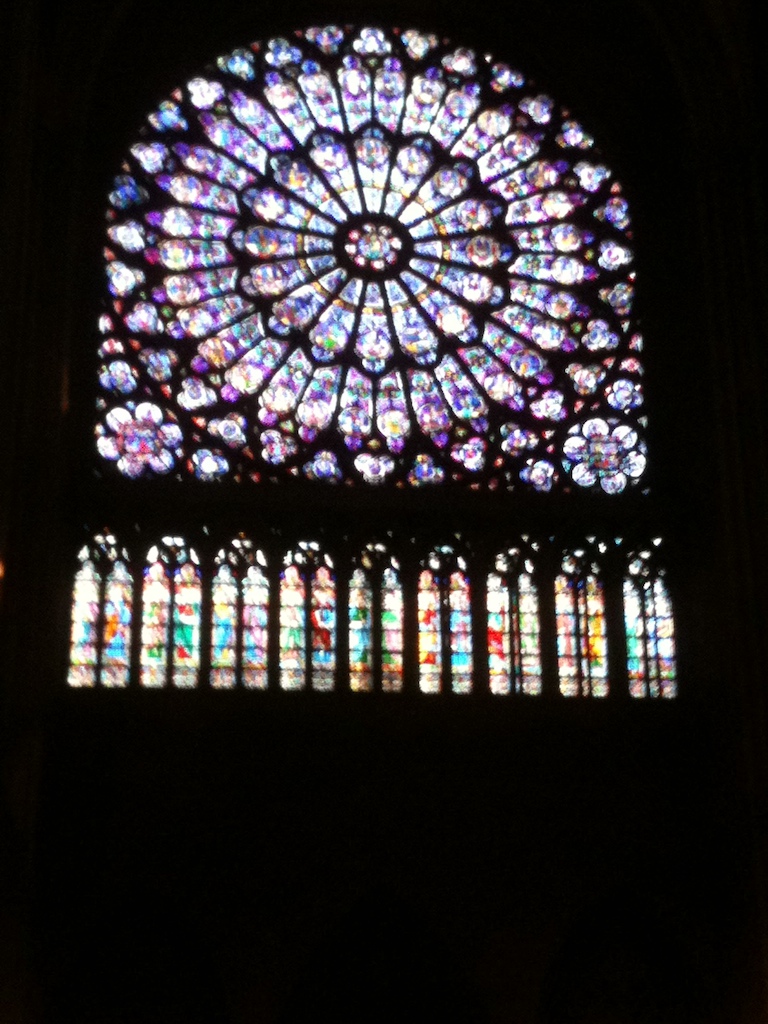
Notre Dame. View from transept down nave to Portal of Last Judgement, great organ, and West Rose window.Notre Dame. View up nave toward chancel & high altar.Stained glass window, Notre Dame.Rose Window, Notre Dame.
I promised a number of people I’d put some pictures from the trip to Paris up, so here goes. I took these with my iPhone, which isn’t quite up to even my Optio S, let alone the Nikons, so the picture quality isn’t that great.
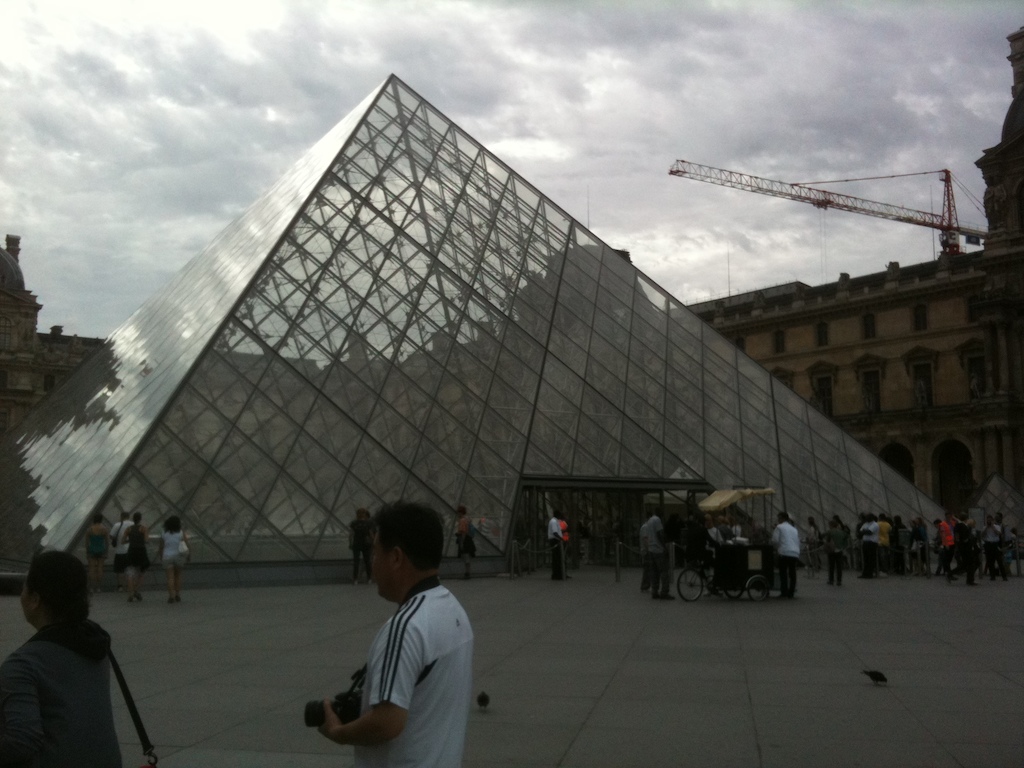
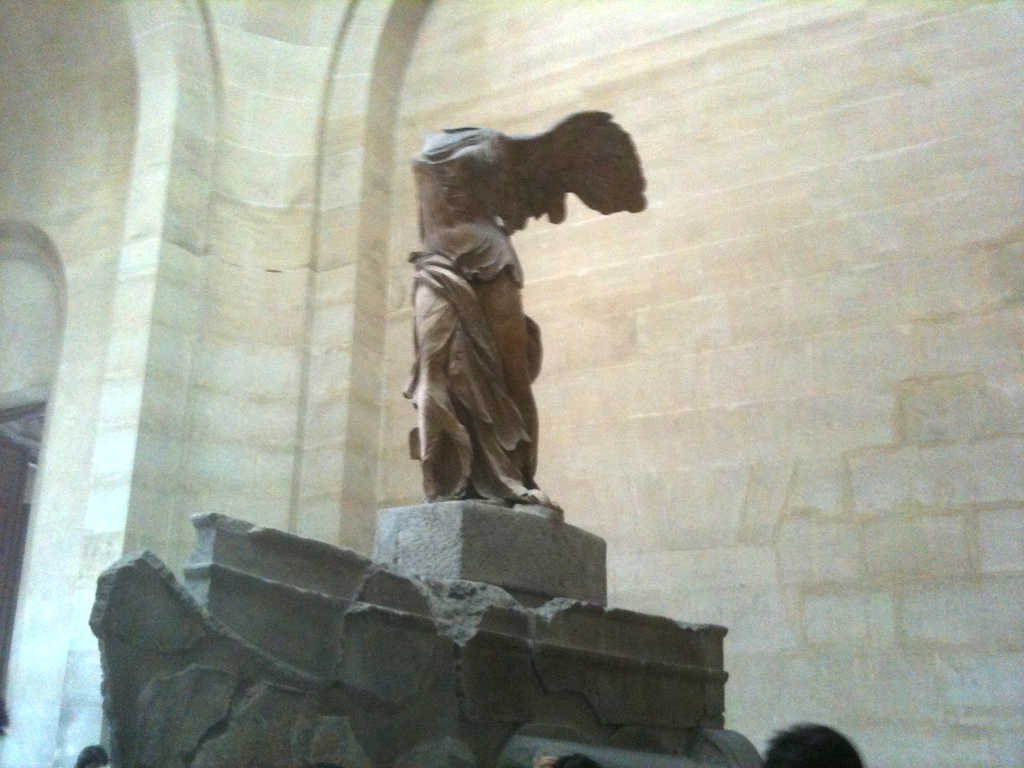
The first set is from the Louvre. A few of us went to visit on Thursday, which the conference organizers had allowed as a day off. This was a great idea, since day after day of papers can leave people sort of “conferenced out” and really not able to pay much attention to papers on the last day. This avoided that syndrome.
Pyramid at the Louvre (the new entrance).Winged Victory of Samothrace.
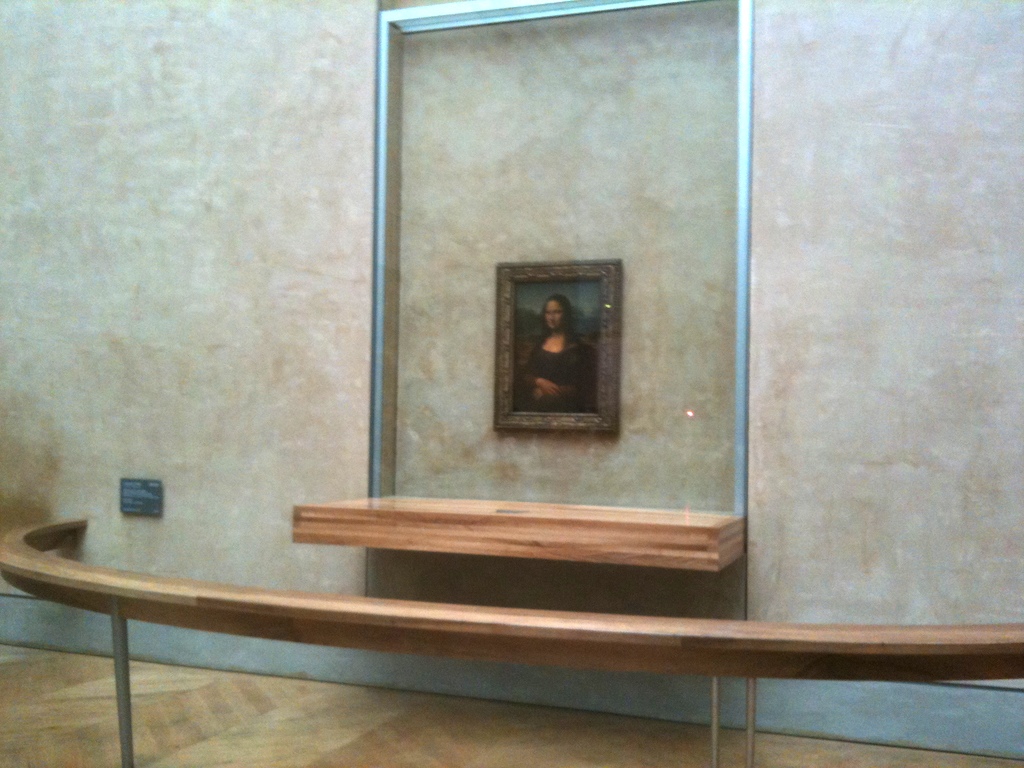
The Mona Lisa looks a little forlorn hanging by itself on a wall that is apparently also a protective vault.
Mona Lisa.
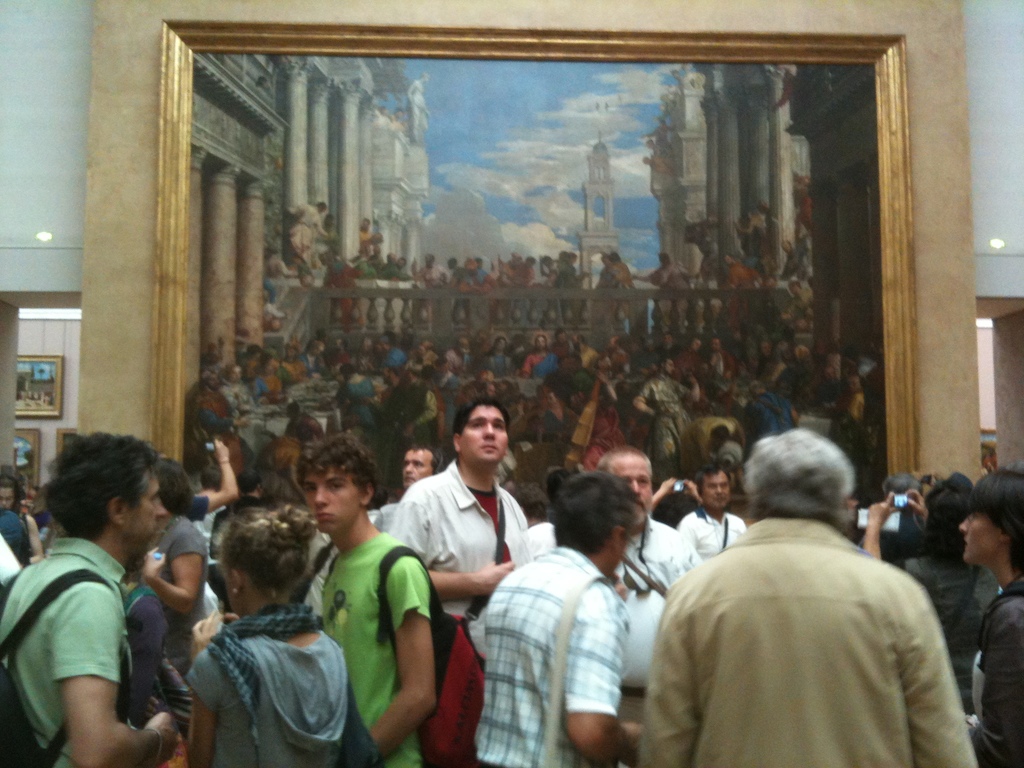
It looks much smaller than one expects, particularly since it is facing a really immense painting.
Opposite the Mona Lisa.
The room is really crowded, and it takes a while to get close enough to get a good picture.
The hordes in front of the Mona Lisa.
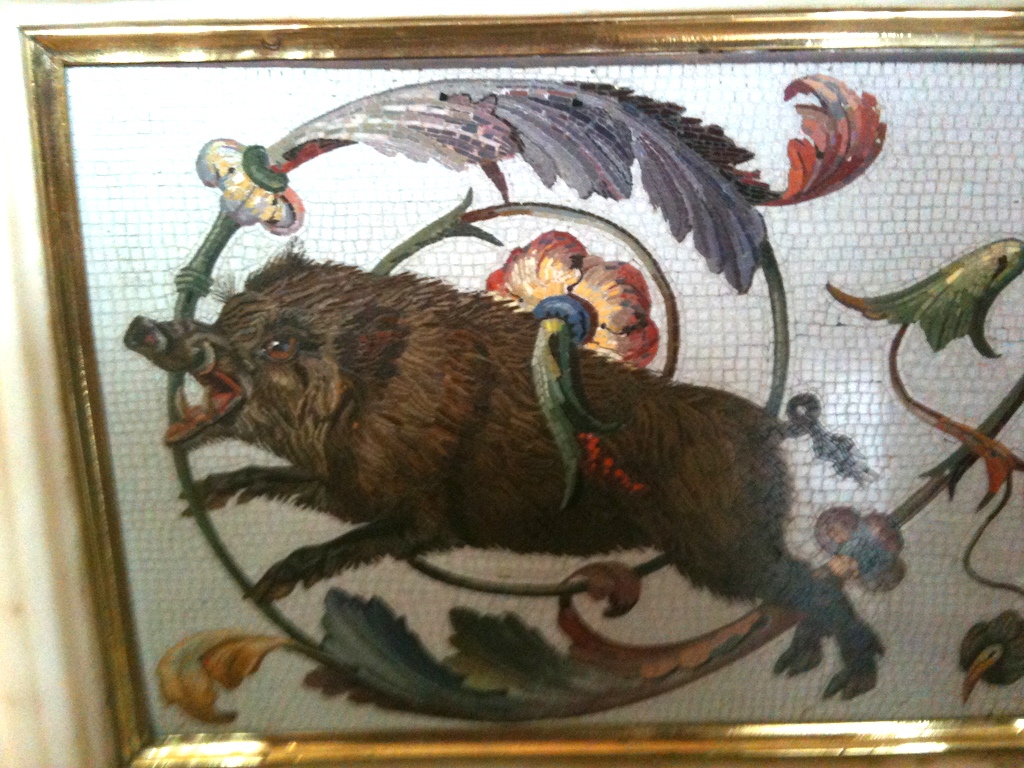
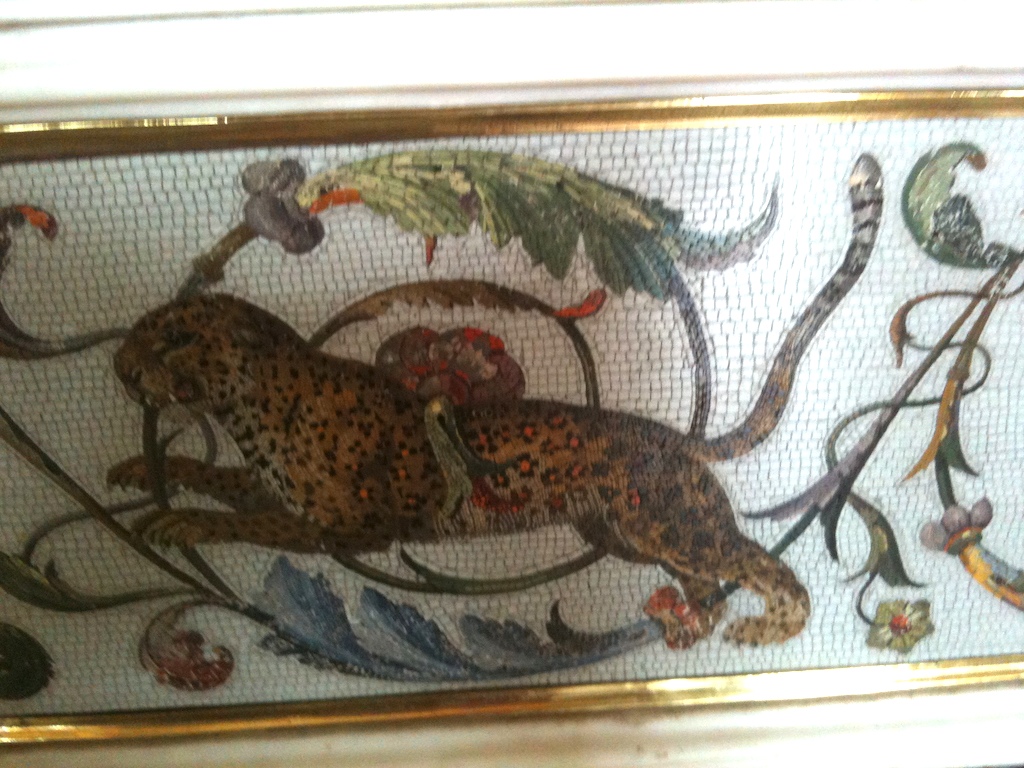
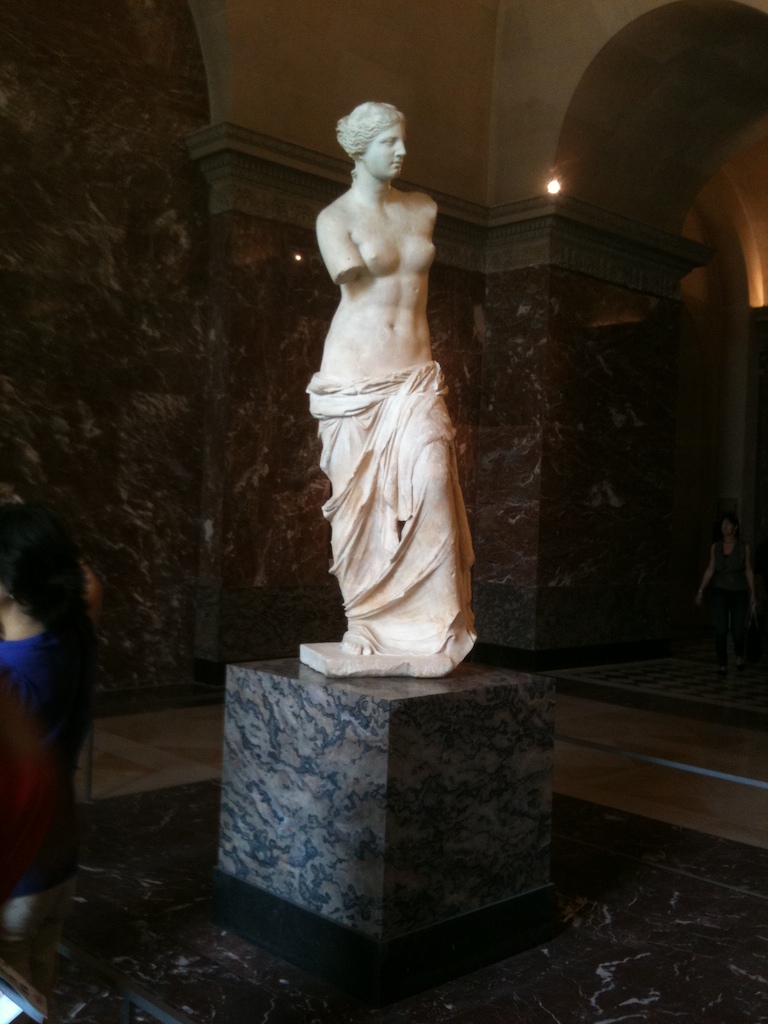
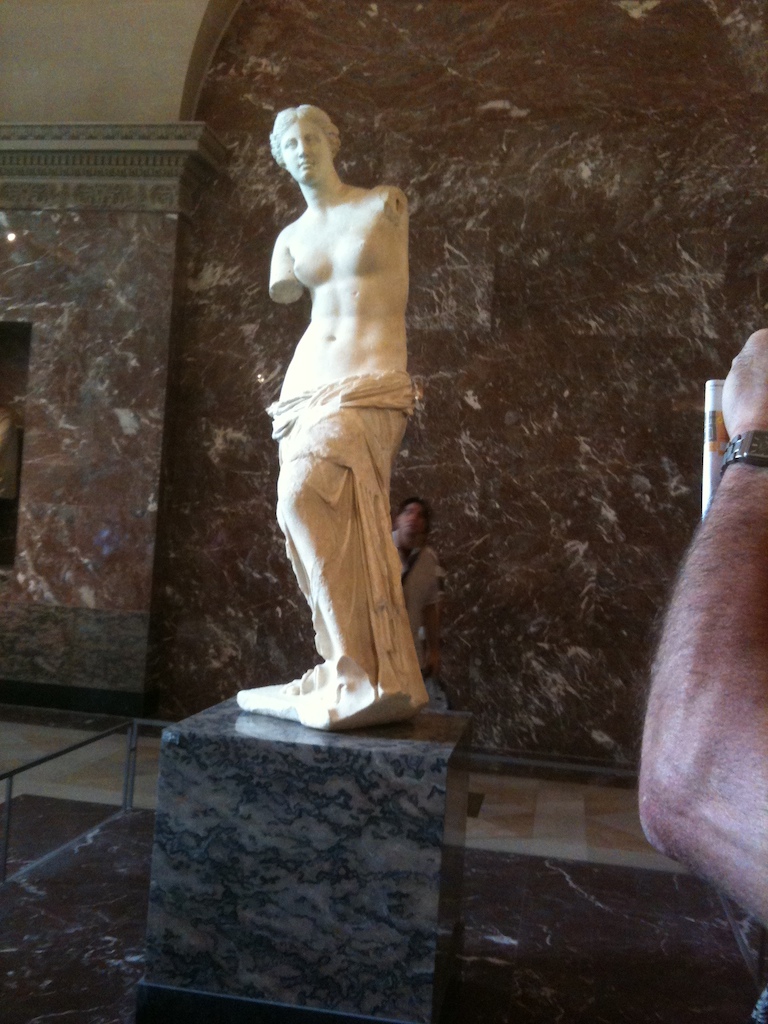
The Louvre itself was pretty amazing in terms of over-the-top interior decoration. The craftsmanship was amazing.
Interior at the Louvre.Wild boar mosaic on fireplace.Leopard mosaic on the same fireplace.Venus de Milo.Another angle on the Venus de Milo.
The conference wound up on Saturday with a really interesting circumpolar archaeozoology session, organized by Max Friesen of the University of Toronto. I’ll do another post about the papers; this one is about coming home. A bunch of us went out to dinner at a restaurant on a little square up Rue Lacépéde from Rue Monge.
The next day I started home. My flight was late in the day, so I had a while to hang around Charles De Gaulle (the airport), which resulted in spending money at the duty-free shops on chocolates (for Glenn) and perfume (for me). The Air France flight had really good food, and was even a bit early into JFK. Passport control and US customs were the usual slow lines winding around like snakes, but eventually I made my way (by train) to the place where the hotel shuttles stop and got to the room. A few glitches with the card keys (apparently their machine is on its last legs and only one of 3 worked) and I was able to sleep.
I had to get up quite early Monday, which wasn’t such a chore since I was still on Paris time, since my flight was at 7AM. While checking in, I discovered that what had appeared as a JFK-ANC flight actually stopped in Salt Lake City. And that’s where the trouble started.
We arrived in a perfectly good plane, a bit early, and were told that we were going to change planes. They re-boarded us an hour or so later on the new plane, closed the doors, and discovered that an engine light was on. They replaced a part, took the jet-way away, tested the engine, put the jet-way back, did something else, took the jet-way away, tested the engine, put the jet-way back, went looking for some other parts, found them, started replacing them, decided that they should deplane us because one of the parts was hard to get at and it would take a while (they didn’t know that until they started doing the work? what kind of mechanics are these?), but we could leave larger luggage on board to speed re-boarding. They handed us $6 meal vouchers and told us not to leave the boarding area (where there was only one place to get food for 100+ people). Several hours later, it was clear that I would not be making my connection in ANC to go to Barrow.
When I went up to get re-booked, they were not able to find me a seat from ANC to Barrow until Wednesday. I had them book it anyway, so I didn’t wind up having to wait even longer. Eventually, they had us go on the plane five at a time to get the stuff we’d left there, and then sent us to another gate with another plane. We finally made it to ANC about 4.5 hours late. A few of us were stuck overnight, but at least the large contingent of senior citizens from the Midwest heading for a cruise ship didn’t miss their sailing.
It took them quite a while working on my ticket, and in the end they took my email and emailed me the itinerary later. I did wind up standing around so long that when it was time for hotel vouchers, I’d checked the room availability, and was able to get them to put me in the Millennium, which has a decent restaurant and a gift shop that sells T-shirts (which I needed since I didn’t want to do laundry), instead of the Puffin Inn. I think the problem was that they managed to book me on a Tuesday flight to Fairbanks, with a layover until the Barrow flight arrived, but hadn’t canceled the Wednesday reservation, so the prices weren’t coming out right, and the poor fellow didn’t have a calculator and was having to do all the math by hand. They handed me more meal vouchers (which didn’t go that far in ANC in the summer) and off I went to catch the shuttle.
The flights on Tuesday went smoothly, Glenn was there to meet the plane, and my bag was one of the first out, so it was only about a 45 minute wait. We then went over to the library where there was a BASC-sponsored talk going on, to hear the rest of the program, and pick up our daughter and an archaeologist friend, Rick Reanier, who is in Barrow getting ready to do some survey for Shell Oil down the coast.
Naturally, the first couple of days back have been a zoo. One client has a procedure where they need to get letters estimating how much you are likely to charge them until the end of the fiscal year (September 30) so they can move money around. The person who does that is going on vacation, so they needed this done ASAP. So I made those letters, only to have them discover they didn’t have enough money in the projects to do that, and they didn’t have time before the woman left to move the money. So I had to rewrite the letters to fit their budget! I really don’t know why they don’t just do it themselves… That took most of the last 2 days.
In between rewrites, I had a group of Secretary Salazar’s staffers (he’s in Barrow holding a public hearing) tour my lab while touring the building. Fortunately, they were busy so the tour was brief. Then I had a regular teleconference with clients, which I got called out of to go and photograph a very large tooth for a local man, Matu. We think it may be a saber-tooth cat. Photos have been forwarded to various paleontologists & mammologists, and we await the verdict.
I’ve heard a number of interesting papers so far. A bunch of them were in a session on digital archaeozoology. I find this interesting in part because I live and work in a remote area with limited research resources on hand, although for the size of the place they are truly exceptional. A number of highlights from the session below:
1) A paper by Matt Law on zooarch on the Internet. He’d done a survey of on-line arch data archives. People often use them heavily, but so far are not good contributors. People still see on-line publication as less prestigious (which is a problem if they are working toward tenure), but most would still be willing to participate if the process were straightforward enough.
2) A paper by Isabelle Baly & others about a big national database (INPN) the French are building of data on plants and animals from archaeological sites. Much of the data they are including comes from salvage and compliance excavations, which often don’t get published. This is a huge amount of work to pull together (especially with the staff of three that they have!), but it lets people do analyses which they could never afford to do otherwise. It seems to be available through a public website, which will let students and members of the public see and use the data themselves, which is pretty cool.
3) A paper by Jill Weber and Evan Malone about a set (30+) of skeletons of equine hybrids between donkey and onager, which are currently a unique sample. These are thought to be the Syrian Royal Ass, the Kunga, which was actually the Animal of the Year in Syria a few years ago. The problem was how to be able to preserve & share these bones, and study them without damage to the originals. Answer–3D laser scanning & “printing” them. 3D printing actually makes a replica of the item, and is very cool technology. Depending on the budget, the replicas can be very good. The scanned models in the computer are actually even better for doing measurements on ( something we do a lot in zooarchaeology) than real bones in some cases.
4) A paper by Katherine Spielmann and Keith Kintigh on the Digital Archaeological Record (tDAR). TDAR is a large-scale data archiving and integration tool, developed at Arizona State University. The impetus was that a lot of archaeologists there had data that they were interested in comparing, in order to look at things across a broader area than any of them had studied individually, but were stymied by differences in the way that their data was stored. They are trying to develop an integration tool and data warehouse. I haven’t tried it, but it seems interesting.
5) A paper by Matt Betts, and a number of others about the Virtual Zooarchaeology of the Arctic Project (VZAP) –very cool 3D models of Arctic (and subarctic, since ISU has been working in the Aleutians/Lower Alaska Peninsula area under Herb Maschner for years, and that’s what they see most of) fauna. The bones are accessed through a very neat visual database interface, which lets you look for bones by species or by skeletal element (part of the body), which is the most common way to find things when identifying unknown bones. Often you can see you have a femur (thighbone) for example, but aren’t sure what animal it’s from. The best physical comparative collections of bones actually have a set of femurs you can look at, rather than having to go to a bunch of skeletons and find the femur. I’ve used this one, and it’s handy. As more species get added, it will only become more useful.
… or zooarchaeologists or faunal analysts (people who study animal remains from archaeological sites), in Paris. The trip over was a two-day affair, involving not one, but two red-eyes. We had a good tail wind, so the Salt Lake City flight was about an hour and a half shorter than expected, which made up for a late departure due to bad weather.
The conference is feeding us lunch every day, and it’s pretty impressive for a university cafeteria. One starter, one main course, one cheese, one desert and one drink. The folks I ate with didn’t see it, but there are rumors that wine was available. The coffee breaks have great pastries and fresh fruit.
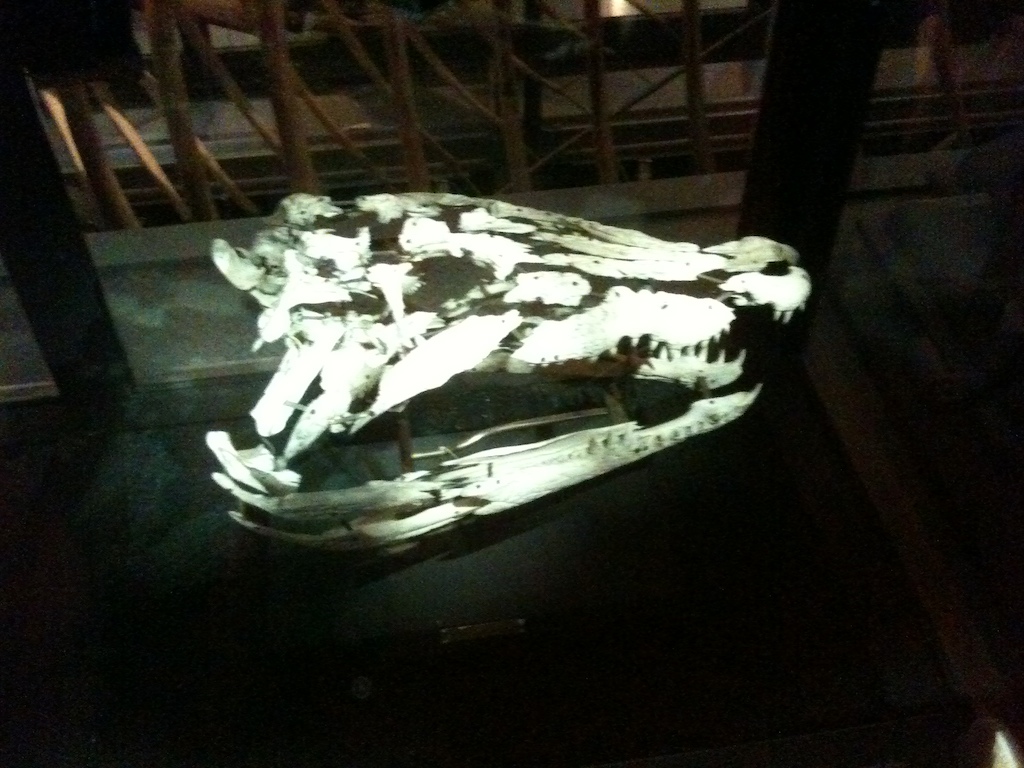
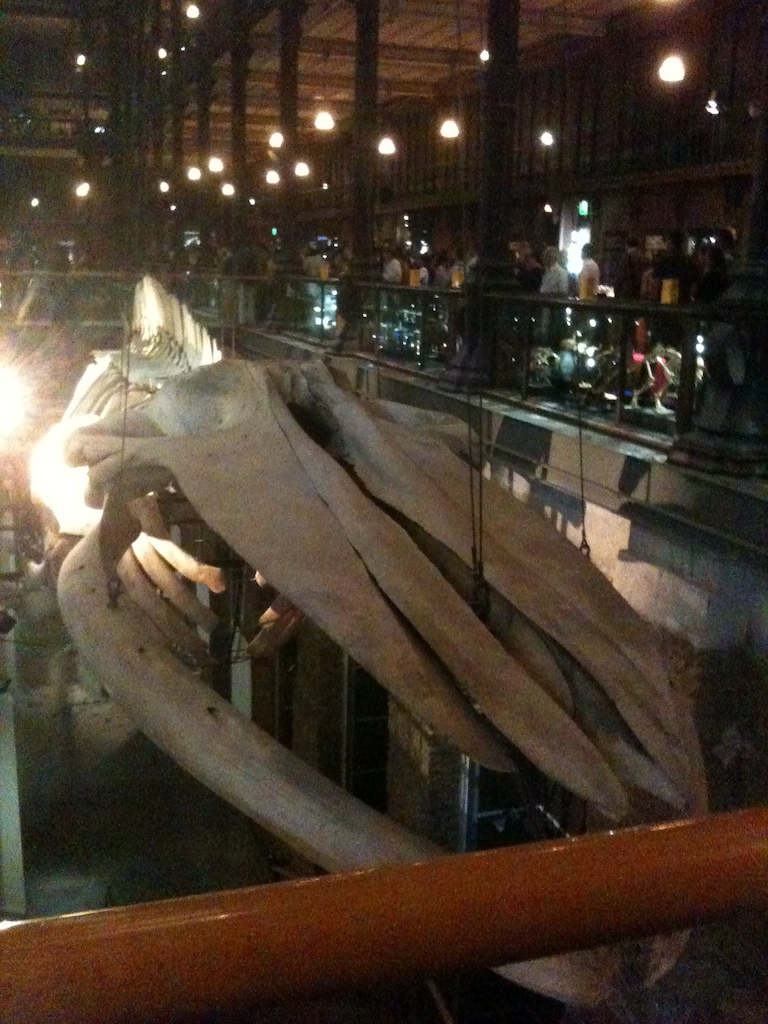
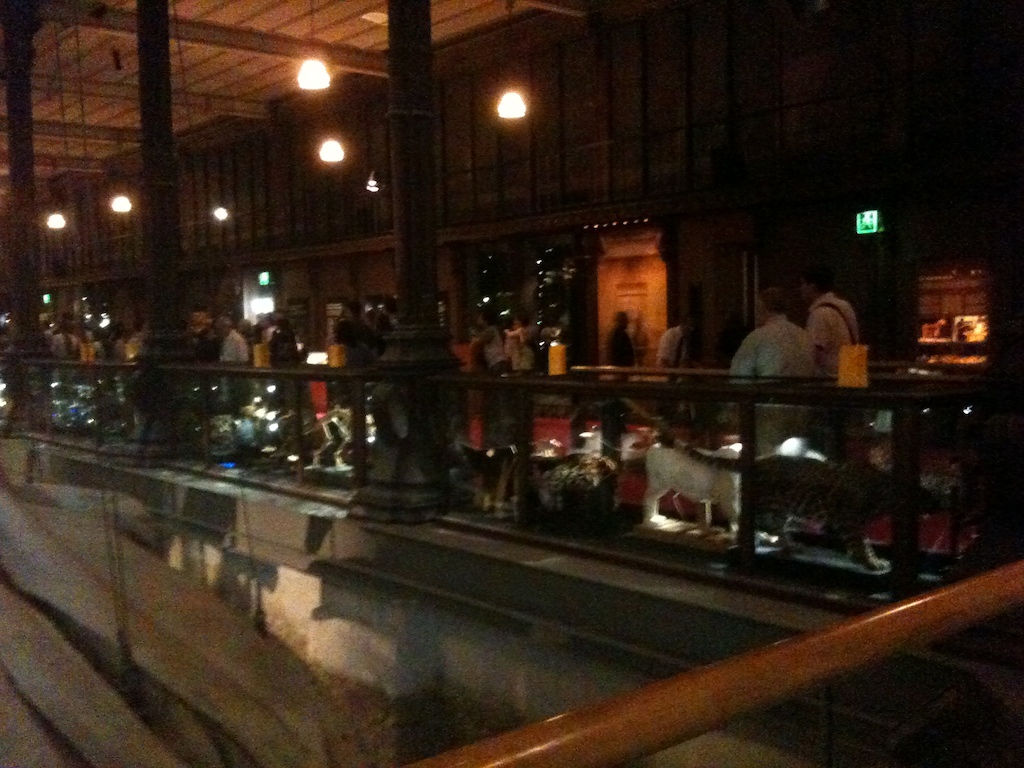
The opening reception was amazing, and they didn’t run out of food, frequent problem at such events. They held it in the Grande Galerie de l’Evolution (Great Hall of Evolution) of the National Museum of Natural History, which is just amazing. A few pictures from there follow. I took them with my phone, so the quality is not the best.
Skull of Nile crocodileBlue whale skeletonSouthern right whale skeletonArctic or Pacific loon, probably Pacific. They look alike, and the ranges overlap.A small portion of the assembled multitude.
There are also some neat older mounts. The one of the tiger on the elephant is because a French duke was hunting on elephant back in India, and a tiger leaped onto his elephant. He was only saved because she was so heavy she broke the basket he was riding in. She was shot, and that’s the tiger in the mount, which he had made and donated. It didn’t say if it’s the same elephant.
A hippopotamus, closer-up than you'd want to get in real life.Tiger and elephant, with howdah (the basket).
Barrow is a pretty interesting place in terms of the sheer amount and variety of science that gets done here, as it has been since the 1st International Polar Year (IPY). It can be hard keeping track of it even if you live here and are a scientist. We don’t have a local newspaper reporter, and the radio station can no longer afford a full-time reporter, so there is no local source of science stories for the general public.
Many scientists want to let people know what they are doing, and what they are learning by it, but there are a number of barriers (another post for another day). One way is blogging. On bigger hard-science projects, websites and more are possible, since the cost of people to take care of them is really a tiny portion of the project budget.
A recent project called OASIS really takes this to another level. Dr. Paul Shepson, the PI, actually built in an author to write about the project, and things grew from there. Peter Lourie, the author, has written two children’s’ books and has moved on to multimedia. They’ve made a really neat website, which has video from a number of scientists who work in Barrow. There’s a lot from various folks on the OASIS project, but also from people who live in Barrow, like Fran Tate of Pepe’s, whaling captain Eugene Brower and even me. I actually got interviewed twice, because the sound on the first set got messed up, so I had to do it all over again when Peter came up again!
Saturday Schoolyard is a BASC-run program of community science talks. Plans are to stream them, as well as archive them as vodcasts. Today’s is being streamed as a test of the system. Since it’s a test, there may be glitches, but if you’d like to hear a bit about doing science in Barrow from a New Orleans science teacher’s perspective, go here.
Barrow to the Bayou:
A New Orleans High School Teacher Explores Permafrost and Polar Education
The talk starts at 1:30 PM ADT, but the video stream should be live by noon.










 Out of Ice and Time