The acting leadership of the Advisory Council on Historic Preservation (ACHP) is planning to change the process that implements section 106 of the National Historic Preservation Act (NHPA). This is the process that protects cultural heritage during development, trying to strike a balance between preservation of all types of cultural heritage and needed development. This will completely destroy the process that has developed over decades, expanding to include input from tribes, local governments, and members of the public, As well as input from State Historic Preservation Officers (SHPO) and Tribal Historic Preservation Officers (THPO). If you care about your cultural heritage, you need to take action.
I’m writing this to detail what is being changed (and lost) and who is being removed from the process. As you will see, this essentially turns all control over to federal agencies, many of which are understaffed and some of which appear to be Controlled by people wishing to undertake various projects.
This is not to say that the process as it exists now is perfect. It is far from it and could certainly stand some improvement. However, the ACHP proposal does not represent improvement. It represents nearly complete destruction.
What Does the ACHP Propose?
Right now, the 106 process applies to any federal undertaking. In general, federal undertakings are anything that requires a federal permit or has federal funds. The current process requires consultation with relevant SHPOs and THPOs, local governments, tribes with an interest in the area, and members of the general public and other interested parties. Some kinds of small projects been determined to pose little risk to potential historic sites and so they are on a list allows them to proceed without going through the full process if they meet all the criteria. The criteria for the lists were established through consultation.
This changes all that. Many federal actions—delegated programs, block-granted funds, “minimal” federal involvement—would no longer be considered undertakings at all. Therefore, they would get no review by anyone. The project can just go ahead.
The current process is replaced by an agency-written “Section 106 Report.” Agencies would determine what’s historic, what’s affected, and what (if anything) is adequate mitigation, then circulate their conclusions for comment. The people writing these reports may not be cultural resource professionals, may well never have set foot on the North Slope, or in some cases even in Alaska. The agencies are very short staffed, which has led to significant delays, and the situation has only gotten worse recently. NSHPO/THPO concurrence on eligibility (or lack thereof) is gone. IHLC (the Commissioners of which function as the official Historic Preservation Commission) has no role. Tribal entities are excluded. The agency does not need to take any comments into account.
In fact, public participation becomes optional, at the agency’s “exclusive discretion.” The category of consulting party that lets preservation nonprofits and concerned citizens at the table would be eliminated. The agency decides if the public gets to comment or even gets to hear about the project before it starts.
To be considered a “historic property” a place would now require actual built improvements and geographic compactness, which could eliminate things like trails, rock shelters and the like. It states that landscapes, ethnographic landscapes, and natural features are excluded from protection. Entire categories of Traditional Cultural Properties would fall outside review, no matter their National Register eligibility. These changes could have serious impacts on the protection of North Slope cultural heritage.
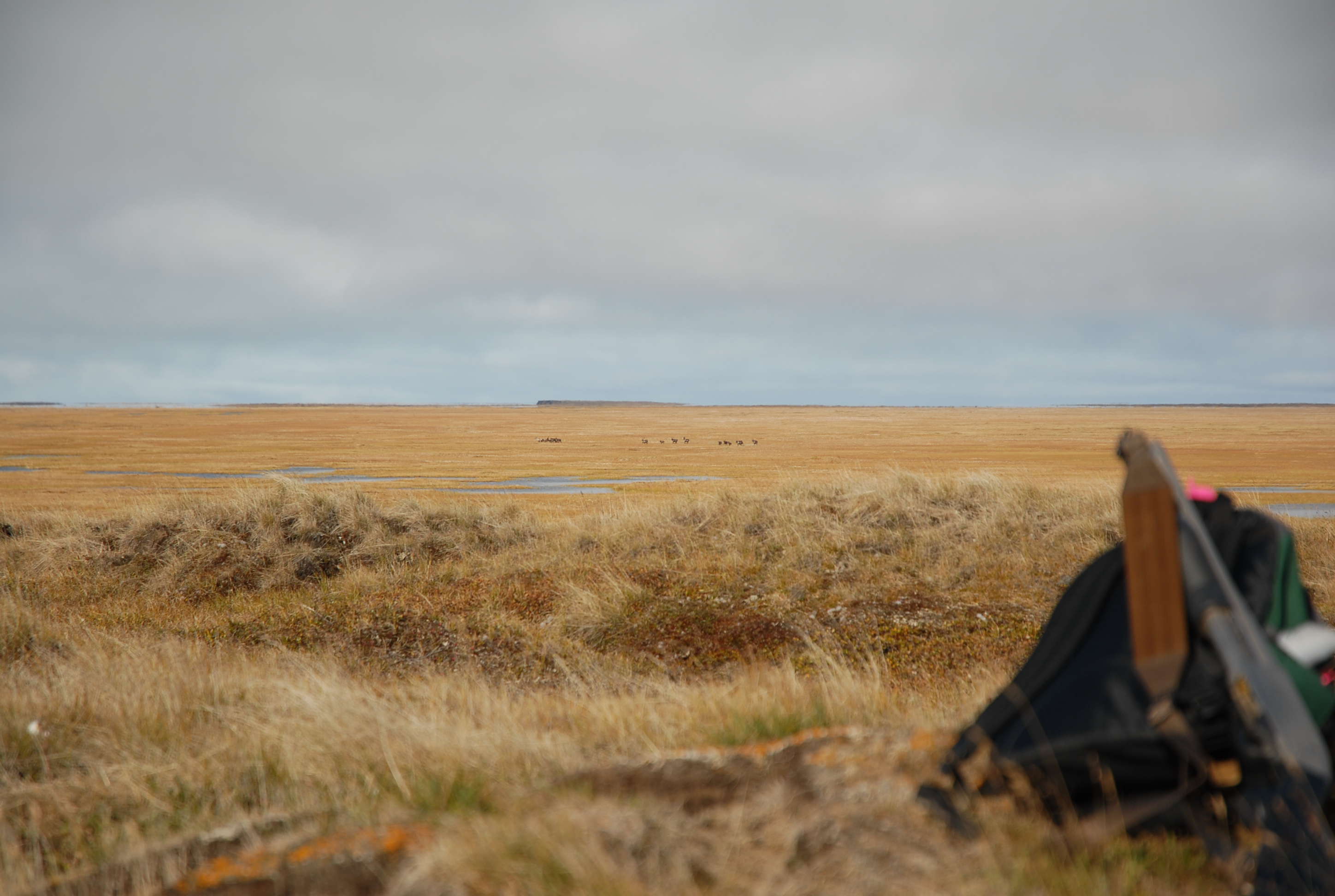
Setting, visual, atmospheric, and noise would no longer count as adverse effects. If a project doesn’t physically touch the resource, the surrounding context that makes it eligible wouldn’t matter. So, for example, building something like a data center that could be seen from A hunting blind which currently overlooks a caribou migration route Would be perfectly fine even though it very much changes what it would be like to visit that place.
Even if the agency decides that a project will impact a historic property under the new limited definition, they don’t have to really do anything about it. Currently, the preferred solution is to avoid the actual property. Under the new system, that disappears as the priority. “Avoid, minimize, mitigate” becomes “address” and agencies could simply document that other considerations outweigh preservation and move on, via a unilateral Memorandum of Decision instead of a negotiated MOA.
Additional Information
Current Situation
Official Section 106 overview: https://www.achp.gov/digita…/section-106-review-fact-sheet
ACHP Section 106 regulations: https://www.achp.gov/digital…/section-106-regulations
Track Federal Register notices: https://www.federalregister.gov/…/advisory-council-on…
NATHPO summary and resources: https://www.nathpo.org/section-106-regulations-review/
Info on current tribal procedures for ACHP: https://www.achp.gov/native-american-information-papers?fbclid=IwY2xjawTN579leHRuA2FlbQIxMABzcnRjBmFwcF9pZBAyMjIwMzkxNzg4MjAwODkyAAEek3SupDx7vXV7_NJpLNZgnxJNYX8_hsJTN_kzAw_uA_DCith3He2DUNBw2Cg_aem_L-sQcEBnrNCAfGeoHQqACA
Society for American Archaeology update: https://saa.org/Member/SAAMember/Media-Room/SAA-News.aspx
American Cultural Resources Association summary: https://acra-crm.org/upcoming-achp-vote-on-proposed…/
Proposed new regulations