August 15th at Walakpa–78 years ago and today

Seventy-eight years ago, it was a foggy day at Walakpa.  The Okpeaha family was camping there.  A floatplane descended out of the fog, and two men asked how to get to Barrow, since they had lost their bearings in the fog.  Getting directions, the got back in the plane and took off.  The engine failed, and the nose-heavy aircraft crashed into the lagoon and flipped.  Unable to reach the plane to help the men, Clare Okpeaha ran all the way to Brower’s Trading Post in Barrow, over 12 miles of very rough going, to get help.  When boats got back to Walakpa & they got to the plane, it became clear the men had been killed instantly.  They were Will Rogers, a noted humorist and political commentator, who was traveling around Alaska to get stories for the newspapers, and Wiley Post, probably the most famous American aviator of the time after Charles Lindbergh.

The crash was national news at the time, and a few years later a monument was erected near the site, followed some time later by another one.  These are the monuments that show up in some of the pictures of the site.  For some reason, these are on the National Register of Historic Places, but the archaeological site isn’t.

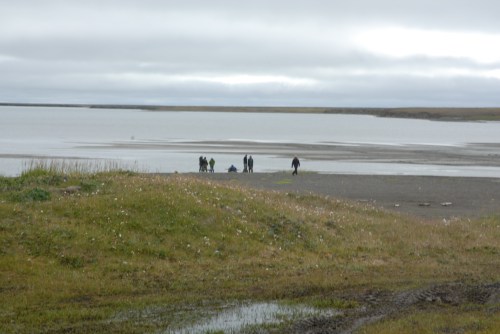
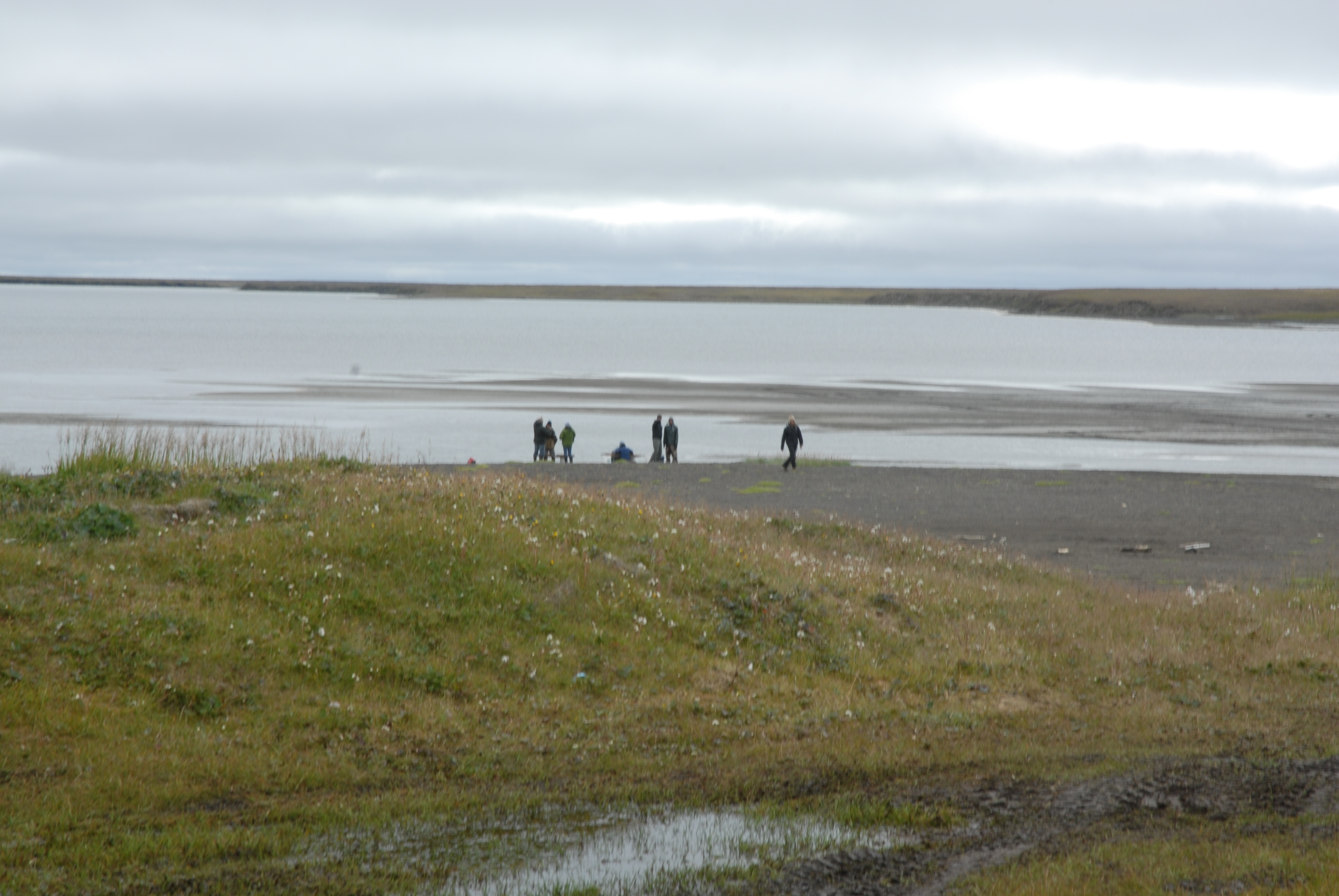
The first monument , looking out over the lagoon where the crash occurred.

Today was a much better day at Walakpa.  We headed down with 7 volunteers, including David Pettibone, Michael Berger, dental extern Temurkin Cucukov, and the entire Von Duyke family, plus Marybeth Timm from the Inupiat Heritage Center.  The stream was running high and fast at Nunavak, but we got across, although not before I got my boot wet.  With that many people, it seemed worth getting the water screening going, so we did, using a small pump to take water out of the lagoon.  Alan & Scott Kerner happened by on an ATV ride and pitched in for a while as well.

Wet screeners in action by the lagoon.

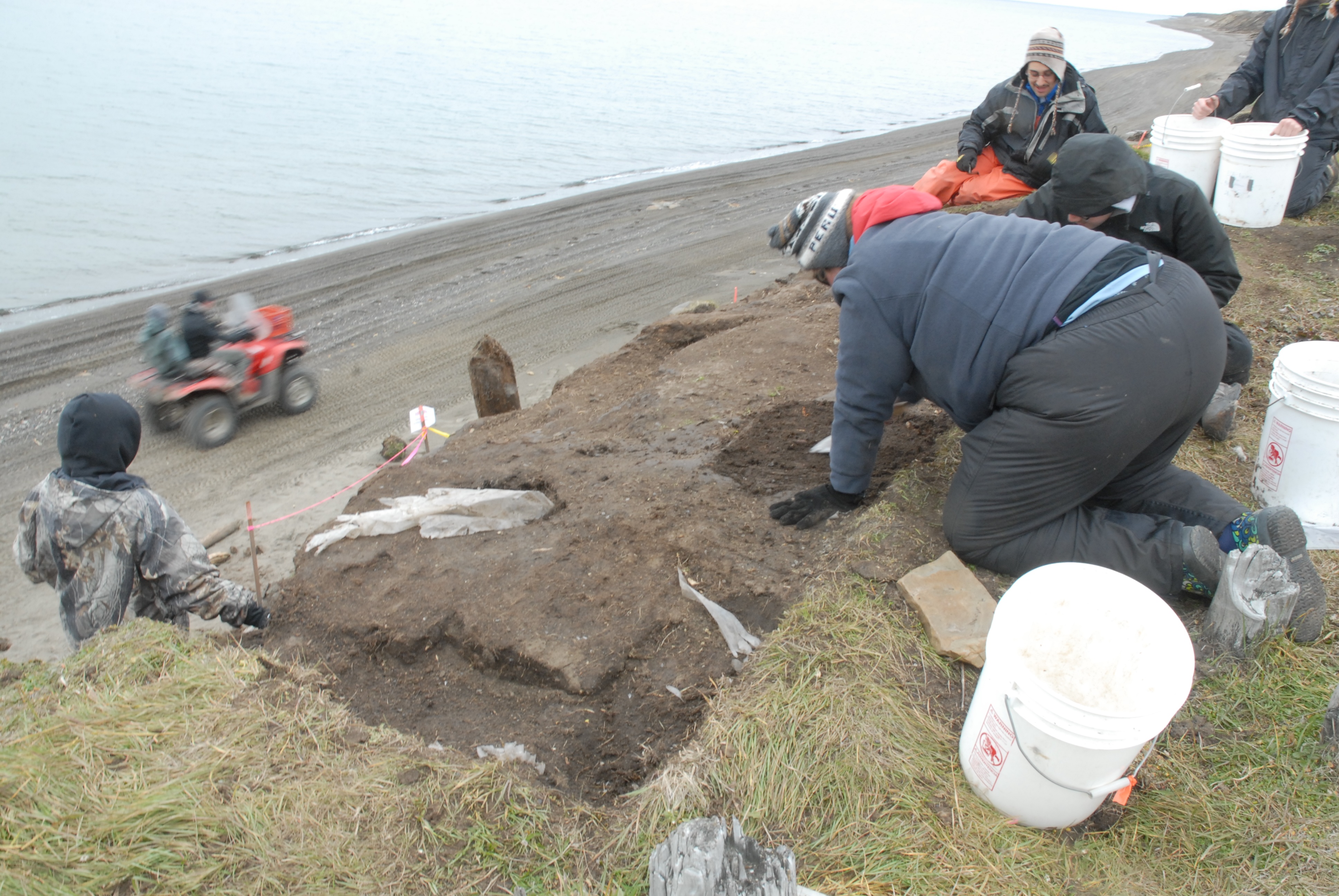
The rest of us continued with taking down the rather disturbed level under the sod.  It would be a lot easier if we could just shovel it out, but the bluff doesn’t seem that stable & we’re afraid we’ll knock the whole thing down if we shovel, especially since there are still a lot of roots holding things together at this level.

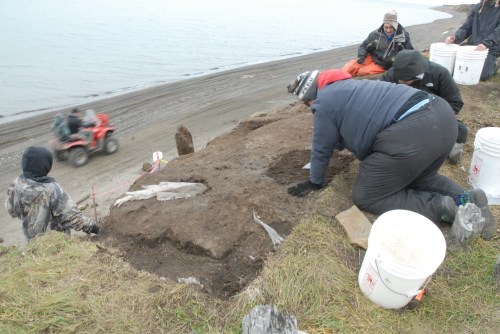
Excavating the disturbed layer. Note the Visqueen.

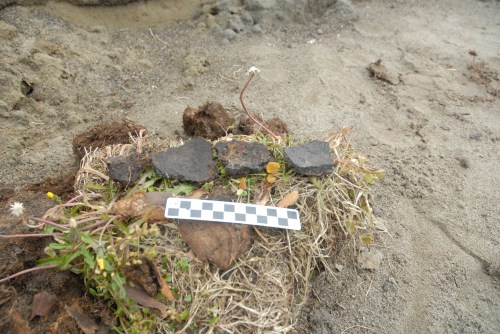
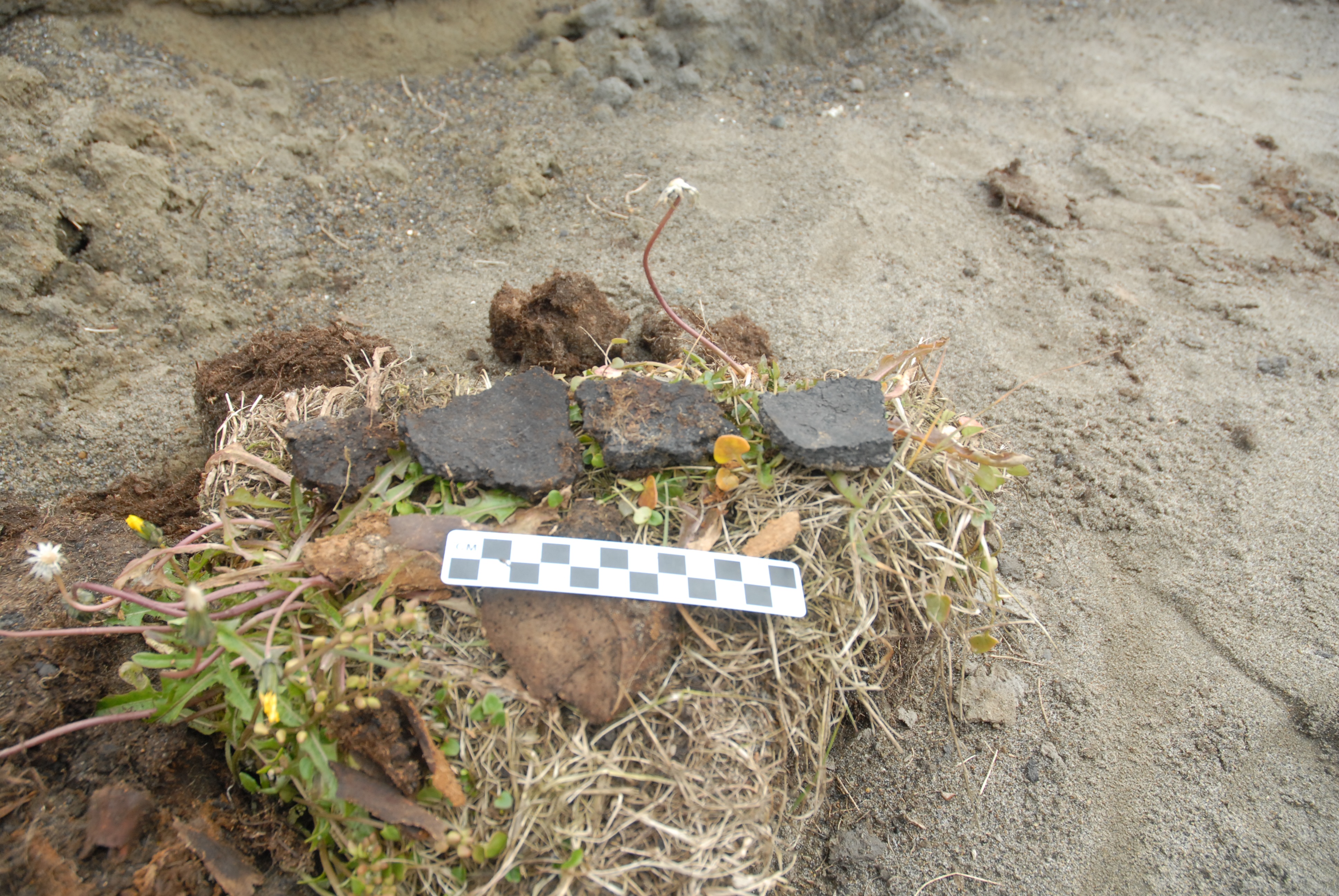
A while after we got there, a boat pulled in, and Jeff Rasic from the National Park Service (in town for a meeting at the Inupiat Heritage Center) Patuk Glenn (IHC) and Kunneak Nageak (IHLC) appeared.  They got a good tour, and spent a bit of time wandering around.  Jeff found a big sod with a lot of artifacts in it, including several very nice potsherds, one with residue, which we collected.

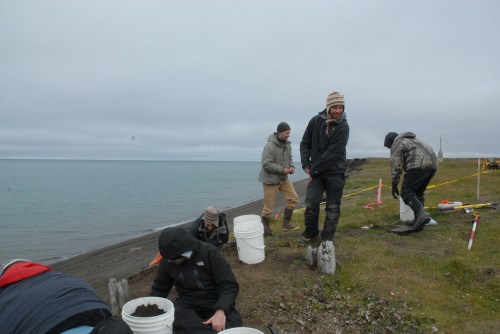
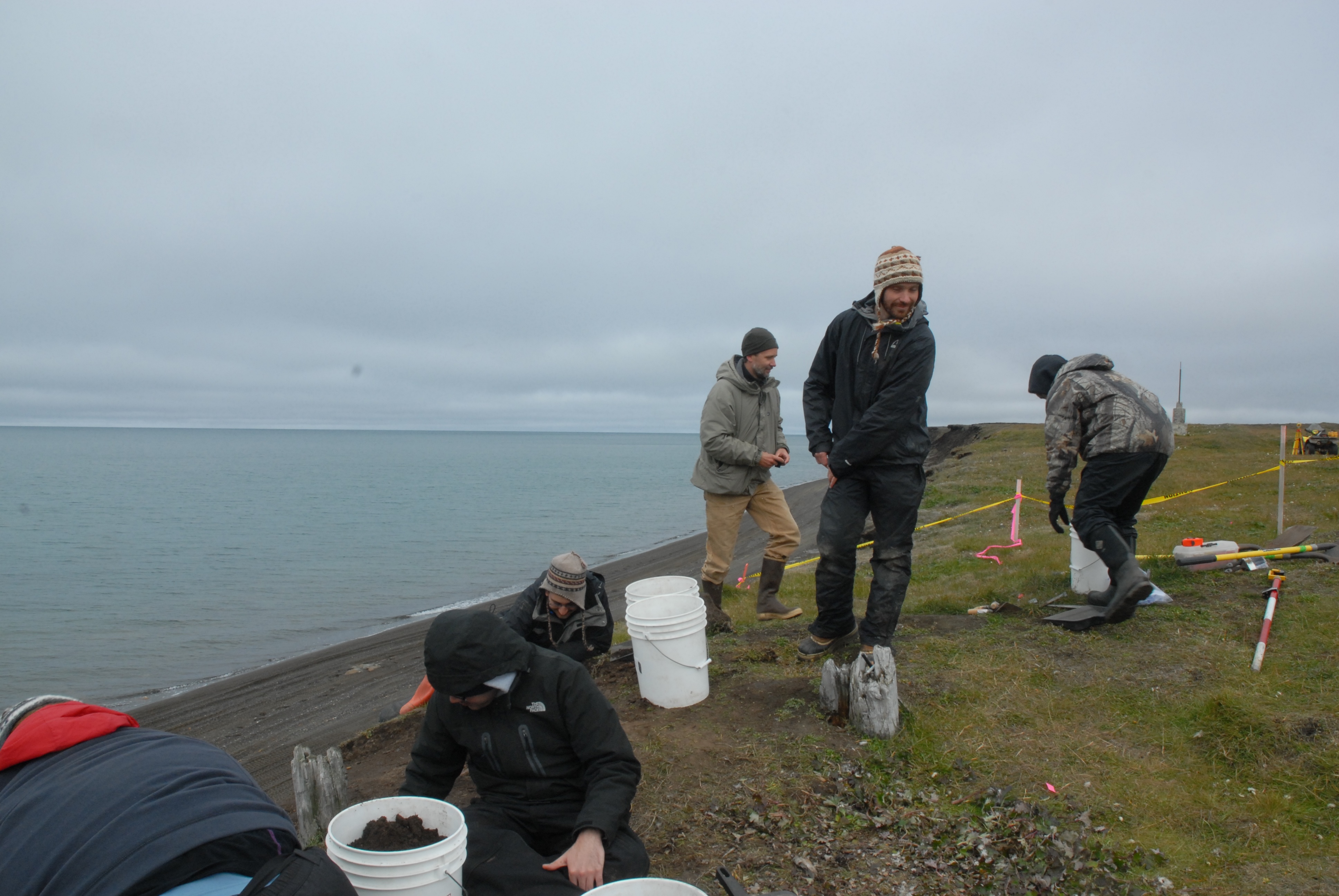
Excavation at Walakpa.
Excavation at Walakpa.  L. to R.  Marybeth Timm, Temerkin Cucukov, Michael Berger, Jeff Rasic, David Pettibone & Trina Brower.
Potsherds.
Potsherds.

The ride home was even more exciting.  Nunavak wasn’t too bad, but they were unloading a barge on the beach, so we took the old Nunavak “road” back to town.  It has pretty much disappeared back into the tundra on the middle section the last few years, and it was a very muddy ride!

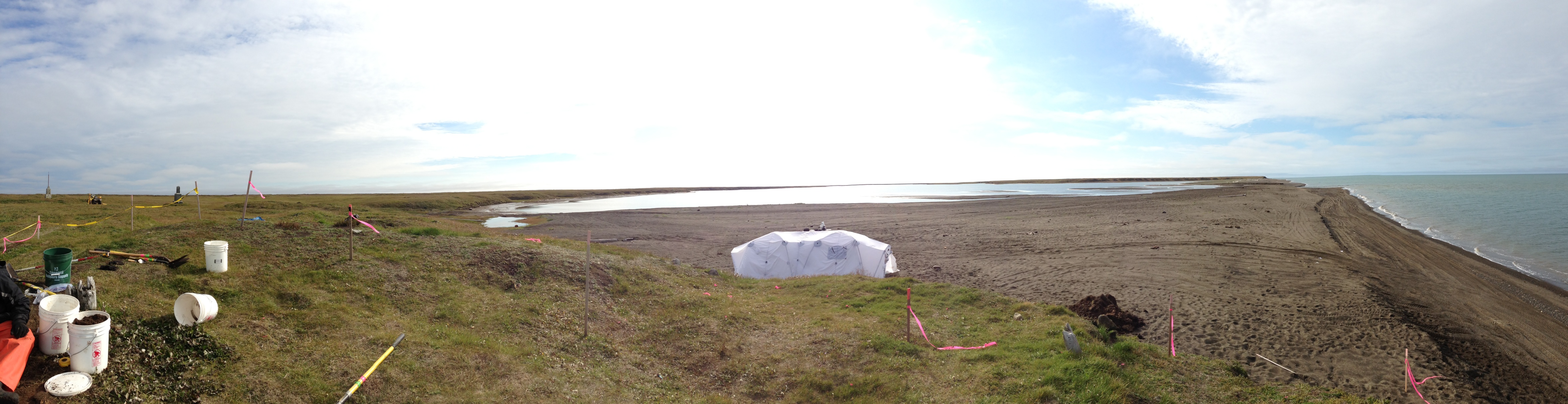
A beautiful day at Walakpa!

We went to Walakpa today.  I’d heard that Nunavak might be running too hard to cross, so we were sort of preparing for having to ride around on the tundra, which would be time-consuming and bone-rattling.  When we got there, we were able to find a couple of ways across, so no worries.

We made good progress on removing the sod & an underlying level of disturbed soil.  Aside from the fact that it contains random fragments of bone, charcoal, rocks, lumps of clay, etc, the fact that it is on top of Visqueen in a lot of places is a strong hint.

Excavating at Walakpa.

The last bits of the overhang are gone.  One fell, and the rest we cut off where it was cracking.  It looks like the ground squirrels had a tunnel where the crack was, so there really wasn’t much holding it.  Some of what came off looked like a sod wall, but it had part of a plastic eyeglasses frame in it, so it can’t be very old, or associated with the house.  We are almost at the point where we should be able to excavate normally.

It was a beautiful day.

Walakpa around lunchtime.

On the way to Aukureyri

I’m heading to Akureyri, Iceland, to take part in a workshop and a NABO Open Meeting.  It’s a fairly long trip from Barrow to anywhere, but Icelandair is now flying direct Anchorage-Reykjavik, so that’s a help.  Not surprisingly, seats on the July 4th departure were very, very cheap, so it was more cost effective to fly me to Iceland then, and put me up in Reykjavik for a couple of days before I head to Akureyri.

When I left Barrow, the ice had come back in.  I got a good shot of the only operational heavy icebreaker in the US fleet, USCG Polar Star lying off Barrow.  You can see masts belonging to much smaller vessels off her bow.  They are a French group who are trying to take a catamaran to the North Pole (it apparently can move over ice as well as water, or they hope so).  They beat  Polar Star to Barrow by a couple days.

USCG Polar Star off Barrow in the ice.

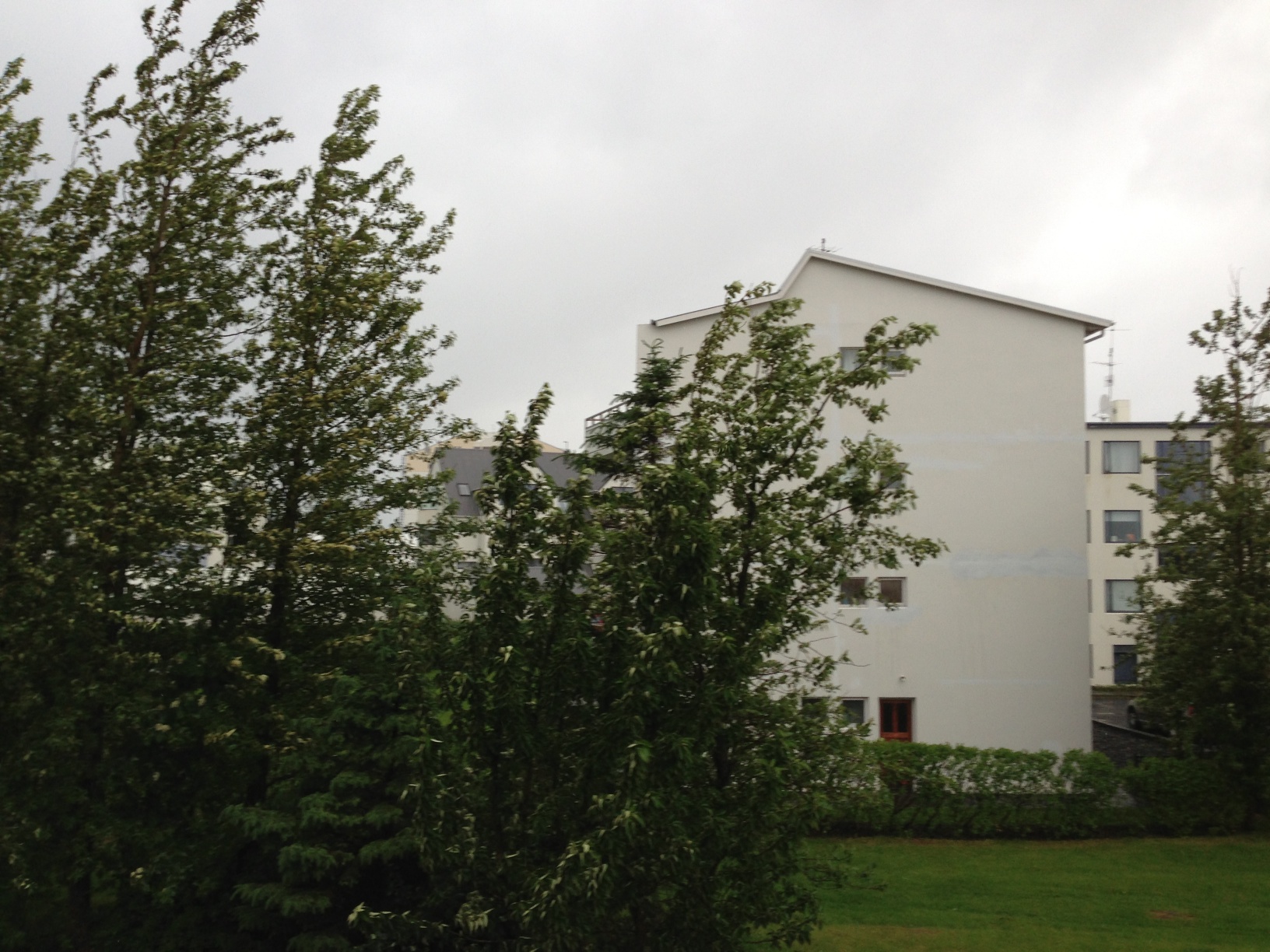
The flight from Anchorage leaves at 3:15 PM AKDT, and gets in at 6AM local (GMT) which is before bedtime in Alaska, so I didn’t get much sleep.  I was wiped, so I took a nap, planning to get up and go wandering about Reykjavik.  Alas, the weather didn’t cooperate.  When I got up, it was raining & blowing 25+.

View out the livingroom window of the B&B
View out the living room window of the B&B

So I confined my walking to a trip to the grocery store and bakery.  Lots of nice local vegetables for good prices–geothermal greenhouses can do wonders.

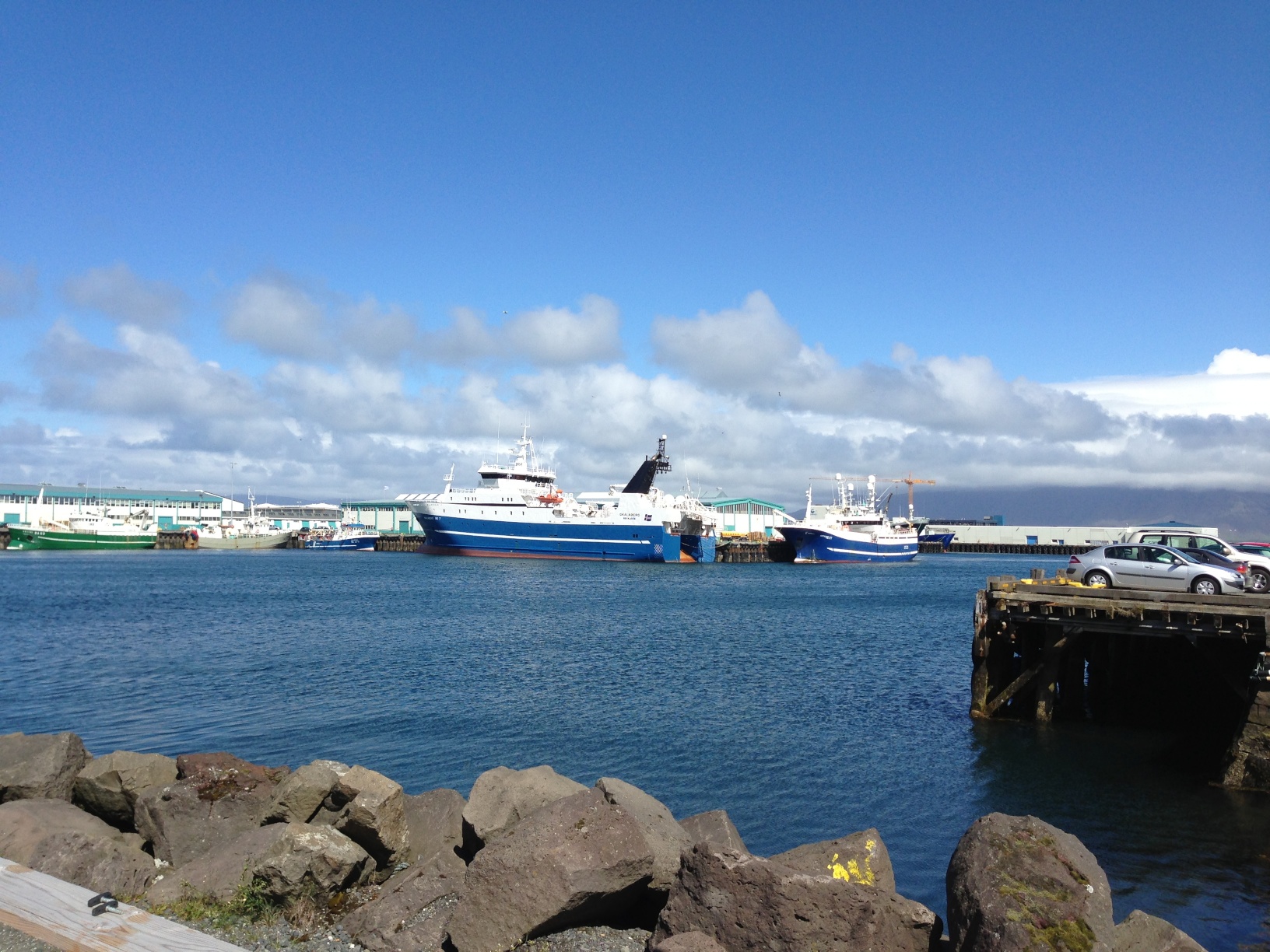
This morning the weather had improved, so I headed out to see some sights.  I had intended to check out a Danish restaurant, but wound up doing something else entirely.  I found a food truck selling grass-fed beef hamburgers, which smelled wonderful.  So that’s what I had.  Then I wound up heading down to the harbor.

Reykjavik harbor
Reykjavik harbor

The green buildings on the left are former (mostly) fishmongers’ stalls that have been converted to shops & restaurants.  I wound up getting a bracelet made of wolfish leather.  There are still the old ladders, presumably for self-rescue by unfortunate fishermen who fell in on the way back to the ship.

Ladder in the old harbor
Trawler in Reykjavik harbor.

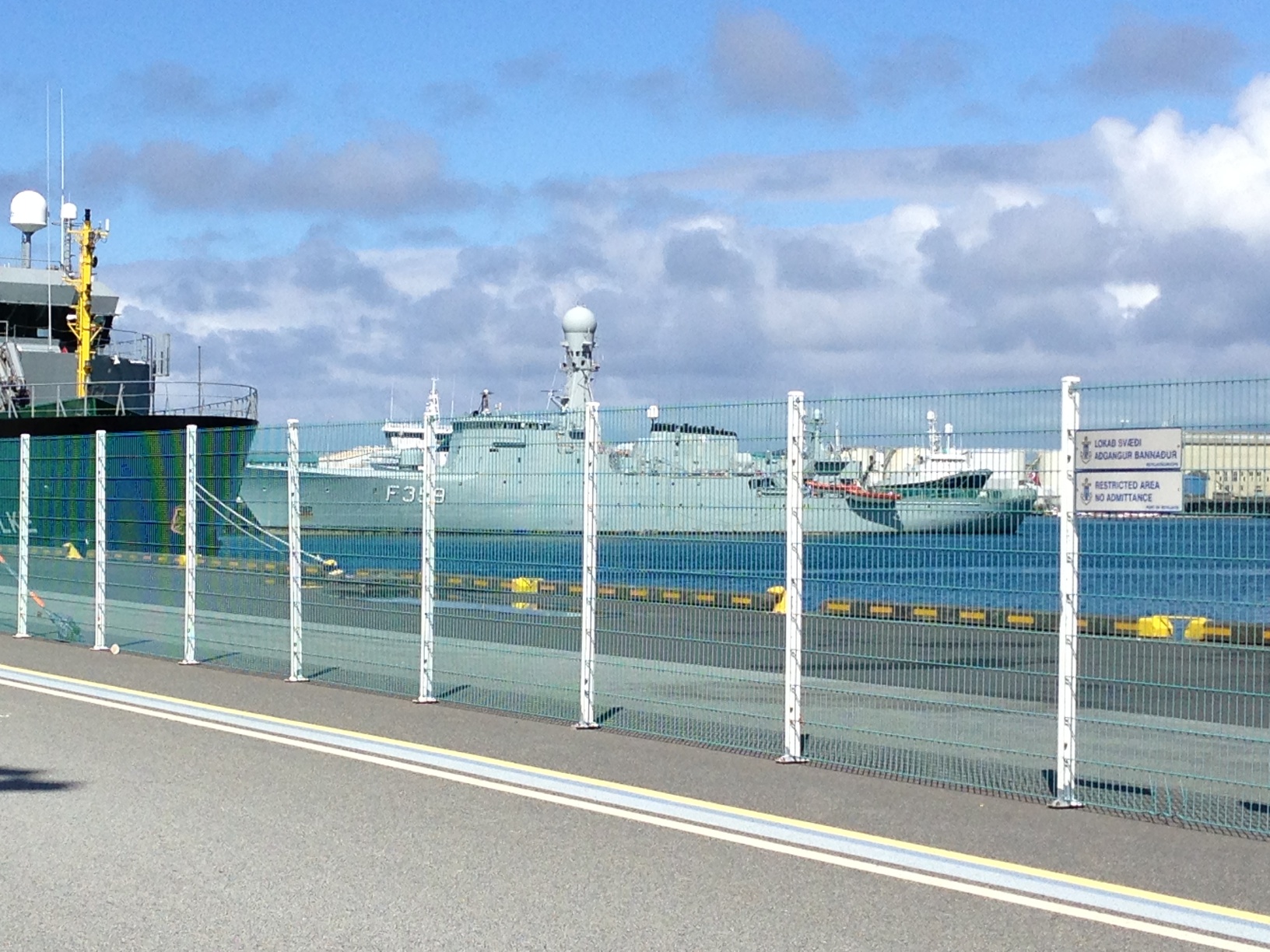
There were the expected Icelandic coast guard ships.  There were also a Danish naval ship and a German Fisheries Protection ship tied up.

Icelandic Coast Guard ships.
Danish ship.
Danish naval fisheries inspection ship, probably HDMS Triton.
German Fisheries Protection ship.

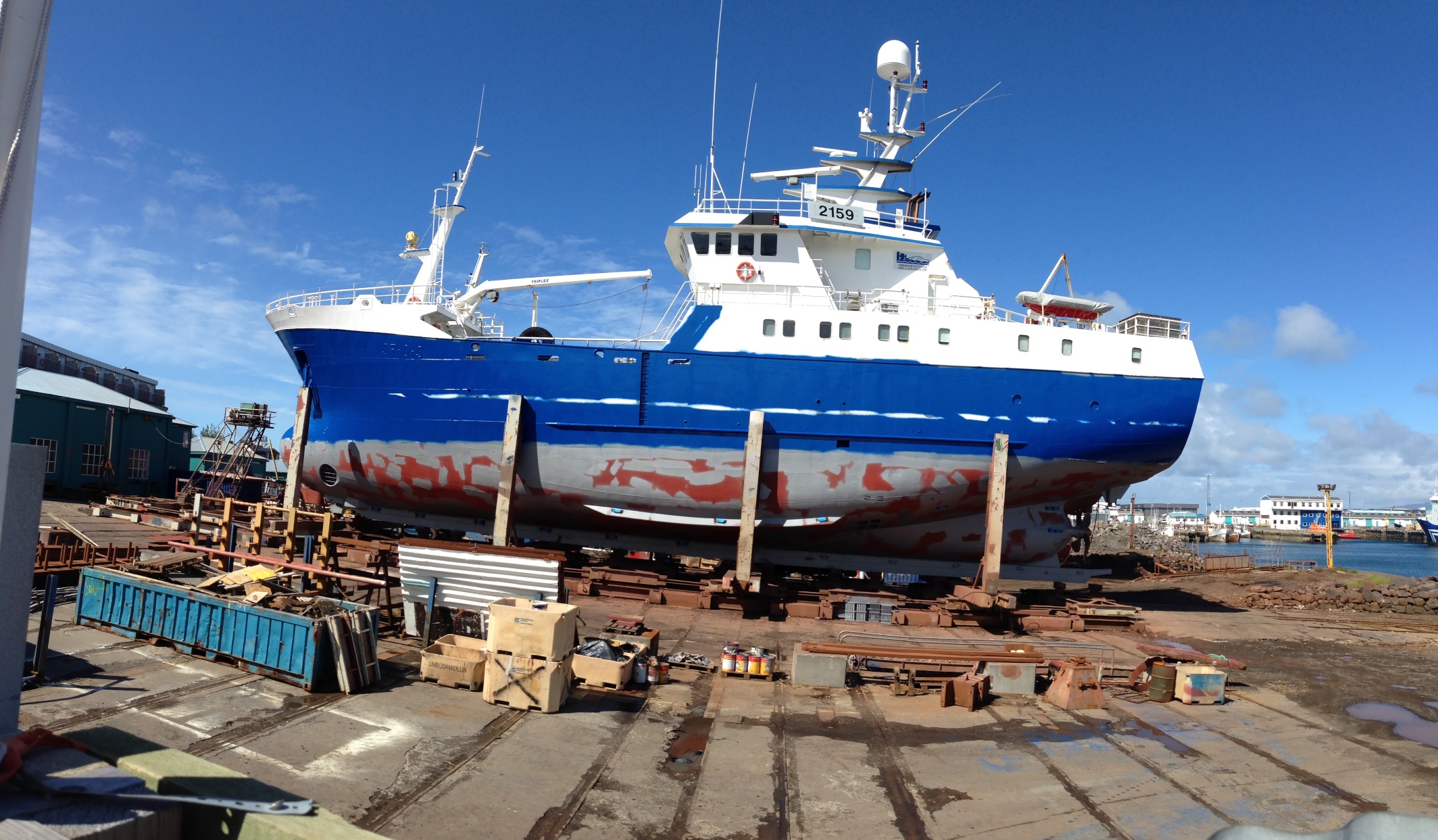
And there were several large fishing vessels out of the water.

Fishing vessel in the yard.
Fishing vessel in the yard, being scraped & painted.


Enhanced by Zemanta

A bit more about Iñupiat subsistence whaling

My post on the Anagi crew’s whale has gotten a number of comments from people who are interested, one way or another, in whales.  Some of them are genuinely interested in learning more about whales & Iñupiat whaling; others appear not to be.  I’m going to try to answer some of the questions, and provide links to sites that can give even more information.

But first,  see this Public Service Announcement.

OK, now a bit of history.  Alaska Natives (and in fact many other Native Americans and Canadian First Nations people) have been whaling for 2000 years or more, since before the Thule culture developed, based on archaeology.  Aboriginal whaling did not damage the whale stocks in any way that can be detected.  What damaged whale stocks was European (and later Euro-American) commercial whaling.  The bowhead was popular with commercial whalers because it was non-agressive and had a lot of blubber for whale oil, plus long baleen.  Most Eastern Arctic stocks were decimated by the early 19th century.

In the western North American Arctic, commercial whaler Thomas Welcome Roys first cruised north of the Bering Strait in 1848, starting a rush to catch the plentiful and naive Bering-Chukchi-Beaufort stock of bowheads on which so many coastal Alaska natives and their inland trading partners depended.  The whales soon became skittish and scarce and many Alaska Natives died of starvation.

Once oil was struck in Pennsylvania, one of the big reasons for hunting whales diminished.  But the baleen, the plates in a whale’s mouth that they use to filter-feed, was still valuable for buggy whips and corset and collar stays.  Bowheads have by far the longest baleen of any whale (15 feet or more from a big whale), so they were still hunted until those items were no longer in fashion or needed.

Many coastal Alaska Natives had become involved in commercial whaling, including shore-based commercial whaling carried out with traditional Iñupiat techniques with Yankee style harpoons, to support their families.  After commercial whaling ended, coastal whaling communities continued these hunts, combining traditional techniques and traditional and modern technology.

In the late 1970’s, some Western biologists, who were not experienced in the Arctic and knew little about bowhead whales (biologists didn’t back then) tried to count bowheads.  They believed that the whales were scared of ice!  They thought the bowheads had to travel in a lead and would come up to breathe in the lead so they could be counted.  Even if that were true, they didn’t account for the fact that there are multiple leads, and that the whales only have to breathe every so often and that wouldn’t necessarily be where the observation post was.  They came up with a count of several hundred whales, and of course, sounded the alarm.  A moratorium was declared on Alaska Native whaling in 1977 (years before the moratorium on commercial whaling, I might add).

Since many families got (and still do get today) a significant portion of their meat from whales, this was a huge problem.  Although wages may look high in places like Alaska’s North Slope, costs are high too, and many families do not have someone who is working in the cash economy and can afford to feed a family on store food and whatever else they can hunt (and of course full-time work does interfere with hunting, which was traditionally a full-time occupation itself).  Most Iñupiat had never heard of the International Whaling commission, and couldn’t understand why they felt it appropriate to starve human beings by forbidding them to feed themselves.

They were particularly puzzled because senior whaling captains and hunters who had spent many decades on the ice had observed that the bowhead population appeared to be growing from the depths it had sunk to by the end of commercial whaling.  They knew that bowheads are not scared of ice.  In fact they can breathe under quite thick ice (they become positively buoyant and use the bow on their head where their nostrils are to push up the ice, cracking enough to let air into the little tented space formed under the ice and breathe there, and then submerge and go on about their business), and that they would not restrict travel to the near shore lead, so they knew the count was wrong.

The North Slope Borough Department of Wildlife Management, with many cooperating researchers over the years, has been studying bowhead whales ever since.  They soon developed a much better way to count them, which is continually refined.  Counts now show an annual rate of increase of 3.2%, which is really high for such long-lived animals.

The Alaska Native Bowhead hunt is highly regulated.   The Alaska Eskimo Whaling Commission (AEWC) manages the hunt under authority from the US government.  There is a quota of strikes (not whales taken, but whales struck so there is an incentive to land every whale struck if humanly possible), which is established based on document subsistence needs of each whaling community, in light of the population estimates. This quota is set so that communities get what they need and no more.  The harvest is considerably below what population biologists would consider a sustainable harvest if they were talking about elk, or caribou, or mule deer.  As long as something else, like marine noise or a massive oil spill in Arctic waters, doesn’t come along and decimate the population the way commercial whaling did, this is absolutely a sustainable harvest, carried out by people who entire culture is centered around that harvest.

The AEWC divides the quota between communities, based on active crews and population, and approves the transfer of strikes between communities (if, say, the ice is bad in one place and they can’t catch whales, they may transfer their strikes to a place with better conditions) since the maktak and meat is shared and everyone on the North Slope and beyond benefits if whales are taken.  Only captains and crews registered with the AEWC are allowed to take whales, and violations of rules, ceasefires, etc can and has led to punishment or suspension of the offending captain.

When a whale is taken there are traditional rules for sharing which vary by community.  In general, specific shares go the captain, the boat (itself–although obviously the boat owner disposes of the boat’s share), the harpooner, the other crew members, and the other boats which helped tow the whale back to be cut up.  Anyone who shows up to help with the butchering (even a little) gets a share.  My daughter helped a very little once when she was about 8, and she came home with a small share.  The captain’s wife and her helpers cook round the clock after the whale is ashore, and when they are ready, the captain’s flag is hoisted and anyone who wants can go and get fed (they will usually send to-go plates to house-bound Elders).

After that, the captain and crew get ready for a celebration where a great deal more of the whale is shared with whomever shows up.  People get whale meat, maktak, kidney, intestine, tail, flipper, gums, plus goose soup, mikiaq (whale blubber, meat & blood, fermented–and before you say gross, when was the last time you ate curdled drained milk with mold on it–AKA a nice Stilton or Brie?), rolls, cakes, fruit, etc.  Most families in the community go to at least one of these every year.  Many go to all of them.  The amount given to each person depends on how many in the family (and the servers pretty much know or the people sitting around do, so no one fibs).  Captains also give out meat & maktak at Thanksgiving and Christmas feasts to whomever shows up (usually much of the community), and usually will provide some for potluck and other festivities as well.  They also share with Elders & folks who need it during the year.  Most of the folks with whom it is shared share it farther.  Shares travel to Anchorage and even to the Lower 48.  Some of the people who get shares send back things like berries or smoked salmon from their area, or caribou from the interior.

None of the whale, or any other marine mammal for that matter, can be sold, with the exception that Alaska coastal Natives can use baleen or bone or ivory to make handicrafts, which they then may sell.  They are not allowed to waste the rest of the animal just to get these products.

There is a great list of links to good solid information on the bowhead whale and bowhead hunt here.

Enhanced by Zemanta

Finally, a whale for Barrow! Yay, hey, hey!

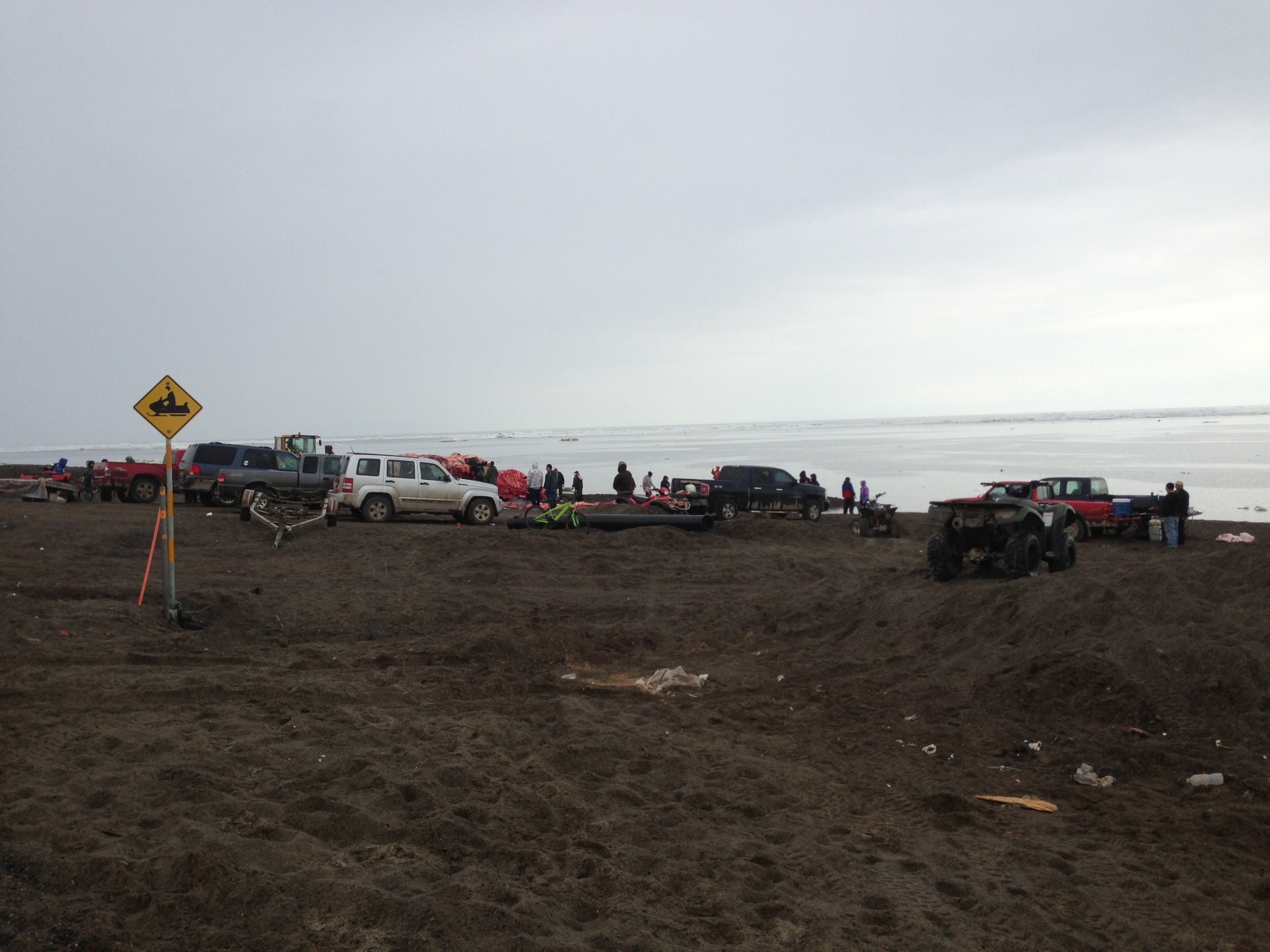
Yesterday and today were great days for Barrow.  Last night, showing real persistence in the face of very discouraging conditions this spring, a number of crews went out.  Anagi crew took a 54 footer, the first whale taken in Barrow this spring (or summer, as some of my Facebook friends pointed out).  The whale reached the beach just after midnight, according to Coby, who took a picture of the landing at 12:05 AM.

I had gone to bed early, trying to make up for sleep lost due to something or other wrong with my shoulder, and slept right through it.  None of my co-workers did.  I got a call at 7AM from Trina, who had been helping all night and had realized she couldn’t stay awake for work (or give rides to the others).  I headed for town.  I stopped at the whale first.  As you can see, the weather wasn’t great, as it often isn’t in the morning in summer, and it actually started raining pretty hard while I was there.

Approaching Anagi crew's whale.
Approaching Anagi crew’s whale.
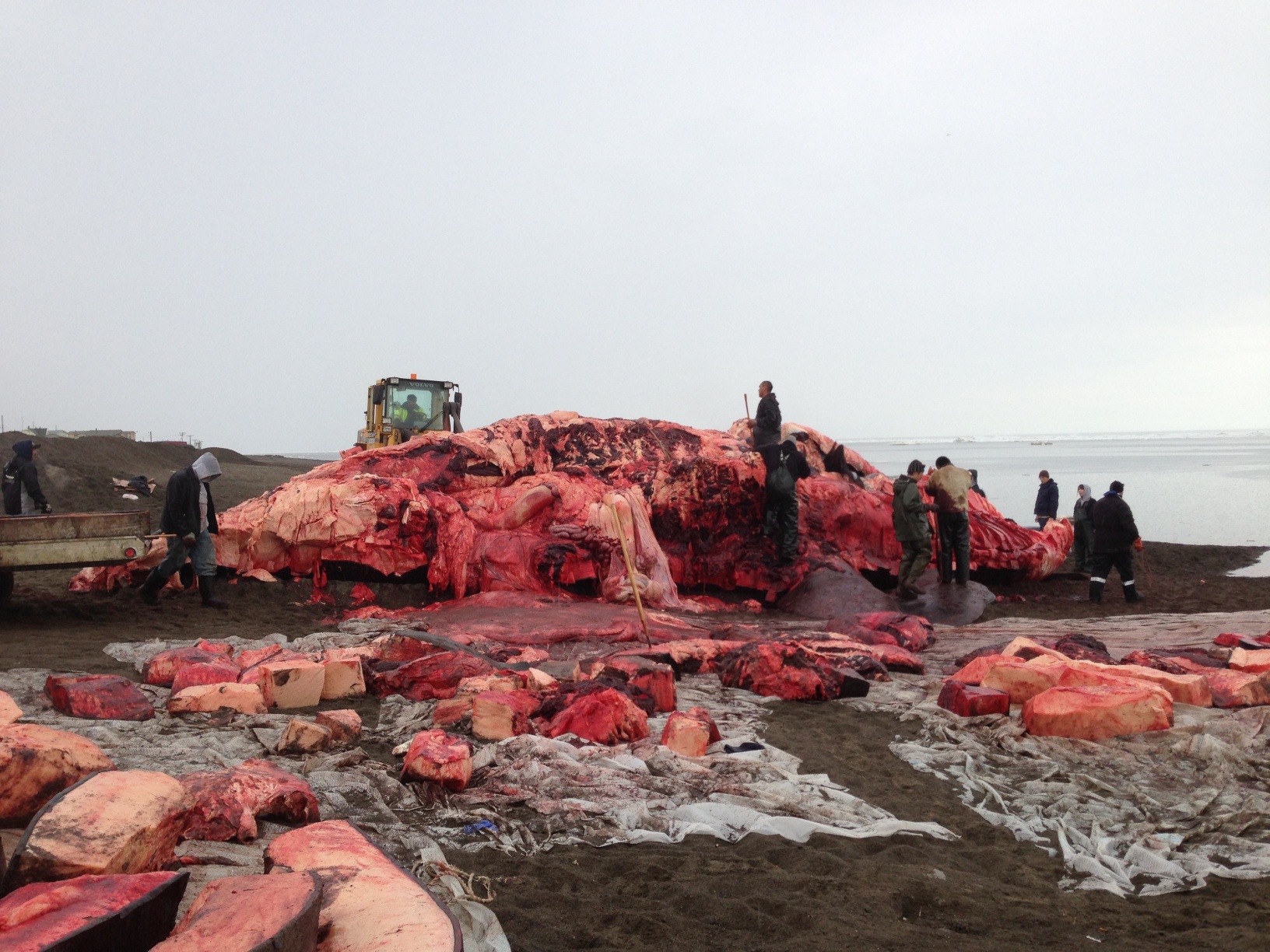
About 9 hours into the butchering.
Shares of maktak waiting to be put away.

A bowhead whale weighs roughly a ton a foot, so cutting up a whale this big involves a tremendous amount of labor.  People had been working for about nine hours at this point, and still had a way to go.  The maktak (skin & blubber–very tasty indeed) was mostly off.  There was a bit waiting to be taken either to the captain’s cellar to be put away or divided as shares, but a lot of it had clearly already been taken care of and put away.

I thought a panorama of the scene might be interesting, so–thanks iPhone.

Panorama of Anagi whale being cut up on beach in Browerville, June 27, 2013.

After that, I got Coby, who had apparently only been at the whale until 2:30 AM, & we tried to find RJ, with no luck.  Went back to the BARC to discover a message from my assistant Tammy, who had been at the whale until 4AM, saying she would be late.  Since she is Michael’s ride, he wasn’t there either.  Coby & RJ started working, and I started trying some VZAP troubleshooting, which required running a logger while trying to access the site and then forwarding the logs to the VZAP team at ISU.  I hope it helps, and we don’t discover the problem is just awful connectivity.  Jan, the middle school teacher who is volunteering, wasn’t in, but she rides her ATV to the lab, so we figured she had decided the rain was a bit much.  After I finished with the logging on the computers, I fired up my email, to discover one from Jan saying she had apparently slept right through her alarm, because she’d been at the whale until after 2 AM!  Coby and RJ decided to call it a day around noon, to go back to the whale.

All this made for limited progress in the morning.  A good bit of the afternoon was taken up with things connected with various non-archaeology projects I manage.

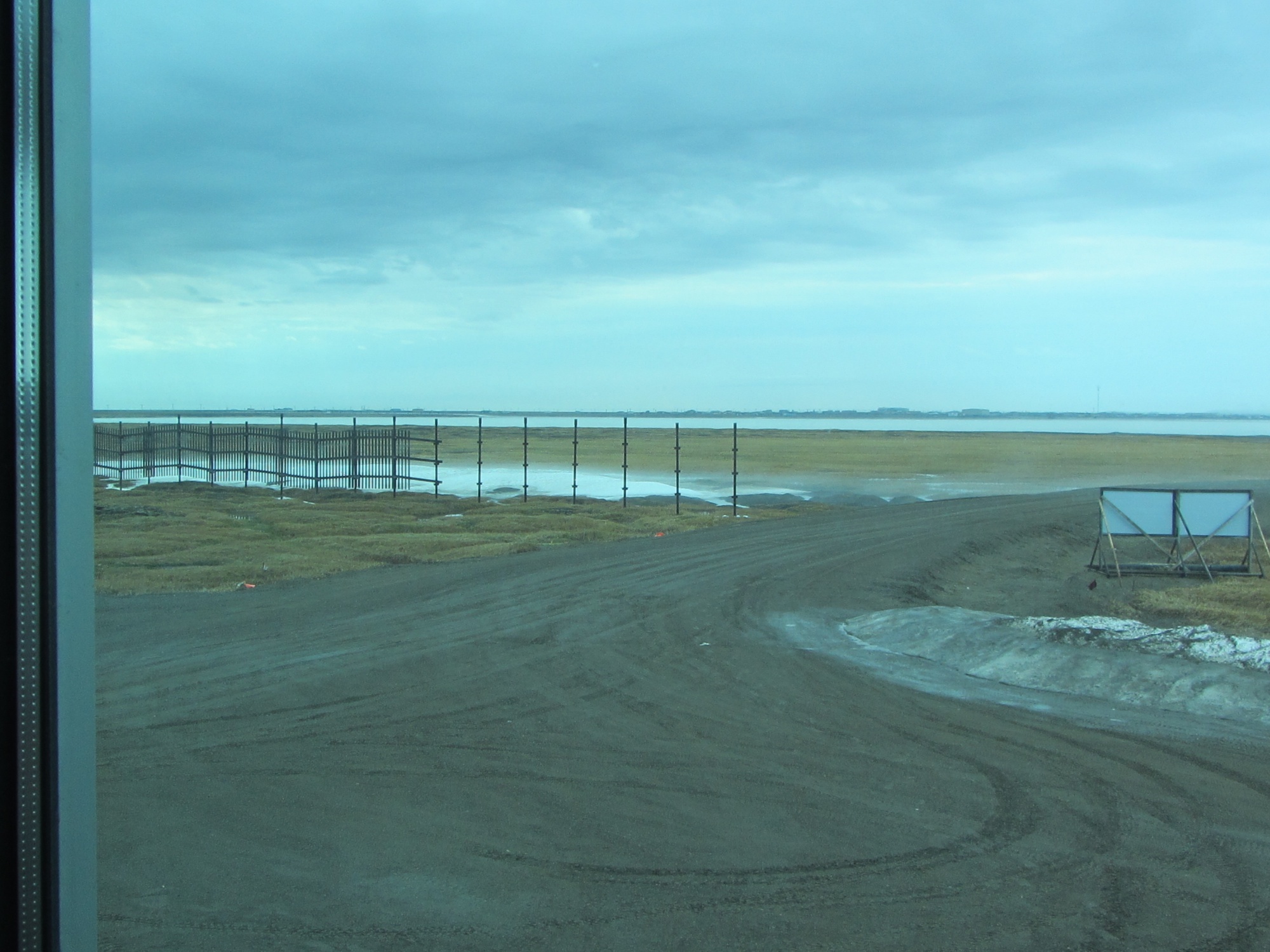
The weather warmed up a good bit later, and the south wind was actually ablating the snow in the drifts by the snow fences, making fog billow off them. It was pretty spooky looking.

Fog coming off the snow banks.
Enhanced by ZemantaADDED  7/1/2013:  If you don’t think people should hunt whales, well, it’s a free country and you are entitled to your opinion.   But before you try to post a rude comment, please check here and here.
A bit of interior decoration

We’ve added a couple of new student hire for the summer, but still have room for one or two more, so if you are interested, get in touch ASAP!

With the larger crew, we have been working on getting some of the Pingusugruk collection sorted and in proper archival boxes.  We need to move the container it was in, so we’d have to move the boxes anyway, and this way we can not only record which bag is in which numbered box, but also sort the “Tamis” bags, which are the 25% random sample drawn at time of excavation from the rest, to make future analysis easier, and find the rest of the bags from the column sample that Rebecca Connor & Angelique Neffe started on, so I can finish that analysis.  Most of this work is being done by our adult volunteers.

The students worked on this a little, mostly to get it set up so the volunteers can work easily, and also to get more room on the lab benches, so that they can work on the Nuvuk materials with no chance of things getting mixed up.  In the process, we had a number of animal bones that were collected on the beach or tundra and donated to us.  Some of them have been labeled as to species and element, and are being used to help with the preliminary sort and cataloging of the materials from Nuvuk Locus 6 midden.

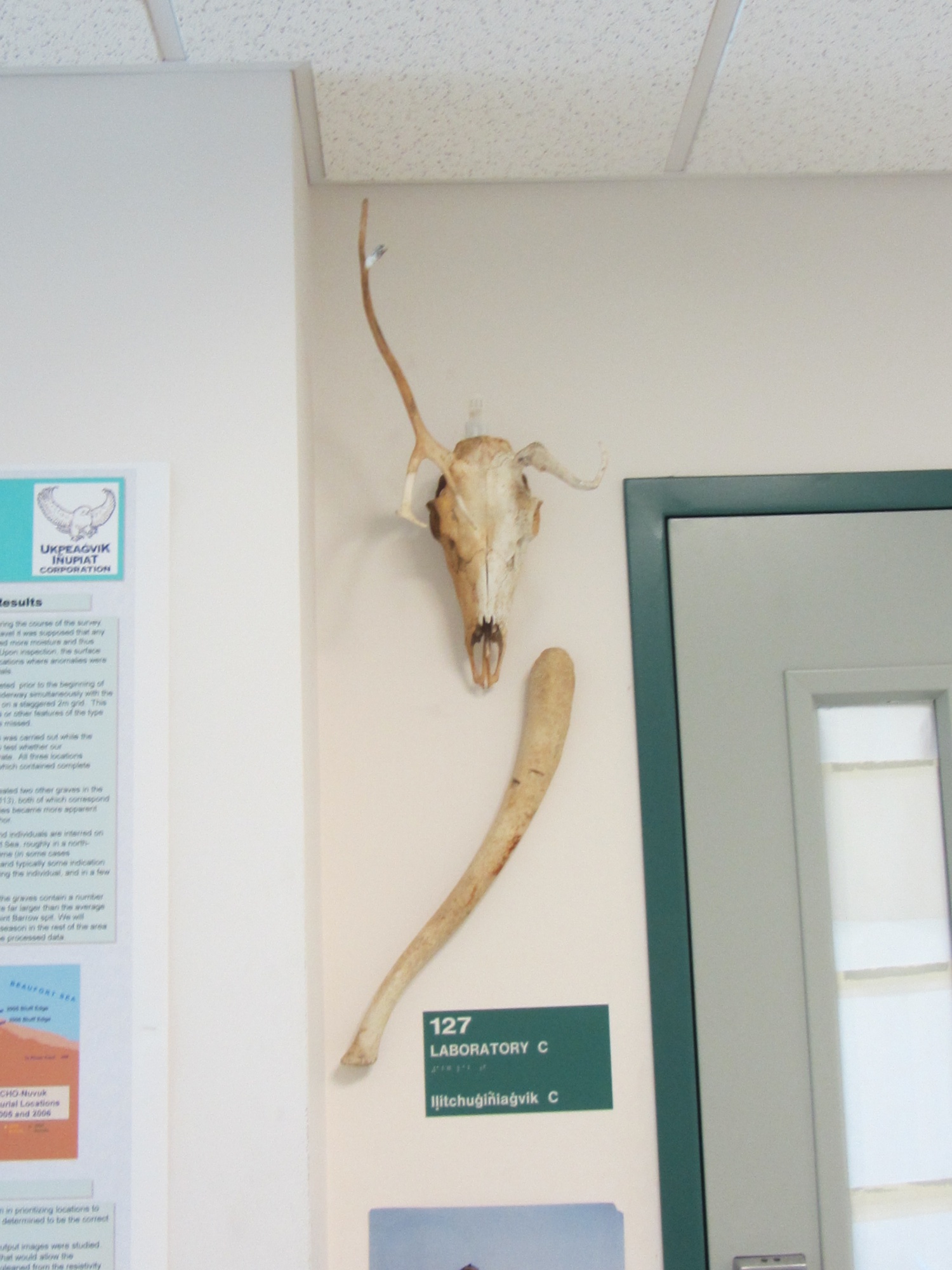
There were a few things which were sort of superfluous, like a caribou skull.  The students really wanted to use it as a decoration, so with a little glue to keep the teeth in, it was suspended outside the door (using peel-off hangers of course to avoid damaging the wall.

The caribou skull
The caribou skull

Apparently, they found something else they felt was not necessary to include in the comparative collection, either because we haven’t found any (we haven’t) or because they figure everyone already knows what it is.  The next day, this is what the door looked like.

A addition to the decor
The new addition is a walrus baculum, often known as an oosik.  I doubt some of the visiting scientists know what they are looking at :-).

Enhanced by Zemanta

Article on Nuvuk Project available Free Access for the rest of January

I just got an email from the editor of Polar Geography, the journal in which on of the articles I have been working on over the past year or so was recently published as part of a special issue on Arctic Community Engagement during the 2007-2008 International Polar Year.  He has been able to arrange for several of the contributions to the issue, including my article, to be available Free Access (no pay wall) until the end of January 2013.  My article is here, and the contents of the entire issue, with links to the various articles, is here.
This is a limited time offer, so if you are interested, head over there now.  You should be able to download the free articles to read later.


Enhanced by Zemanta

A trip to the nation’s capitol

Last week I went to Washington, DC.  I went for the 18th Inuit Studies Conference.  The Inuit Studies Conference happens somewhere every two years, and this year it was hosted by the Smithsonian.  I was a co-author on a paper on aDNA from the North Slope (I provided the archaeological background), and I wanted to hear it, as well as a couple of other Arctic genetics papers.  I also wanted to get together with several folks I collaborate with who were going to be there.  Sometimes face-to-face is better than Skype between Europe & Alaska.

Because of the Smithsonian hosting, it was a bit of an odd conference.  There was no main conference hotel.  Events & sessions took place at three different venues distributed around the mall, which in many cases made it logistically impossible to catch a paper in one session and hop over to another session.  The program didn’t have times set for papers, so it was tough to know when folks were talking even if the sessions were next door to one another.  And of course there was the usual problem of all the papers on a topic being scheduled in sessions which were opposite each other!  Despite the challenges, there was a very interesting Paleoeskimo session, which I was able to go to 2/3rds of.  I had to miss the end to go over the National Museum of the American Indian (NMAI) to hear the paper on Nuvuk (given by Justin Tackney) and one on the North Slope modern genetics given by Jenny Raff.  They were in a session with papers on 1) Unangan myth and magic, 2) theriomorphic imagery in the Liangzhu culture of China and Old Bering Sea, and 3) the Sealstone (a large petroglyph which was probably from Shemya in the Aleutian Islands, although it had been removed to a garden in California and the folks who were trying to return it to its home weren’t quite sure.  It was a bit incoherent.

All this happened opposite what looked like a very interesting session on ethnology and one on education with a number of my friends from the North Slope in it.  The next day I went to a session to hear a couple of archaeology papers, which were in a session with a paper on Greenlandic theater and a paper about a novel about Greenland.

I arrived to find my registration had gotten scrambled, so that there was no banquet ticket (and they were sold out).  A 1-day registration was $100, and the full conference was $325.  Even though I was only able to stay for 2 days, I had to pay the full conference fee!  It didn’t seem quite right, but there was supposed to be a free book included.  Unfortunately, they were out of all the books that I didn’t already own, and even though they kept saying more copies would come, they never did…  Hauling an extra copy of a book back to Alaska in my carry-on didn’t seem that attractive.

While I was there, it became clear that Sandy was going to play havoc with my planned return to Alaska (by way of my Mom’s in upstate NY).  That in turn would mess up plans for a trip to Valdez for an Arctic Visiting Scholars speaking tour and Seattle for a workshop.  I had to spend some time on the phone moving the travel up a day, and changing the routing out of Albany to head Alaska by going west to Minneapolis instead of south to Atlanta.

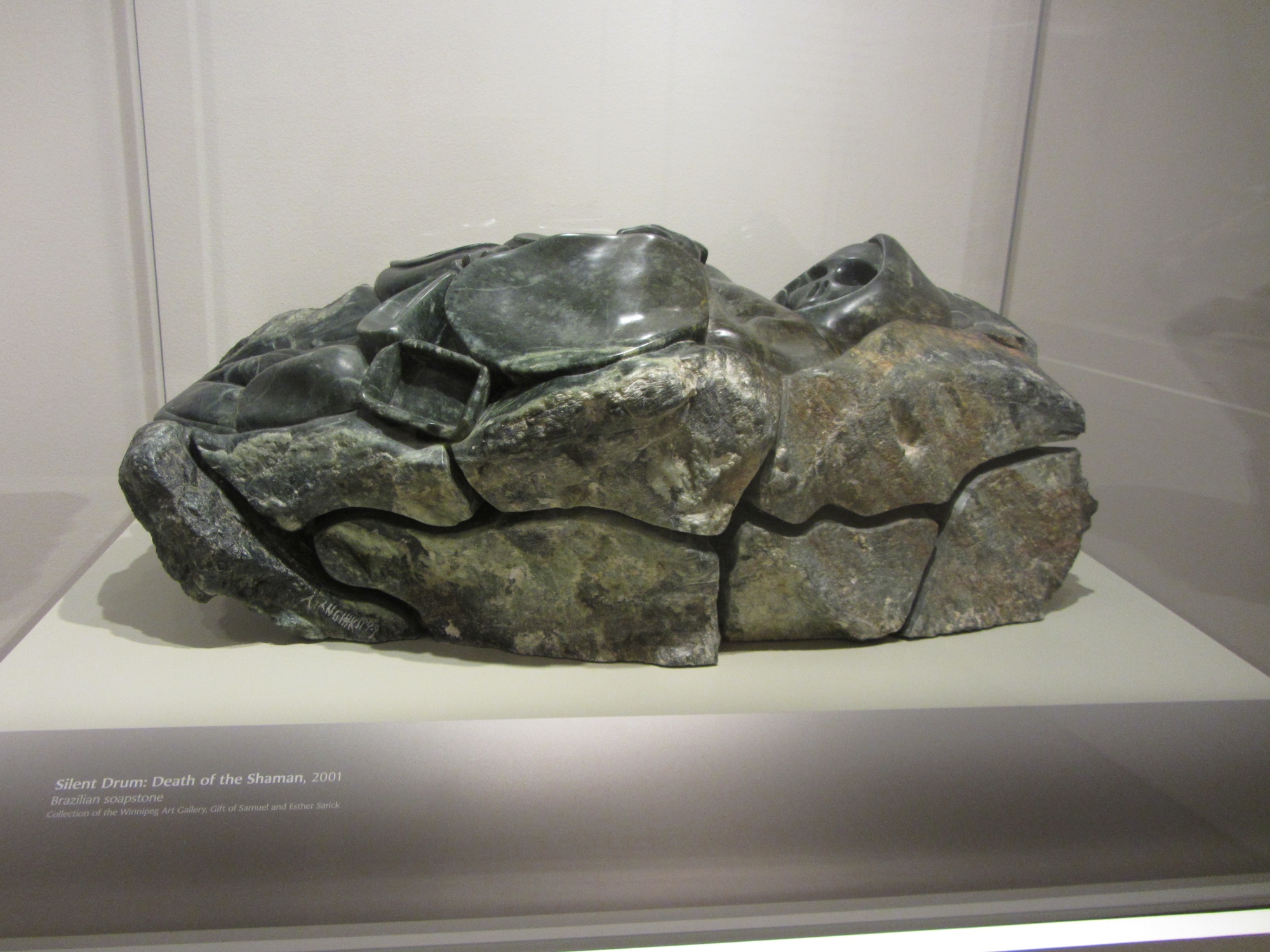
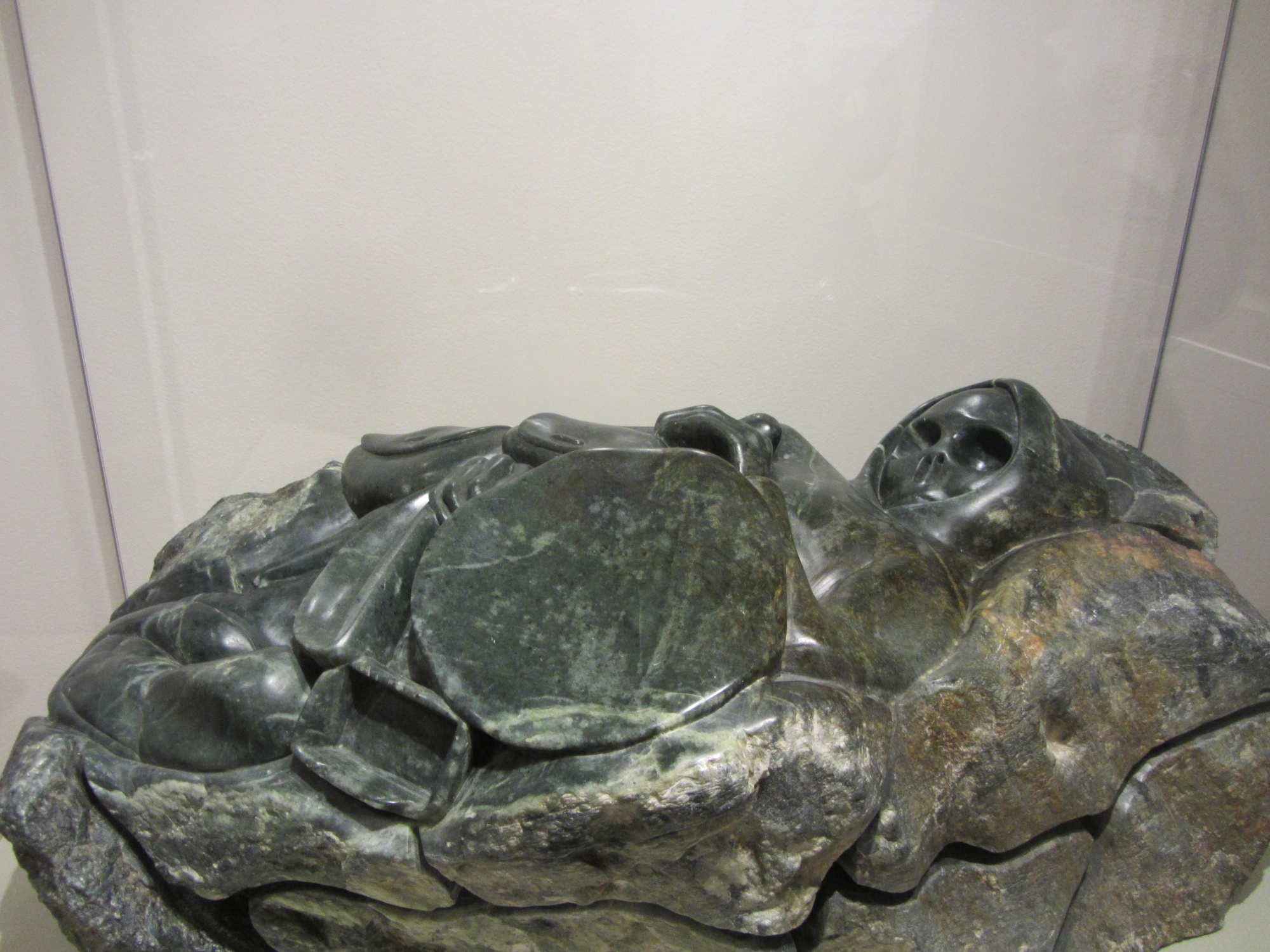
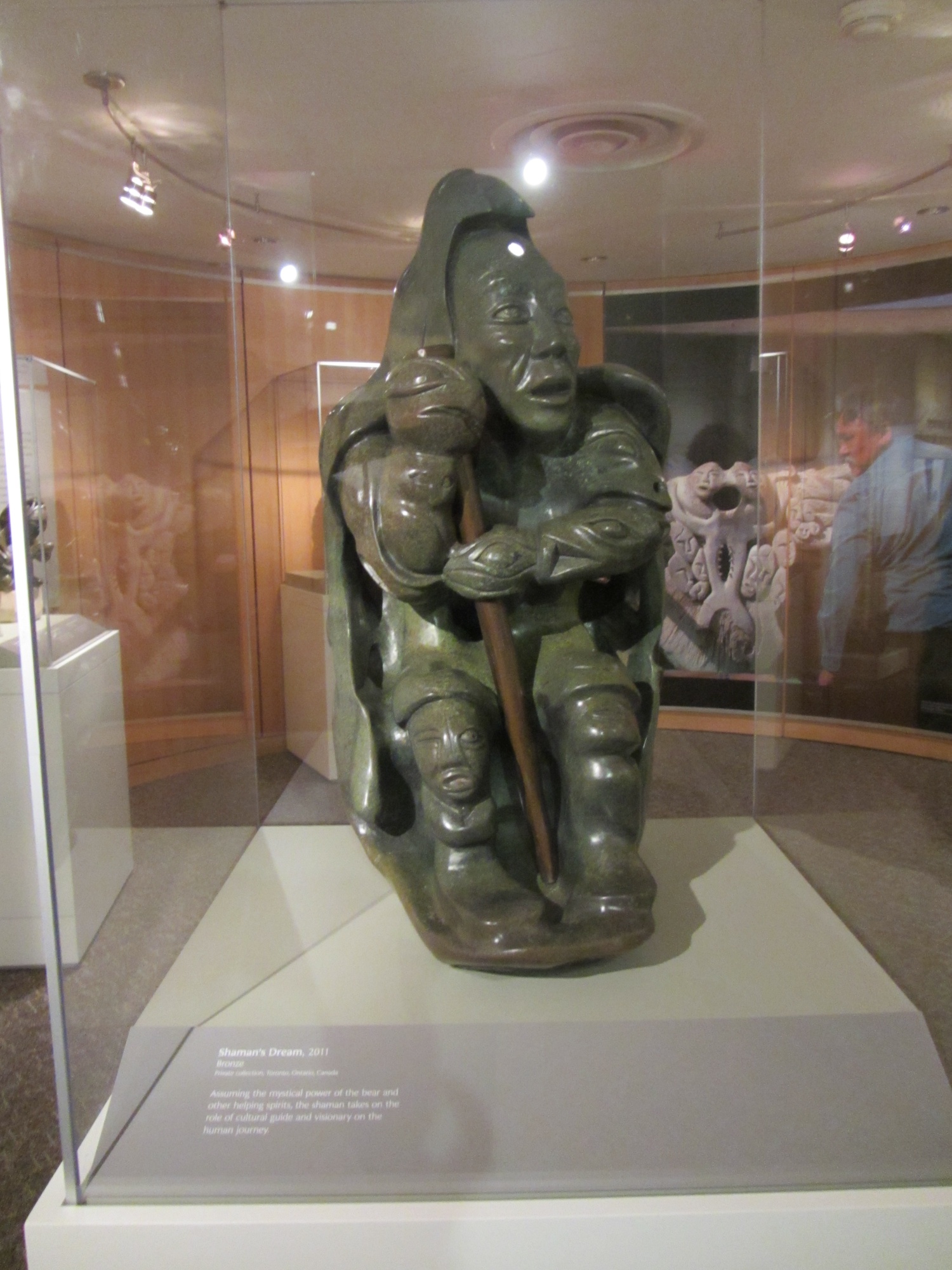
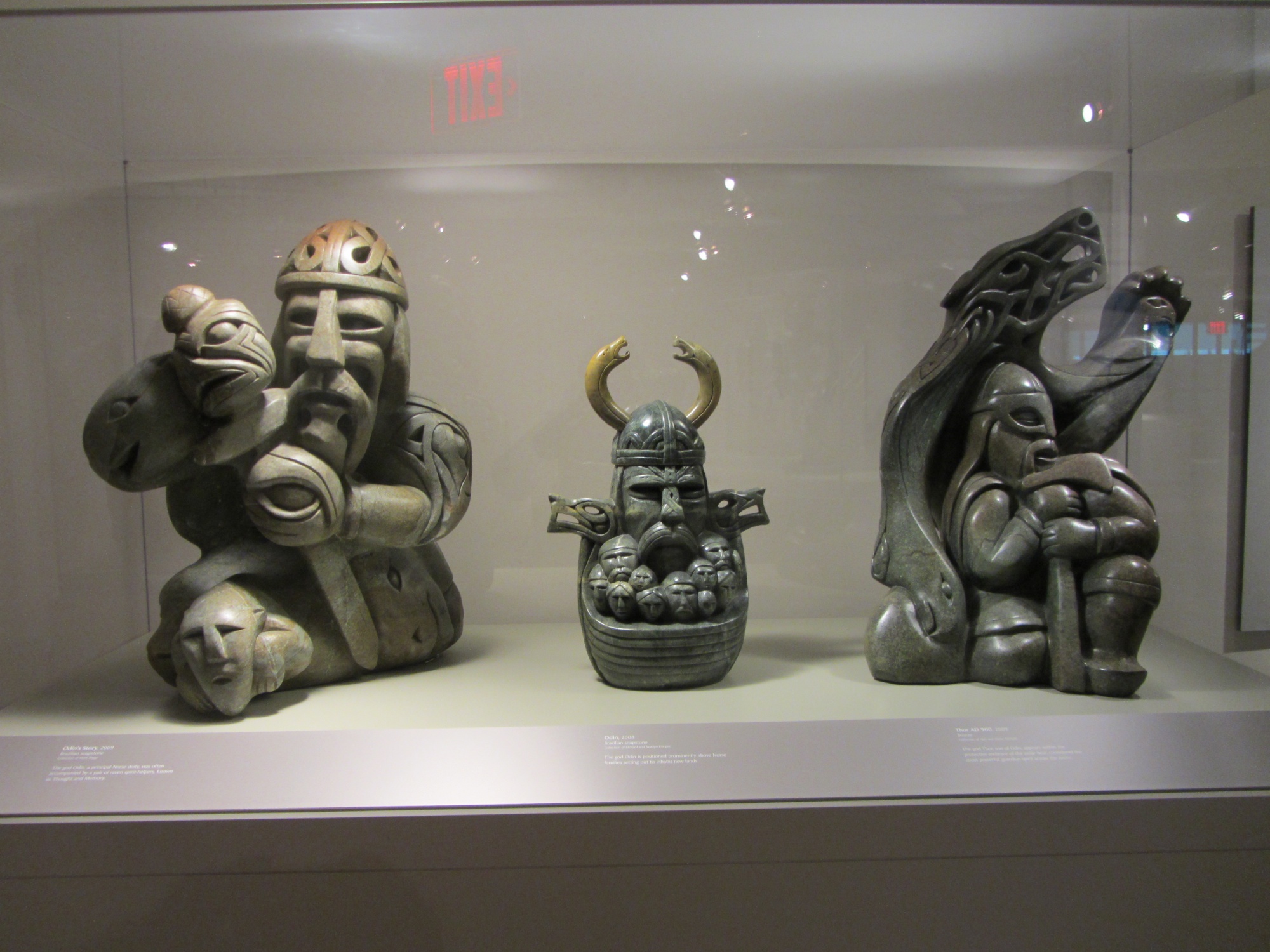
One of the pluses of the various venues was getting to see a special exhibition at NMAI of the sculpture of Abraham Anghik Reuben.  His work was using aspects of the lives of the ancient Norse and the Thule whalers.  There is a Flickr photo stream with professional pictures here, but I took some too.  My favorite of all was Silent Drum: Death of the Shaman.

This piece is so powerful.
Enhanced by Zemanta

The artist captured the way it would look in amazing fashion, given that he is working in stone, not with soft material.
This blind shaman’s eyes are astounding. You can see the cataracts (at least in person).
Odin, his ravens, & other Norse being.

How to get writer’s cramp

I’m almost done with the last of the papers I (over)committed to.  I am waiting for one reference and the encyclopedia entry on frozen sites will be done.  I’ve got a few more references to add and a few more C14 dates to calibrate and the chapter on North Slope archaeology for a Point Hope bioarcheology volume will be ready to go off for review.  I have a general NS archeology document that I wrote and update on a regular basis that I use when people ask for background.  Because the available information about the published C14 dates from some of the earlier sites is not really sufficient to calibrate them (and the archaeologists haven’t published calibrated dates) I had been using BP (before present–present being 1950) dates in this, but decided that I needed to bite the bullet and get some calibrated dates.  Some more recent work has resulted in calibrated dates being available, so I can at least give date ranges for the various cultures in cal years, which should be an improvement.
I started to work on the two NSF proposals that are up next.  I am working on both a RAPID and a regular proposal for work on the Ipiutak component at Nuvuk.  Unfortunately the NSF Fastlane web site wouldn’t let me see any of the PDFs that it converts things to.  I’ll have to take this up with their tech support in the morning.

Enhanced by Zemanta