
We’re back from Walakpa, most of the gear is cleaned up and put away, and initial sample processing is done. We couldn’t post from the field, so I’m going to put the posts up a day at a time.
Tag: Walakpa
A day in the lab
I spent much of Friday in the lab, selecting items from Walakpa to send off for radiocarbon dating. We had a reasonable set of samples from 2013 and funds to run the dates, but given that that entire area is gone, I wanted to get some idea of how old some of what was exposed this fall is. That meant I had to make some choices about what got sent and what didn’t.
We had managed to collect several caribou bones, but most of them were ex situ (not in their original location). There are also several samples of plant material from known locations which are much more likely to be informative. Everything had been frozen as soon as it came in from the field due to the aggressive mold we had had to deal with last year. For carbon dating, the lab needs to have a certain minimum weight to work with (varies by each type of material), which means that the samples had to be thawed enough to allow them to be split, cleaned, and dried enough to make sure that the weights were accurate.
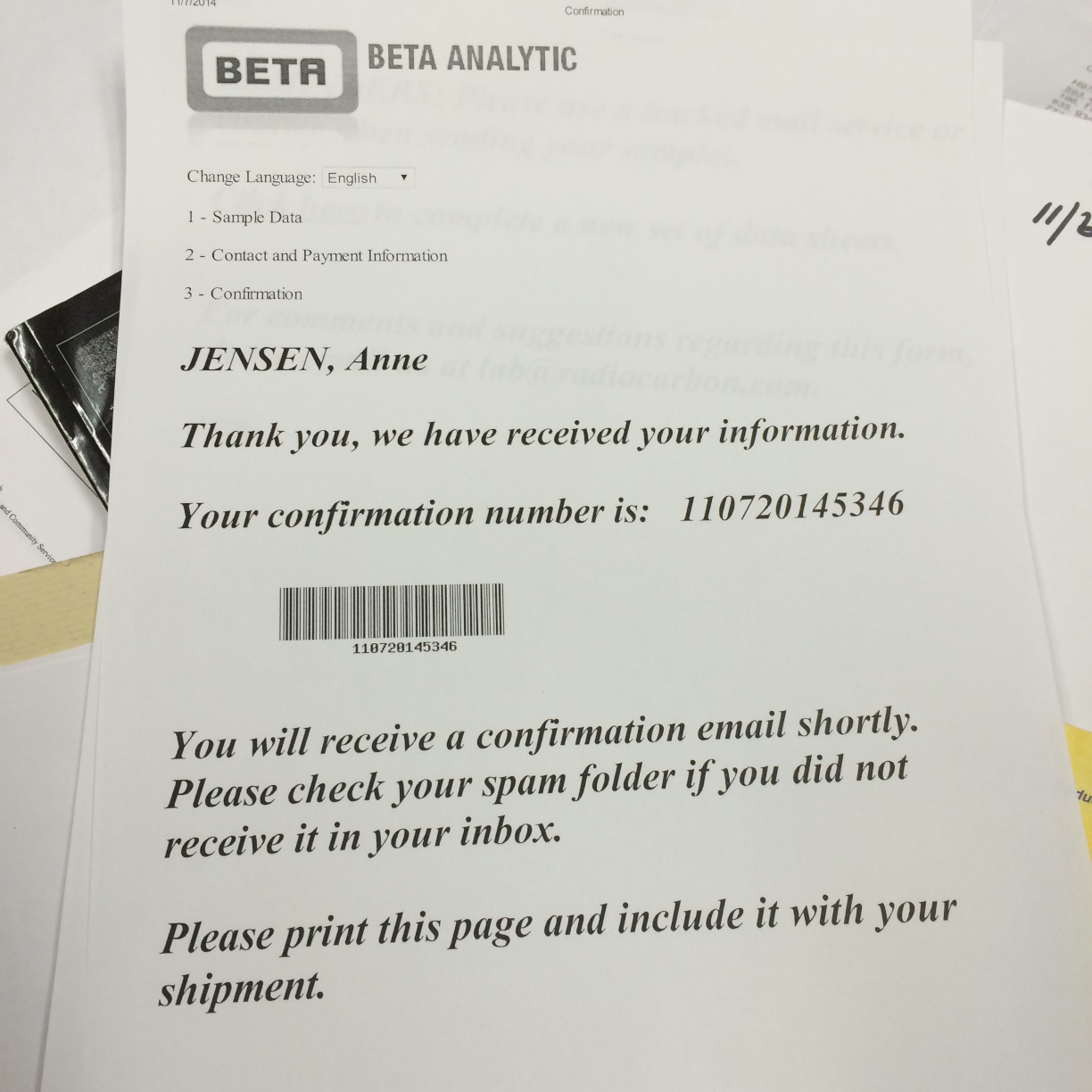
Beta Analytic has got a slick new sample submission interface that I had never used before. It has a few quirks, which meant that I had to quadruple check the submissions to fix things. I got better at it, so . In the end, it prints out a barcoded form that you put in the package with the samples.
By the time I finished, it was too late to mail the samples on Friday. The US Post Office in Barrow doesn’t have any counter service on Saturdays, so they’ll get mailed on Monday.
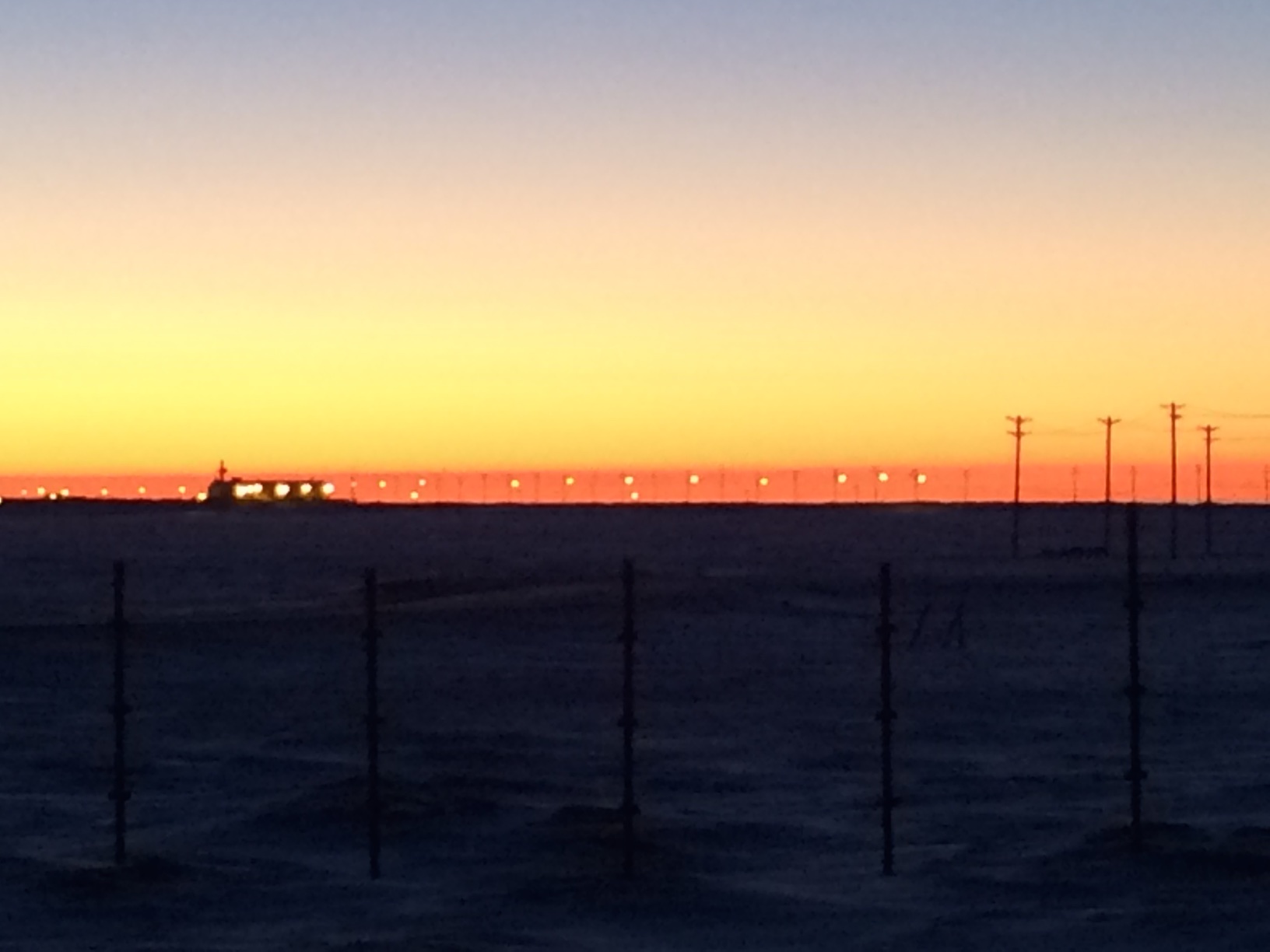
As a result, I didn’t get to see much of the sun that day. It is almost time for it to go down for the winter, and we’ve had so much cloudy weather this year, it was a pity to miss a rare sunny day. By the time I had finished, the sun was down, and this was the view from the BARC.
A quick recap
This summer was unexpectedly quite on the archaeology front. The non-profit through which my grants were run had some problems, which meant that work had to stop and I had to move my grants. This turned into a rather long drawn-out process, with many fits and starts. In the end, I was appointed as a Research Associate in the Department of Anthropology at Bryn Mawr College and the three grants on which I am PI (Principal Investigator) were moved. We are still finalizing moving the purchase orders to allow for work to proceed on the WALRUS grant, but hope to get it done this coming week.
We had hoped to be doing some work at Walakpa, which had survived the winter unscathed, but despite the North Slope Borough asking for UIC Science’s Certificate of Insurance, which usually happens when a contract is about to be awarded (good thing, the insurance company charges to issue those things), nothing was issued. Then came the first week in September.
I was in Point Hope monitoring the drilling of a geotechnical test hole for a possible fiber project. It took an extra day to get there from Kotzebue, because the weather was so stormy that planes couldn’t land in Point Hope. We didn’t find anything during the drilling, but the extra day gave me a chance to visit with Molly Odell and some other colleagues who had been working in Kotzebue and look at some of what they had recovered during their field season. That was fun, but unfortunately the same storm really did some damage at Walakpa.
The site was undermined by high surf. Mark Ahsoak Jr. kept me posted (Taikuu Mark) via Facebook message, and it was pretty depressing. In the end, the house we were working on last year seem to have been entirely obliterated. A big slump block broke off and is resting on the beach.
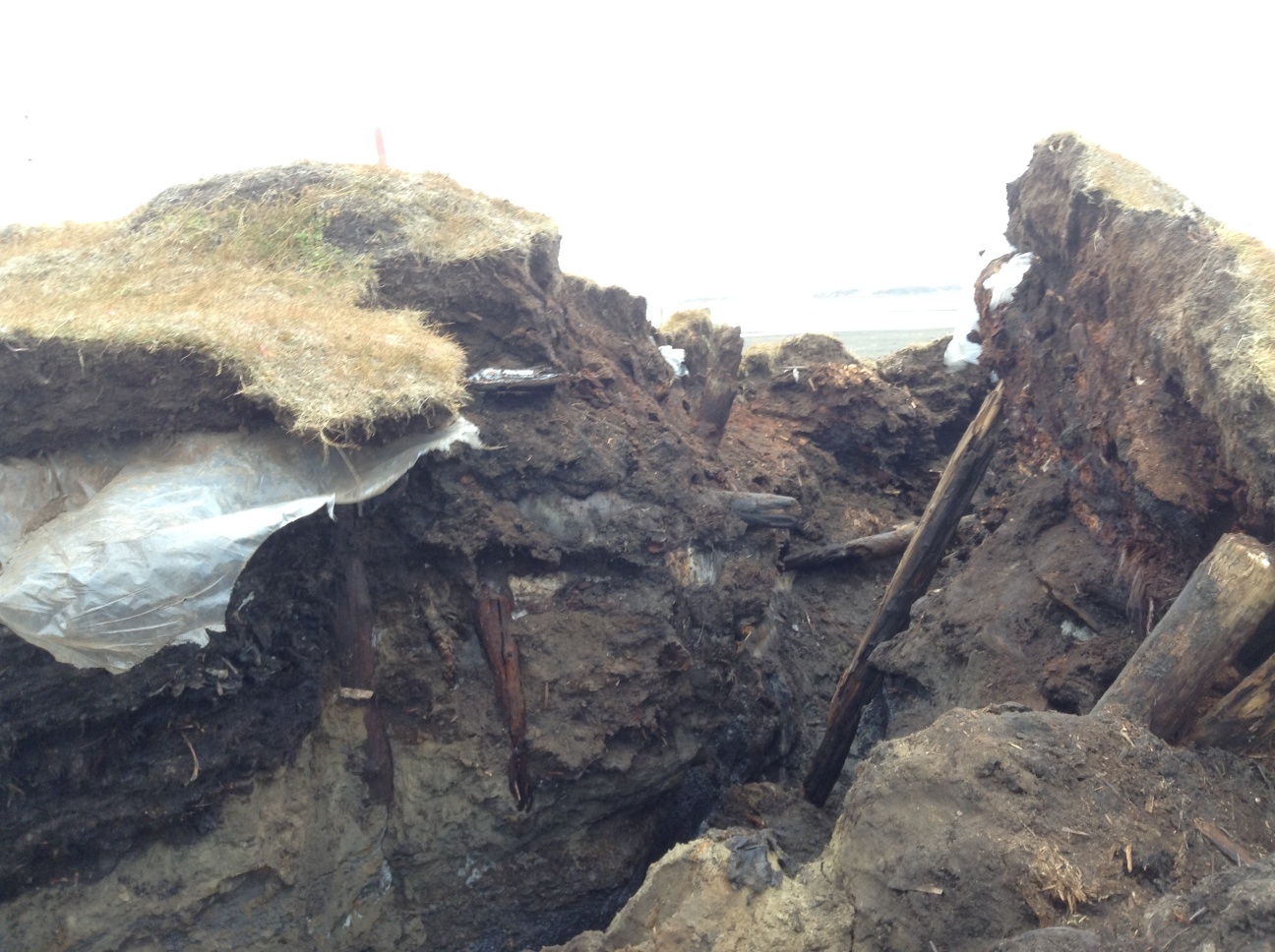
I went down with a crew from UIC Science Logistics to evaluate it. We found that there had been a lot more Visqueen under the surface than we had thought. The stratigraphy is very complex, with a very large feature containing solidified marine mammal oil, some artifacts and what appears to be maqtaq at the landward edge of the slump block.

Unfortunately, the marine mammal oil feature is starting to break loose from the main slump block and tip back into the crack between the block and the intact site. We put driftwood props under it, and then stopped all work under the overhang, since it could easily kill someone.
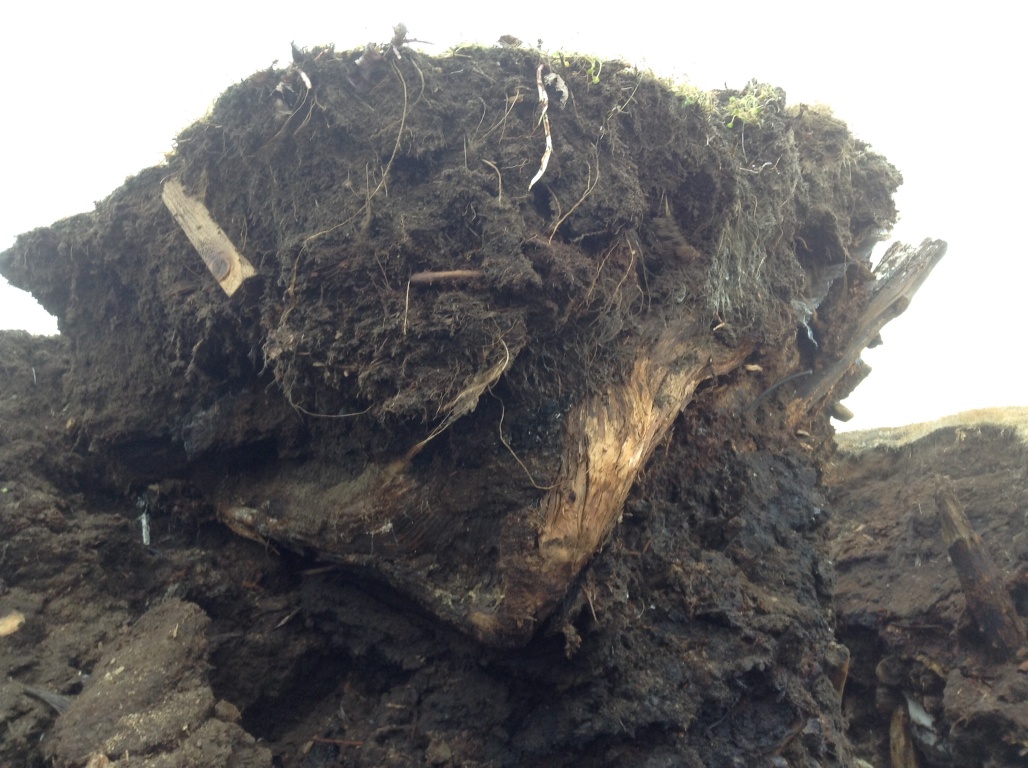
We didn’t find any loose artifacts, although there were a number of visible artifacts that were frozen in. Some folks had been collecting them and turning them in, which is great. I’d really like to thank everyone who has been helping in this way. Unfortunately, some other people have just been collecting them. Several of the artifacts that we saw the first day were gone by the time we returned.
After we headed home, the next day was spent in getting a crew and material to do some stabilization. Several of the Barrow-based UIC subsidiaries pitched in with materials, crew and transport, and we went back to put some temporary protection on the site. We were able to cover almost all the eroding surfaces with geotextile fabric , secured with some cutdown metal support fasteners and sandbags.
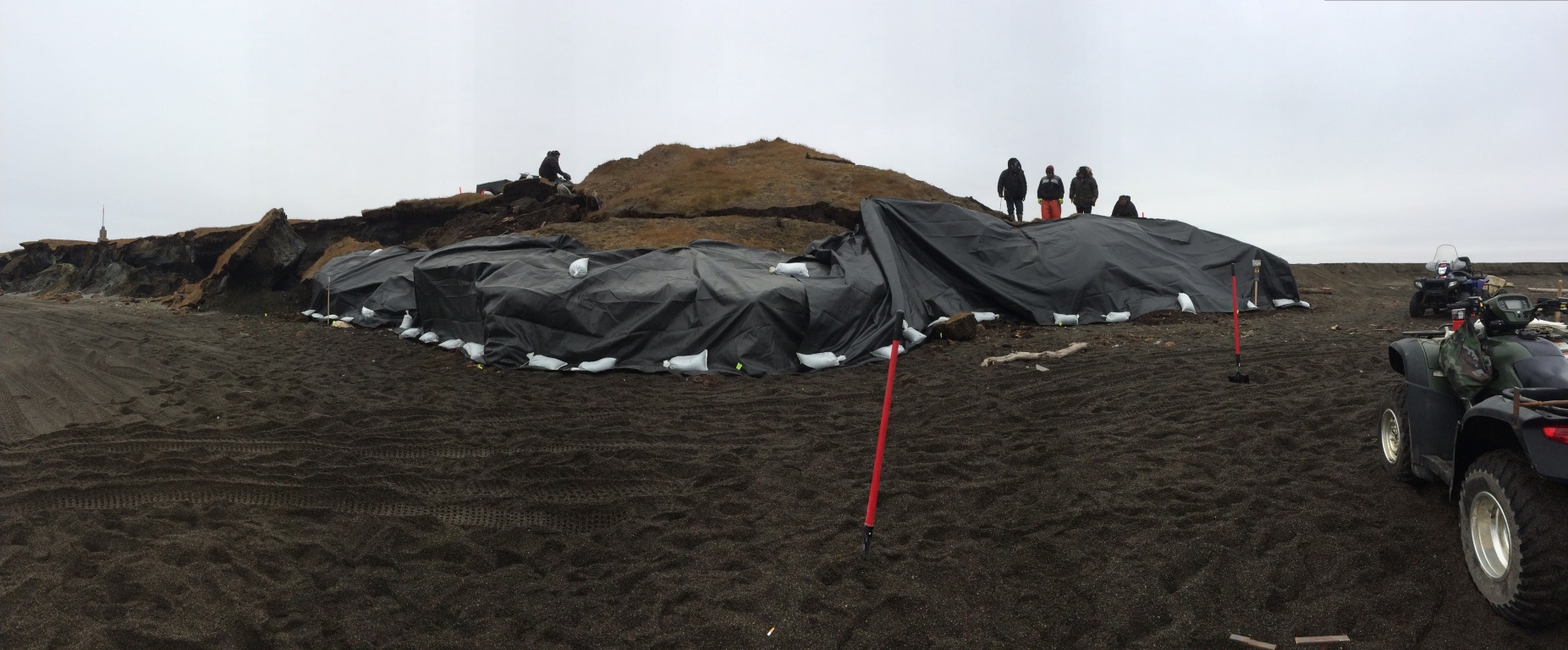
We made another trip down with the theodolite to map the new boundaries of the site. This let us document the loss of over 33 feet (11+ m) in that storm alone. We also put a lot more sandbags on the site, and so far it has resisted the weather.
Help wanted!
Crew members wanted
Nuvuk Archaeology Project
Walakpa Archaeological Salvage Project
WALRUS – Walrus Adaptability and Long-term Responses; Using multi-proxy data to project Sustainability
——————-
We are seeking students (high school or college) to work in the archaeological laboratory on artifacts as part of several NSF-funded research projects. The lab crew will be working on processing artifacts excavated at Nuvuk, Walakpa and other North Slope sites.
This will involve cleaning (gently), sorting, marking, cataloging and preparing some items for transfer to a long-term repository. We will also be going through and sorting some frozen organic samples from an earlier project in Barrow that have been sent back from New York State.
We also will be attempting to find walrus bones in these collections for analysis at UAF. There is a possibility for student travel in connection with that project.
You do not need any prior experience; we can train you. Many archaeology crew members start as high school students. Once you learn how to do the work, scheduling can be very flexible. If you have skills in drawing, photography, or data entry, we can really use your help as well! Starting wages will depend on experience and qualifications.
To apply, send a resume and cover letter to Anne Jensen, anne.jensen@uicscience.org as soon as possible. You can use the contact form below for questions.


Ramping up in the lab
I have gotten far enough along in getting over the back surgery that I finally have enough energy to do things that are not strictly essential for work or staying fed. So we are ramping things up in the lab.
We are looking for a few more people to work in the lab here in Barrow, joining the current crew on weekdays or weekends. Due to the source of funding, these folks will need to be high school or college students. We are also looking for volunteers. I will post the announcements on here a static page and also as posts.
We aren’t sure yet if we will have funds available to do fieldwork this summer, but we are hopeful. If we do get into the field this summer, people who have lab experience will have priority for fieldwork jobs.
If you are interested, please contact me ASAP. Please pass this on to anyone you know who might be interested.
A radio interview
Yesterday was supposed to be a big day for interviews. One of the Alaska TV stations has someone coming to Barrow who wanted an interview, and Joe Schuldenrein was scheduled to prerecord an interview with me for his internet radio show on archaeology, Indiana Jones: Myth, Reality and 21st Century Archaeology. Unfortunately for them, the TV folks went on a tour of the entire state, except Barrow, courtesy of Alaska Airlines and didn’t get in until after 7 PM. We may reschedule.
The radio interview did happen, and will be broadcast today, 1 PM EDT, 4PM AKDT. I believe you should be able to access the archived version here after the broadcast. If you want to listen live, I think you can log in here and do so, but I don’t know the details, since I have only tried the saved version of the show.
Now for some time in the lab, and maybe another interview…
|
|
||||||||||||||||||||||||||||||||||||||||||||||||||||||||||||||||||||||||||||||||||||||||||||||||||||||||||||||||||||||||||||||||||||||


A day of taking pictures
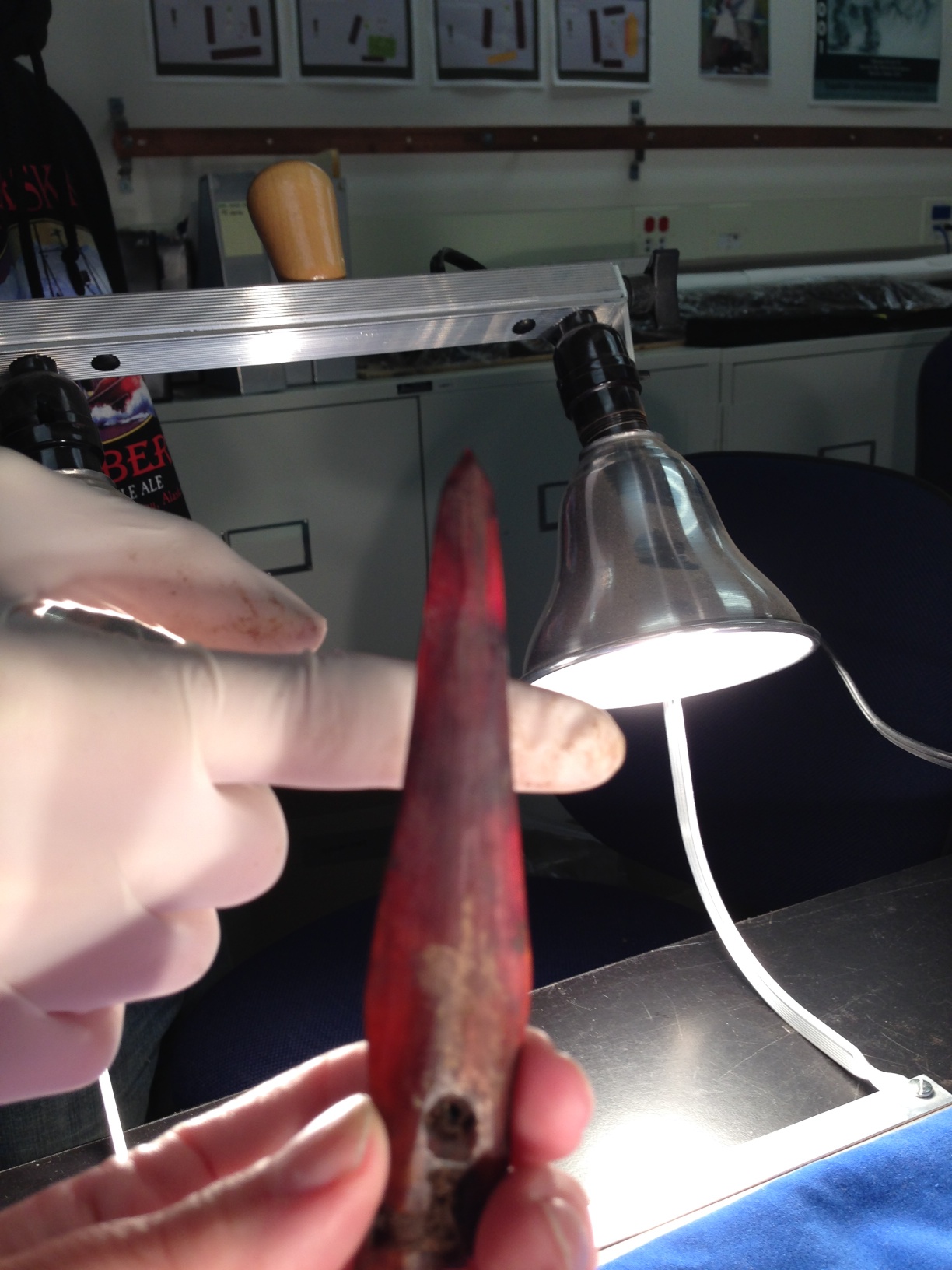
This Saturday, I’m giving a Saturday Schoolyard talk about the Walakpa salvage project. That means I need a lot of pictures. So I spent the last couple of days in the lab taking pictures of the artifacts from we recovered.
Just a few of the results:


Thinking about logistics & links
I am currently in Washington, DC, participating in a workshop on Arctic Research and Logistic Support planning. The idea is to get a group of scientists working in the Arctic together to see what we think Arctic research will be like in 10-20 years, and what sort of logistic support will be needed. Then, action steps to get there from here will be formulated. One hopes it is not just an exercise in futility.
As is usual at such gatherings, there are not very many social scientists. There are a lot of physical scientists (marine, terrestrial & atmospheric) and a fair number of biology types. Many of the groups are quite interested in new “toys” (UAVs) and the like, as well as more icebreakers. Better connectivity is also something that is high on most people’s lists, mine included. What I find interesting as an anthropologist is how the cultures of various disciplines vary so widely. One of the breakout sessions was organized more or less by location of research (with social sciences its own group). I actually went to the Coastal group, since I’d just had lunch with Sophia Perdikaris & Genny LeMoine, both of whom are archaeologists, who were going to be in the social science group, and I thought it might be more valuable to get a social science voice into one of the other groups.
The variation in the visions of the groups when they reported back was quite striking. Although there were some things all agreed on, one group saw research in 10-20 years as being done remotely. They even thought that maybe social science could be conducted through social media. Unfortunately they didn’t describe how they imagined one could excavate a site that way; I’m sure it would be a lot warmer than what I was doing last month!
While all that was going on, the Alaska Dispatch picked up Abra’s Arctic Sounder story. Then Archaeology magazine added it to their website news, even asking if they could use a specific picture from this blog. Then they used another one… Oh, well. And I got another interview request.
Some media attention, and why it can be a double-deged sword
For some reason, this year there has been quite a bit of media interest in Barrow and archaeology. To begin with, there were several film crews in Barrow while we were working at Walakpa, two of which actually came out to the site and filmed as well as filming in the lab. Only one of them has anything out yet. PBS filmed for several both in the field and in the lab, and a little bit of it made it into this piece, and a shot in the slideshow that they put up on the web in conjunction with the series on sea ice change. It was a very buggy day in the field, and it was quite the challenge not to be swatting mosquitoes all the time.
Oh, and the buoy experiment that Ignatius Rigor is working on in the film clip is supported by UIC Science staff (not that they have to do much, the idea is to see how the buoys do with no servicing). Their data can be compared to data from ARM’s established serviced meteorological instruments. That way, when scientists get buoy data, they have an idea how reliable it is, and if there are any special considerations in interpretation (becoming uncalibrated over time, etc.)
We’ve also gotten interest from the press. Abra Stolte-Patkotak, one of our volunteers writes for the Arctic Sounder, and did a piece on the Walakpa excavations, which is on-line here. For some reason, they don’t have the picture that was published up on-line, but I will ask Abra if I can put it up here & add it if so.
I am currently working with a free-lancer who has interviewed me and asked me to fact check the article before he goes further. A very good idea, as many years ago I was interviewed by a reporter who mis-heard my answer to the question of how far back in time human occupation of the Barrow area was archaeologically demonstrated to extend. I said “maybe 4 to 5 thousand years” which was what people thought reasonable for Denbigh at the time. He refused fact-checking help, and published an article in which I was directly quoted as saying “45,000 years”. Although Glenn & I could never get the Arctic Sounder to mail our subscription to us in Pennsylvania, apparently Tiger Burch could. I got a very puzzled email from him after the article came out, in which I believe he was politely trying to ask me if I’d lost my mind. Fortunately, he had enough experience with the press that he believed the explanation.

 Out of Ice and Time