Just got included on a list of CRM blogs over at Doug’s Archaology. This is one of a series of posts he’s doing on various types of archaeology blogs, all of which are worth reading.

Doug Rocks-Macqueen's avatarDoug's Archaeology

Here are some great blogs that discuss working in commercial archaeology/CRM. This topic can be tricky and some of these blogs do not actually cover just Commercial/CRM archaeology but they do give good insights into the life/conditions. This list of blogs and others can be found at my archaeology blog list.

If you want to subscribe to all of them in a RSS Feed you can do so here

10 simple steps to better archaeological managementhttp://10simplesteps.blogspot.com/

Martin Locock’s blog is a must read if you are interest in being successful in archaeology or life.

ArchaeoJobshttp://www.archaeojobs.com/

Archaeology employment inEurope& some more. Paolo’s blog is a great resource and posts lots of great information pertain to archaeology in all sectors.

The Charles Mount Blog http://charles-mount.ie/wp/

“Dr. Charles Mount has more than twenty years experience of archaeology and cultural heritage assessment. ” He blogs about many different things…

View original post 646 more words

The child is out

Just a short post, because I’m home celebrating my birthday (mostly by coughing–the cold has moved to my chest).

The child is completely out of the parka and pantaloons (Murdoch’s term), and Shawn was able to examine the remains.  No change in the age estimate.

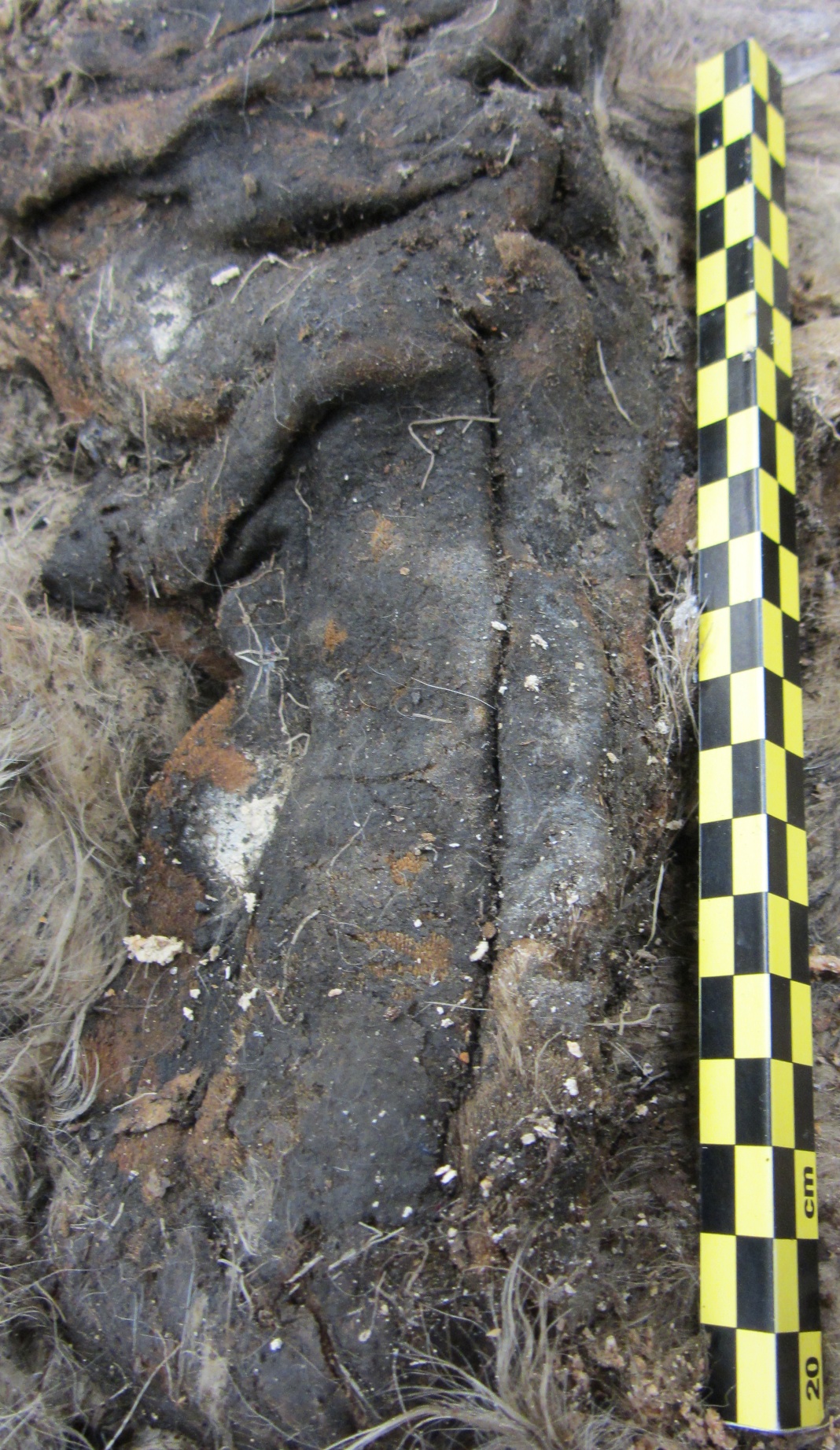
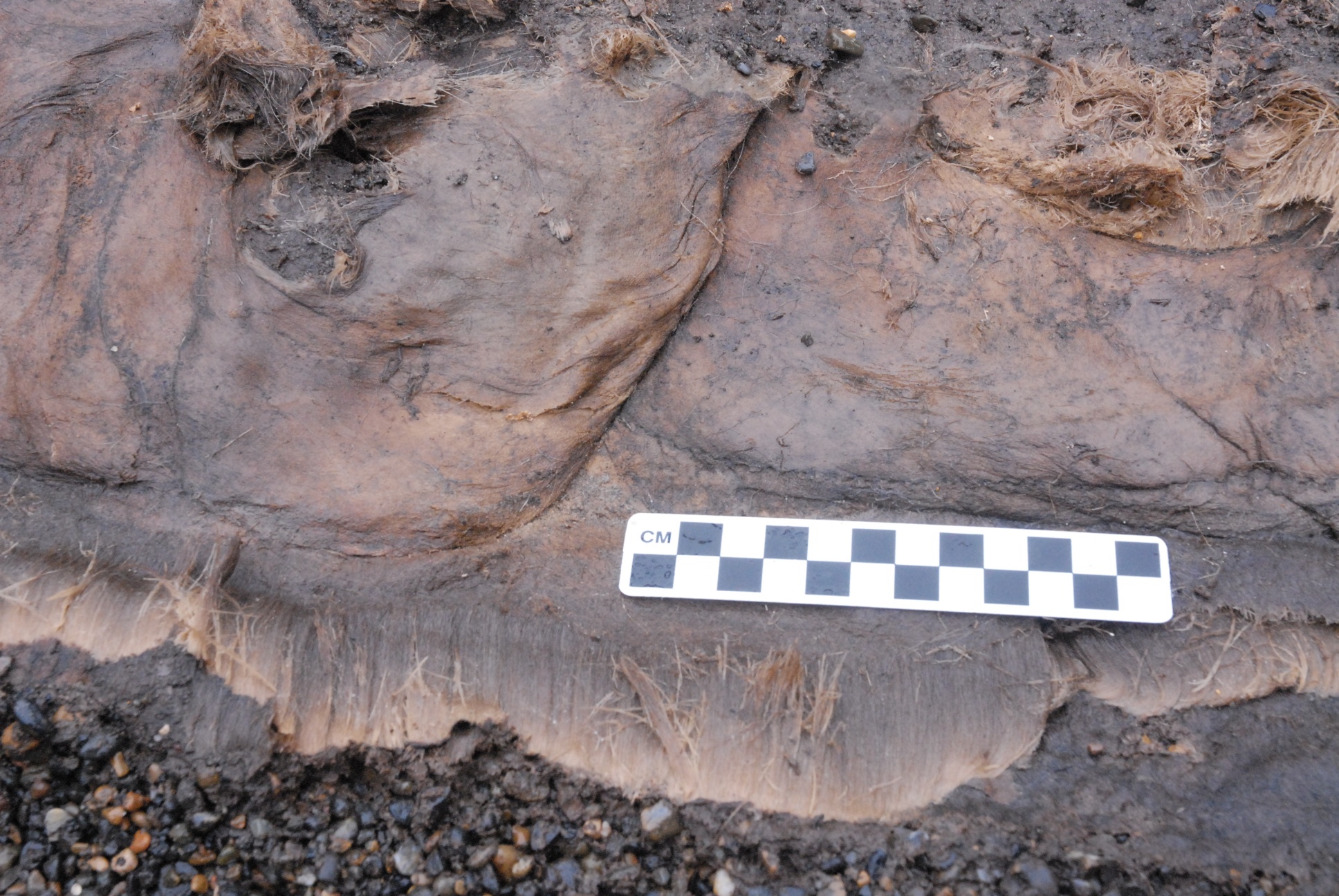
I was able to get some pictures of the boot part of the pantaloons.  They look like they may have been made from leg skin (something with shorter finer hair than the main part of a caribou hide), with separate soles.

Sole of the left boot

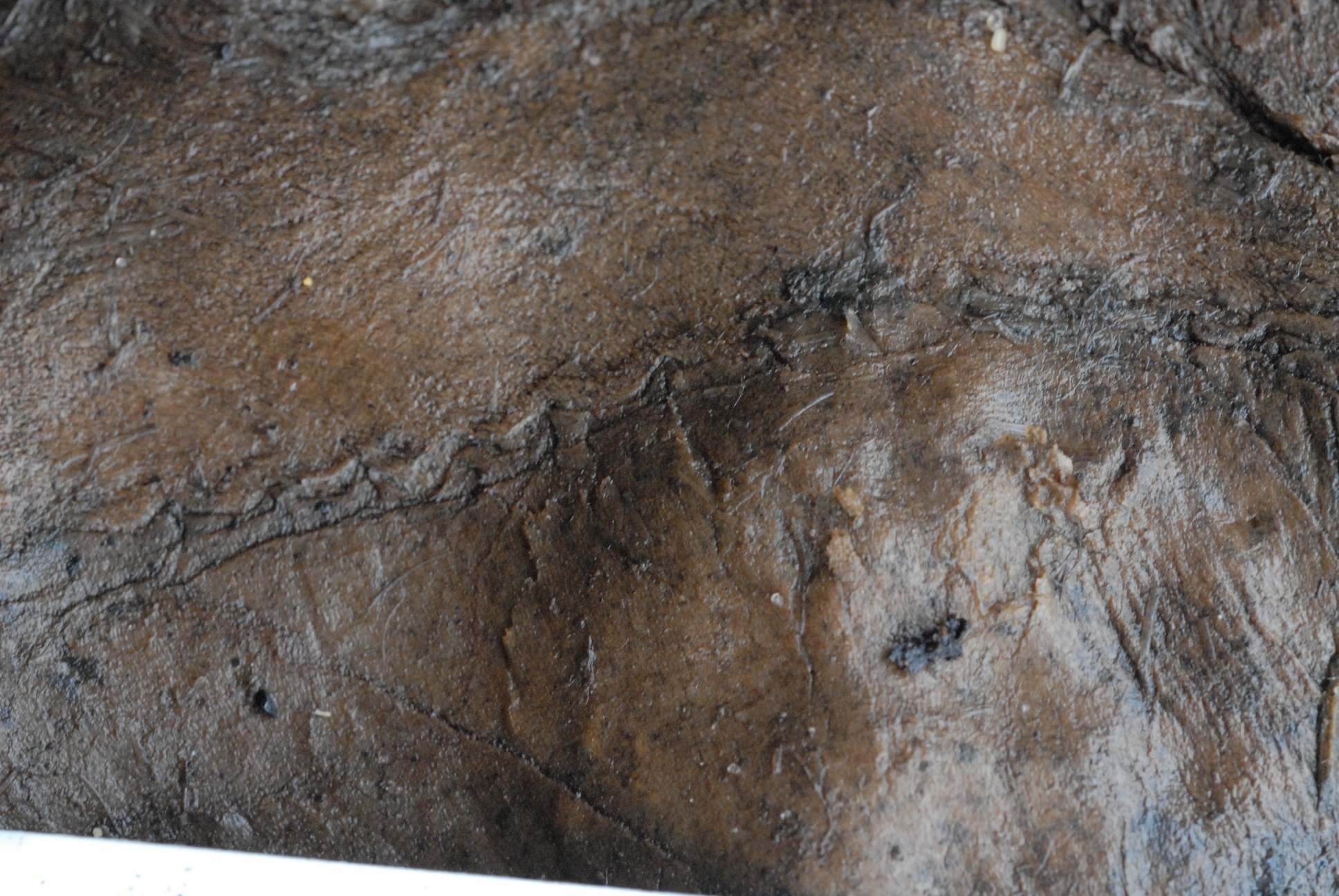
There was a seam up the middle of the vamp on each boot.  The boots seem to have been sewn to the pants, which were of caribou hide.

Seam up the vamp

More tomorrow.

Physical anthroplogy underway

Shawn Miller, the physical anthropology PhD student (and University of Utah anatomy instructor) who examines and records the data on the human remains from Nuvuk prior to their reburial, is here.  He has been working on the multiple burial with an intact box that we excavated in early July.  It is looking like there were two primary individuals, probably both men.  The juvenile elements could all have come from the same individual, Shawn thinks, so there may have only been three people in this burial.

It is looking like one of the adults has signs of porotic hyperostosis and cribra orbitalia.  These have generally been considered as signs of iron-deficiency anemia and a diet lacking in animal food-sources, but recently it has been suggested that this may be incorrect (Walker et al. 2009).  Certainly that would seem unlikely for someone living at Nuvuk, as there really was almost nothing available there but animal food.  It will be interesting to get the dates for the individual, who was apparently more recent, since there was reportedly considerable starvation after Yankee whalers decimated the bowhead stocks.

I went to get the coffins that we had in stock.  UIC RE Maintenance folks had made us a bunch, since it is easiest to cut a whole lot of standard size pieces at once.  Unfortunately, things seem to have been moved around in the warehouse where they were stored, and we seem to be short a few boxes and quite a few lids.  The ones I found were scattered in several locations.  I was able to find enough for the individuals in the burial, and will see about getting some new lids made later this week.

Education, Culture & the Past

I just got back from the local library, where I went for a talk by Aviâja Egede Lynge on Mental Decolonization in Greenland.  Aviâja is a really great speaker, with a graduate degree in social anthropology, who is working on the process of changing the school system to be truly Greenlandic in nature.  If you ever get a chance to hear her talk, take it.

The talk was about the lingering effects of the Danish colonization of Greenland.  A benign colonization, perhaps, but that brings its own issues.  A very complex problem.  Much of it is probably the same in any area that has been colonized, other aspects are perhaps specific to this particular case.

Gravel moving accomplished, & then football

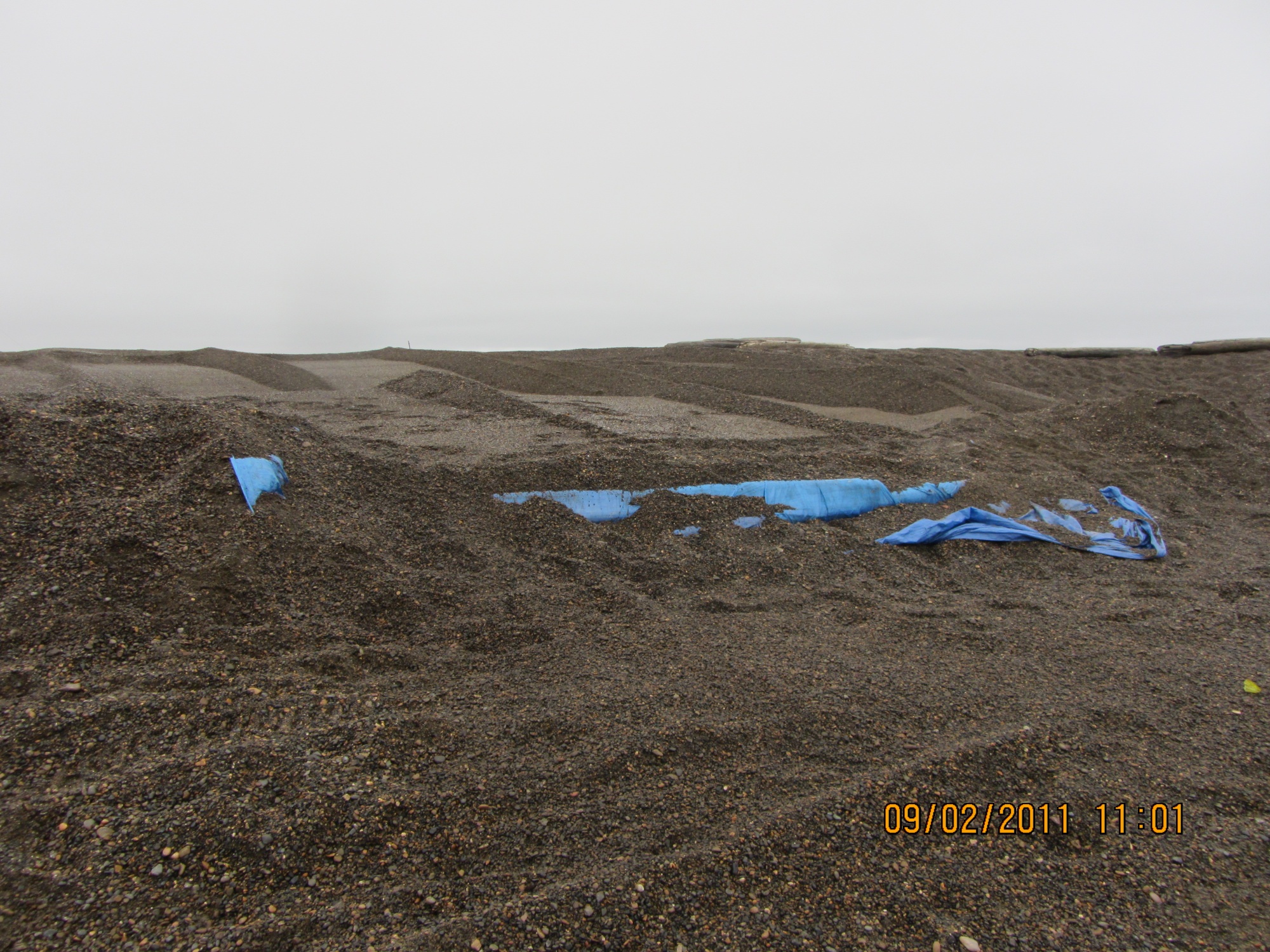
Friday we got the gravel moved.  If you remember, the site looked like this:

Gravel pile on the Ipiutak structure

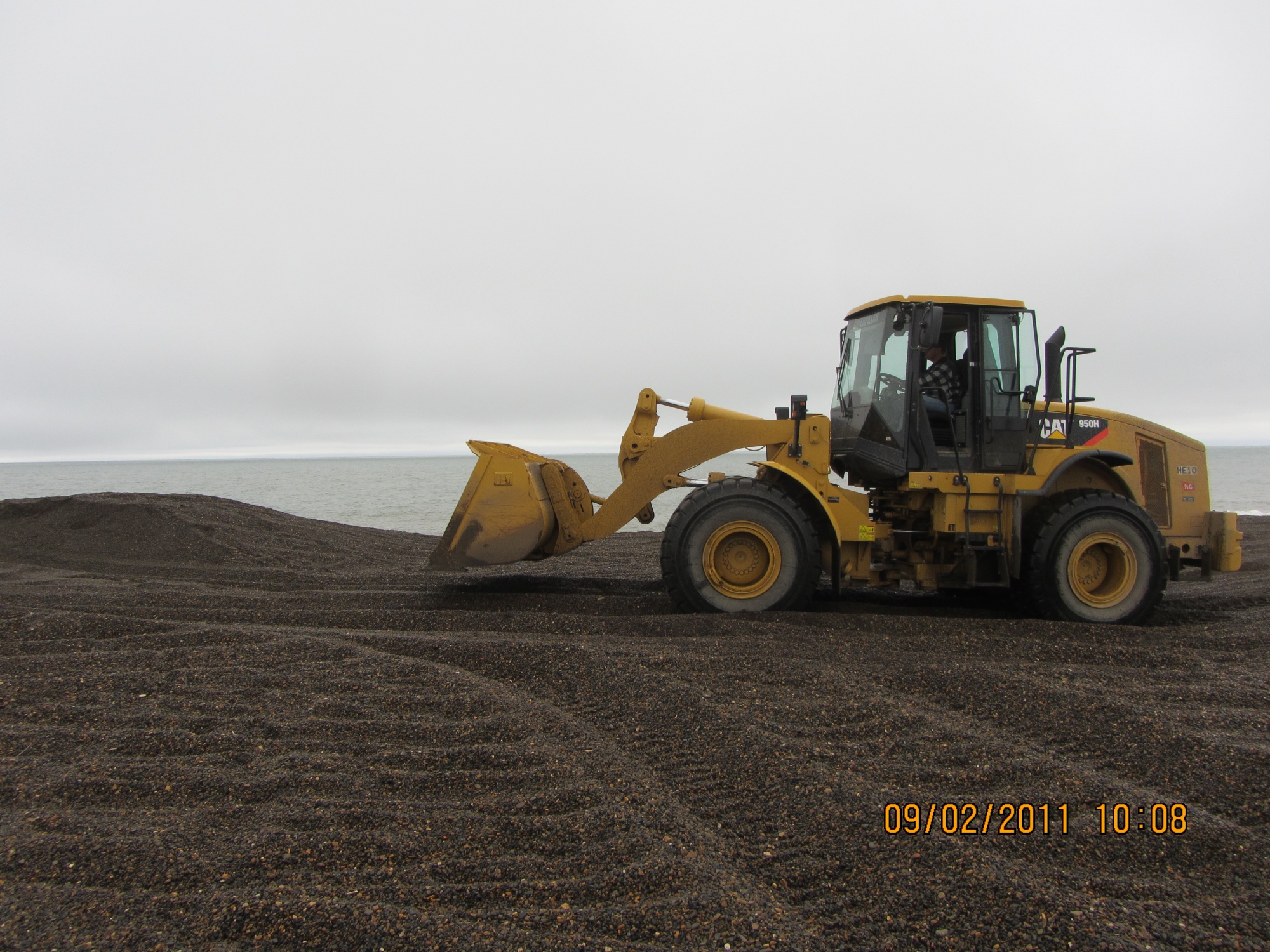
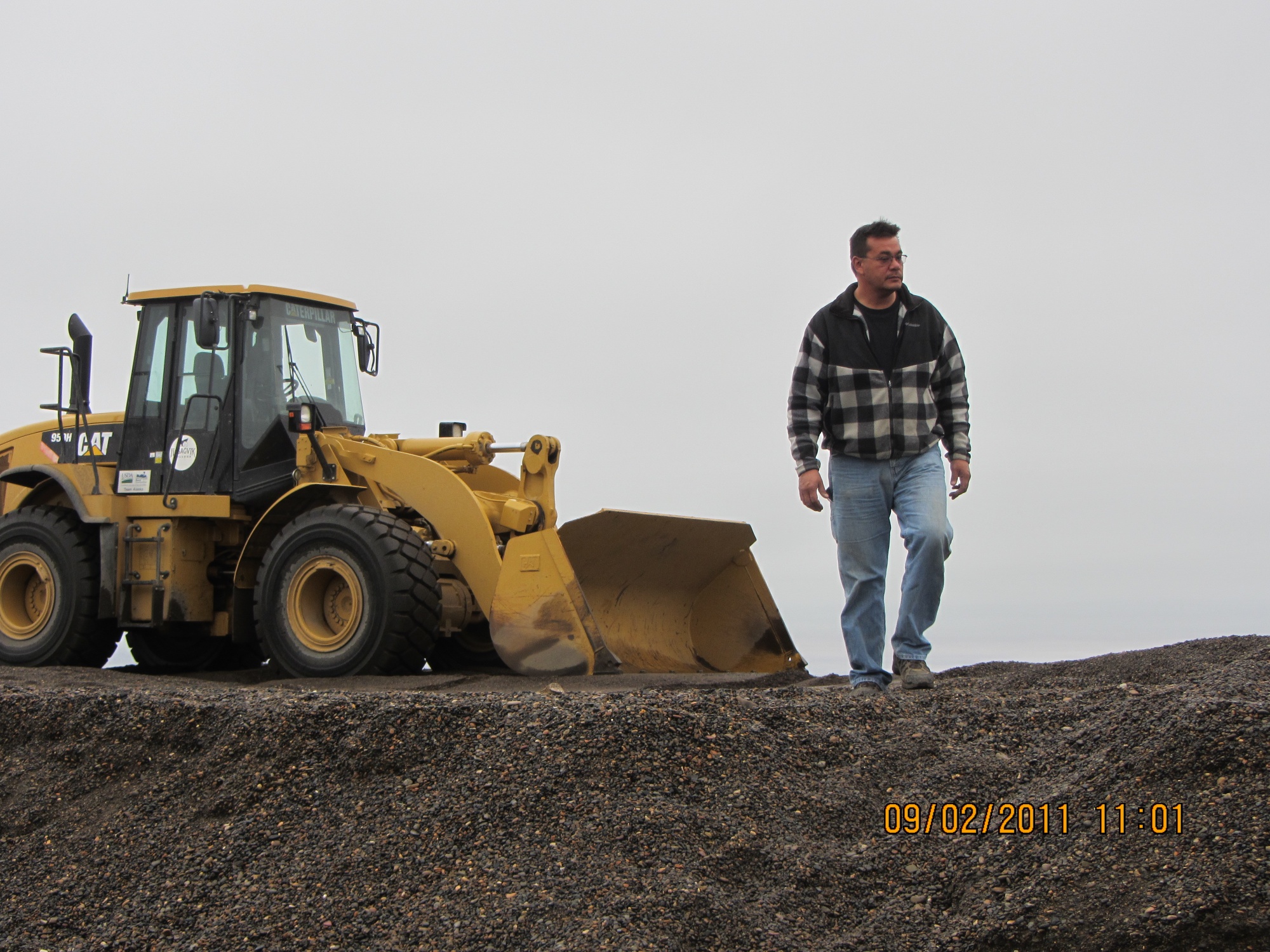
Not exactly conducive to a quick recovery excavation, especially since it’s mostly going to be volunteer labor, the students being back at school and all.  It had been looking pretty grim on the heavy equipment front, but Ilisaġvik College came through with a reasonable rental on their new Case loader, and Walter Brower & I headed out around 9AM.

Getting there took a while, but shortly after 10 we were at work.  The loader has extra wide tires, and reputedly is not very good in snow, but it did fine in the gravel.

Starting work


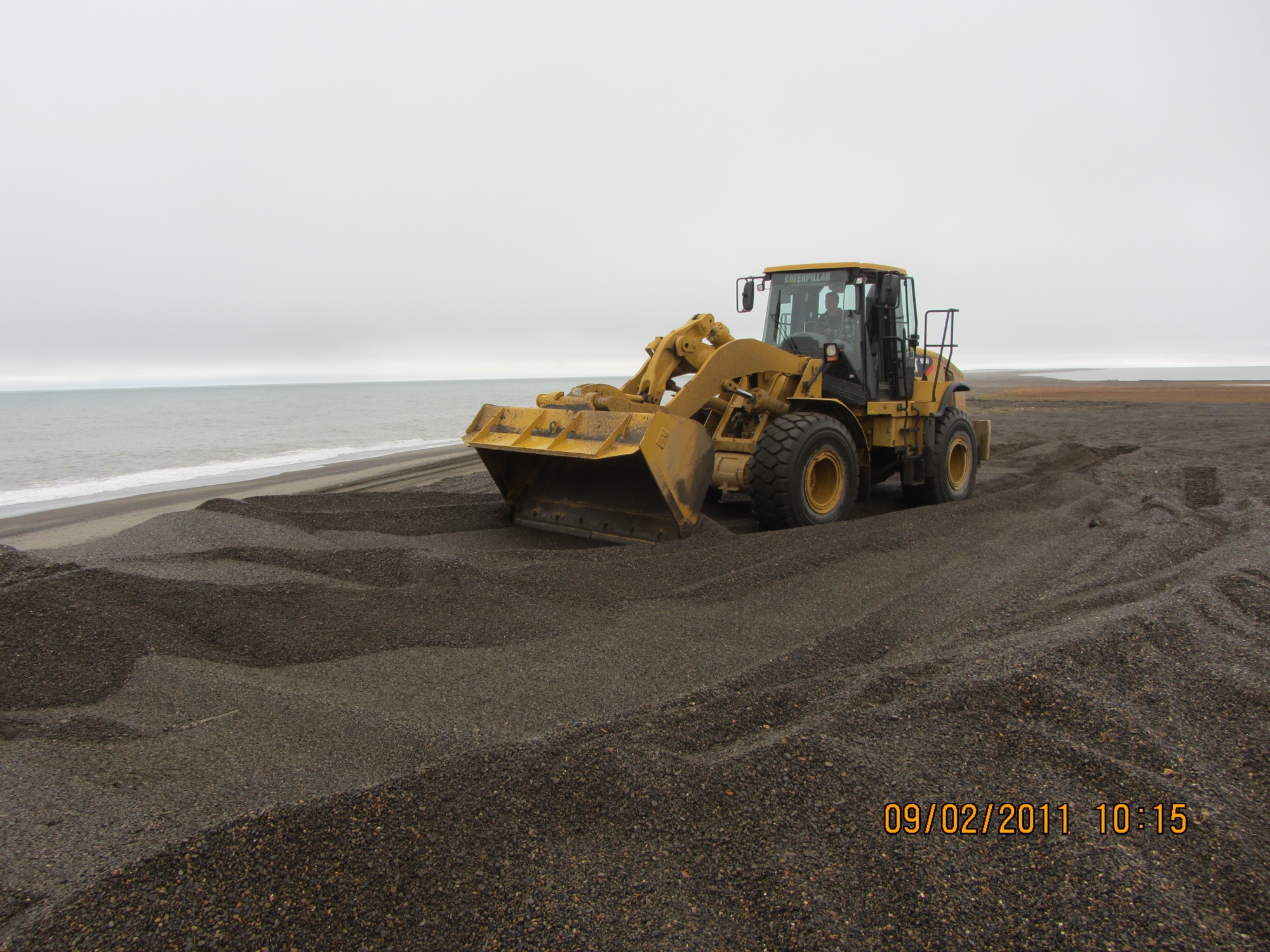
Backdragging.

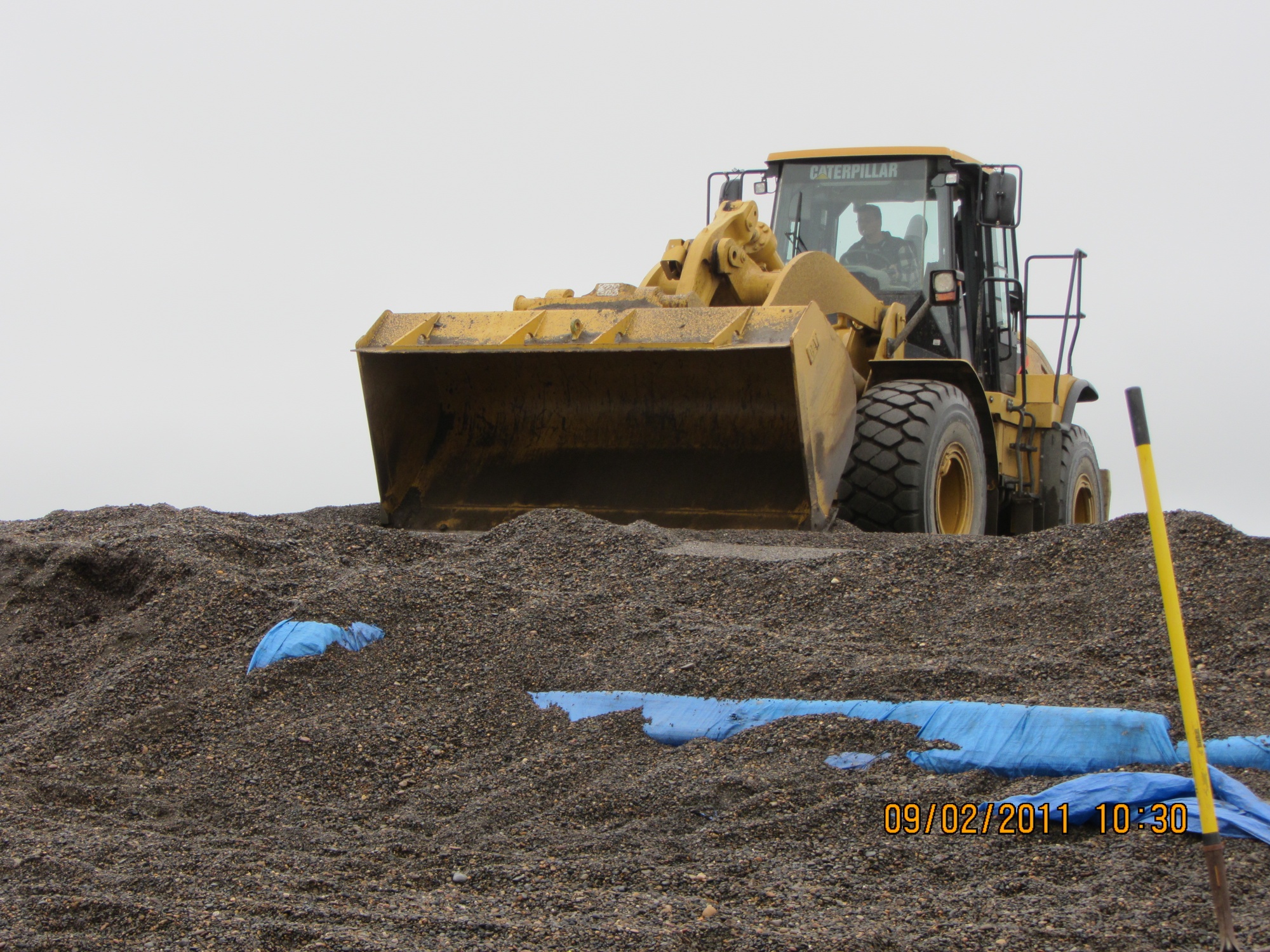
Backdragging proved effective and minimized the need to drive on top of the feature.  We were able to take it down to less than 1 foot above the surface, so it will be a lot less work this week & next weekend.

Finishing touches.
Walter checking the results.
Final result--a great improvement.

All in all, a great improvement.

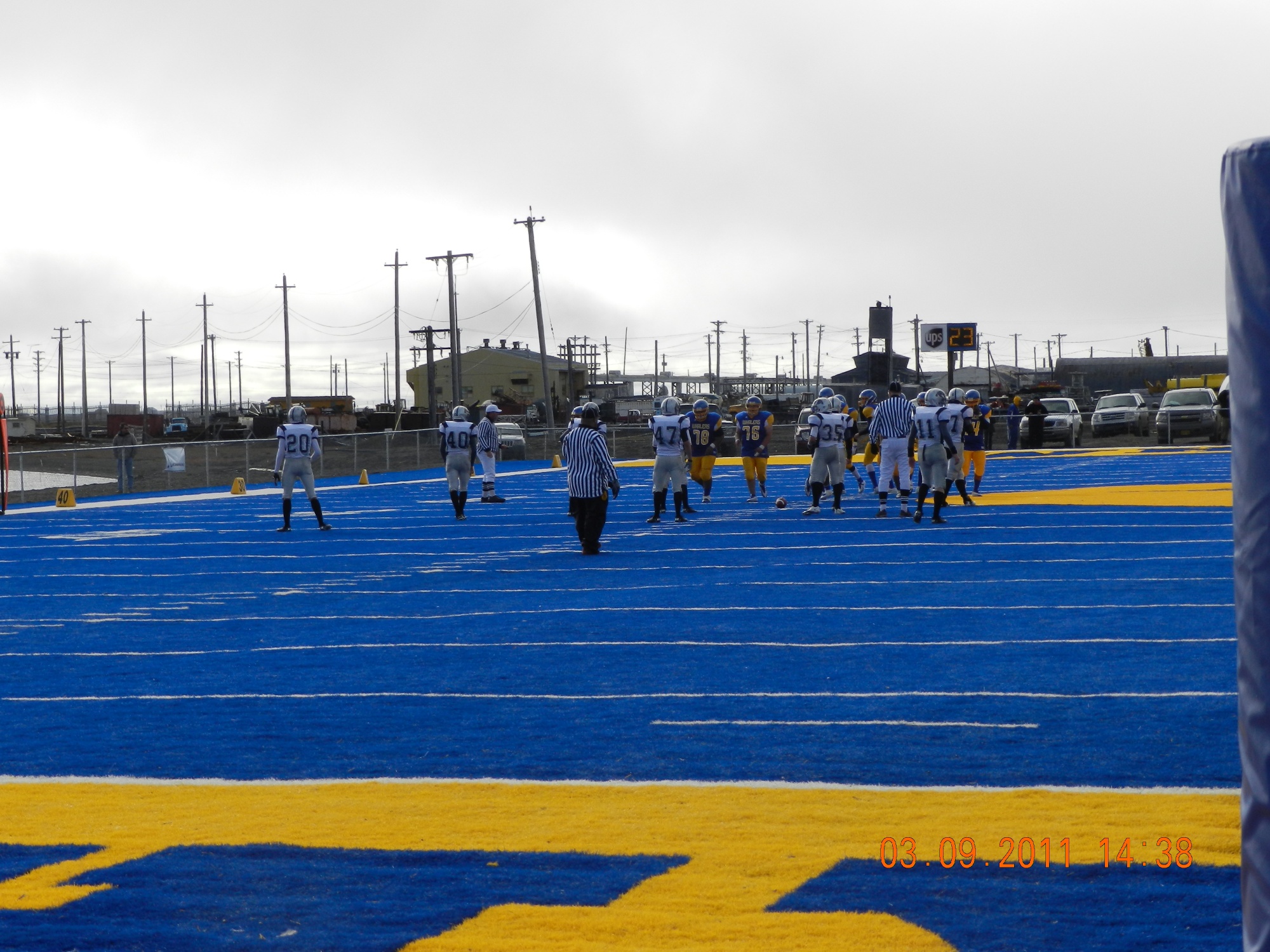
The next day Barrow played Nikiski in football. Both schools are in the Greatland Conference, and Nikiski is a perennial football powerhouse.  Barrow had never beaten them.

Cathy Parker Field
Football beside the Arctic Ocean. Whalers #24 (in motion to the left of the frame) is Trace Hudson, who works on the Nuvuk Project when he's not playing football.

Barrow fixed that.

Final score. No, I have no idea why there is 3:24 on the clock; the game was over.

Trip to Wainwright–Maudheim?

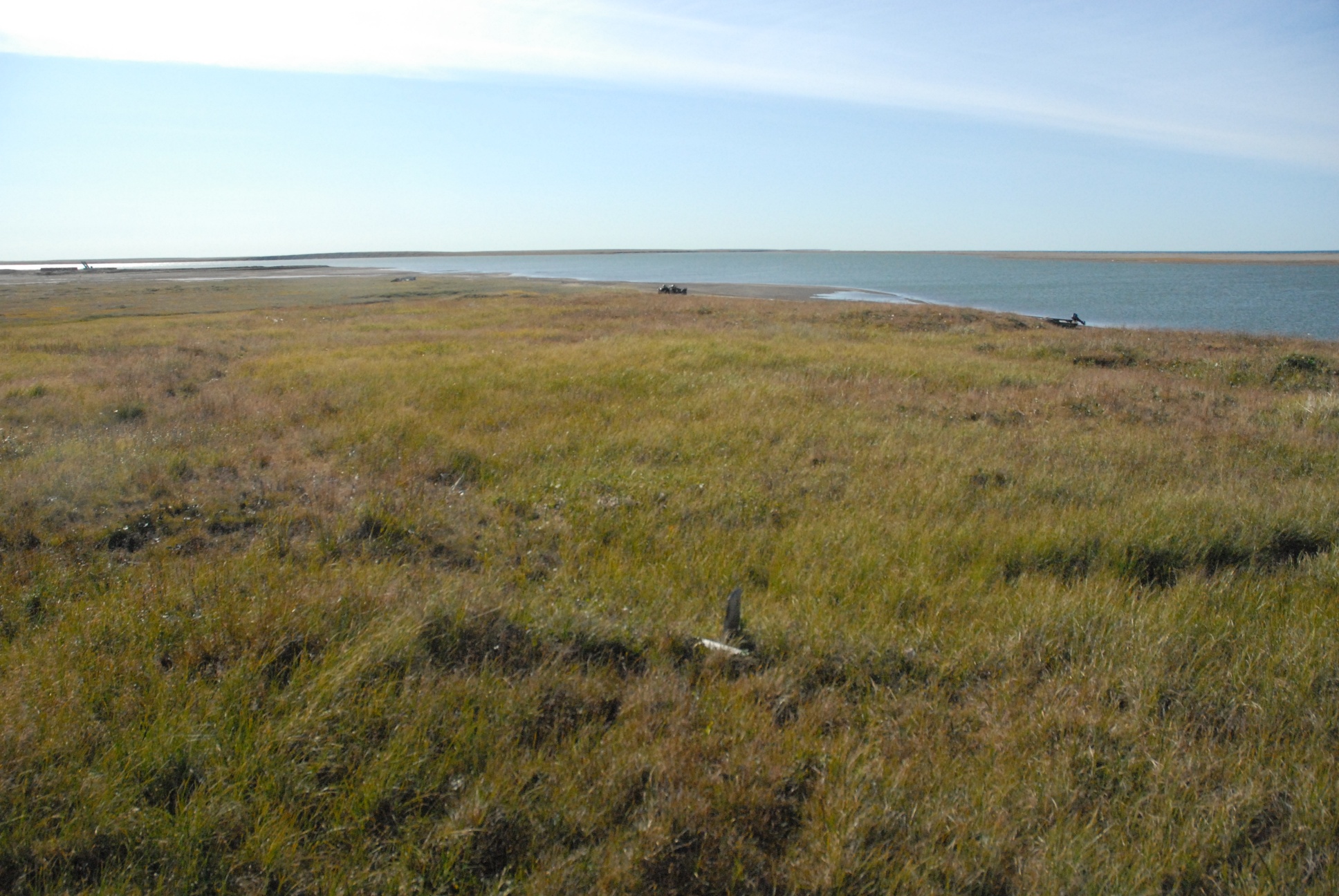
When I got the information from the AHRS files, one of the two sites listed was Maudheim.  I recognized the name, but had connected it with a Norwegian-British-Swedish station in Antarctica.  Obviously that wasn’t it.  It turned out the Maudheim near Wainwright was a station that had been built by Roald Amundsen, the Norwegian explorer, in 1921 or 22 in connection with his planned flight over the North Pole.  It was meant as an overwintering base, although it seems that Amundsen actually spent the winter in Nome, leaving his pilot Oskar Omdal to take care of Maudheim and the plane.

After the expedition was over, Maudheim was apparently acquired by the Midnight Sun Trading Company, which seems to have dealt in coal from small mines near Wainwright as well as other standard items.  There may have been some additions to the building.  Although the trading post seems to have gone out of business quite some time ago, the building survived for many years.  According to Tim, he was told it was torn down a few years ago since it was not being maintained (no real owner) and people in Wainwright were afraid it was becoming a hazard for kids.

Footprint of a building, probably Maudheim.
Ice cellar near Maudheim site.


The tale of an osteometric board

I recently contributed a post about a field-made osteometric board to ThenDig, a blog about archaeology which has been doing a theme month on tools and archaeology.  There are a number of interesting posts over there, and it’s worth checking out.

Best day yet

We had a really great finish to the official field season.  We excavated a last burial which turned out to be that of a very muscular person, who seems to have been buried in or on bird skin (maybe a bird parka).  A possible burial (a human bone showed up in a test pit) turned out to be an isolated find, so we don’t have an unexcavated burial undone.  There was a complete egg in the dark organic soil by the bone, which looks like something a fox might do to hide a stolen egg, so maybe the fox brought the bone there from somewhere else.  The DWF continued to have a number of interesting artifacts (nice lithics, ground slate, composite labret). I’ll try to get pictures up in the next few days.

We were able to backfill all the big holes, record all surface finds, cover the DWF in hopes of being able to come back later this year, and still get the students home at a reasonable hour.

Some of us are going out again in the morning with an NSF-funded Mexican/North Slope student exchange group of about 25 or so.  We’ve worked with them before, but not after the season ends, so it’s a bit challenging to find something to teach them that doesn’t risk disturbing something we haven’t got the time or crew to deal with.

I only got 4 hours of sleep last night, so off to bed.

What a day!

The weather was not pleasant.  It rained all day, and was pretty cold.  My fingers are swollen up like sausages.  The rain also took out the track pad on the computer for the transit, so we couldn’t back up the files in the field.  We were able to use a mouse in the lab, and got the files backed up and transferred to the other laptop, so if the track pad doesn’t perk up, we’re OK.  My Nikon Coolpix S9100, which I just got last night to replace one that failed after a week, died the same way today.  Nikon won’t issue a refund for 15 days, which is truly ridiculous under the circumstances.  I’ve been committed to Nikon, loved all the SLRs I’ve had (FM, 4 FEs, 4 N70s, D200) and liked everything about this camera, too, except it won’t work.  Epic fail.  So don’t buy one!

On the plus side, the very deep burial turned out to be a person wearing a fur parka and wrapped in hide!  You can even see traces of the stitching.  We aren’t sure how well-preserved the person is (we found a few finger bones and a nail inside the cuff).  We decided to take it out en bloc (complete) and take it back to the lab to excavate in controlled conditions so we can document the garment better, since it is very fragile.  We had some plywood brought out and managed to slide it through the gravel under the entire burial and lift the whole thing.  This required the digging of a very large hole, which we’ll now need to backfill.  Many thanks to Brower Frantz and his crew for bringing out the plywood and transporting the individual back to the lab while we kept on in the field.

Right arm and side of the fur parka, lying on a hide.
Close-up of stitching on parka

The DWF keeps yielding more artifacts, some of which are quite nice.  We’re trying to get to a reasonable stopping point and figure out a way to protect the exposed feature in case we can get funds to work on it in September.

Artifacts from DWF.