Much gravel is moved

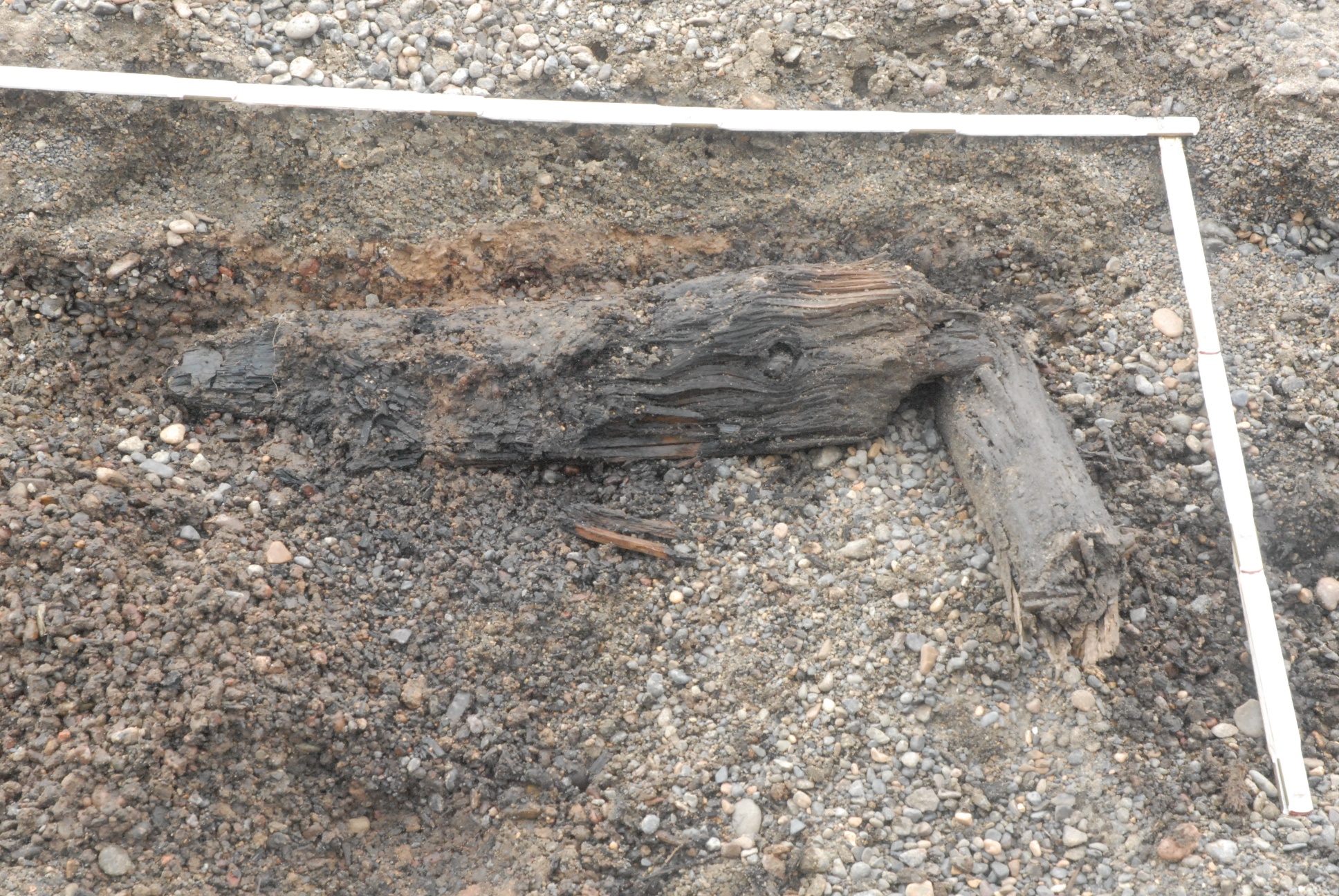
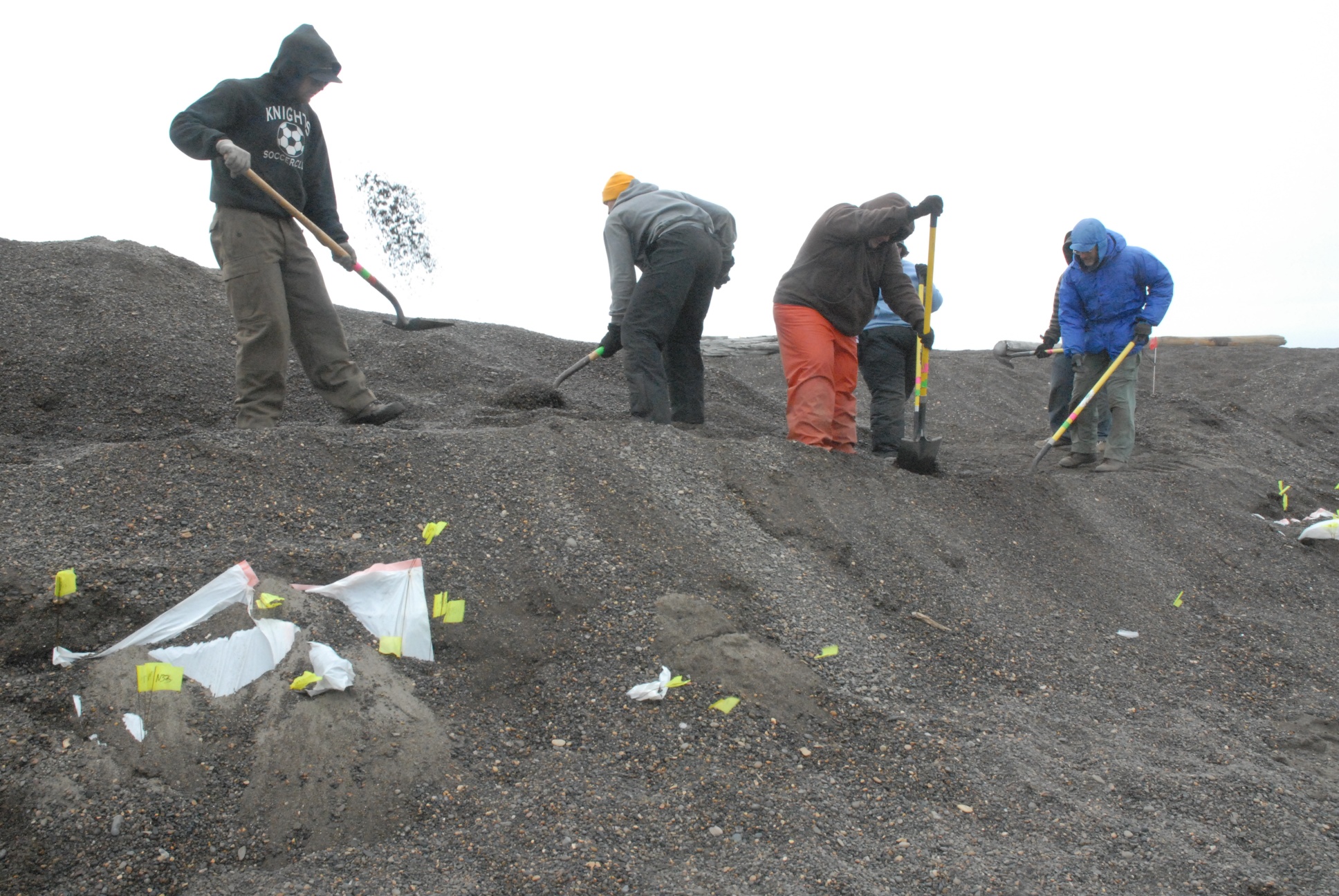
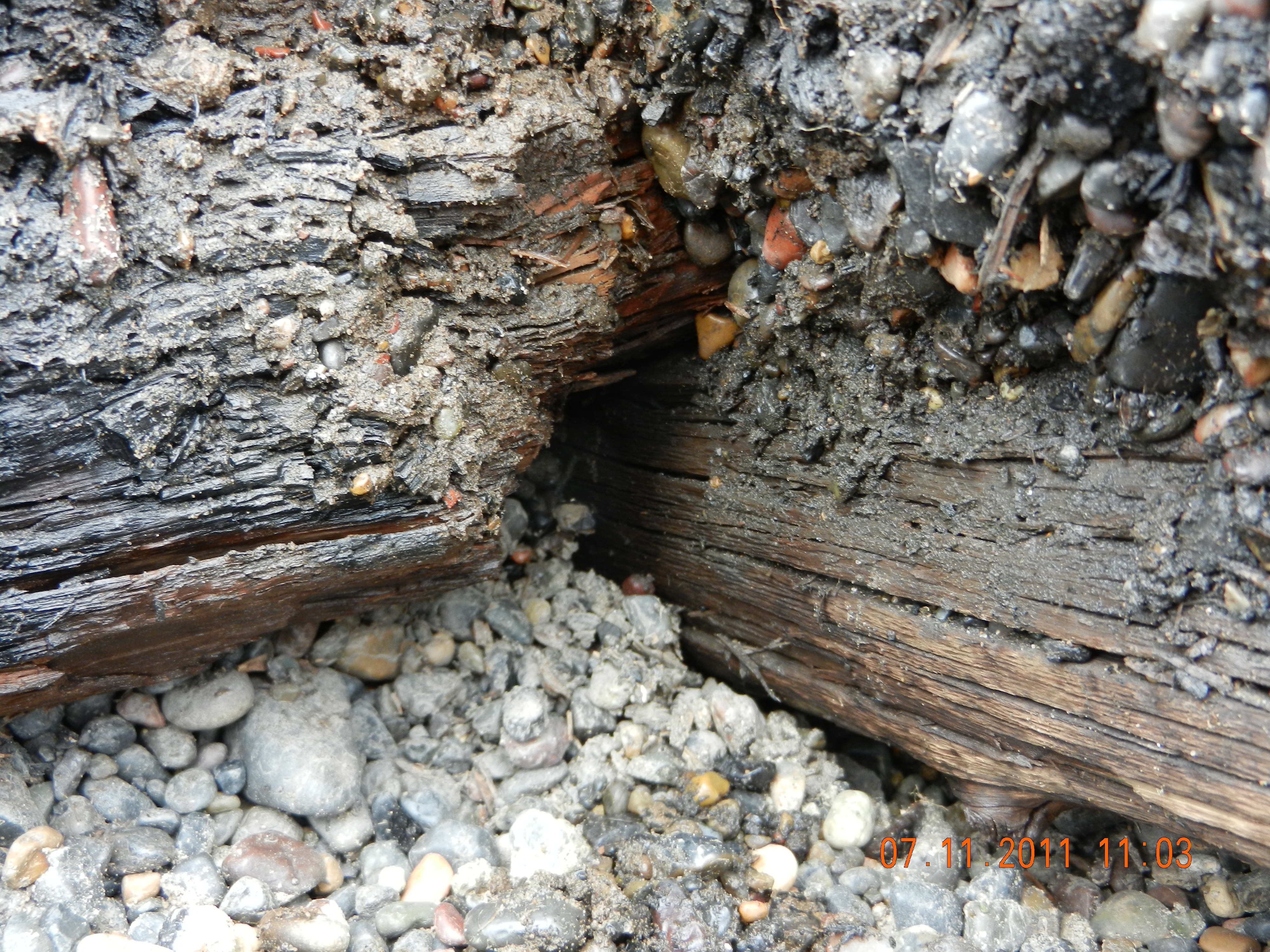
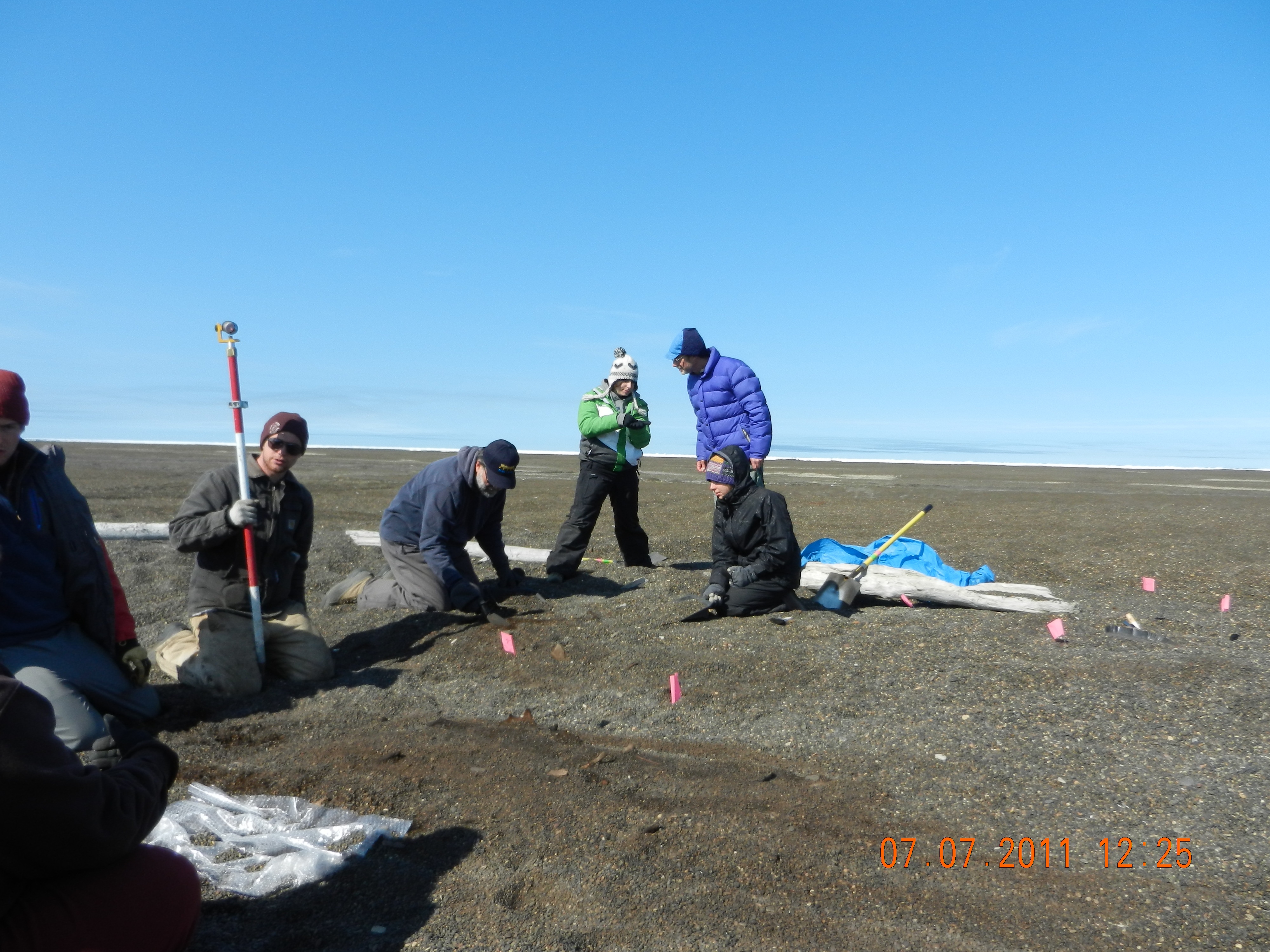
We spent most of the day with shovel testing, shooting in pits and moving gravel.  The gravel moving was in aid of getting a better look at the worked wood protruding from the erosion face at what appears to be the Ipiutak level.  So far, there seems to have been a fire and a lot of ash in association with one of the wood features, and it’s not clear if it was a hearth or a structure that burned accidentally.  Opening it up a bit more would help, but it is under a lot of gravel.

Structural timbers with possible hearth in Ipiutak level

The crew did yeoman work, and much gravel was moved, so we can get a look tomorrow.  There is actually a frozen layer under where most of them are standing, which will have thawed by tomorrow if we are lucky.

Flying gravel! L to R: Adam, Trace, Laura, Candace, Dennis, Tom

Sunshine & blue skies…

…and a full crew.  We started work on the burial under the plank.  It took quite a while, as the plank was complex to define.  It was all one piece, in some places up to 9 cm thick, and had obviously required a great deal of work and skill to make.  The top surface looked like the outer surface of the tree.  The bottom surface showed evidence of burning, in some areas completely charcoal.  It should be good for C14 dating.

The remains are those of a large male.  Preservation is a bit variable, but it looks like there might be some ribs that could yield aDNA.  In any event, he will be safely out of the trail.

Many on the crew did STPs.  So far nothing has shown up.  It is beginning to look as if there is a gap in the burials (or at least a much thinner distribution).  I’ve begun to wonder if this could be the result of a village move due to erosion, which brought the village close to the cemetery and made them skip a bit of ground to put the new cemetery at a proper distance from their residences.

At least it was a beautiful day.

First rainy day of the summer…

…which is pretty amazing if you know Barrow.  It was still somewhat windy and actually raining quite hard at times in the morning.  I decided we’d stick to STPs for the day, since drawing and photography would be sort of problematic.  Rhett and Jared were scheduled to be in the lab processing data, and Dennis decided to stay in too.  Several of the students were sick.

There was a half-hour delay due to confusion over who was going out as bear guards, and where they were to get rain gear.  UMIAQ even asked us.  We do have some spare rain gear, but it stays in the field in case someone’s gets wrecked or a student forgets theirs, so that really was no help.  They finally had to go home and get their own.  Then on the way out an ATV, which had been acting up for several days, “failed to proceed”  just past the end of the road, so another half hour delay for me, one of the bear guards and Candace, who was riding the dead machine.  UMIAQ brought another out and we continued.  No huge deal since we were just doing STPs, but if we’d been planning to excavate, everything would have been on hold until the transit and the excavation equipment in the trailer being towed by the dead machine could get to the site.

The crew that was there got a good number of STPs done, although nothing showed up.  At least it doesn’t seem like the GPR is missing anything, although some areas have been driven over so much and have so much refuse in them that nothing short of a whale skull would stick out from the background noise.

Blustery day

It really was, and chilly besides.  Winds were probably over 30 knots at Nuvuk, so we didn’t even try to excavate.  The day went with shovel testing, shooting in various things with the transit, and checking out the wood projecting from the erosion face that appears to be in the Ipiutak layer.  It’s looking pretty interesting, but hard to get at.

It was a long cold day, and I had a lot of paperwork to do, as well as homework for a course I am taking online, so…  More tomorrow.

Back at it…

After a day off, we were back in the field today.  The GPR hits we tested were mostly concentrations of water, and buried whale bones (not part of graves, unless it was a whale grave).  However, we also looked at two other areas that had turned up in the trails on the first day’s walkover.  One proved to be nothing but a concentration of refuse.  The other wasn’t looking much more promising, with peat and a little wood, but we took it down to expose all the wood, and low and behold, a very large piece of wood indeed, which is a burial cover.  We will have to excavate that tomorrow.  There will also be a new set of GPR results to test.

The burial cover exposed. That is one piece of wood! The dustpan is covering what may be a bone, so the photo can be used for the public.

There is also some wood exposed on the erosion face at what looks like the Ipiutak level, including something that looks like architecture.

Notched log resting on another log. Ipiutak?

Still working on it…maybe

We finished excavation of the primary individual in the burial, and even managed to remove the box for further analysis and sampling in the lab.  The second individual whose grave had apparently been disturbed seems to be a secondary burial, since there was a nail under the cranium, although there was a bird blunt among the remains, so…  And another very large skeletal element turned up, so there may still be more of the very large man.

More on all this later.

…turns into five…or possibly six (!)

It was fairly windy today, which made it a bit colder.  The GPR sleds are working much better, and even what they got yesterday looks promising without elevation correction.   They used a backpack Trimble GPS unit to get accurate elevations, and will use that to correct the GPR images.

The burial is becoming more complicated.  There are indeed 2 primary individuals, the most recent (a woman, we think) one whose grave cross-cut another smaller person’s grave.  The woman had a couple of leg bones from a smaller person in her “box”, which may or may not come from the smaller person whose grave was cross-cut.  There were also a few cranial fragments from a small child in the box, and a few elements from a sub-adult (but not the small child) turned up today.  There is also a pelvis from a large man, which makes at least 5 individuals.  If the leg bones don’t come from the second grave, it could be six.

We have expanded a bit and aren’t seeing much sign of any grave structures, so we are beginning to wonder if some of these individuals aren’t buried some meters away, with a few parts having been moved by vehicular traffic.  This may wind up being a case for the GPR.

One turns into three…

It was a great day in the field, with really lovely weather.  Dennis O’Rourke got in last night and joined us, as did Rhett Herman, & his student Jared Palmer with the GPR gear.

Crew members at the start of the day

We started excavation of the burial that had been found in the road.  As with most road burials it has suffered some disturbance.  At first it looked like there was a large man (found part of his pelvis), then a neck vertebra from a small person showed up, then one skull, then another, and then the nasal area from a third (!) person.  We still have more to do tomorrow, so this may change, but at the moment it looks like there may have been two burial side by side, and a third burial was dug across one of them at a later date.

Starting excavation of the burial

The GPR  guys had a good workout.  They had set up the units on carts, which had worked well yesterday on the beach near NARL, but something at Nuvuk must be different, because they described it as being like “pushing a shopping cart in sand.”  Naturally, this meant that they got less done than they had hoped, but they saw some things and will have a plan view in the morning.  I saw them this evening, and they’d already changed the configuration to a dragable sled, which seems like it might make tomorrow better for them.

GPR gear ("Eva") in foreground, with flagged survey grid in rear
Jared pushing the GPR lawnmower in a brief foggy period

First field day!

We headed to the field this morning.  There were a few glitches, as always in Arctic fieldwork, and a few minor issues that could have been avoided with a bit of planning ahead.  The Rule of 6 Ps applies here, as in so much of life.

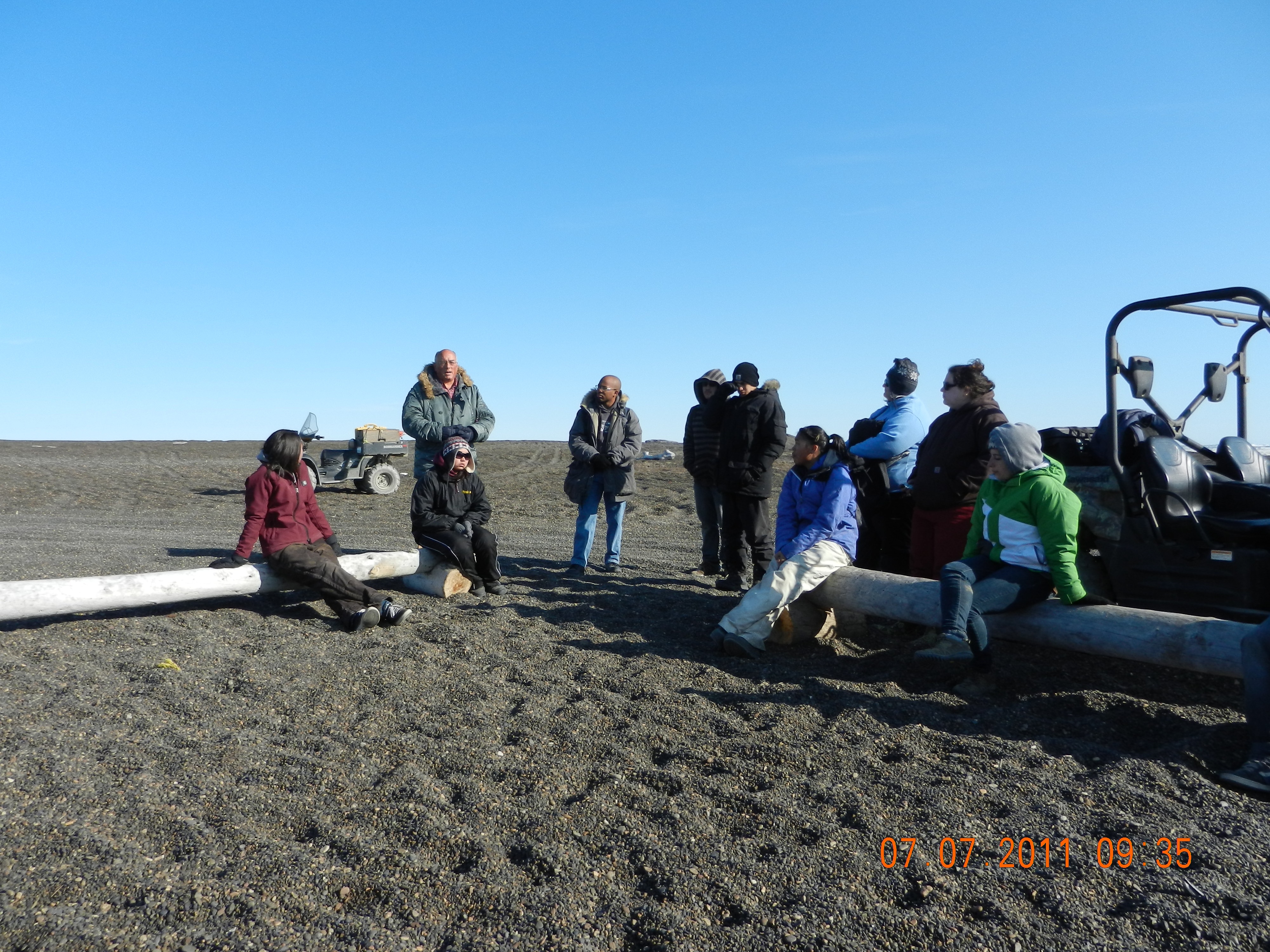
The first order of business was to get the gear stashed in a suitable fashion.  UMIAQ had come out and put ties on the tents so there was a way to keep the flaps open, and even built some benches out of driftwood, complete with a stump they had set up for a stool in front sort of like a lecture hall.  They told me this evening the stump was meant for me to sit on when addressing the crew (!) but so far it only got used for balancing on one foot on.

Once that was taken care of, the crew got pin flags and set forth to do a surface survey of the area inland of where we left off last summer.  We have done this for seven years now, and we are finding less than we used to in these walkovers, but there is always something that works its way to the surface.  There were a couple of bird blunts, a marble and some other odds & ends that we managed to shoot in with the transit and collect, but the big find, since our goal is in part to keep the former residents of Nuvuk from eroding into the ocean and learn about them at the same time, was the discovery of a grave.  It was in the middle of the trail that people use on that side of Point Barrow, and had clearly been exposed by traffic, which had scattered some parts.  We recorded the scattered elements, and have set up barriers so no one can drive over the person by accident.  Dennis O’Rourke gets here tomorrow, so we will excavate the burial on Thursday, when he can take the aDNA samples.

It was sort of foggy and windy, and really looked like it should be miserable, but it was oddly warm and bright, just really foggy most of the day.  Everyone kept remarking on how weird, but nice, the weather was.  Hoping for more of the same…