I haven’t been posting much lately. Not that I haven’t been writing a lot, but it’s all been papers, reviews, more papers, quarterly reports, monthly reports, bi-monthly reports and so forth. I’ve still got a couple of papers to finish, not to mention homework for an on-line course I’m taking, and of course, that wonderful April ritual of taxes. Then there are a paper and a presentation for the SAAs in Memphis.
The most fun things to write are letters of recommendation for students who have worked on the Nuvuk Project. It is really great to see kids graduating and moving on to college, although we do miss them when they move on. I’ve been working on ways to continue the archaeology program after the Nuvuk grants are done.
The sun is up for about 15 hours a day now, and will be up full-time in just over a month. This is a pretty time of year, and I’ve gotten some nice pictures. Here’s one of the conjunction of Venus, the moon and Jupiter.
A couple of days ago, I looked out the window, and noticed frost flowers hanging on the clothesline, swaying in the breeze! I’ve never seen anything like it.
I was traveling the last couple weeks to the Alaska Anthropological Association conference in Seattle, and then stopping in Anchorage on the way home to help my daughter get settled there. The conference and the session went well. I’ll try to put something up on the highlights, when I get a little more free time. I’ve still got papers and also homework for an on-line class I’m taking.
Yesterday, we got back to going through the Ipiutak floor material from the summer and the fall salvage excavation. Trace Hudson, Jacob Harris & Frieda Kaleak all came in, along with Laura Thomas, and we got going on the screening, floating and picking over the heavy and light fractions.
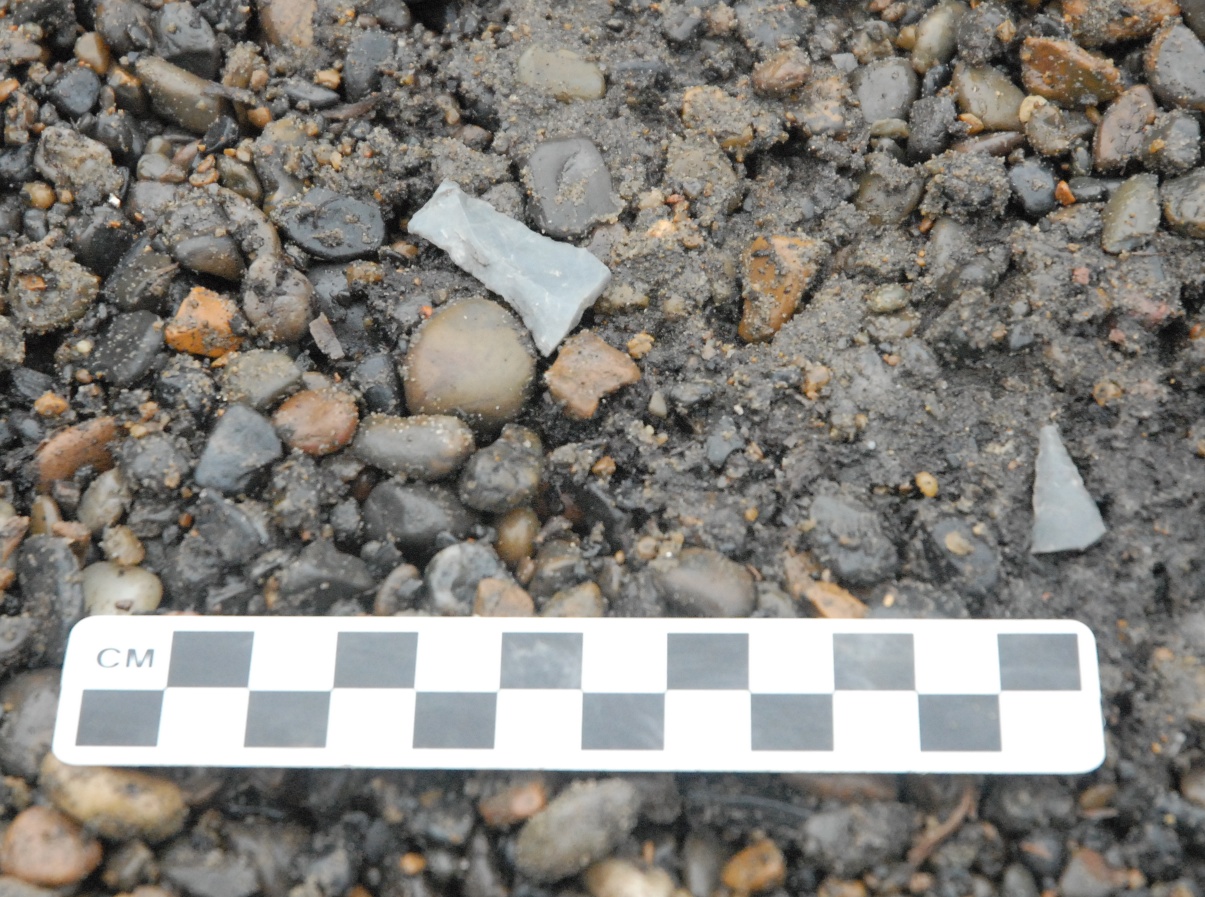
It’s a slow process, but a couple of things were found yesterday that may be interesting. A couple of very small fragments of rock crystal (probably clear quartz) showed up. This is interesting because of some of the properties of quartz crystals and the finds of larger quartz crystals at some Ipiutak sites.
We got so into that process that we didn’t actually get much straightening up done. I’ll have to do that later this week, since some visitors are being brought to the lab on a tour late in the week, and it’s a bit messy there now :-(.
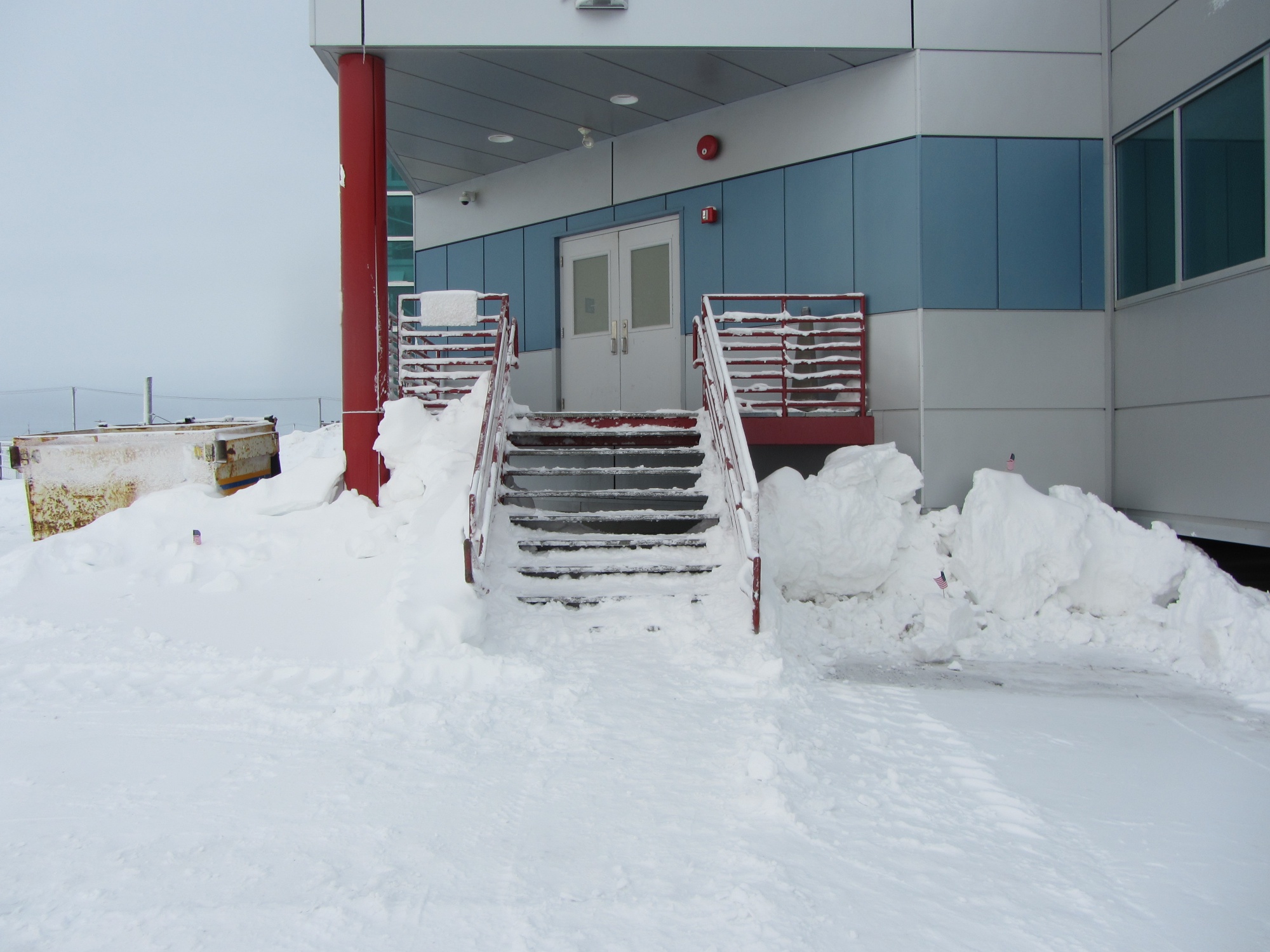
I was walking into the BARC (where I have my office and lab) after lunch the other day, when I came upon this scene:
Flags at the BARC
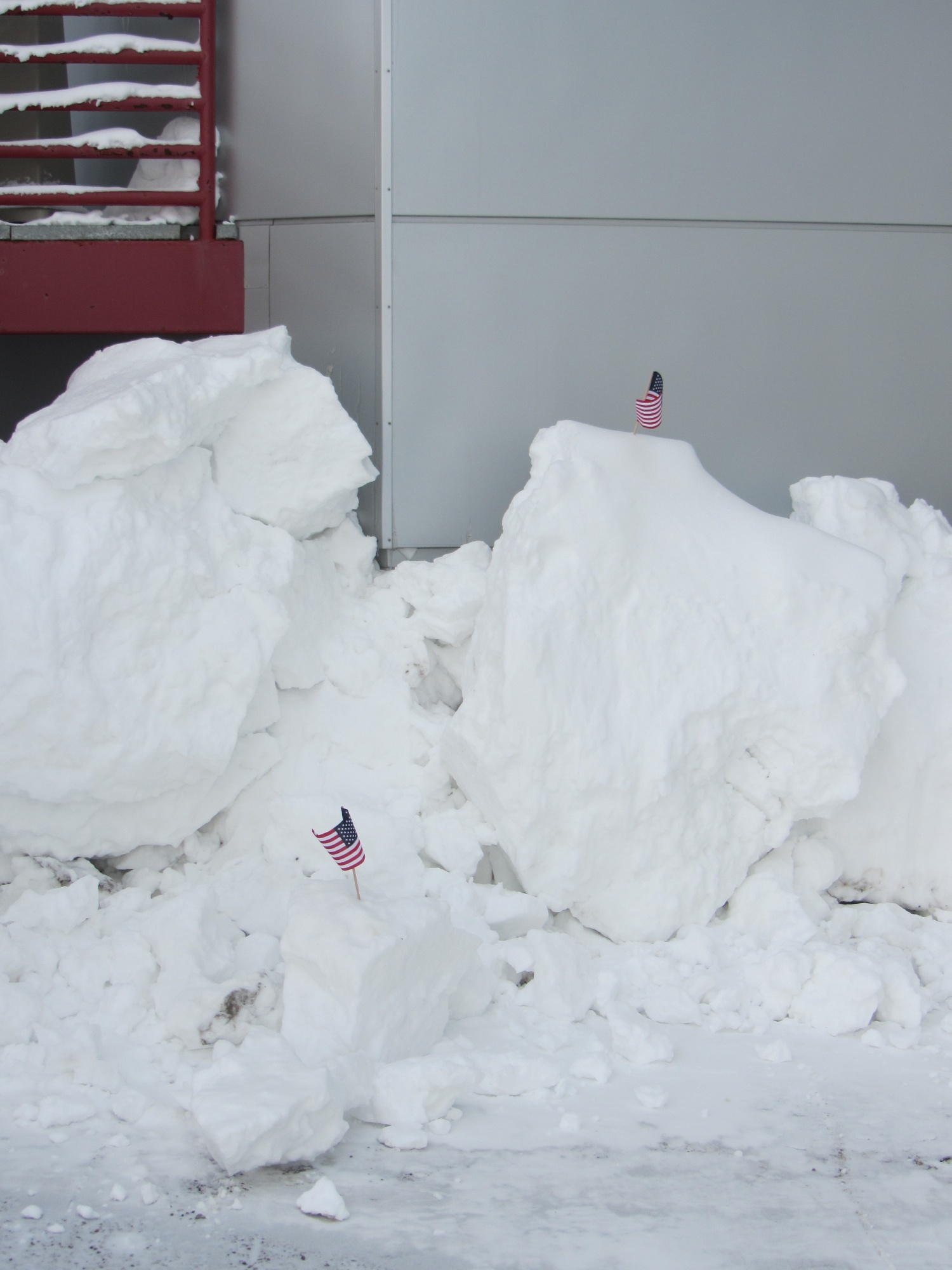
A closer look:
Flags at the BARC II
Who put them there, or why, we do not know. But there they were and are.
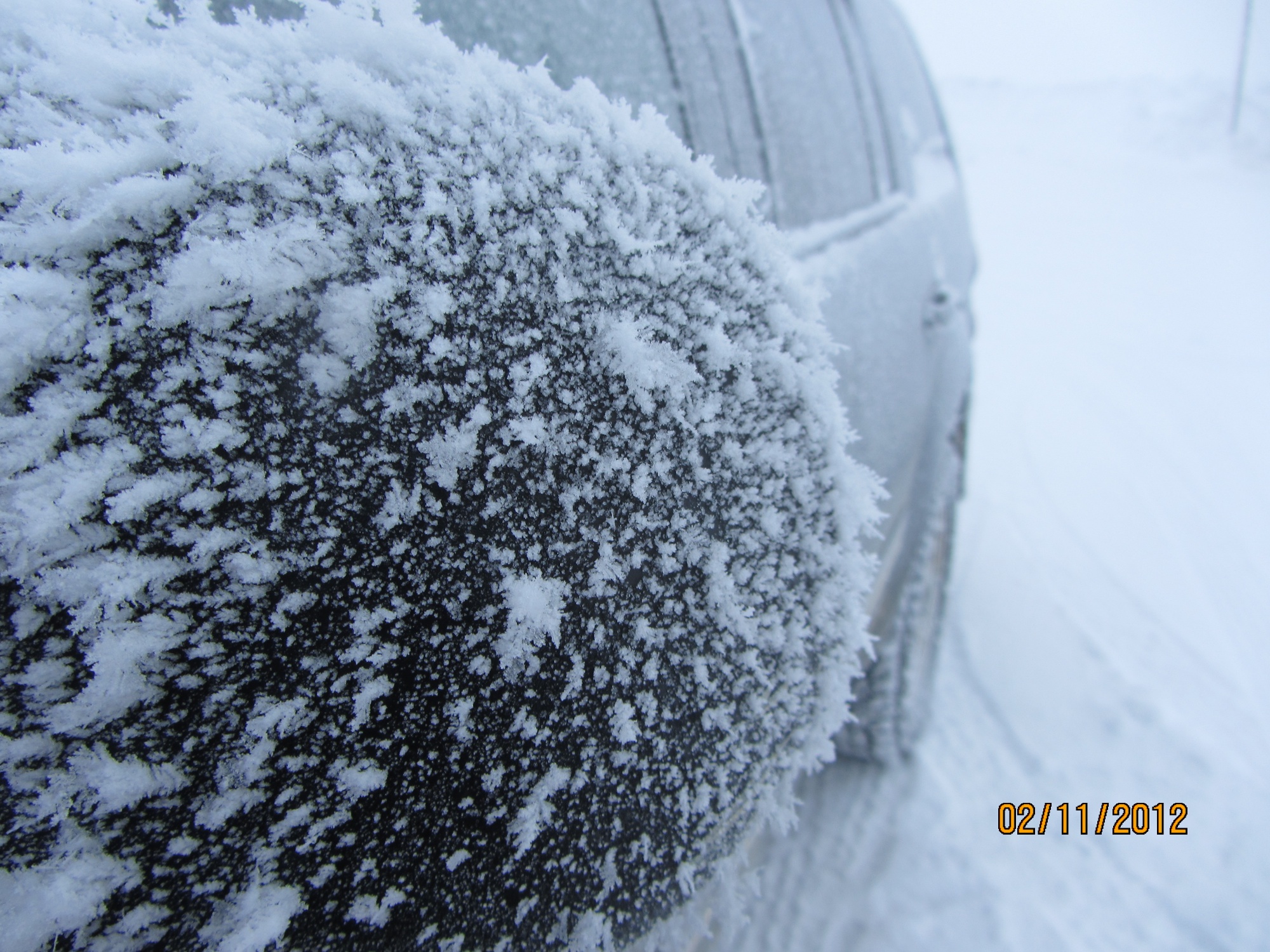
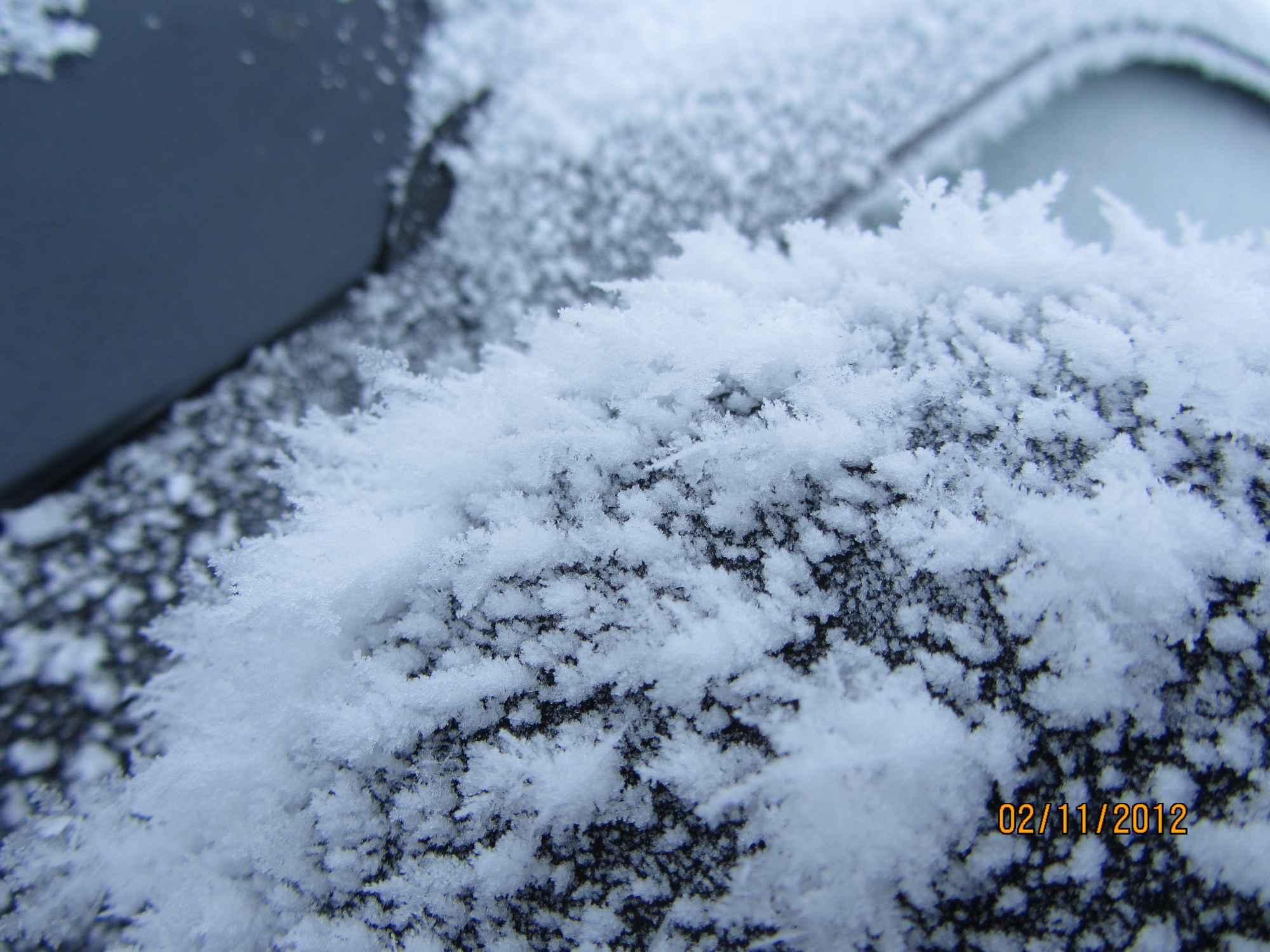
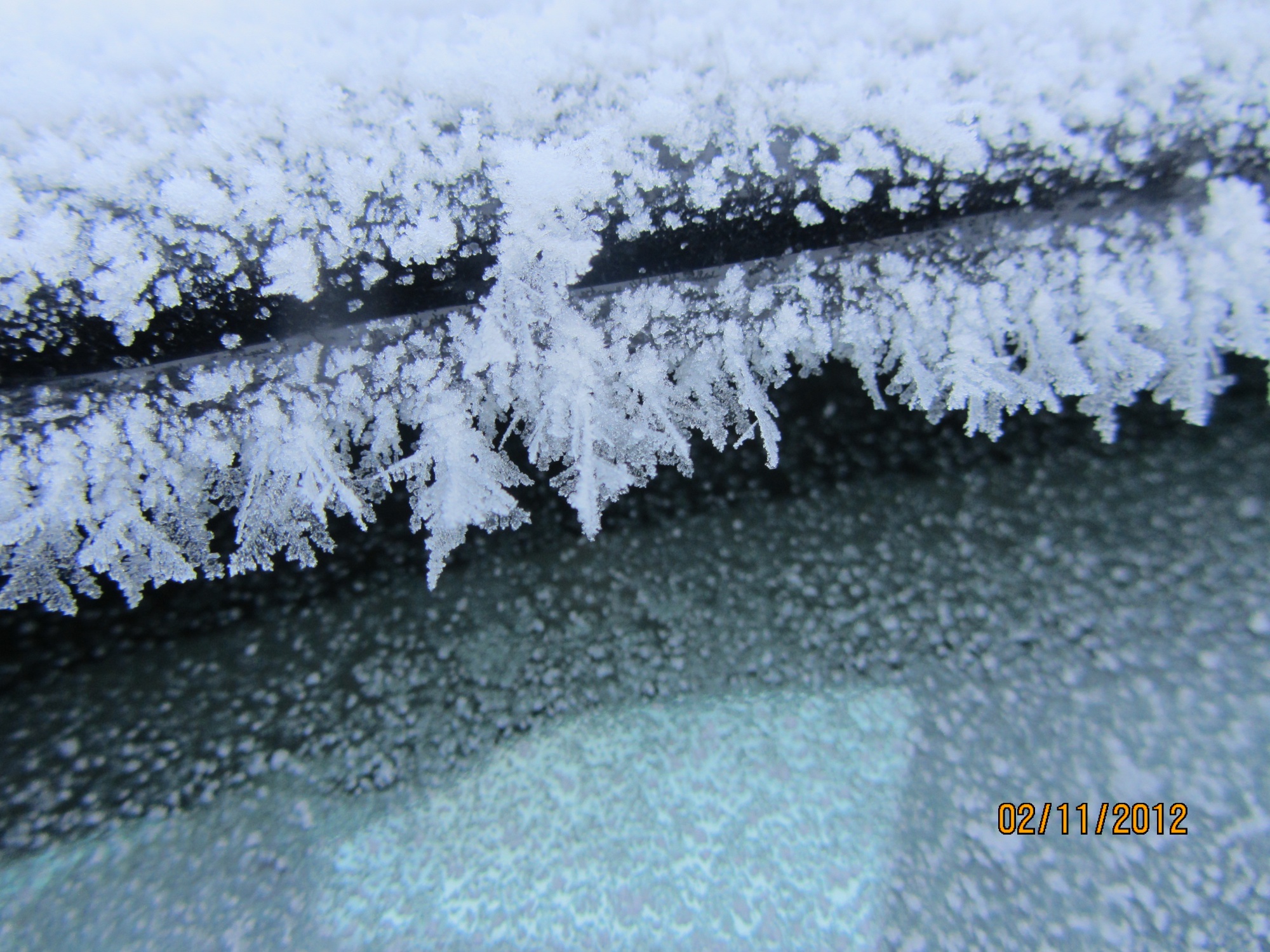
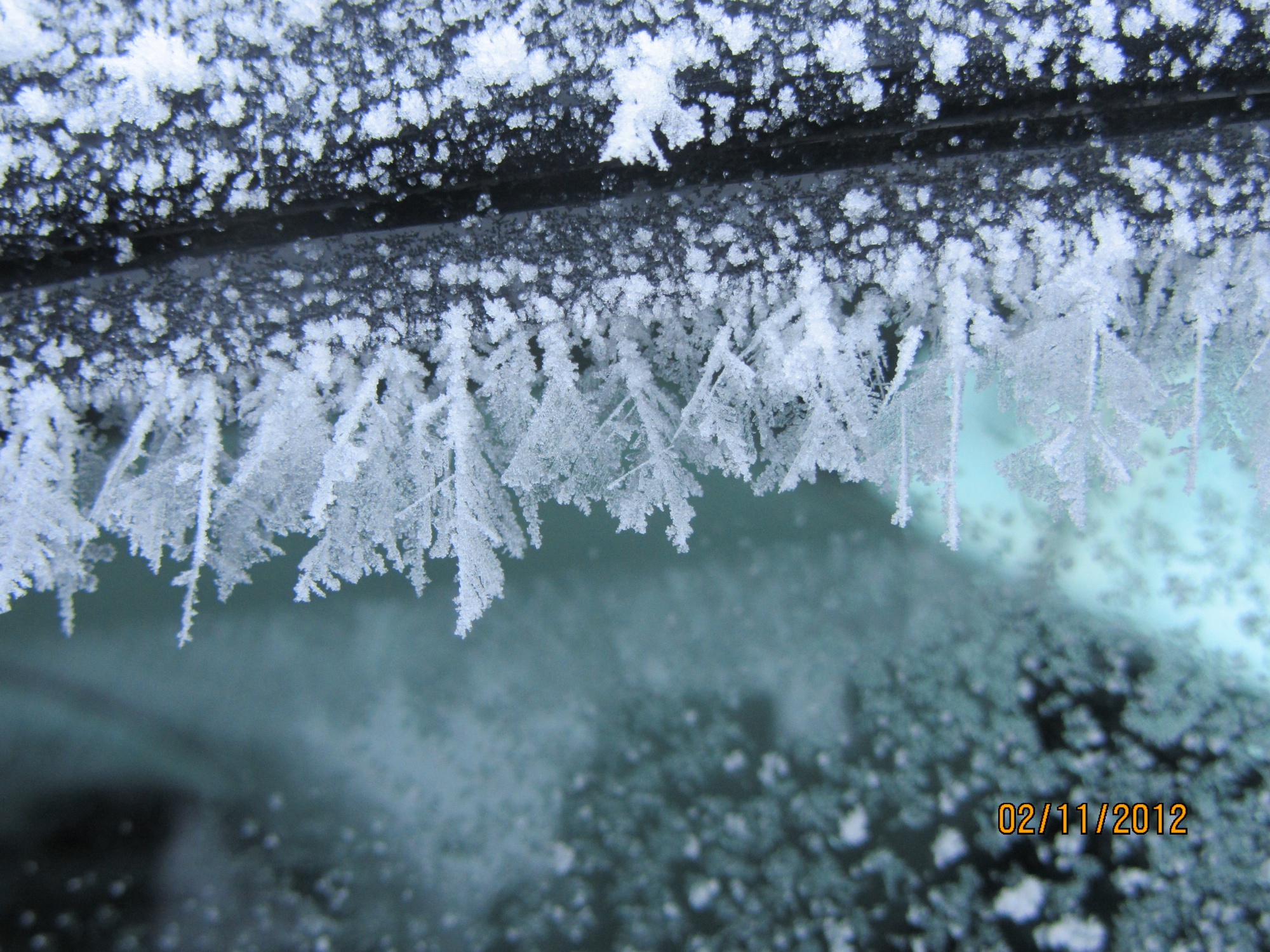
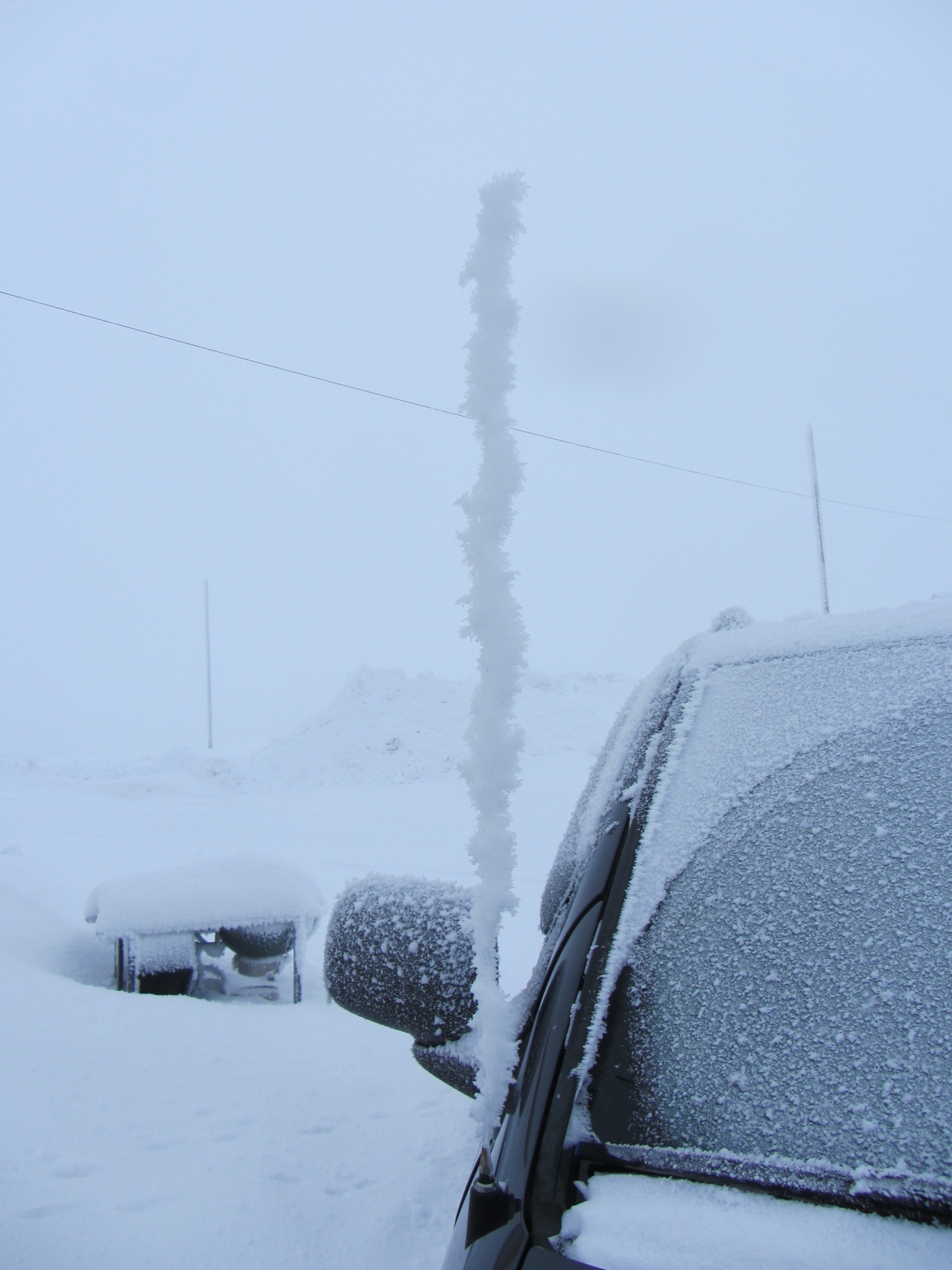
Last night, hoarfrost started building up on things. By this afternoon, my car was covered in it. Hoarfrost can be amazing, with long fern-like feathers growing off of surfaces.
Hoarfrost on the mirror.Mirror close-upFrost feathers IFrost feathers II
The best was the spiral effect the frost that grew on the antenna made.
Well, I’ve gotten 3 of the six papers off to the editors, either in final form or waiting for review, and the big one on Late Western Thule (I think that’s what I’m calling it, pending any requests from the editors to change it for consistency in the volume) is coming along. Right now it’s way too long, still missing a couple of topics, and in need of serious cutting & some illustrations. So I don’t feel quite so guilty about writing anything not strictly part of the paper.
That was going to be the start of a good (nay, dare I say great) catchup post. However, it has been very cold in Barrow, the rest of the family is in Juneau, and I have been trying not to use too much water because the trucks that bring it and the trucks that haul the sewage don’t work well below -30°F. Alas, apparently I used so little water that the bathroom sink drain froze up (there is sort of a design flaw in the drain & I don’t think they ran the heat trace (heated wires along pipes to keep them from freezing) far enough), although thankfully the tub & toilet still are working. So I think I have to go try to remedy the situation now :-(.
I just got back from the local library, where I went for a talk by Aviâja Egede Lynge on Mental Decolonization in Greenland. Aviâja is a really great speaker, with a graduate degree in social anthropology, who is working on the process of changing the school system to be truly Greenlandic in nature. If you ever get a chance to hear her talk, take it.
The talk was about the lingering effects of the Danish colonization of Greenland. A benign colonization, perhaps, but that brings its own issues. A very complex problem. Much of it is probably the same in any area that has been colonized, other aspects are perhaps specific to this particular case.
When I got the information from the AHRS files, one of the two sites listed was Maudheim. I recognized the name, but had connected it with a Norwegian-British-Swedish station in Antarctica. Obviously that wasn’t it. It turned out the Maudheim near Wainwright was a station that had been built by Roald Amundsen, the Norwegian explorer, in 1921 or 22 in connection with his planned flight over the North Pole. It was meant as an overwintering base, although it seems that Amundsen actually spent the winter in Nome, leaving his pilot Oskar Omdal to take care of Maudheim and the plane.
After the expedition was over, Maudheim was apparently acquired by the Midnight Sun Trading Company, which seems to have dealt in coal from small mines near Wainwright as well as other standard items. There may have been some additions to the building. Although the trading post seems to have gone out of business quite some time ago, the building survived for many years. According to Tim, he was told it was torn down a few years ago since it was not being maintained (no real owner) and people in Wainwright were afraid it was becoming a hazard for kids.
Footprint of a building, probably Maudheim.Ice cellar near Maudheim site.
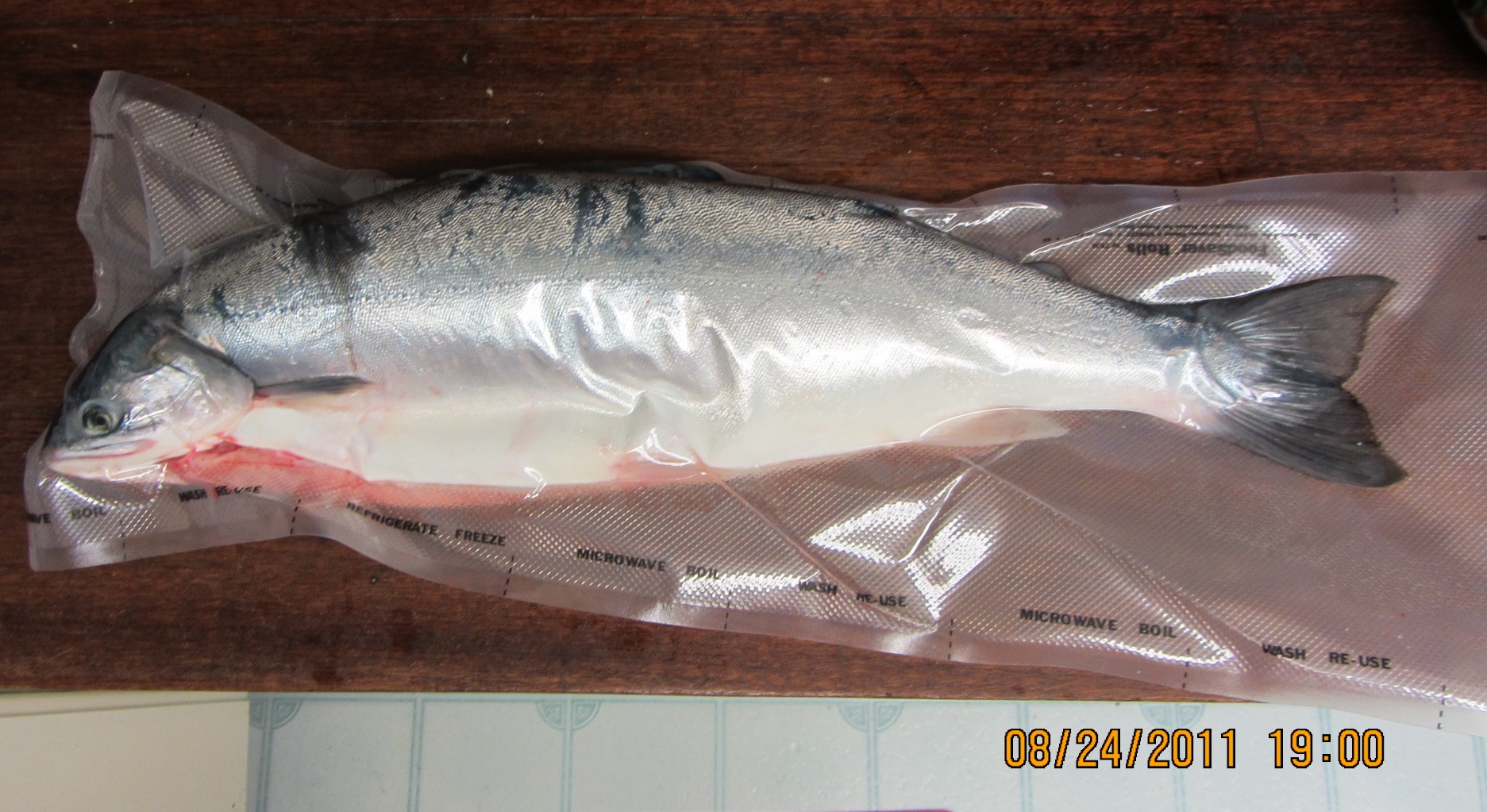
I was going to continue the story of the trip to Wainwright, but then there was a knock at the door. Mike & Patsy Aamodt have a net out by Nuvuk, and often stop by to check on the proceedings (Mike was once an archaeologist, among many other things). They stopped by on the way home from checking their net, and were kind enough to share two Dolly Vardens from their catch.
Dolly Varden heading for the panDolly Varden heading for the freezer
They were alive until a couple of hours ago, and one went straight to the oven and the other got vacuum sealed and went straight to the freezer.
Super tasty! Thanks so much to Mike & Patsy!
Dolly Varden “trout” are actually char and can either be sea-run, spending part of their lives at sea, or landlocked, spending their entire lives in freshwater. The name comes from a character in a Charles Dickens novel, who had a polka-dot dress, and after whom a type of 1870’s fashion was named. The fish was probably named after the fashion.
I am going to save the skeleton for a comparative specimen.
Once we finished with the original reason for the trip, we headed back to town for lunch. The Olgoonik Hotel does have a very tasty grilled cheese sandwich, and they make their own soups.
Since there was time left, I decided it would be a good idea to go back to the general area where the possible road would go, since between the TLUI and the AHRS there were a number of nearby sites. Given that many of them were not located by GPS (in some cases the only location data was something like “3 miles from Wainwright” it seemed like it would help my clients to know a bit more about the situation prior to actually trying to design a road.
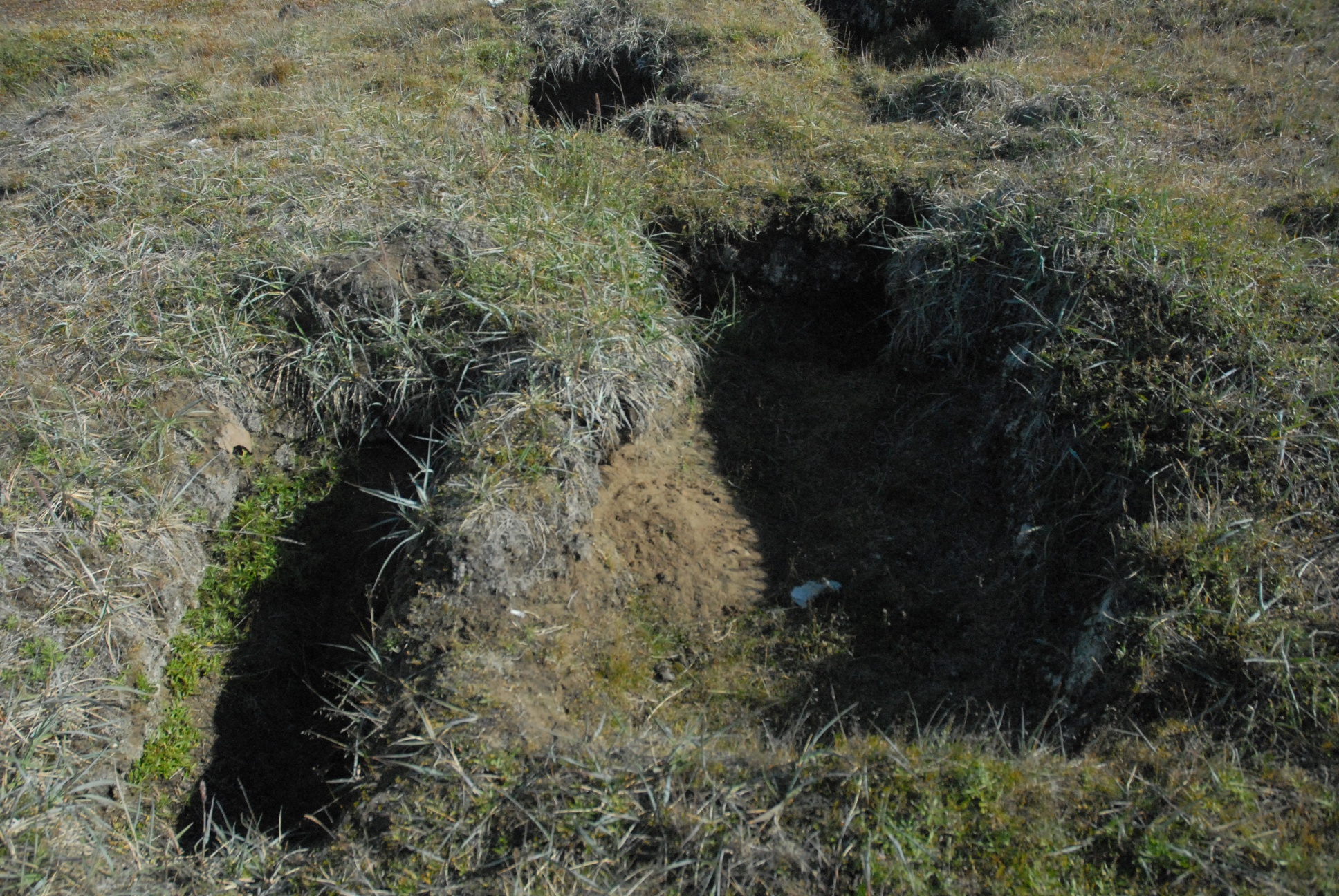
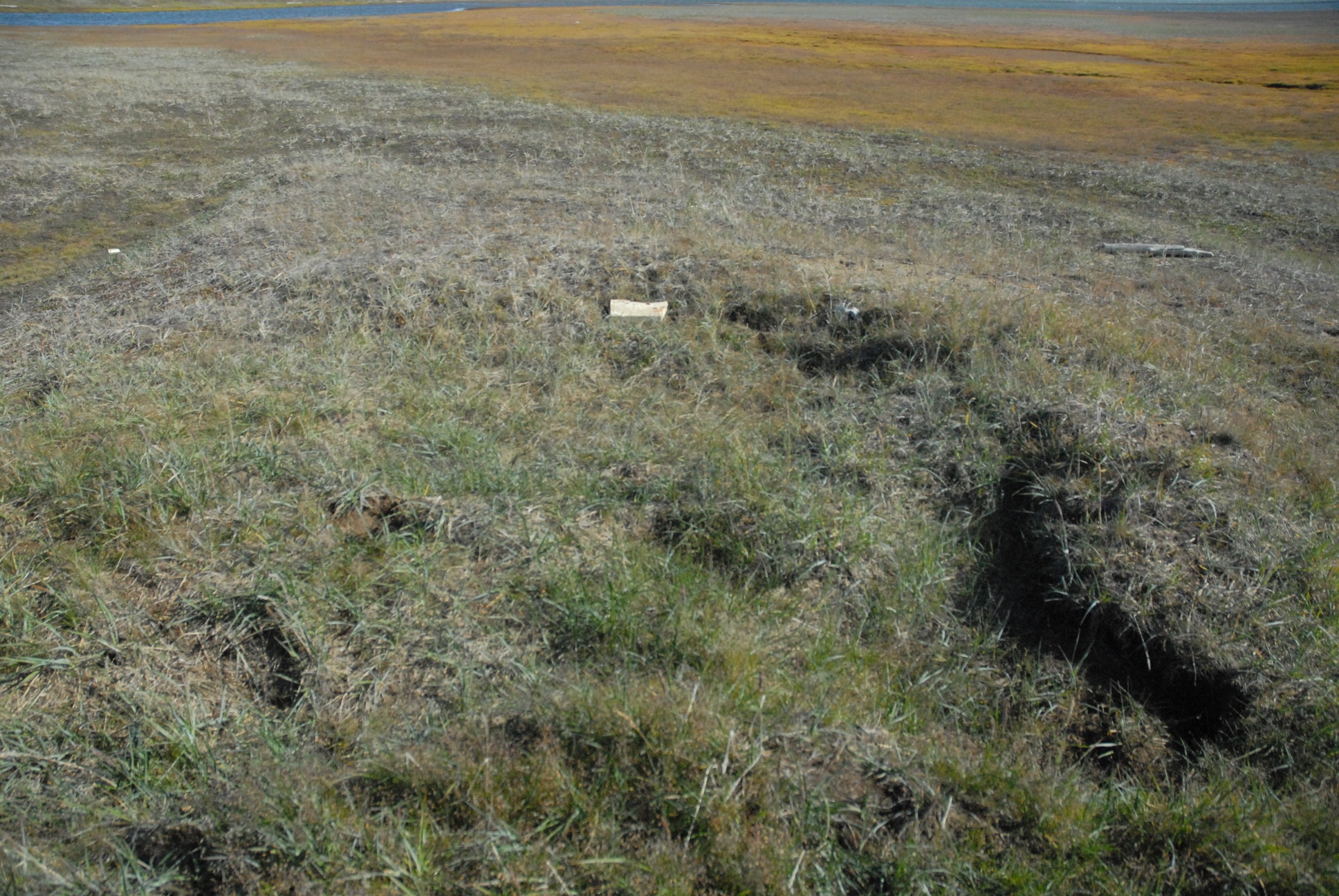
The TLUI showed an area whose name translates as “a place to tent” very close to the find. There was a fairly flat area between the river and a lagoon which looked likely (especially in the past, when sea level was a wee bit lower) so we went there. There was some evidence of tenting, and a lot more of butchering, mostly of larger marine mammals, including beluga and maybe a porpoise (they are found around there, and the skull didn’t look right for a beluga, of which there were multiple examples). But what there was also evidence of was archaeology. And lots of it! There were a veritable plethora of trenches, very overgrown, so this had all happened some time ago.
Old 1m x 1m unitTwo units separated by a baulkYet more excavations, at a slightly higher elevation.
Tim was fascinated, and wanted to clean a wall, so I headed off to get my trowel. He’d started with a bone he found, and discovered that under the lichen the wall in question was very hard. I started to clean it and immediately recognized oil-indurated sand. It became clear that there were overlapping patches of oil induration at various levels, and that the area had been used to process marine mammals for some time. It was a sunny day, and after a while the smell of marine mammal oil permeated the pit. It’s the smell of archaeology in the north, and I love it. Others may think differently.
This was very interesting, as one would expect that this much excavation would only happen if the archaeologists were finding things. If one put several sterile trenches in, one would probably go elsewhere. Yet, there is no site recorded in the AHRS at that location, and I’m not sure who did this. There are a couple of hints in Waldo Bodfish’s autobiography with Bill Schneider, but there is still a mystery to solve there.







 Out of Ice and Time