Some interesting papers so far

I’ve heard a number of interesting papers so far.  A bunch of them were in a session on digital archaeozoology.  I find this interesting in part because I live and work in a remote area with limited research resources on hand, although for the size of the place they are truly exceptional. A number of highlights from the session below:

1)  A paper by Matt Law on zooarch on the Internet.  He’d done a survey of on-line arch data archives. People often use them heavily, but so far are not good contributors. People still see on-line publication as less prestigious (which is a problem if they are working toward tenure), but most would still be willing to participate if the process were straightforward enough.

2)  A paper by Isabelle Baly & others about a big national database (INPN) the French are building of data on plants and animals from archaeological sites. Much of the data they are including comes from salvage and compliance excavations, which often don’t get published. This is a huge amount of work to pull together (especially with the staff of three that they have!), but it lets people do analyses which they could never afford to do otherwise. It seems to be available through a public website, which will let students and members of the public see and use the data themselves, which is pretty cool.

3)  A paper by Jill Weber and Evan Malone about a set (30+) of skeletons of equine hybrids between donkey and onager, which are currently a unique sample. These are thought to be the Syrian Royal Ass, the Kunga, which was actually the Animal of the Year in Syria a few years ago. The problem was how to be able to preserve & share these bones, and study them without damage to the originals. Answer–3D laser scanning & “printing” them.  3D printing actually makes a replica of the item, and is very cool technology.   Depending on the budget, the replicas can be very good.  The scanned models in the computer are actually even better for doing measurements on ( something we do a lot in zooarchaeology) than real bones in some cases.

4)  A paper by Katherine Spielmann and Keith Kintigh on the Digital Archaeological Record (tDAR).  TDAR is a large-scale data archiving and integration tool, developed at Arizona State University.  The impetus was that a lot of archaeologists there had data  that they were interested in comparing, in order to look at things across a broader area than any of them had studied individually, but were stymied by differences in the way that their data was stored.  They are trying to develop an integration tool and data warehouse.  I haven’t tried it, but it seems interesting.

5)  A paper by Matt Betts, and a number of others about the Virtual Zooarchaeology of the Arctic Project (VZAP) –very cool 3D models of Arctic (and subarctic, since ISU has been working in the Aleutians/Lower Alaska Peninsula area under Herb Maschner for years, and that’s what they see most of) fauna.  The bones are accessed through a very neat visual database interface, which lets you look for bones by species or by skeletal element (part of the body), which is the most common way to find things when identifying unknown bones.  Often you can see you have a femur (thighbone) for example, but aren’t sure what animal it’s from.  The best physical comparative collections of bones actually have a set of femurs you can look at, rather than having to go to a bunch of skeletons and find the femur.  I’ve used this one, and it’s handy.  As more species get added, it will only become more useful.
Off to a conference of archaeozoologists

… or zooarchaeologists or faunal analysts (people who study animal remains from archaeological sites), in Paris. The trip over was a two-day affair, involving not one, but two red-eyes. We had a good tail wind, so the Salt Lake City flight was about an hour and a half shorter than expected, which made up for a late departure due to bad weather.

The conference is feeding us lunch every day, and it’s pretty impressive for a university cafeteria. One starter, one main course, one cheese, one desert and one drink. The folks I ate with didn’t see it, but there are rumors that wine was available. The coffee breaks have great pastries and fresh fruit.

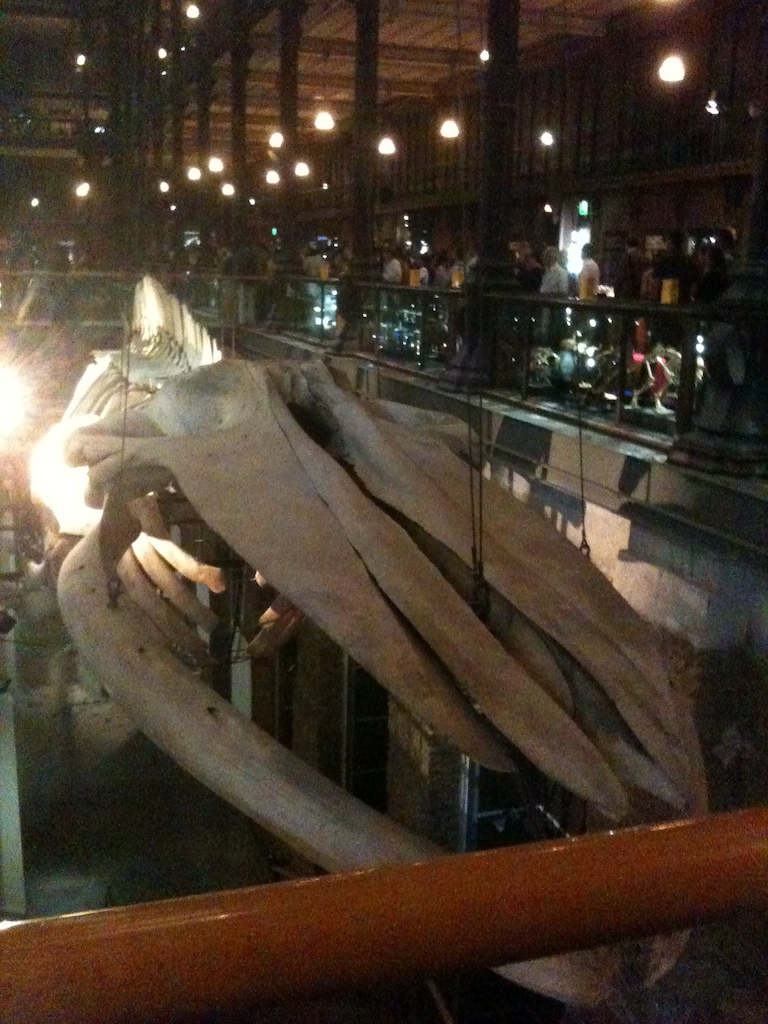
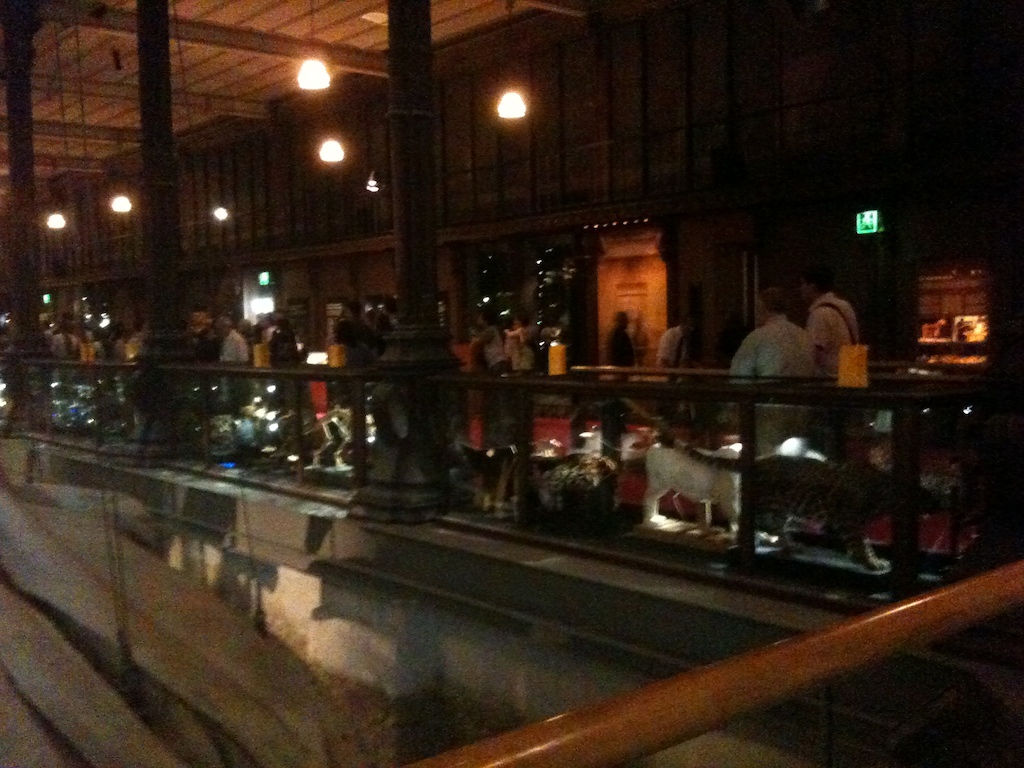
The opening reception was amazing, and they didn’t run out of food, frequent problem at such events. They held it in the Grande Galerie de l’Evolution (Great Hall of Evolution) of the National Museum of Natural History, which is just amazing. A few pictures from there follow. I took them with my phone, so the quality is not the best.

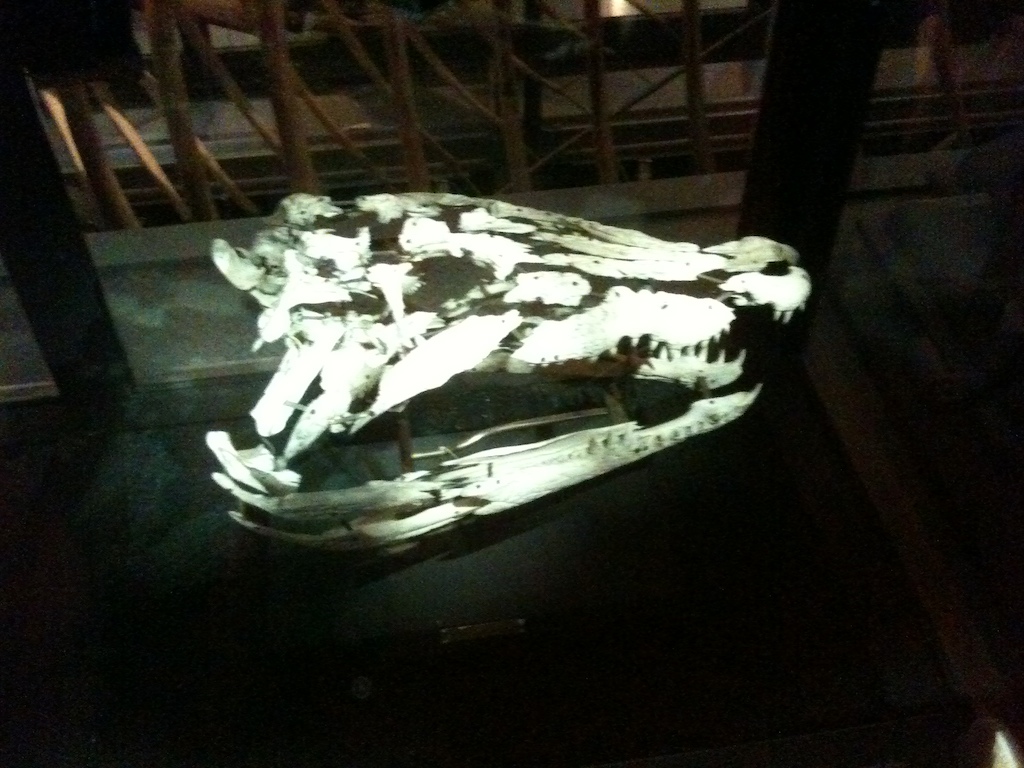
Skull of Nile crocodile
Blue whale skeleton
Southern right whale skeleton
Arctic or Pacific loon, probably Pacific. They look alike, and the ranges overlap.
A small portion of the assembled multitude.

There are also some neat older mounts.  The one of the tiger on the elephant is because a French duke was hunting on elephant back in India, and a tiger leaped onto his elephant.  He was only saved because she was so heavy she broke the basket he was riding in.  She was shot, and that’s the tiger in the mount, which he had made and donated.  It didn’t say if it’s the same elephant.

A hippopotamus, closer-up than you'd want to get in real life.
Tiger and elephant, with howdah (the basket).

Very neat website about Science and Barrow

Barrow is a pretty interesting place in terms of the sheer amount and variety of science that gets done here, as it has been since the 1st International Polar Year (IPY).  It can be hard keeping track of it even if you live here and are a scientist.  We don’t have a local newspaper reporter, and the radio station can no longer afford a full-time reporter, so there is no local source of science stories for the general public.

Many scientists want to let people know what they are doing, and what they are learning by it, but there are a number of barriers (another post for another day).  One way is blogging.  On bigger hard-science projects, websites and more are possible, since the cost of people to take care of them is really a tiny  portion of the project budget.

A recent project called OASIS really takes this to another level.  Dr. Paul Shepson, the PI, actually built in an author to write about the project, and things grew from there.  Peter Lourie, the author, has written two children’s’ books and has moved on to multimedia.  They’ve made a really neat website, which has video from a number of scientists who work in Barrow.  There’s a lot from various folks on the OASIS project, but also from people who live in Barrow, like Fran Tate of Pepe’s, whaling captain Eugene Brower and even me.  I actually got interviewed twice, because the sound on the first set got messed up, so I had to do it all over again when Peter came up again!

Definitely worth checking out.

Live, from Barrow, it’s… Saturday Schoolyard!

Saturday Schoolyard is a BASC-run program of community science talks. Plans are to stream them, as well as archive them as vodcasts. Today’s is being streamed as a test of the system.  Since it’s a test, there may be glitches, but if you’d like to hear a bit about doing science in Barrow from a New Orleans science teacher’s perspective, go here.

Barrow to the Bayou:
A New Orleans High School Teacher Explores Permafrost and Polar Education

The talk starts at 1:30 PM  ADT, but the video stream should be live by noon.

Now we’re waiting for equipment…

Shawn made it in on Friday, but some of his digitizing equipment, which had been shipped in advance with a promise from UPS that it would be here last Tuesday or Wednesday, didn’t.  He had to start with analyses that didn’t need the equipment, and we’re hoping it gets here in time for him to use it before he travels back to Utah on Wednesday.

Here’s hoping the plane makes it in tonight…

…because Shawn Miller, the physical anthropologist who will be documenting the human remains excavated at Nuvuk this summer, is supposed to be on it. The weather has been rather unfortunate of late, and a number of flights have tried to land, only to be turned back by visibility below minimums, thanks to the fact that the folks who sited the Will Rogers-Wiley Post Memorial Airport seem to have picked the foggiest spot they could find. A lot of folks have gone back and forth between Anchorage or Fairbanks and Barrow a couple of times by now (and you don’t get frequent flier miles for that).

We’ve got the lab all ready, and Laura is getting Shawn’s equipment (various digital measuring devices) out in case he wants to get an early start.  Once he’s done, we can arrange the reburial.

RIP Uncle Ted

“Where there was nothing but tundra and forest, today there are now airports, roads, ports, water and sewer systems, hospitals, clinics, communications networks, research labs and much, much more.”  (from Senator Theodore F. “Ted” Stevens’ final speech in the United States Senate).

I read those words yesterday.  When I did, I was sitting in my office in one of those research labs, the Barrow Arctic Research Center (BARC).  Down the hall is the beautiful lab occupied by the Nuvuk Archaeology Project.  Like so many other things in Alaska, especially rural Alaska, it wouldn’t be there if it weren’t for Uncle Ted.

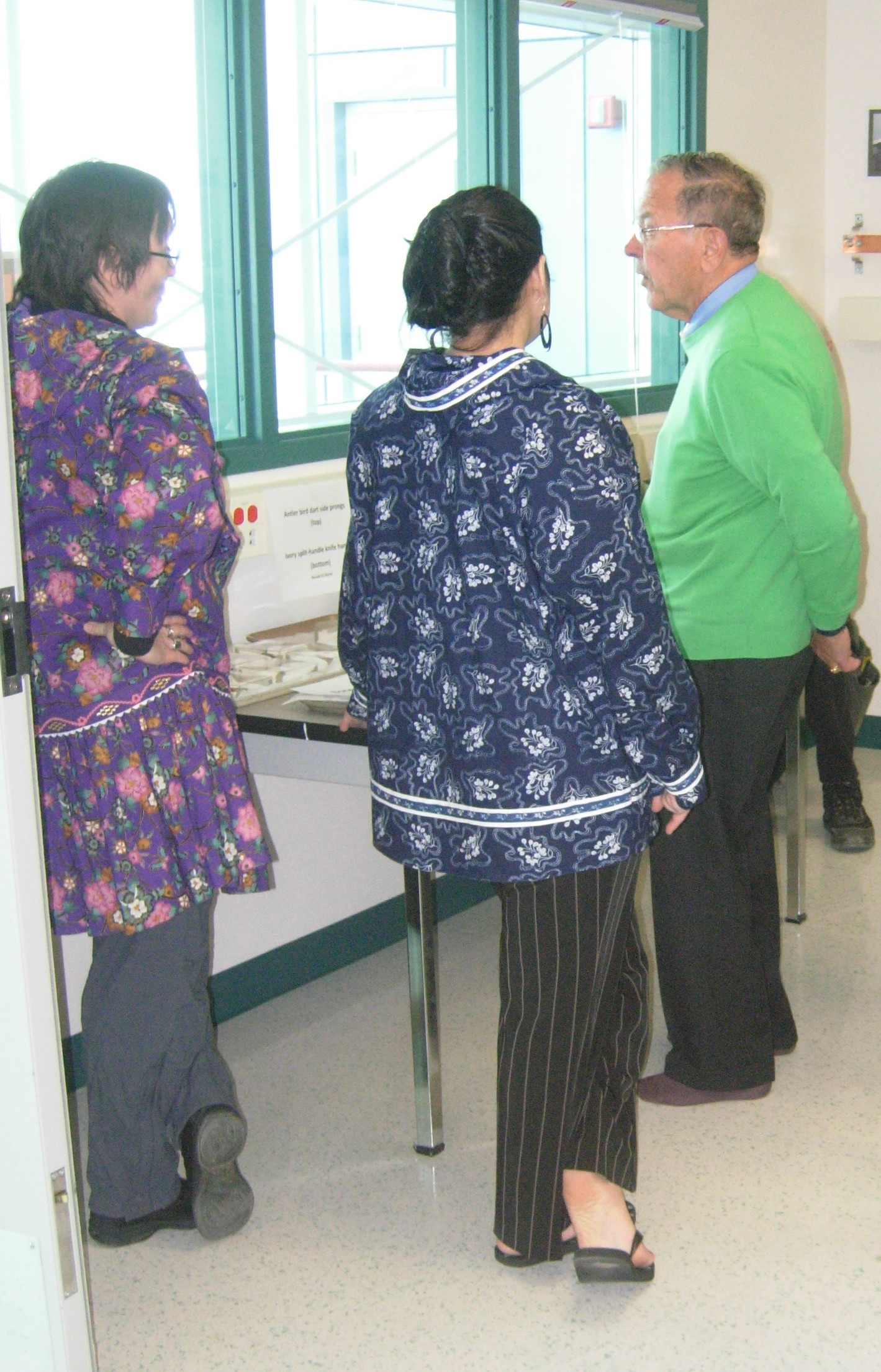
When the building was done, there was a Grand Opening, to which the entire Alaska Congressional Delegation was invited.  We were asked to move from our old lab in another building to the BARC, so that some research would be happening there when the opening happened.  There was a nice ribbon cutting ceremony, and then the dignitaries toured the building.They visited the lab, and Uncle Ted really looked at the materials we had laid out, asked questions, and was great about taking time to talk with high school students.

Senator Ted Stevens talking to Selma Khan and me in the Nuvuk Lab at the Grand Opening of the Barrow Arctic Research Center.

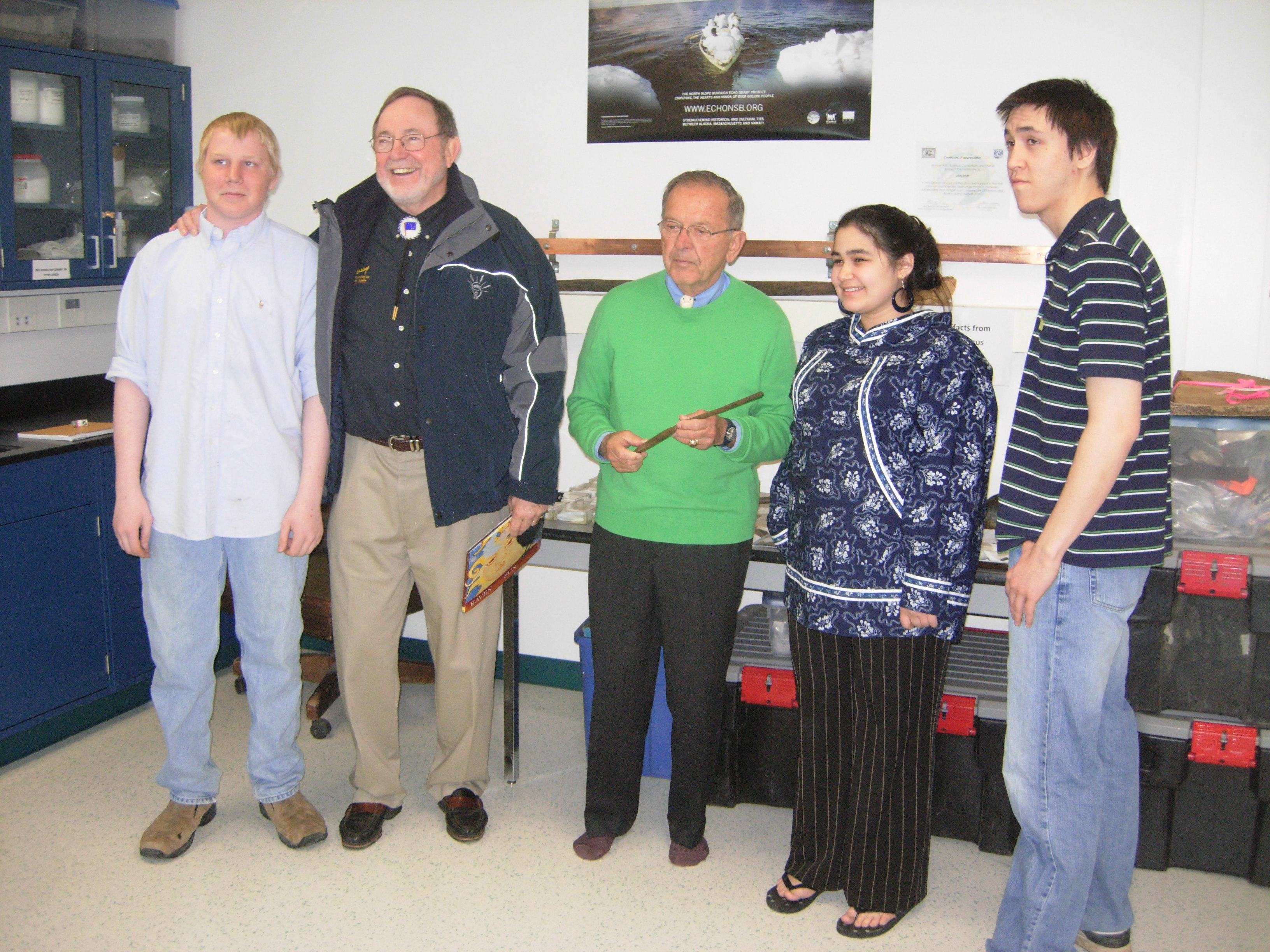
He was particularly fascinated by some Yankee whaling gear that we had recovered from the work area that had been used by an umialik (whaling captain) and his crew.  When he (and Representative Don Young–the only one Alaska has) posed for pictures with the students, he wanted to hold one of those artifacts, a Yankee whaling iron.

David Patton, Representative Don Young, Senator Ted Stevens holding a Yankee whale iron, Selma Khan and Ben Frantz III in the Nuvuk Lab at the Grand Opening of the Barrow Arctic Research Center.

Ted Stevens was a gentleman and a truly great man.  He spent his adult life in public service, for Alaska and his country.  He was a genuine war hero,  with a Distinguished Flying Cross to his credit, flying transports in the China-Burma-India theater during WWII.  He graduated Harvard Law, worked as a federal prosecutor in Fairbanks, served at Department of the Interior in the run-up to statehood, practiced law and was first appointed to fill the seat of the late Senator Bob Bartlett in 1968.  He won election to that seat, and served Alaska in the US Senate for 40 years.

There,  he had a huge influence on the state of Alaska, and the US as well.  Ted Stevens was a major factor in shaping the Alaska Native Claims Settlement Act (ANCSA) which more-or-less settled the thorny issue of Native land claims, established the regional and village Native Corporations, and made construction of the Trans-Alaska Pipeline possible.  He got the TAP through the Senate, and that made Prudhoe Bay development possible.  Prudhoe Bay supports about 90%± of the State of Alaska budget, so this would be a very different place had that not happened.  He was influential in drafting the Alaska National Interest Lands Conservation Act (ANILCA), which set aside a considerable amount of federal land in Alaska (not so popular in Alaska; it cost Mike Gravel his Senate seat) and protected Native subsistence rights.  He co-authored a fisheries act that made the Alaska fisheries the best-managed in the US, and among the three best in the world, improved fishing safety (the Deadliest Catch isn’t anymore), and figured out a way to get some of the money being made on those fisheries to the impoverished original residents of the region.  The Denali Commission, which he established based on the example of the Appalachian Commission, has brought money to the state to help poor rural communities raise their standard of living to something a bit closer to what most Americans simply take for granted as their birthright.  He worked incredibly hard to improve aviation safety, not only in Alaska, but throughout the US.  He kept the USPS from degrading service to rural Alaska, and pushed the bypass mail system, which kept mailing costs (and the cost of living in rural Alaska) down a bit, and insured some revenue to passenger carriers, keeping routes to small rural communities which can only be reached by air commercially viable.

People in Alaska know that he fought for them tirelessly, and almost to a person can cite something he did that made their lives better.  He wasn’t about power for power’s sake, or for personal aggrandizement.  He knew that power & seniority were tools so he could do a better job for Alaskans.

I’ve noticed that some non-Alaskans don’t get it.  They just see Ted Stevens as a pork-barrel politician.  They are wrong.  He did indeed bring money to Alaska.  That was his job.  It was also the right thing to do.

For a good century, fortunes in gold, whale oil and baleen, furs and fish have been hauled out of Alaska to places like Seattle and San Francisco, leaving precious little benefit to the people of Alaska.  With the exception of Hawaii, the other states of the union have benefited from a century or more of federal largess, either in the form of direct federal investment like highways, locks and dams, or by way of indirect subsidies like tax breaks or free land for railroads, homesteaders and so forth.  When Stevens took office, the state of sanitation and public health in many rural villages might have been the envy of peasants in rural India, but not of most other people.  Conditions were worse than most Americans can even imagine.  People were poor, had little opportunity for Western education, in many cases were far more fluent in their Native language than in English, and had been pushed into moving into houses that were impossible to heat without expensive fuels that required cash to buy in communities where there was no wage labor.  A lot of people would have just ignored these folks, because there aren’t very many of them, and they were not politically sophisticated.  Ted Stevens didn’t.  He did the principled thing.

When Ted Stevens tied on the Incredible Hulk tie and headed for the Senate floor, he was fighting for what was right, as he understood it.  He didn’t just think of Alaska, either.  He fought very hard for funding for the National Endowment for the Arts (NEA) and National Public Radio (NPR), even when that was not a position popular with the Republican party.  He was also instrumental in restructuring the US Olympic movement to bring central control to the USOC.  He was a proponent of Title IX, which has been of so much benefit to so many female athletes throughout the US.   He was willing to work with those on both sides of the aisle, in order to get things done to benefit his state and his country, and he was very effective at it.

Along the way, he survived a plane crash that killed his first wife, and all but one other person on the Learjet.  Unfortunately, he didn’t survive this one.  Alaska and indeed the world, is a poorer place for it.  May he, and the others who perished with him, rest in peace.

Meanwhile…

While the dental extern was busy in the lab, Laura was there to help her find things, answer questions, and so forth. I was busy with other things.

A couple of Navy archaeologists (yes, the US Navy has archaeologists) were in Barrow last week to look at a tract that the Navy may be transferring to UIC, the Barrow village corporation, to get an idea of what needs to be done to comply with cultural resource protection laws prior to transferring Federal land. Neither of them has any Arctic experience, and they stopped by my office to pick my brain a bit. The next day they were doing a few STPs on an old beach ridge on the tract, and asked if I’d like to join them. It was a warm sunny day, with not much wind, and therefore many mosquitos. I hiked our from my office building to meet them, we checked out the area a bit & I hiked back. Other than all the bugs, it was great.

Navy archaeologists David Grant and Bruce Larson surveying.

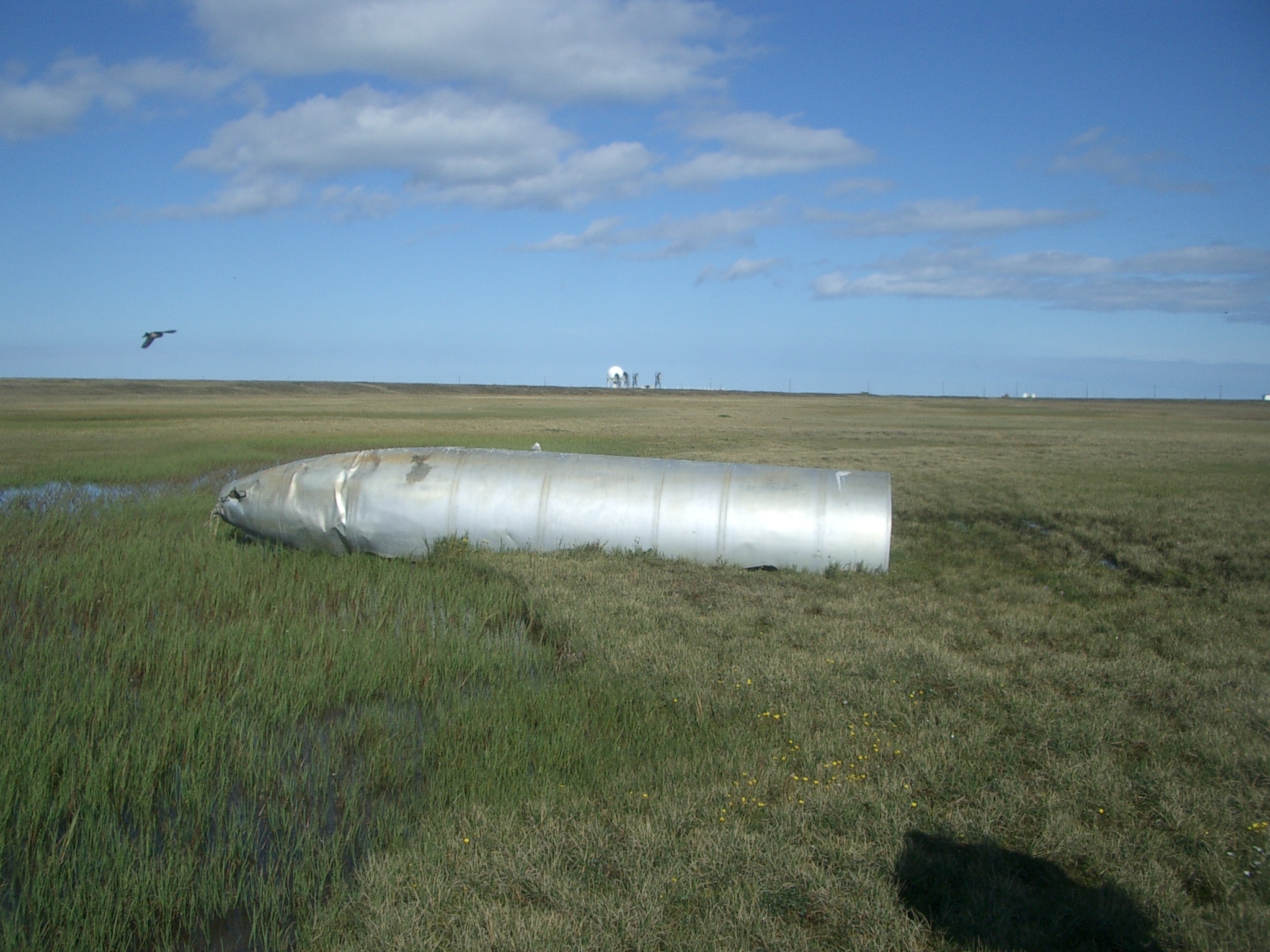
We didn’t find anything cultural that was older than NARL, but we did find a couple very old gravel beaches. We did find some stakes that had probably marked research plots, and a big aluminum object that looked like an aircraft part. It had some cable attached to the front, as if someone had been trying to tow it. Apparently they gave up.  If you happen to recognize this, please let me know and I’ll pass the information on.

Large aluminum mystery object on Navy tract.

The next day I got a call from the City of Barrow. They run the cemeteries, and had been getting reports that a coffin was partially open. They had checked, and indeed a coffin had been frost-heaved and was damaged. They asked if I could come over when they moved the person into a new coffin. We decided to do it the next afternoon, after they got the new coffin built.

Fortunately, the old coffin wasn’t damaged except for a bit of the lid, so we were able to get the dirt off to make it lighter without disturbing the remains. The City crew was able to lift the entire box out and place it in the new larger coffin. It was a tight fit, because the old coffin had been covered with canvas that was nailed on, but that wasn’t clear when they had measured for the new box! Luckily they had left a bit of space, so they were able to pry a bit and get it in. I got the canvas that had frozen in out so it could go along.  I’d mostly been there in case the coffin was fragile and we had to transfer the individual, to make sure that nothing got left, but that wasn’t needed.

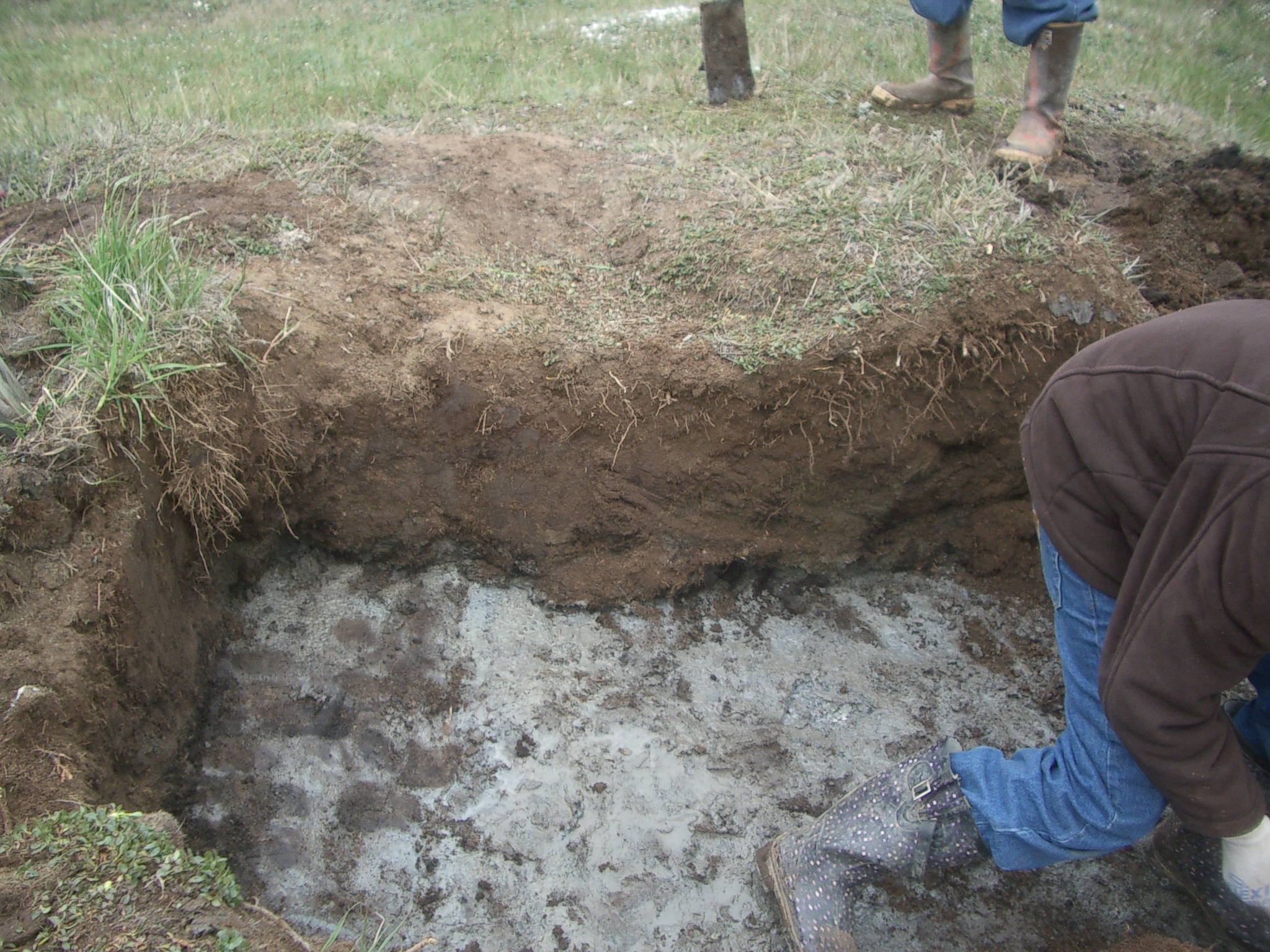
Once the coffin was out of the grave, the idea was to dig it a bit deeper, and then rebury the person. The soil profile was pretty interesting. There was clay (which generally is deposited on the bottom of bodies of still water) very close to the surface, despite the fact that the grave was on a mound. Apparently the permafrost has pushed it up a good bit, although it may have been deposited when sea level was higher than today.

Permanently frozen clay exposed in grave in Barrow cemetery.

The crew did what they could with shovels, but thaw was not that deep, as you can see from the picture above, so they were going to get a compressor and jack hammer, to really get the grave deeper, when I left.  If not, frost heaving would just bring the box up again in a few years.

The deceased see a dentist

This week, the individuals we excavated this summer saw a dentist.  This is not as silly as it may sound.

The various individuals whose burials we excavate at Nuvuk are not kept in a museum somewhere for future study.  That is the way things were done in the past, but nowadays that is not acceptable to most descendant communities (people who consider themselves descended from the individuals whose remains are in question).  There are laws specifically to protect Native American graves, as well as laws which protect all graves regardless of the ethnic origin of the occupant.  This is a good thing, but it does mean that either research has to be completed very quickly, or new ways to save data for future research need to be found.

The current residents of Barrow, some of whom are the children of people who grew up at Nuvuk, generally think people should be left where they were buried, absent a pressing reason to move them.  In general, I agree.  My primary research interests don’t involve digging up burials, which makes it odd that I’ve been involved in excavating over 70 of them at Nuvuk over the years.  The thing is, the point is eroding, and if the graves aren’t excavated and moved, their occupants will wind up in the ocean.  So there is an urgent reason to be doing these excavations.

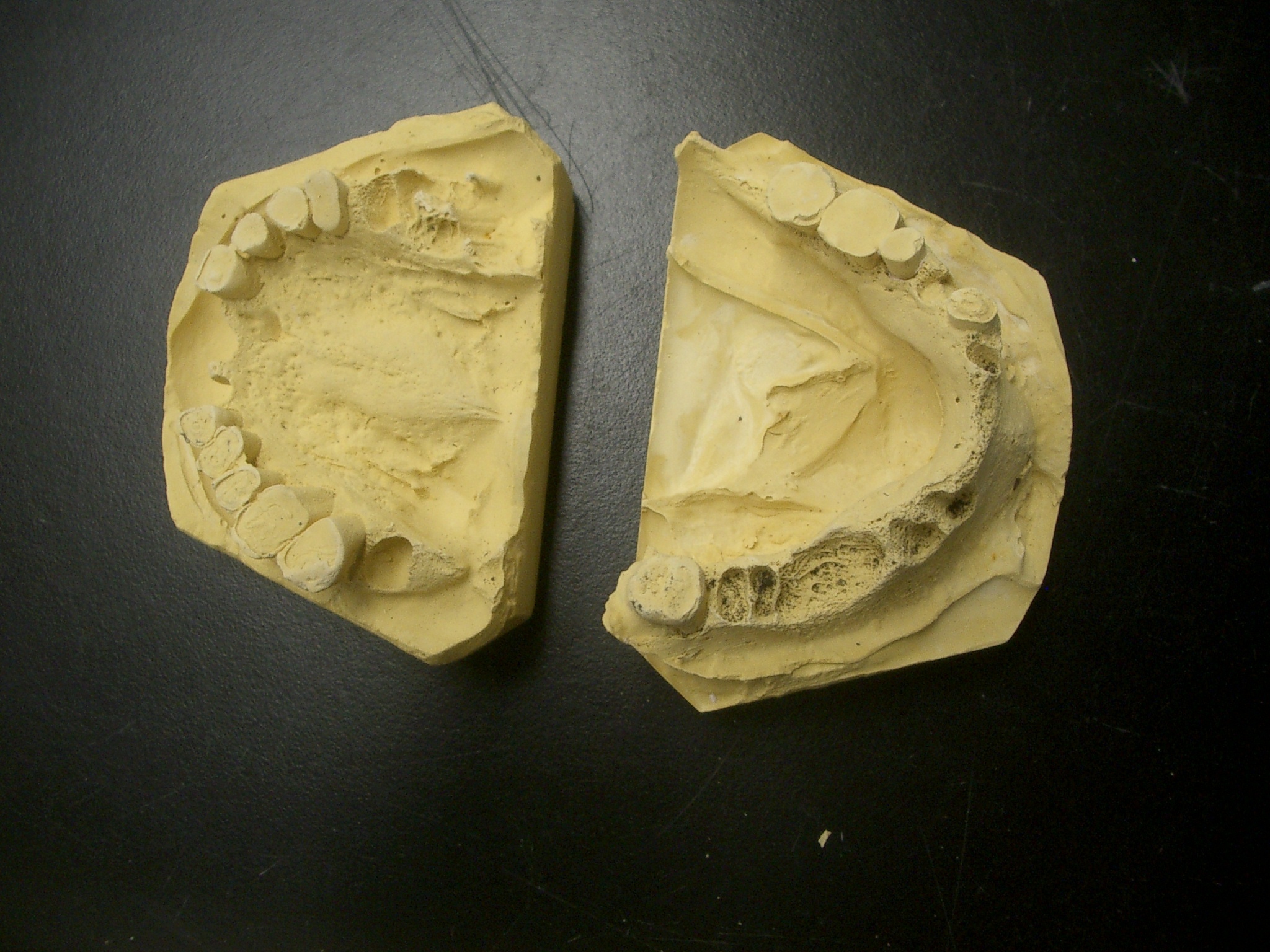
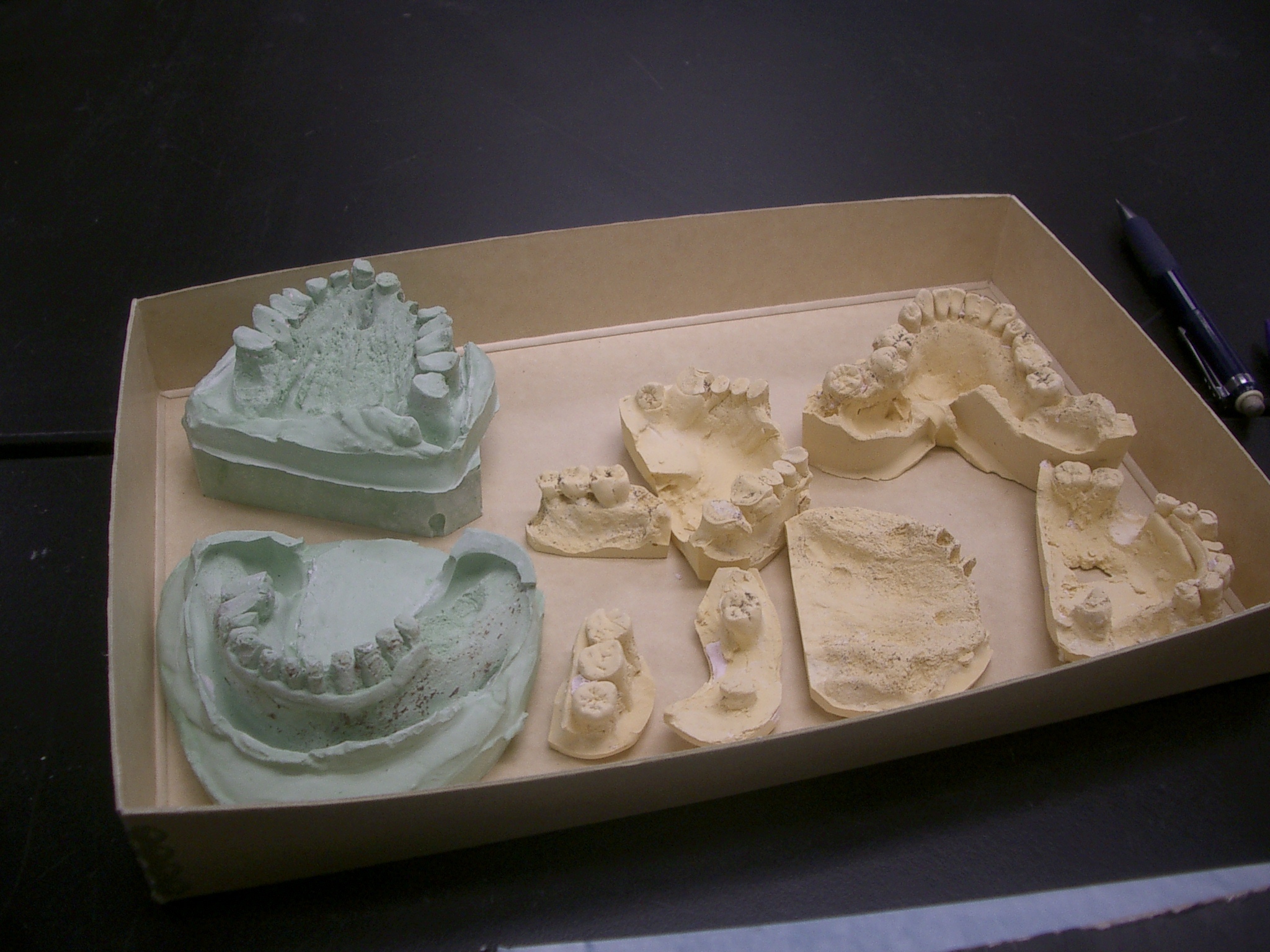
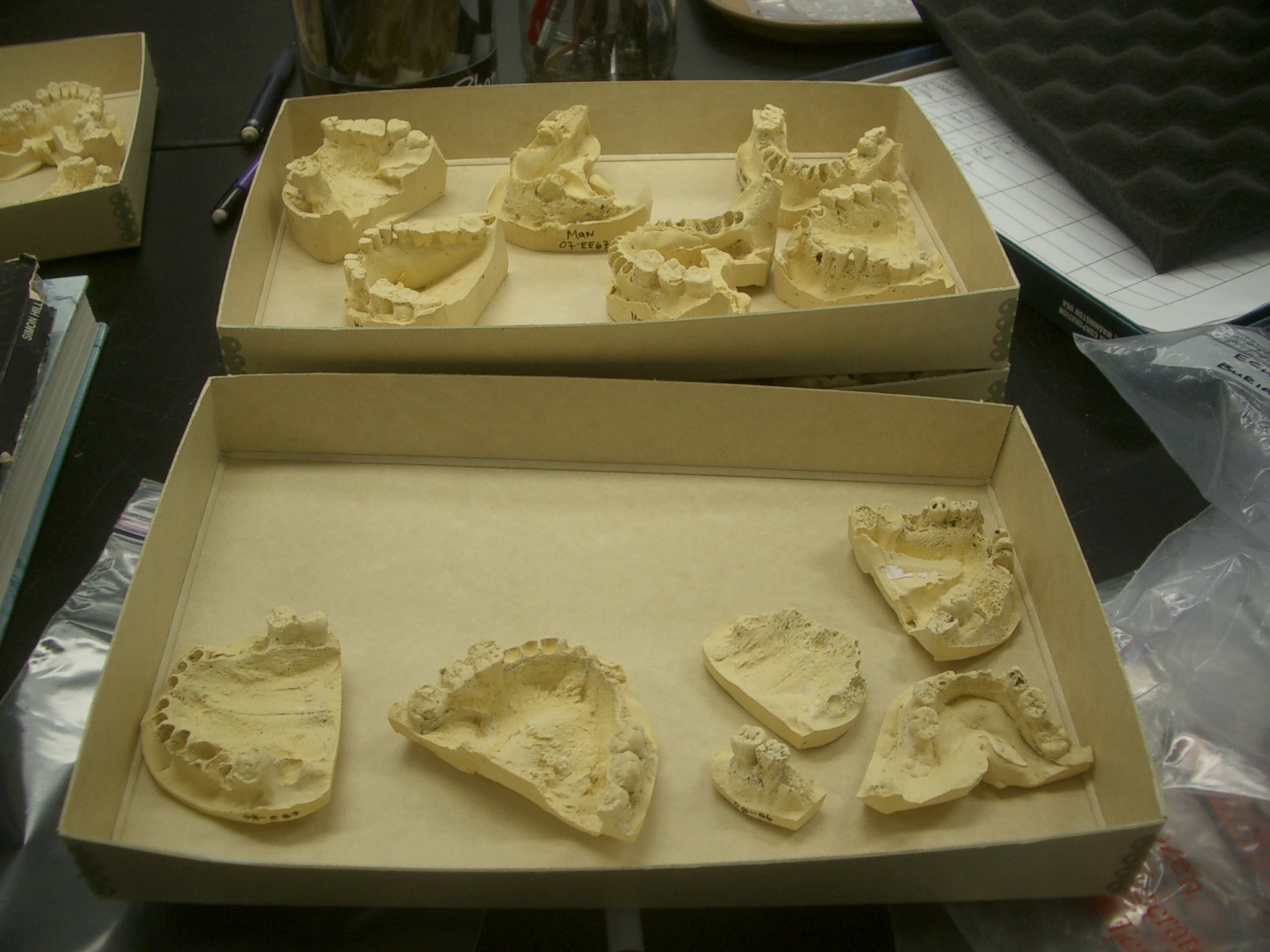
Since they are happening, most folks in Barrow agree that it makes sense to learn as much as we can about the individuals, prior to reburying them in the Barrow cemetery.   I’ve mentioned that a rib is saved for aDNA extraction, which takes place in Dennis O’Rourke’s lab at the University of Utah.  Everything else happens in Barrow.  For a number of years, the Dental Clinic at Samuel Simmonds Memorial Hospital has sent one or more dental externs (dental students who have come to Barrow to get practical experience in the clinic) to work with the Nuvuk Archaeology Project for a day or two at a time.  Sometimes they have come to the field with us, but their primary role has been in the lab, where they examined the teeth of the various individuals whose remains we have recovered.  In addition to recording the teeth on standard dental charts, including information on disease and anomalies, they have made casts of the teeth, just like the ones dentists make of live patients in their offices.  The idea came Amanda Gaynor-Ashley, DDS, until recently head of the dental clinic, who was visiting the lab a few years ago and noticed that some of the skulls had unusual dental patterns that looked just like those she was seeing on patients in the chairs at the clinic.  Dentition (shape and arrangement of the teeth) is highly heritable (it runs in families).  Since the individuals we were looking at were going to be reburied, Mandy suggested trying to cast their teeth.  It worked well, and each since the externs have done it for the individuals excavated that year.  Even after they are buried, we will have an accurate representation of their teeth for future researchers.

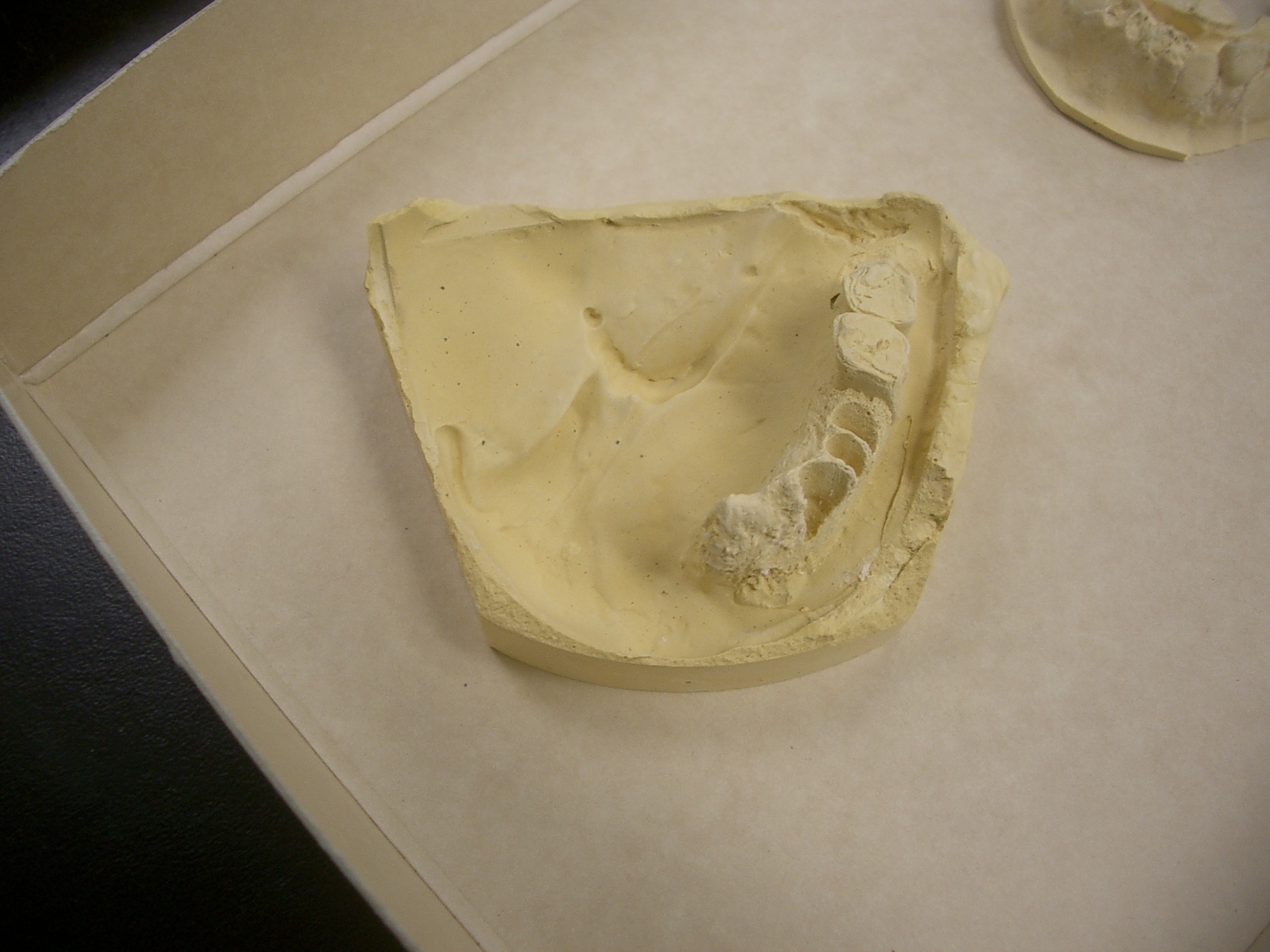
Casts of upper and lower jaws of 10A927
Cast of all that remained of 10A928's tooth rows

Since we started doing this, I stumbled across a mention of a collection of dental casts of living Barrow residents which was made by a researcher in the 1950s.  It apparently still exists, so the casts we are making as part of the NAP may well have an important place in a future research project.

Some of the casts from previous years.
More of the casts.

Later this week, Shawn Miller, the physical anthropologist from the University of Utah will arrive.  We will have to get the casts put away before that to give him maximum space to work.