First trip to Nuvuk in 2011

I went out to Nuvuk today.  The purpose of the trip was to accompany Hank Statscewich from the University of Alaska Fairbanks, who needs to pick out a new site for an experimental current radar.  They have run it near NARL for a year, with no problems, so they want to try it further out-of-town.  Since there is a good bit of archaeology out at the tip of Point Barrow, the idea was that I could help him find a spot that was not likely to have any archaeology.  We’ll still test before anything gets put out there, but still.

It was a sunny day, but there was a good East wind off the ice.  We were heading into it, more or less, going probably 25-30 mph until we got off the road, and the ATVs from BASC didn’t have windshields on them yet (they take them off when storing them so they can fit more vehicles into a smaller space).  That bit was not fun.

The first place we went was on the younger, more western of the two prominent beach ridges, near a weird concrete and steel device that reportedly was brought over from Prudhoe Bay during the gray whale rescue.  It seemed like a good possibility, so we took GPS readings.  It looks like there has been a good bit of er

Looking at the ice on the Beaufort Sea, I was happy to see it was really flat for quite a way out.  That will make it easy for bear guards to spot bears there, if only it will stay that way.
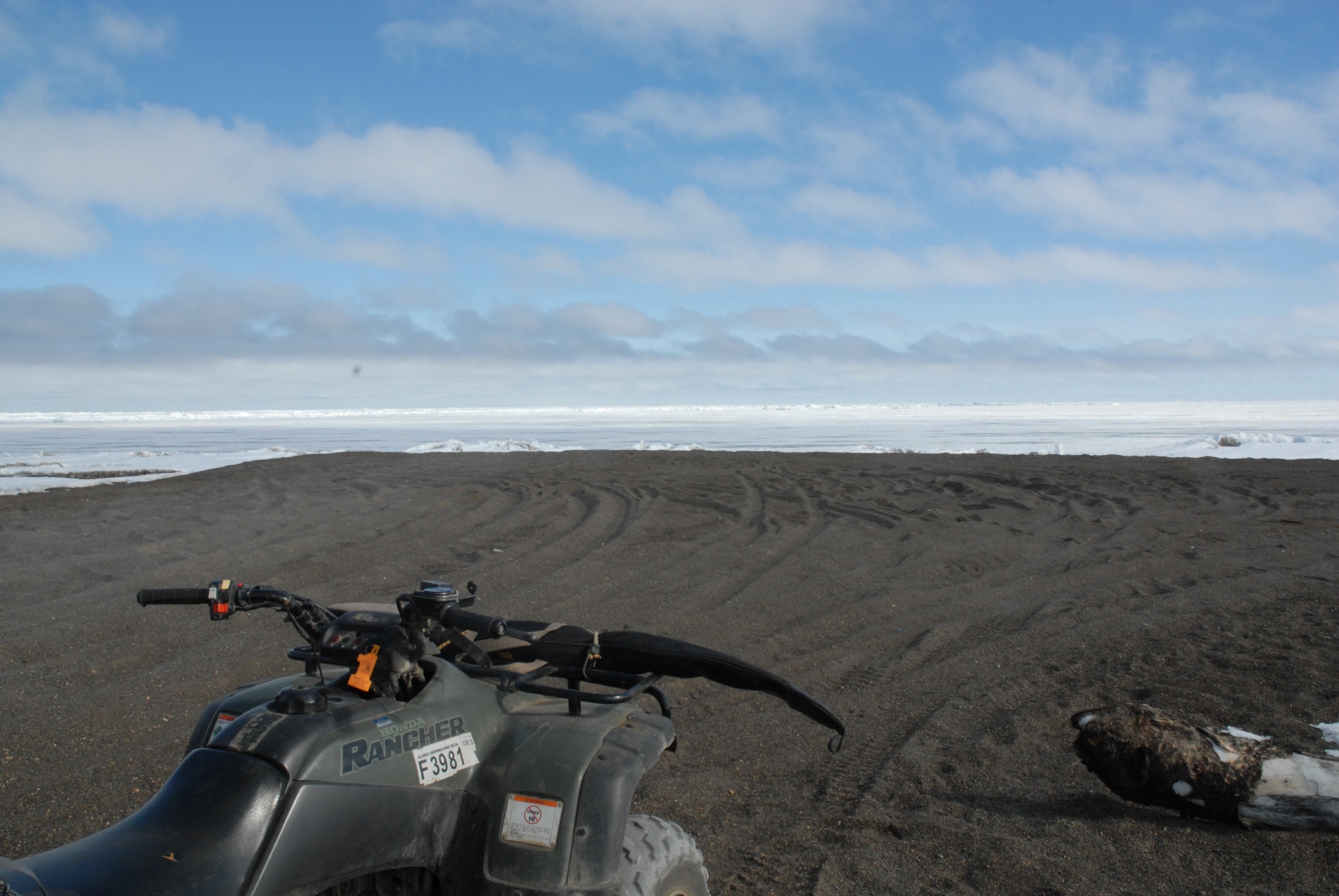
Flat ice on the Beaufort Sea, at the farthest north point in the US.

We looked over toward the ridge with the Nuvuk site on it.  I was very discouraging about it as a site for the radar, but Hank was curious, and enough snow had melted so we could get there without bogging down (ATVs aren’t so great in snow), so we headed on over.  There was some sort of rack that was new since fall, so I wanted to look at that.
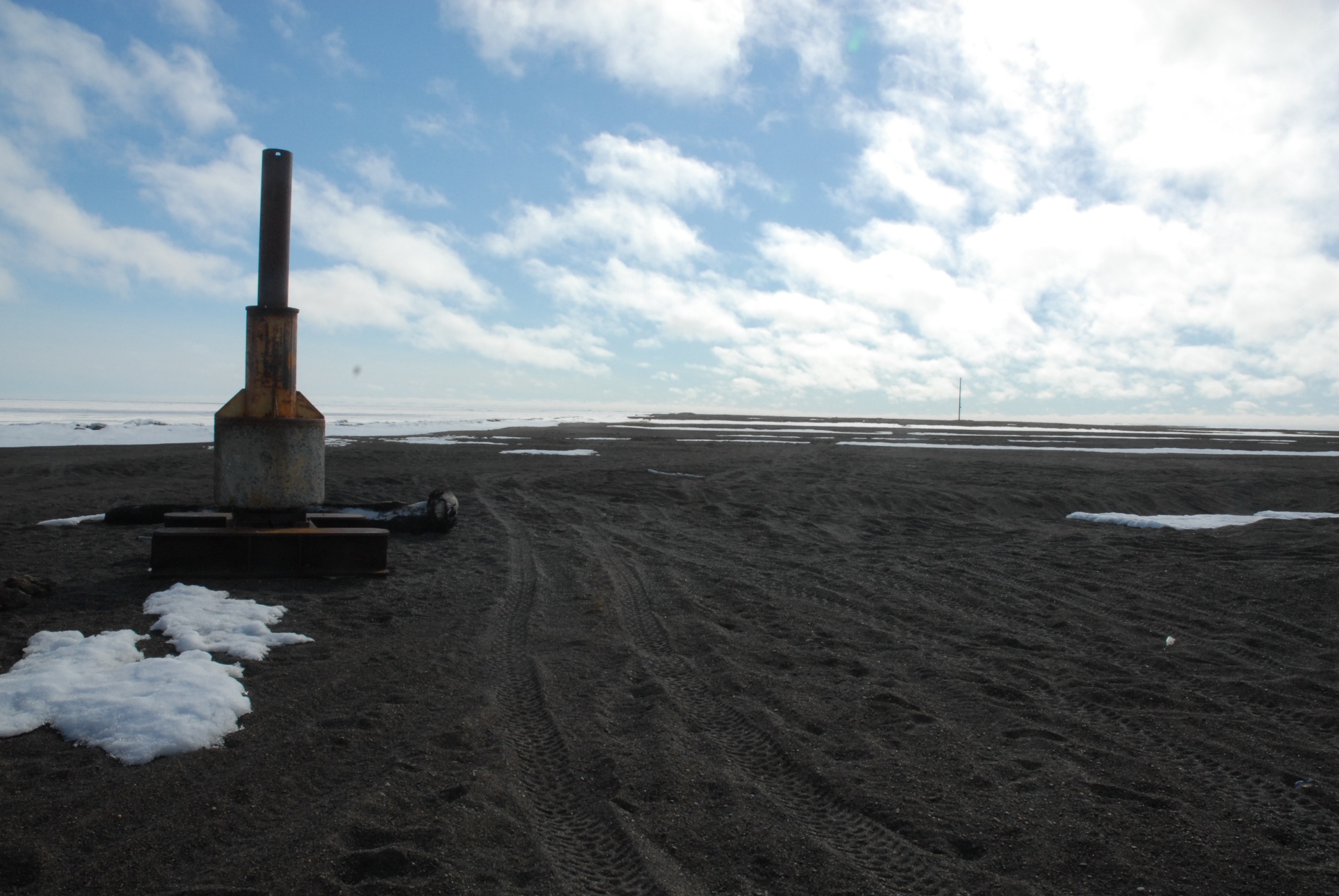
Looking SE toward the Nuvuk site.

While we were over at the site, I double-checked how far we had tested in relation to the telephone pole with a light on it, since there is interest in mounting something on that pole, and access will be an issue until we are sure there are no graves right around the base.  We mark the end of the tested area with a line of driftwood, which we move inland at the end of every field season.  It’s only a few meters from the pole, so we should be able to clear that one way or another this summer.
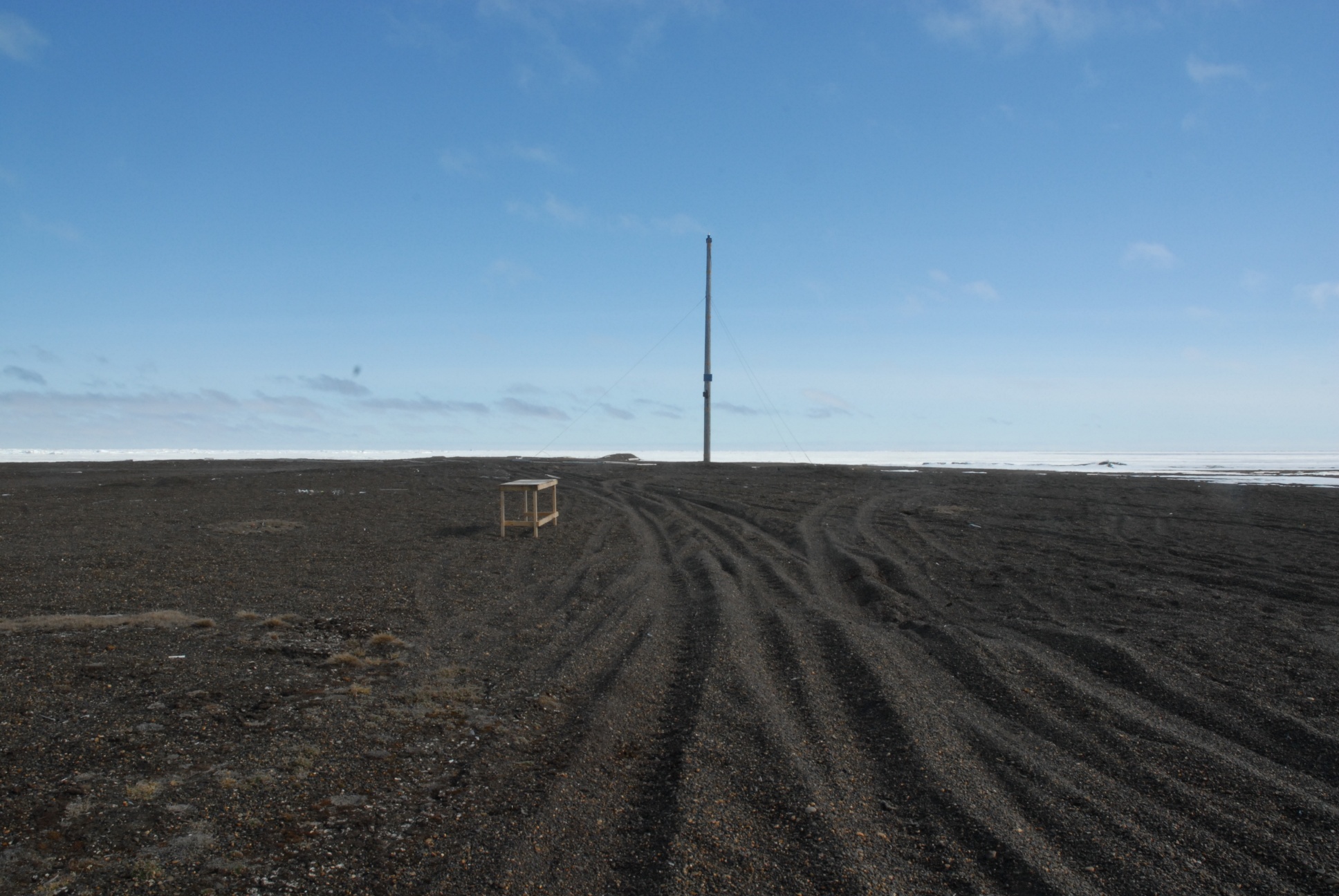
Looking toward the Beaufort from the middle of the site. The line of driftwood on the ground marks the limit of the tested area.

The “rack” turned out to be a table-like construction which was labeled as a survey marker for North Slope Borough Wildlife Department.  I checked with them when they got in, and the survey is due to be completed in four days, so it won’t be a problem for us.  I took a picture of Hank on his ATV while we were there.  Actually, I took several with his camera too, but the image never looked in focus to me, so I took some with my camera just to make sure.
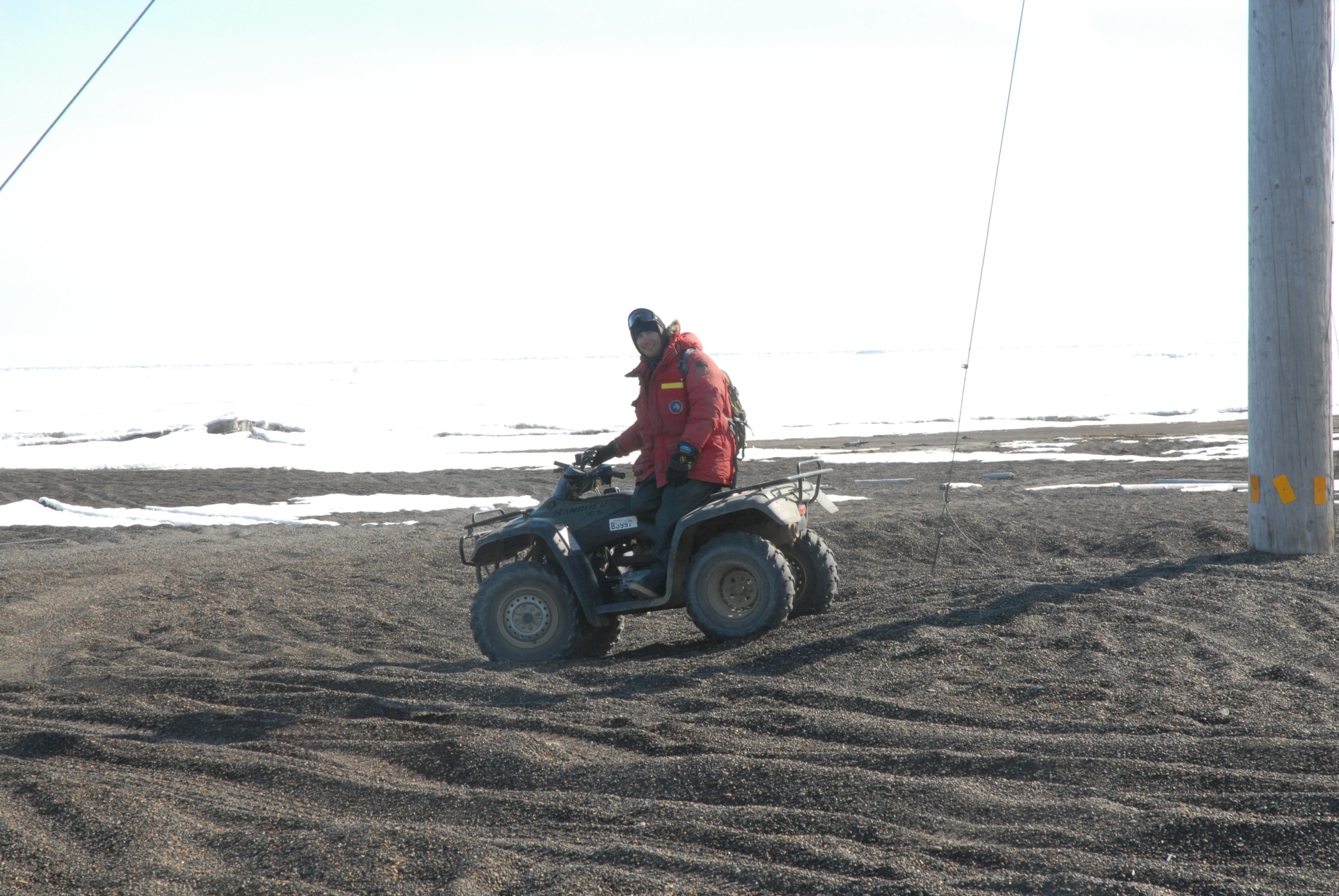
Hank S. at Nuvuk

We stopped at another spot that was also a possible radar site.  Hank will take the GPSs back and do calculations to determine which one would work best for the radar, and then let me know and we’ll test it as part of determining if it can go out there.

The ride back was great, since the wind was at our backs.  Alas, my face is covered with what look like hives, which is what happens when I windburn
Now that I’m home…

I was lucky enough to get an upgrade from Alaska Airlines, so at least I wasn’t bent up like a pretzel all the way to Barrow.  They weren’t any too quick about getting the baggage out, and no-one was to be found to issue the Baggage Service Guarantee vouchers after the 20 minutes had passed, so we took my bag when it showed up (after about 1/2 hour) and went home.

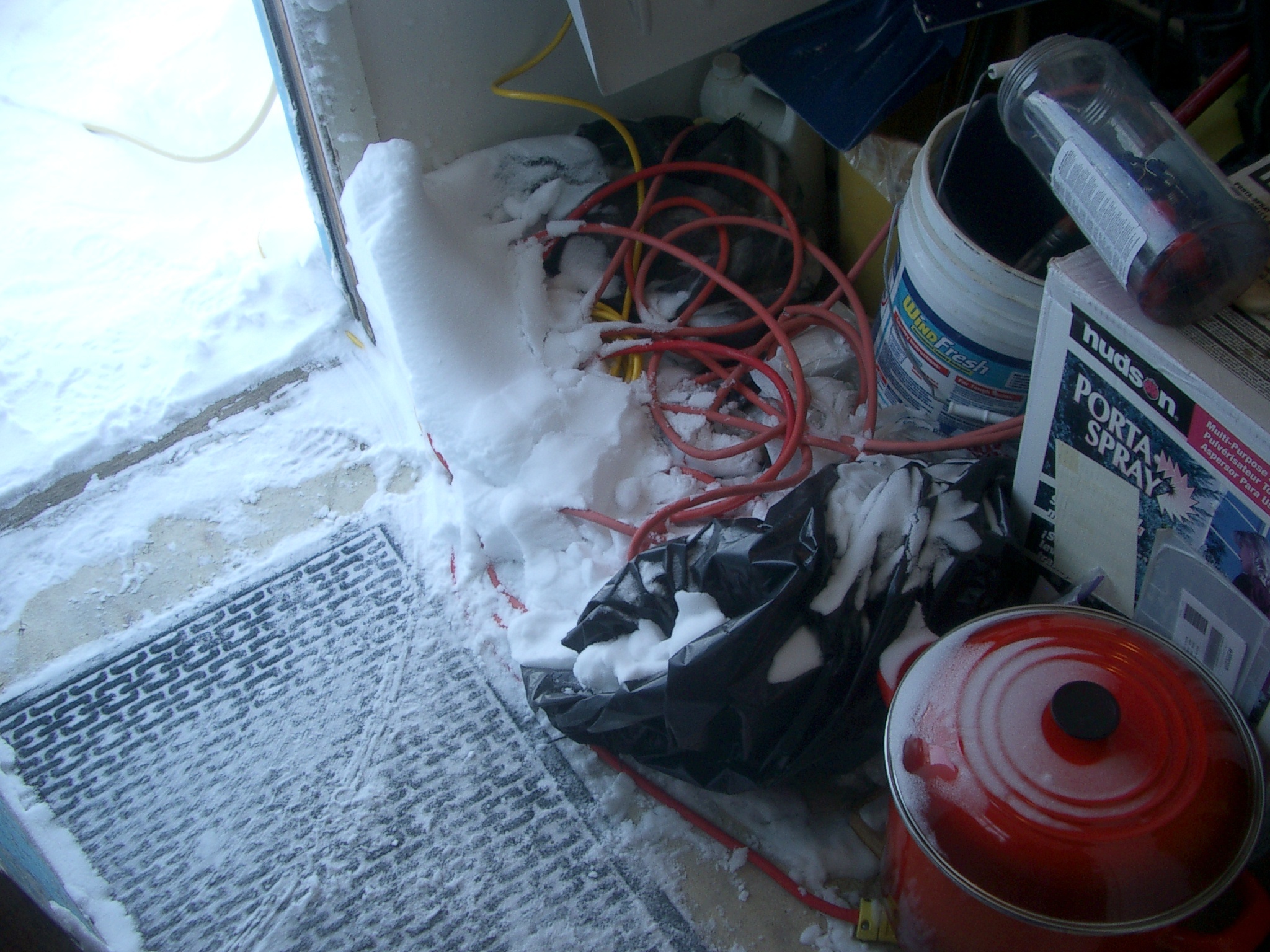
Luckily, today was a holiday so I could sleep late.  Once up, there was the usual post-travel laundry pile to start on.  Once that was underway, I had to dig out my car.  There had been a blizzard in Barrow on Friday, which had blown snow into our arctic entryway, among other places.

Snow in the arctic entryway.

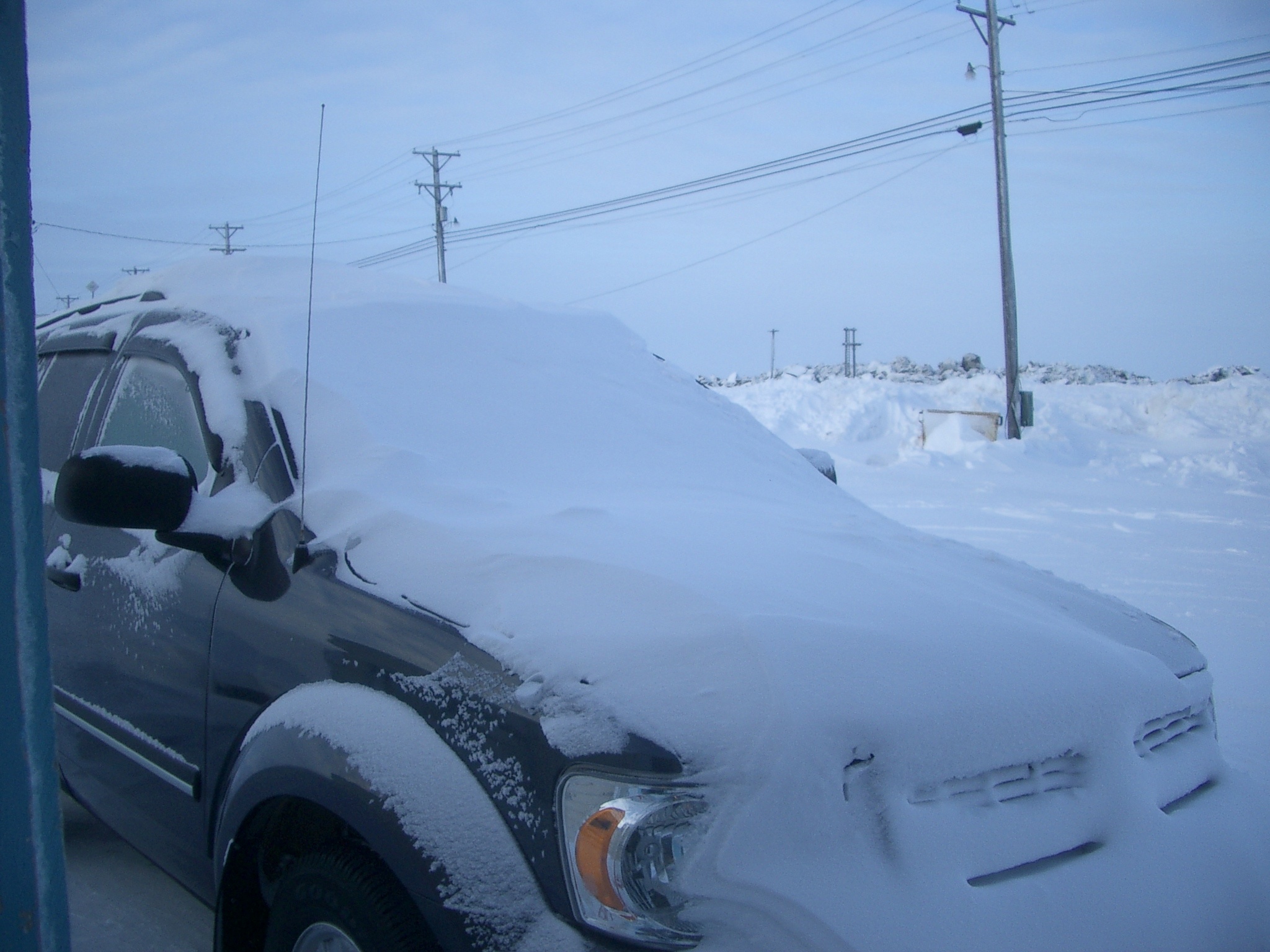
It had also blown all over my vehicle, which required significant digging out.  Apparently the blowing or subsequent plowing had somehow packed snow around my left rear mudflap, since that shattered when I pulled out (only went forward) although I didn’t discover that until I got home.

View out the front door, showing snowed-in car, and ivu (ice push) on the beach in the background.

The wind had apparently also caused some pretty significant ice push from the Chukchi Sea onto the beach.  You can see it in the background of the photo above.  The ice is black in places because it was frozen to the bottom.  The ice is very thin for this time of year.  In some places it is probably 20 or more feet tall.

Once I got to work I caught up on emails, drafted a “mission statement” for a working group on coastal erosion I am helping to organize (contact me if you are interested–it’s global, not just Arctic in focus), worked on an encyclopedia article a bit, and took care of things like time-sheet approvals which can be a time suck, but are fairly important (we all like getting paid!).

Coastal Flood Watch Remains in Effect

I woke up and turned on the radio this morning in time to hear the morning fellow recommend paying attention to the weather.  Since most folks here do that anyway, it was obvious that something a bit unusual was coming.

…COASTAL FLOOD WATCH REMAINS IN EFFECT FROM 2 AM AKDT SATURDAY THROUGH LATE SATURDAY NIGHT…

A COASTAL FLOOD WATCH REMAINS IN EFFECT FROM 2 AM AKDT SATURDAY THROUGH LATE SATURDAY NIGHT. LOW PRESSURE 400 MILES NORTH OF BARROW EARLY THIS AFTERNOON WILL STRENGTHEN TONIGHT AS THE LOW MOVES SOUTH. BY SATURDAY MORNING THE LOW IS EXPECTED TO BE ABOUT 250 MILES NORTH OF BARROW. STRONG NORTHWEST WINDS WILL DEVELOP ALONG THE BACKSIDE OF THE LOW. WIND SPEEDS OF AROUND 25 KNOTS ARE EXPECTED IN BARROW LATE TONIGHT THROUGH SATURDAY NIGHT WITH WINDS TO 35 KNOTS OFFSHORE.

THE SEA ICE IS NOW NEAR SEASONAL MINIMUMS AND THERE IS OPEN WATER SEVERAL HUNDRED MILES TO THE NORTHWEST OF BARROW. THIS WILL CAUSE SEAS NEAR SHORE TO BUILD TO 9 TO 13 FEET ON SATURDAY. THE SEAS ARE EXPECTED TO BREAK ALONG OR NEAR SHORE. IN ADDITION TO THE HIGH SEAS A STORM SURGE OF UP TO 2 FEET IS POSSIBLE AROUND THE TIMES OF HIGH TIDE SATURDAY AND SATURDAY NIGHT. SIGNIFICANT BEACH EROSION IS EXPECTED WITH MINOR COASTAL FLOODING POSSIBLE AROUND THE TIMES OF HIGH TIDE. THE AREA AROUND STEVENSON STREET NEAR THE BOAT LAUNCH BY THE CITY PLAYGROUND IS PARTICULARLY VULNERABLE TO FLOODING. OTHER LOW SPOTS ON DOWN THE BEACH WILL ALSO HAVE THE POTENTIAL FOR MINOR FLOODING.

ADDITIONALLY…SIGNIFICANT EROSION TO THE BLUFFS ARE LIKELY AS WELL.

PRECAUTIONARY/PREPAREDNESS ACTIONS

… A COASTAL FLOOD WATCH MEANS THAT CONDITIONS FAVORABLE FOR FLOODING ARE EXPECTED TO DEVELOP. COASTAL RESIDENTS SHOULD BE ALERT FOR LATER STATEMENTS OR WARNINGS…AND TAKE ACTION TO PROTECT PROPERTY. NOW IS THE TIME TO MAKE PREPARATIONS AND MOVE ALL PROPERTY WELL AWAY FROM THE BEACH.

Not what I needed to hear…   Turns out it’s the first big fall storm.  With the ice so far out, that means lots of room for the wind to put energy into the water, which means big waves and a storm surge.  That means beach erosion for sure, and maybe coastal flooding.  Our weather forecasts here are a bit less accurate than those most other places, because there are no observing stations where the weather is coming from.  It’s sort of like trying to predict weather in Pennsylvania using data from nothing but a weather station in Chicago.

I don’t like fall storms and coastal erosion.  Aside from the dangers associated with flooding (the house I live in floated in 1963, and if it does it again we might wind up in a sewage lagoon), erosion is the most immediate threat to coastal archaeological sites.  I spend my summers trying to organize things so that we got well ahead of erosion at Nuvuk and now are trying to stay that way.

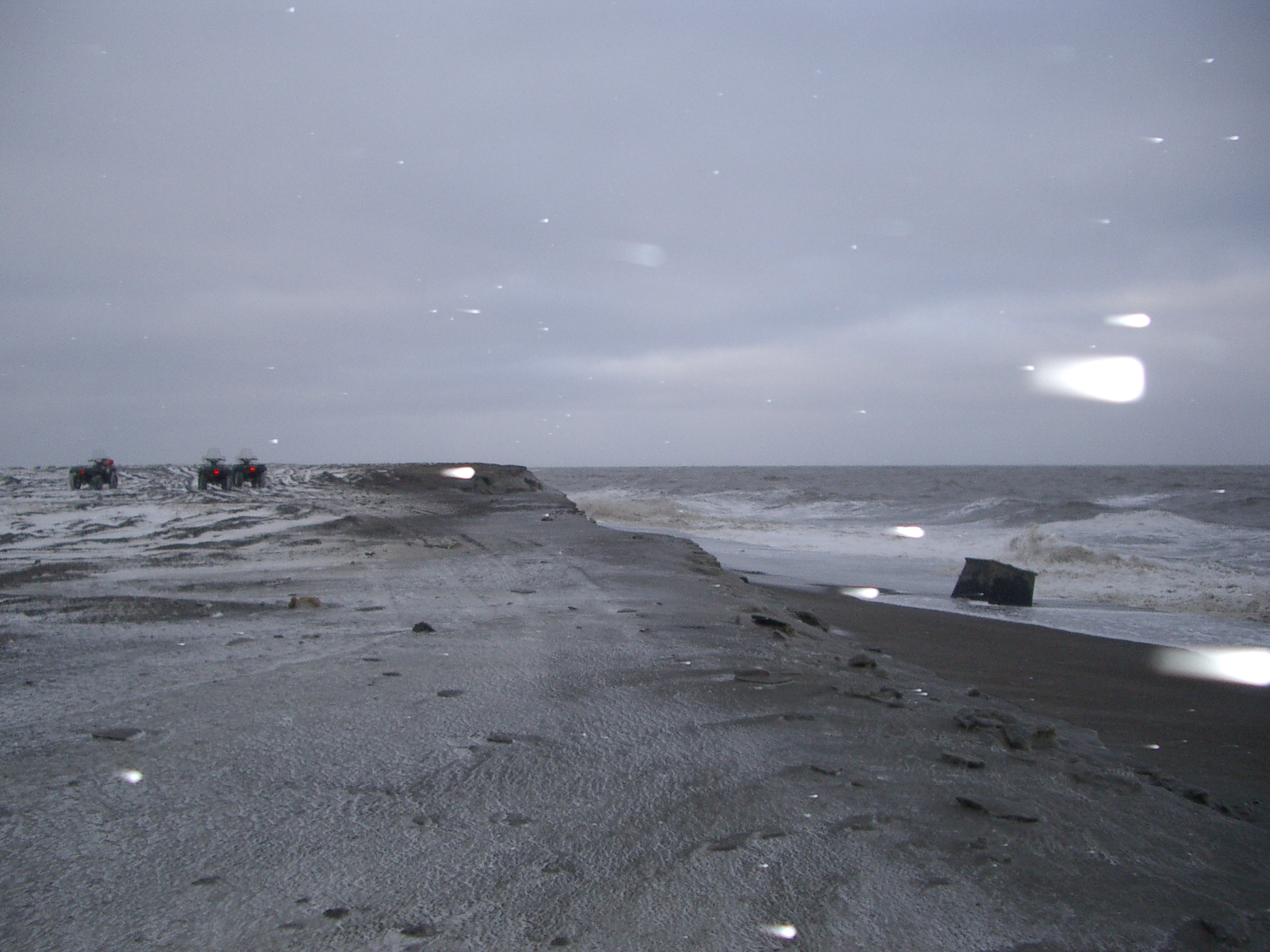
2004 fall storm erodes Nuvuk
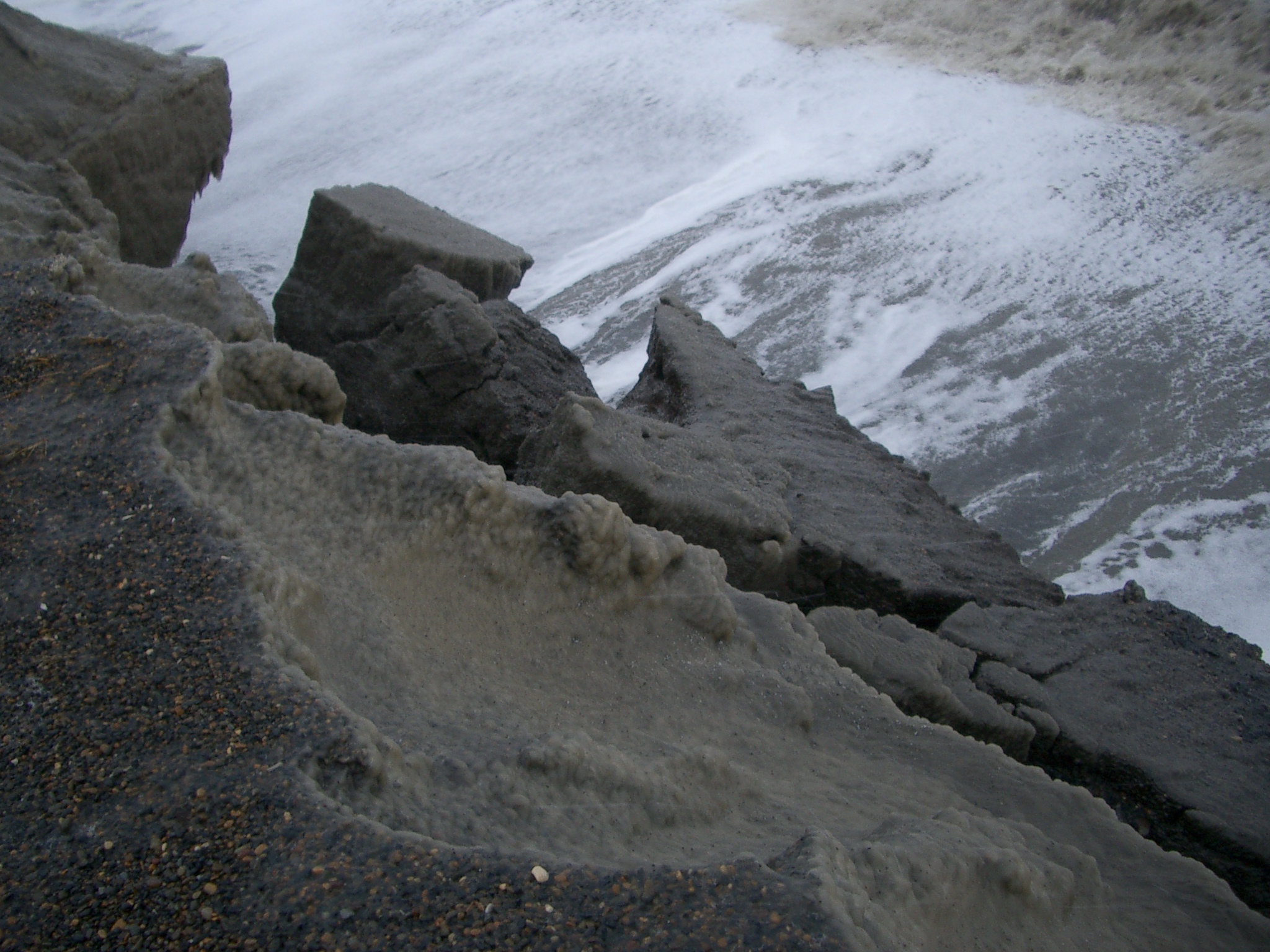
Nuvuk bluff slumps from effects of surf

The thing is, Nuvuk, where “the houses are all gone under the sea” to borrow T.S. Elliot’s phrase, is just one of many important sites.  Utqiagvik, Nunagiak, Ipiutak, Tikigak (Point Hope), and so on down the coast.  Most of the sites on the Beaufort coast from Point Barrow east to the Mackenzie River Delta in Canada have already washed away and out of the archaeological record.

Mysterious sea Creatures

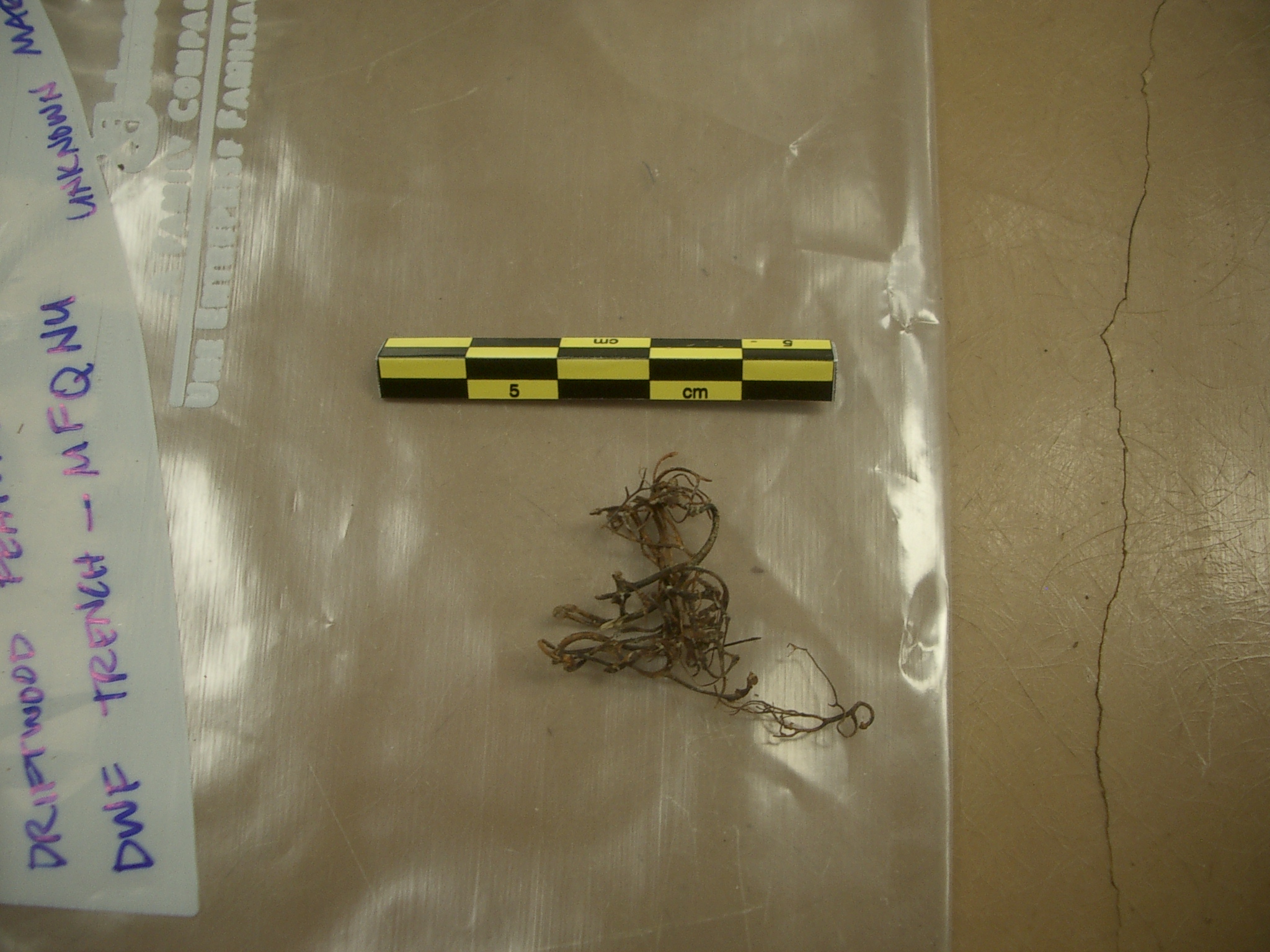
One of the things we collected a lot of from the strand lines was a variety of sea creatures.  There are a lot of pieces of what we thought (in the field) was gut, which is a useful raw material.  Now that we’ve gotten them into the lab, we think most of it is some sort of marine worms.  There are also a variety of other small marine creatures (plants or invertebrates–they have lost their orignal colors) and mollusks.

Marine worm? from 300-400 AD
Another sort of sea creature
Some sort of seaweed?
Maybe some type of sponge-like creature?

Obviously, I know a lot more about mammal bones & teeth than these things.  So we’ve sorted out a bunch, and Claire will take a couple of each type to Fairbanks, along with the shells. With any luck, we can get some IDs.  If we’re really lucky, the species in question will turn out to have fairly narrow habitat requirements, and we’ll know something about what the ocean was like near Barrow when the big storm happened between 300 & 400 AD.

If you happen to recognize any of these, please let me know what you think they are.  If you know anyone who might be interested in these creatures, send them my way.  The “worms” are very well-preserved, and still flexible.  It occurs to me that it might be possible to extract DNA from them (and maybe some of the other creatures as well), which would be a pretty rare opportunity.