One of my colleagues, Matthew Betts, who has done Arctic work for years, is currently excavating a large shell midden at Port Joli, Nova Scotia. He also has a project blog, and in a recent post on trowels, there was news of the sad demise of a Marshalltown trowel. Marshalltowns are great trowels, and I’ve never seen one break the way this one did. They usually wind up being discarded after being resharpened so many times they are nubs.
However, in the spirit of friendly competition (?) I’d like to point out that we have broken a larger piece of excavation equipment this season; to whit, a Sear Craftsman shovel (the yellow-handled kind). The evidence is below:
Laura, Jenny and Rochelle with the remains of the late shovel.
To be fair, I’ve seen these things break before, but it involved heavy equipment. We’re not sure what happened with this one. These are great shovels (maybe only archaeologists and landscapers can get so enthusiastic about shovels), but have to be special ordered to Barrow, which is sometimes a very convoluted process. That is why it has the pink and green duct tape rings on the handle. That way, we can recognize our shovels when they get “borrowed” and borrow them back.
We had another windy day today. In fact, it was probably even windier than the day the artifact blew away. We didn’t try to excavate or even dig STPs, since odds were that notes, baggies, artifacts and all would have been heading for Canada. We did get two burials ready for excavation when the wind dies down, which should be tomorrow if the National Weather Service knows what they are talking about. One can only hope.
It was so windy that some of the excavators were wearing goggles to remove vegetation, since it was flying into eyes once loosened. The gravel they were removing was flying a good 10-15 meters downwind. Since we were shooting and backfilling all the STPs that were open, that took care of a bunch of them without shoveling! I took some video with my iPhone, but I think I need to get an upgrade and figure out how to use it before I can post it.
We came in after lunch, since we had nothing left we could do in the field.
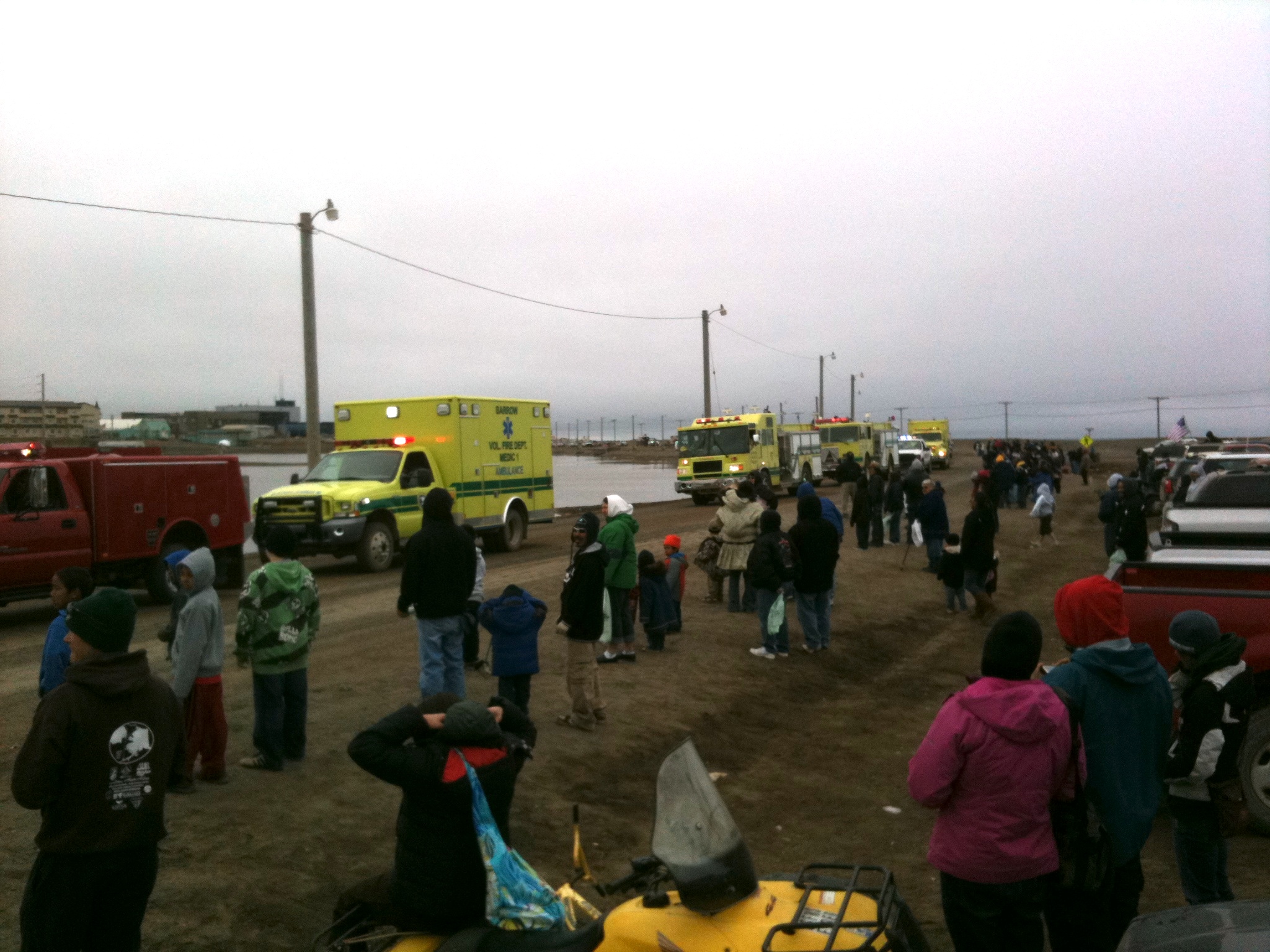
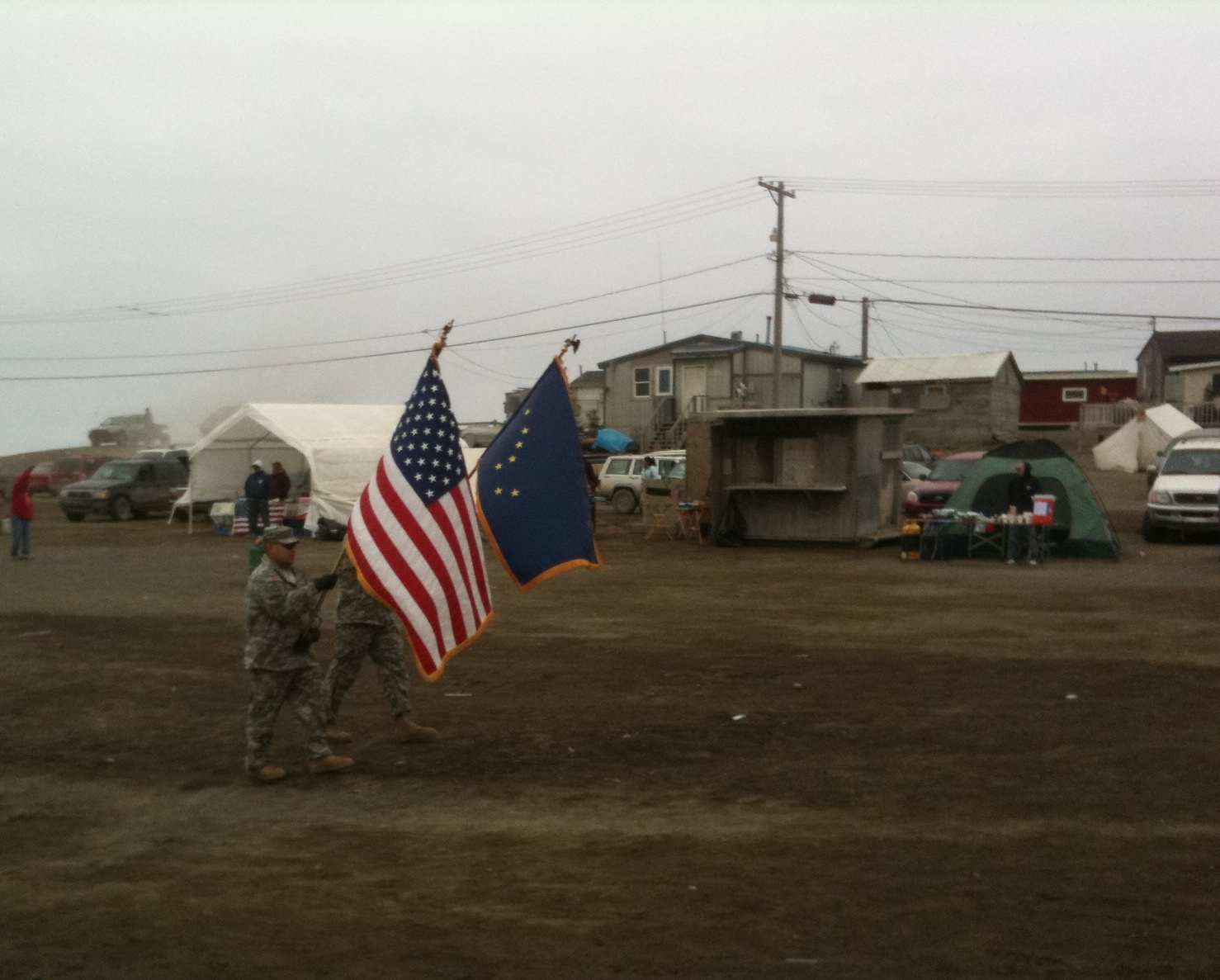
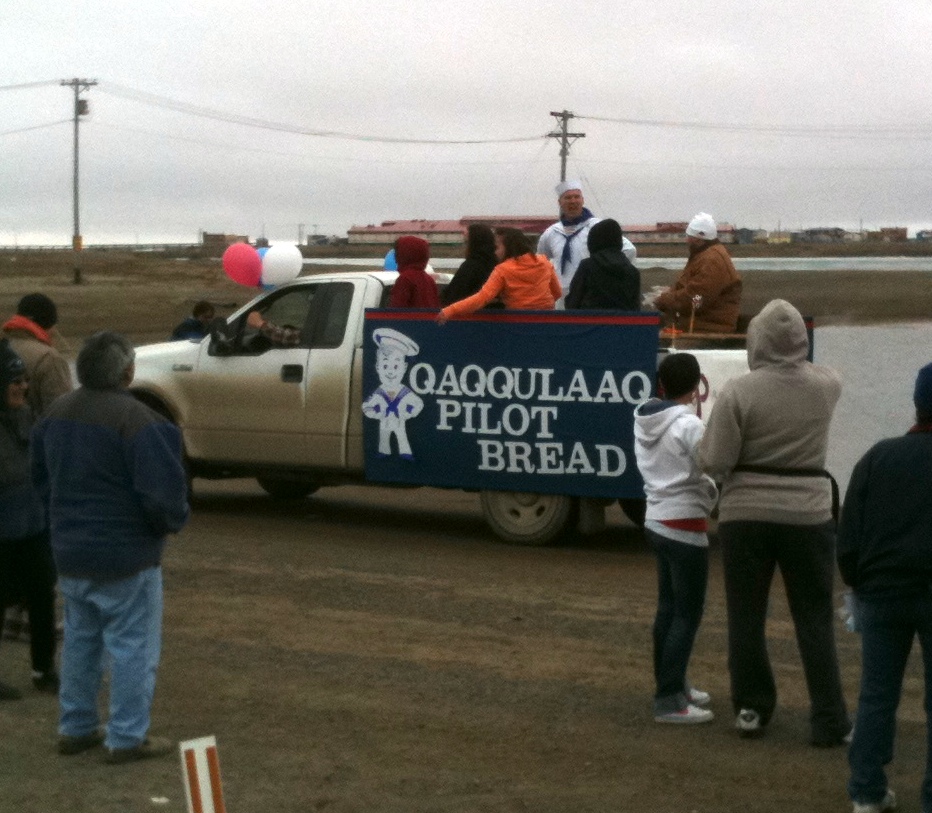
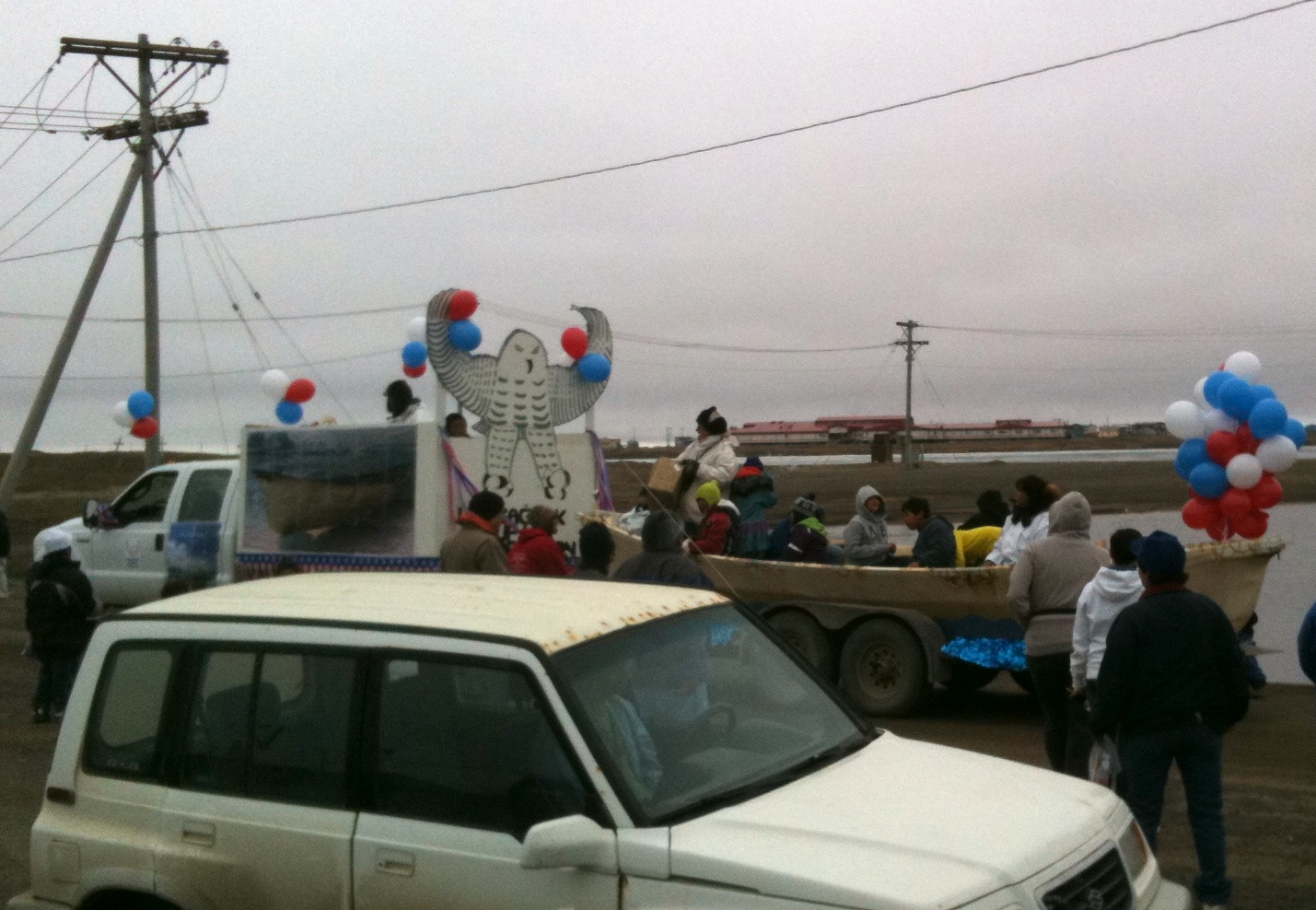
Barrow really does up the 4th of July. In part this is because Eben Hopson Day, which celebrates Eben Hopson and the founding of the North Slope Borough, falls on July 2. This year, it was essentially a 3 1/2 day weekend, with games and activities every day. Not only did people have the 5th off in lieu of the 4th, but most places let people off work early on the 2nd.
There were all sorts of races and games, a big parade, and the Pretty Baby and Miss Top of the World contests. The contests (run by age group) usually have money prizes, and are hotly contested. Lots of local groups fund-raise by selling food, candy, and so forth, and you really don’t need to cook. This year the Arctic Education Foundation booth had brought up 13 (!) tubs of Baskin-Robbins ice cream, which was a huge hit. I went 3 days in a row.
One thing it doesn’t include is a fireworks display. Why not? Not because people here don’t like fireworks. The New Year’s Eve display is broadcast not only across the North Slope but on WGN from Chicago. Long story… We don’t have 4th of July fireworks because the sun won’t go down until August 2nd, and it’s just too light to appreciate them. Of course kids have little noise-making ones, snaps & “M-80s” and somebody did try something with colored smoke trails, but it’s not the same. Most people save their money until New Year’s Eve.
I took a ton of pictures, but not all came out so well (using the iPhone, not the D200), so not all the babies are here :-(. Some pictures for those who weren’t lucky enough to be here in person…
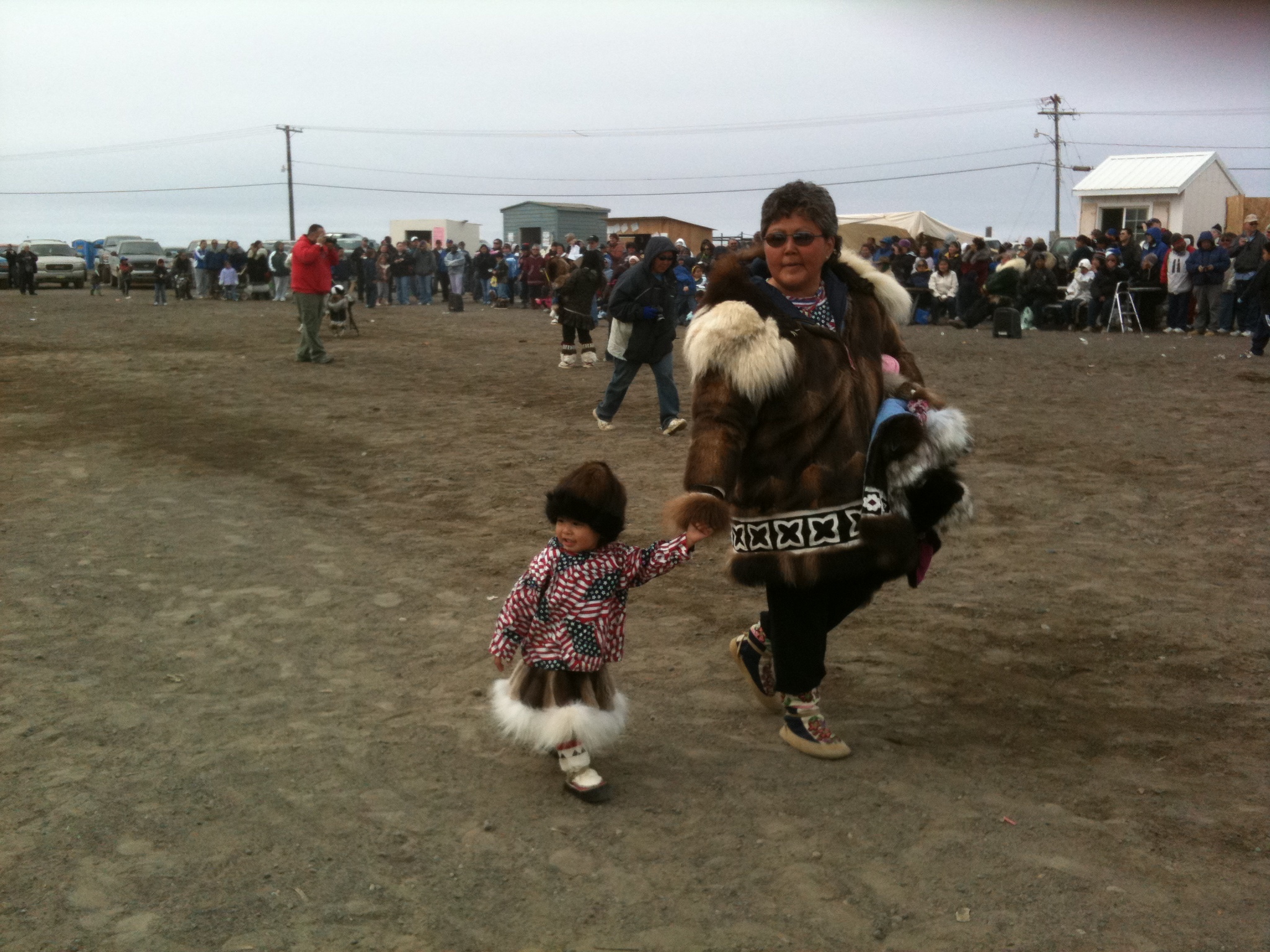
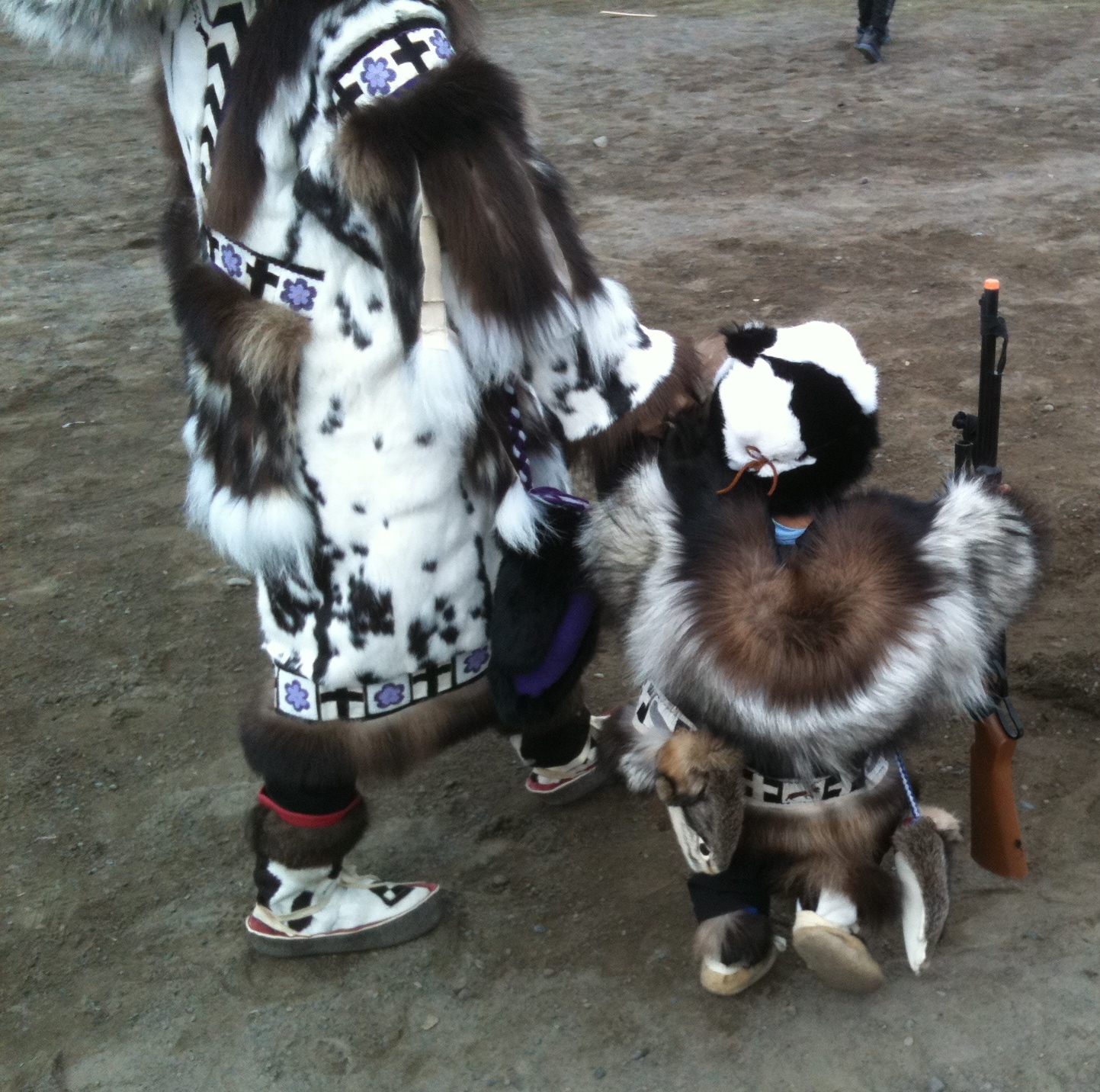
What's a parade without lots of fire apparatus?Color guard of local reservistsIf you've spent time in Bush Alaska, you'll know why this is the Best. Float. Ever.Search and Rescue boat. Perry Anasugak, former Nuvuk bear guard, is in the cabin window.UIC (my employers) float, with real umiaq and surreal ukpik (owl). They can be scary enough at life-size.Women runners for Clare Okpeaha Memorial Race--2 x around town.Men runners for Clare Okpeaha Memorial Race--3 x around town.Pretty baby & her Aaka walking around so the crowd can see.Pretty 4th of July BabyBudding hunter and his mom in beautiful parkas
Oh, yeah, for those on the East Coast, our high today was a pleasant 38 (4.4 C) with light winds :-P.
Heat it, it turn out. The Department of Energy has some experiments running in the lower 48 (that’s the Continental US for you non-Alaskans) which involve heating small patches of land to see what the effects of global warming might be. Better than just wait and see, no doubt, and it would give some guidance about adaptations that might work. Anyway, they are thinking of trying this on the North Slope. For the moment, they just want to test the proposed method in a very small area,less 30 m in diameter. (A meter is just over a yard, about 39 inches, for those who forgot about the metric system when they left school).
Barrow has many wonderful things, including the Barrow Environmental Observatory, which is 7466 acres of land set aside by the Ukpeagvik Inupiat Corporation, the Barrow village corporation (more about that some other time) for scientific research. It is actually zoned as a Scientific Research District by the North Slope Borough. That’s where DOE wants to test this. So, a plot had to be located. It needed to be near power and a trail. Craig Tweedie of UTEP, an ecologist, found a spot that seemed fit the bill, which had been disturbed in the past by tracked vehicles called “weasels” which NARL scientists used to use to get around on the tundra. Now everyone walks in the BEO when the snow is melted, unless matted trail is put down. The idea with a disturbed site was that it wasn’t much good for other research, so it’d work for testing the warming equipment.
The next question is if there are any cultural resources (archaeological or otherwise) on the site. Since I work for the company that owns the land, that’s part of my job. Normally we’d wait until later in the summer when the ground is thawed more and the Nuvuk field season is over, but they’d like to try to install the equipment soon. So I went out this afternoon to look at the place for the first time and see what was what. There were a few pictures, but I guess archaeologists look at things differently.
I had a GPS location for the center point, so I programmed it in, got a 30 m tape and pin flags, and set off. First I drove to a pull-out on Cakeater Road, parked the truck, and took a half-mile or so hike into the BEO. There is boardwalk part of the way, and matted trail goes right past the site, although it isn’t very level, since the tundra it is built on is fairly lumpy and shifts a bit over time besides. However, it’s been such a late melt that a lot of parts of the trail were under water, so I had to do all this in Xtra-Tuffs & rain bibs. I’ve been coming down with something the last few days, so I really just wanted a nap, and wasn’t exactly looking forward to this little excursion. Luckily, the sun came out for what seems like the first time in days, and it was actually fun, although I took an amazingly long time to do it. Then I had to turn around and hike back to the road :-(. There were lots of birds around, and the buttercups and willows were in full bloom, so all in all a good day.
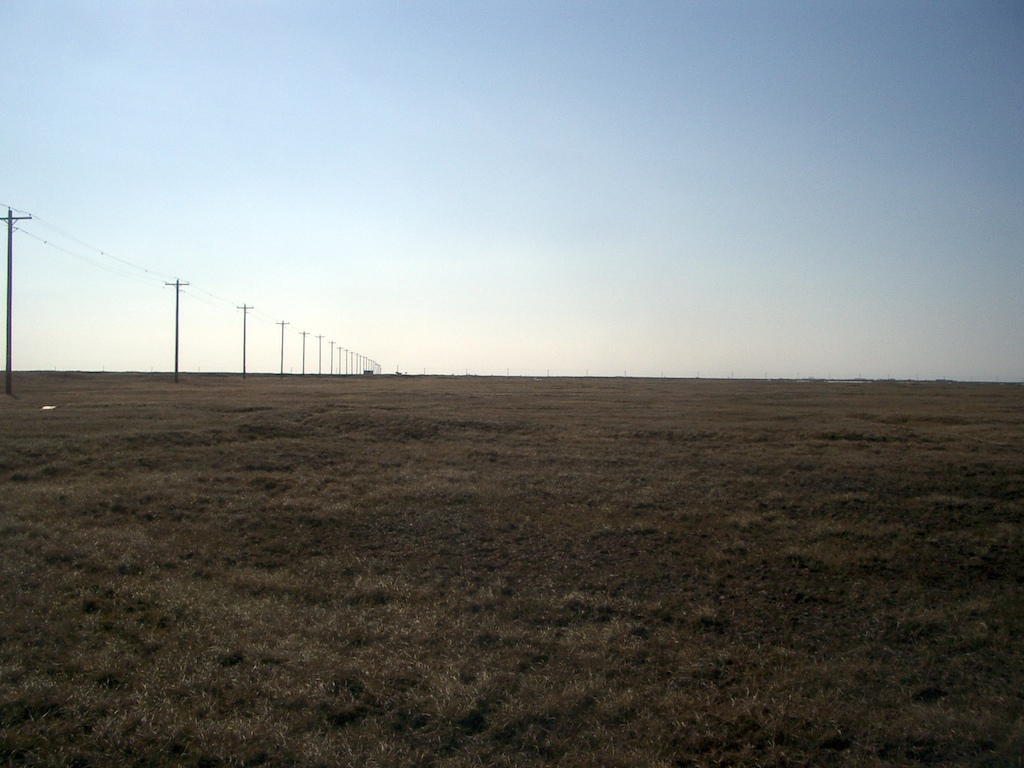
Looking back toward Cakeater Road from the site. My truck is the teeny-tiny thing at the end of the power line.
Once I got there, I put some chaining pins into the center point, and ran out a circle around it with a 25 m radius. The actual equipment is going to be a hexagon with about a 25 m max dimension, so this gives room for construction and a little wiggle room. I walked the whole thing in really close transects, much to the annoyance (verging on hysteria) of a shorebird which must have a nest nearby. Based on this inspection, it looks good for the tundra warming experiment. The only evidence of human activity on the site was the aforementioned weasel tracks, a crushed 55-gallon drum, and a flattened tin which probably held Blazo once. The area was pretty damp, and there was higher, drier ground nearby, so it’s unlikely to have any significant pre-NARL activity when we test.
The tundra near Barrow (with my tape stretched out).
Monday afternoon I got to take a quick trip to Nuvuk to check on the two tents BASC had put up for us to use doing the field season. The big one is for lunches and gear storage, and the little one is for the honey bucket (the tour van kept showing up at such awkward times…). It was a nice sunny day, not too windy.
On Point Barrow, heading toward NuvukLooking northwest across Point Barrow. The horizon is white because of "ice blink" since the ice pack is still in.
We even got to see a polar bear. It was sleepy, and just lay there snoozing. There was a van full of tourists snapping away (just out of frame to the right).
Sleepy bear at Nuvuk.Blown-up picture of the bear.
Unlike most other Arctic archaeologists, I live where I work. My house is less than 10 miles from the site I am currently working on, and there are other sites closer than that. In general, that’s a good thing, and I wouldn’t change it for the world, but like so much else in life, it’s not an unmixed blessing.
PROS OF LIVING WHERE YOU WORK
Community members can take part in all parts of the project, and can find you to ask questions whenever they want.
No long expensive trips to get to the field.
Logistics can be arranged before the field season, by talking to people you know or making local phone calls.
Gear doesn’t have to be shipped to and from the field, at great expense.
If you run out of Ziplocs during the season, you can get more at the grocery store (assuming they haven’t run out, of course.)
The artifacts get to the lab every night, after a short trip, and can be treated and stabilized quickly if necessary.
The artifacts stay in the community.
You get to sleep in your own comfortable bed.
You get to cook meals in a real kitchen and go to restaurants, instead of having to eat only things that everyone else will eat too. (Arctic archaeology is hard work, and camp cooking can’t get so far off the beaten track that some folks won’t eat it.)
You have access to laundry equipment.
You’ve got your professional library handy if something unexpected shows up.
You have a good computer and internet access.
CONS OF LIVING WHERE YOU WORK
No long expensive trips to get to the field, so people can’t understand why you can’t take a day off during the field season, or don’t want to run out at midnight to see some archaeology they just found.
You get to sleep in your own comfortable bed (so you stay warm and can’t eat unlimited amounts of fat and sugar and still lose weight during the field season, so you have to exercise & watch your diet the rest of the year 😦 ).
You get to cook meals in a real kitchen (which means you have to cook and clean up, even if you’re exhausted.)
You have access to laundry equipment (which means you are expected not to wear the same clothes for 6 weeks, or at least to wash them frequently if you do, so you don’t get out of doing laundry.)
You’ve got your professional library handy so you feel like you should be writing professional material in your spare time.
You have a good computer and internet access so people expect you to respond to all email just as fast as when you’re not in the field, as well as doing all the work-related tasks you do then (like approving time sheets, etc.).
As you can see, the cons are pretty much personal convenience things, and being here makes the archaeology better and makes it possible to involve local high school students in a way that would be impossible if I didn’t live here. Aside from the time away from home and school issue (not a minor one with high-stakes testing), no funding agency would pay for a bunch of high school students (& chaperones) to spend weeks somewhere else so they could be part of the lab work.
Right now, I’m trying to get as much “housekeeping” type stuff out-of-the-way, both at work and at home, as I can before the fieldwork starts on July 5. No way I’m going to get through the to-do before the field list. Oh well.
I’ve been working on a major update to the Nuvuk catalog database structure, and the subsequent import and merging of data from 2 Access databases with about 18,000 records or so. Much keyboard & screen time involved, leaving my hands too sore to type more.
Anyway, that’s done, without disaster, and I’m typing again…
The first of the non-Barrow residents arrives on the evening plane. He’s coming up a bit early to help get ready for actual fieldwork. It looks like he may wind up in the hut next door, which will be handy, since we won’t get a truck assigned to the project for a week or so. The physical anthropologists won’t get here for a couple of weeks, since they can’t do a lot (except help dig) until we’re in the field & finding things. They’ve using the time in the lab instead.
For the 2nd Tuesday evening in a row, I was at a public meeting being held by a NSB Assistant Borough Attorney, who is working on the monumental task of revising Titles 18 and 19 of the North Slope Borough Municipal Code. These Titles deal with permitting and land use, including issues affecting cultural resources. She’s certainly trying to do a good job, and the people who came had good input. Unfortunately, it’s been pretty nice weather both nights, so turnout was light.
Since I’m one of maybe 3 archaeologists resident in Barrow, and the others were otherwise occupied (well, I did bring Glenn along this evening), it seemed like it was pretty much my duty as a concerned citizen to go and make sure the attorney is aware of issues that she might not have thought of. Many more meetings in all the villages and more drafts and Planning Commission and then NSB Assembly need to pass it before anything really comes out of it, but at least there is some progress. I certainly hope so, since otherwise I might have finished a piece of needlepoint I’ve been working on for 6 months. Maybe tomorrow…
…that I had originally gotten a North Slope Borough development permit for the Nuvuk Archaeological Project that expired in September 2009. At the time I applied, we only had funding for the 3 years, so that seemed reasonable. We’ve been fortunate to get additional funding, which has let us do at least one extra season.
However, that means that technically we need a new permit (or at least the old one extended/renewed). I know, it’s not development, but it is a ground-disturbing activity, and that what the NSB calls all permits. At least they have a permit system that actually covers such things, unlike some places.
Anyway, once I noticed the oversight, I spent the rest of Friday getting all the paperwork and backup together for BASC to take over to the Planning and Permitting Department. I think everything they need is there, and since it is a renewal, I hope it won’t be a problem for them. They do have an extension sort of category.








 Out of Ice and Time