Trading Skins & Oil

I’ve been working on talks for the session on the Connected Arctic at next week’s Alaska Anthropological Association meeting in Seattle. My family was in Juneau lobbying, so I had some free time.  I’m almost done with the one about the trade networks  which moved large quantities of oil, blubber & baleen from the coast to be exchanged for caribou & sheep products from the interior.  By volume, this greatly exceeded  the amount of metal, jade and similar items that also moved through these networks.  For some reason, the skin & oil trade has received less attention from archaeologists, although it has been documented ethnographically.  In fact, it seems to have been a necessity for sustained interior occupation.  I’ve been trying to make a good visual presentation, which takes a bit of doing.  I think it should be done tomorrow.

I would have been done earlier if I hadn’t had to spend some time on sorting out some safety issues. The local phone company is installing a microwave link to carry  internet for science, and the best spot is on the BARC, apparently on the tower where the radar is.  For some reason, they didn’t think the FOUR signs on the locked door to the tower warning of possible radiation hazards and giving the numbers to contact someone who could  make sure the radar was disabled before they went up on the tower meant THEM.  The locked gate at the bottom of the tower deck stairway didn’t faze them either.  Fortunately the radar was off, so no one got hurt.  However, the radar can be activated remotely, so going up on the tower, even if you think you saw the radar was off when you went by the controls, is a really STUPID idea.  Since they presumably will need to go up there again to finish the setup and for periodic maintenance, it was necessary to impress on them (management, not just the crew) that they need to call and get an OK every time.  The excuse was that they’d talked to the building owner (who I’m sure approved putting stuff up there in concept, but never told them it was OK to ignore warning signs while doing it!)  If people would just read and think….
Frost and flags

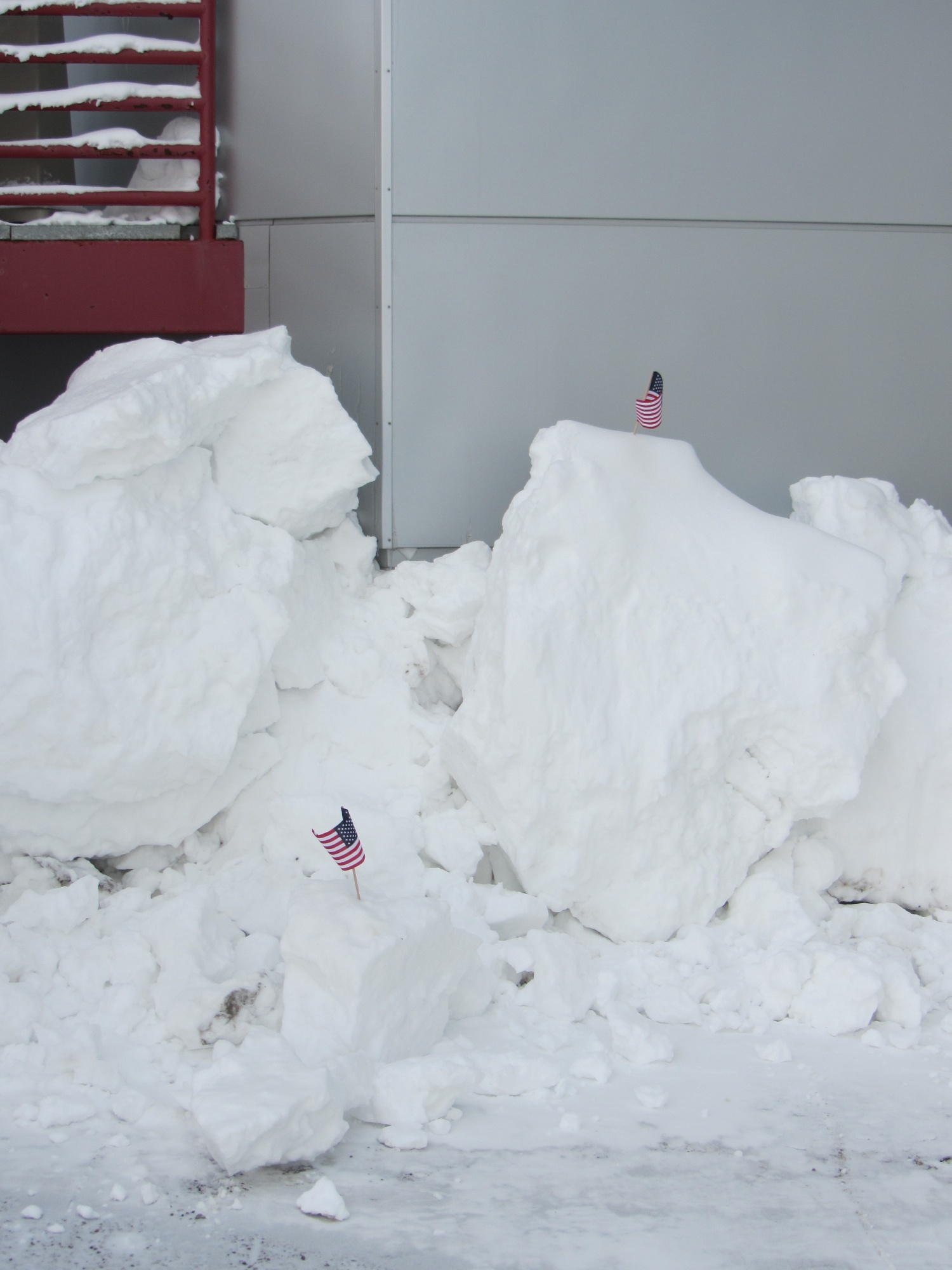
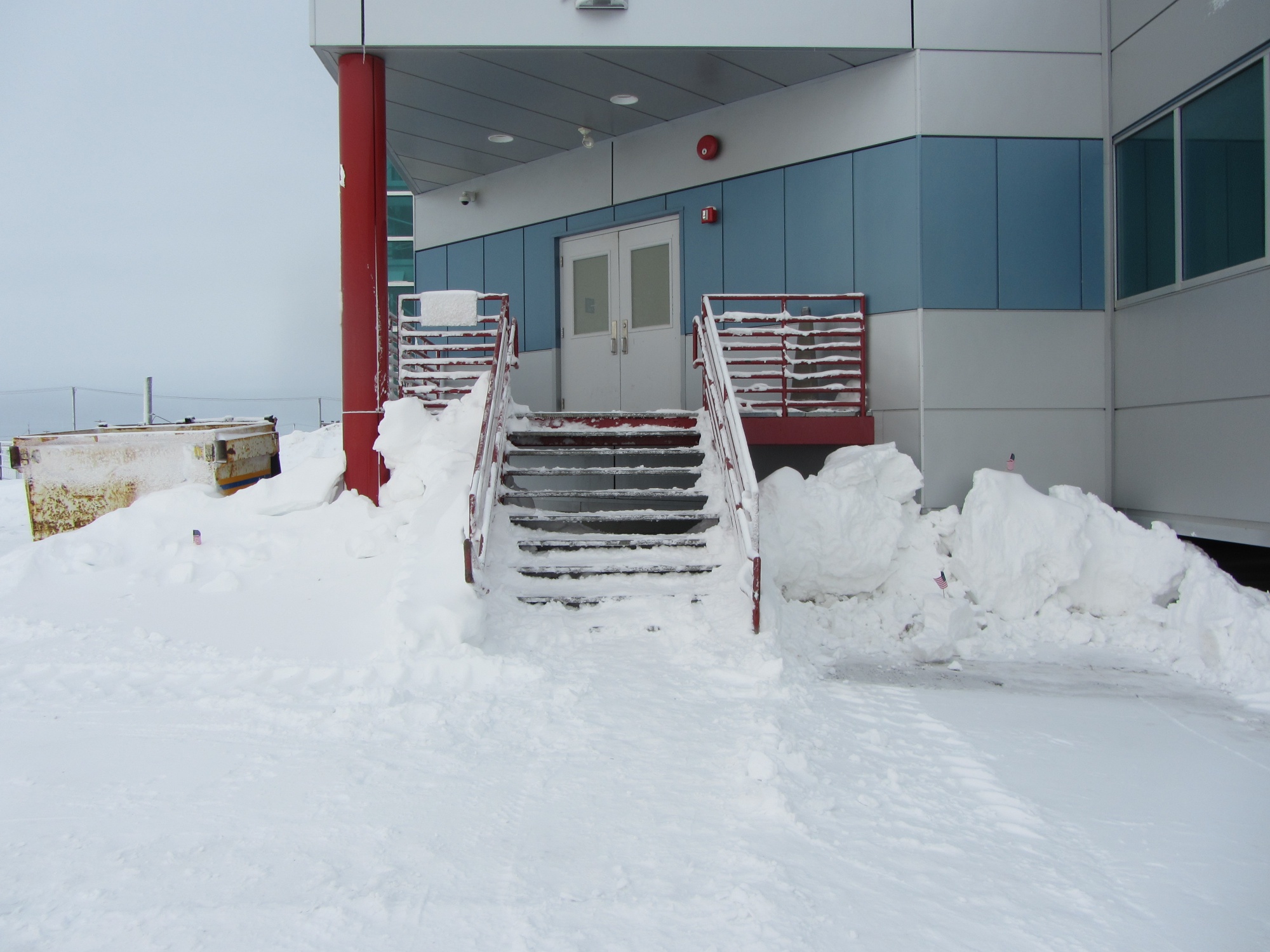
I was walking into the BARC (where I have my office and lab) after lunch the other day, when I came upon this scene:

Flags at the BARC

A closer look:

Flags at the BARC II

Who put them there, or why, we do not know.  But there they were and are.

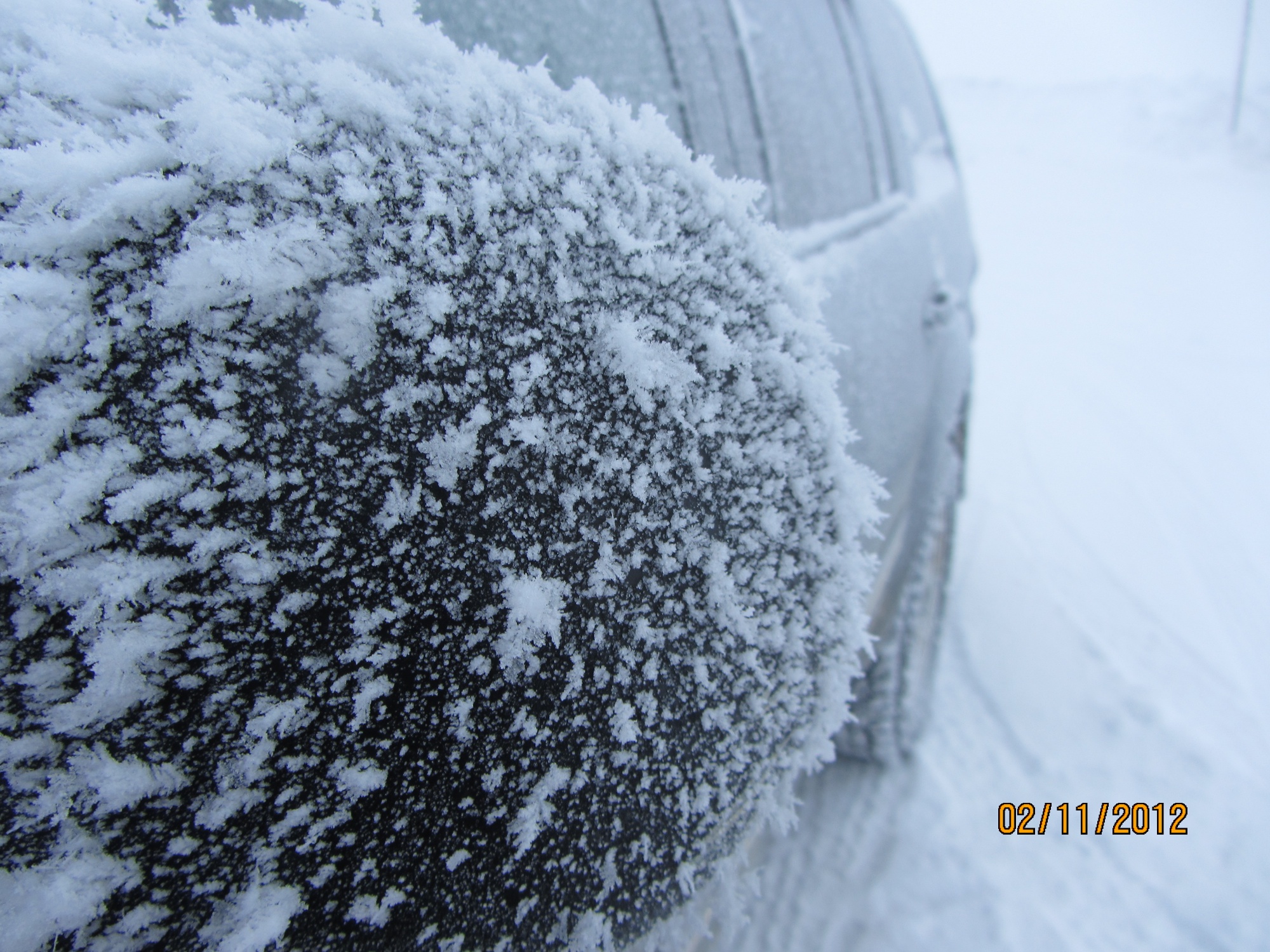
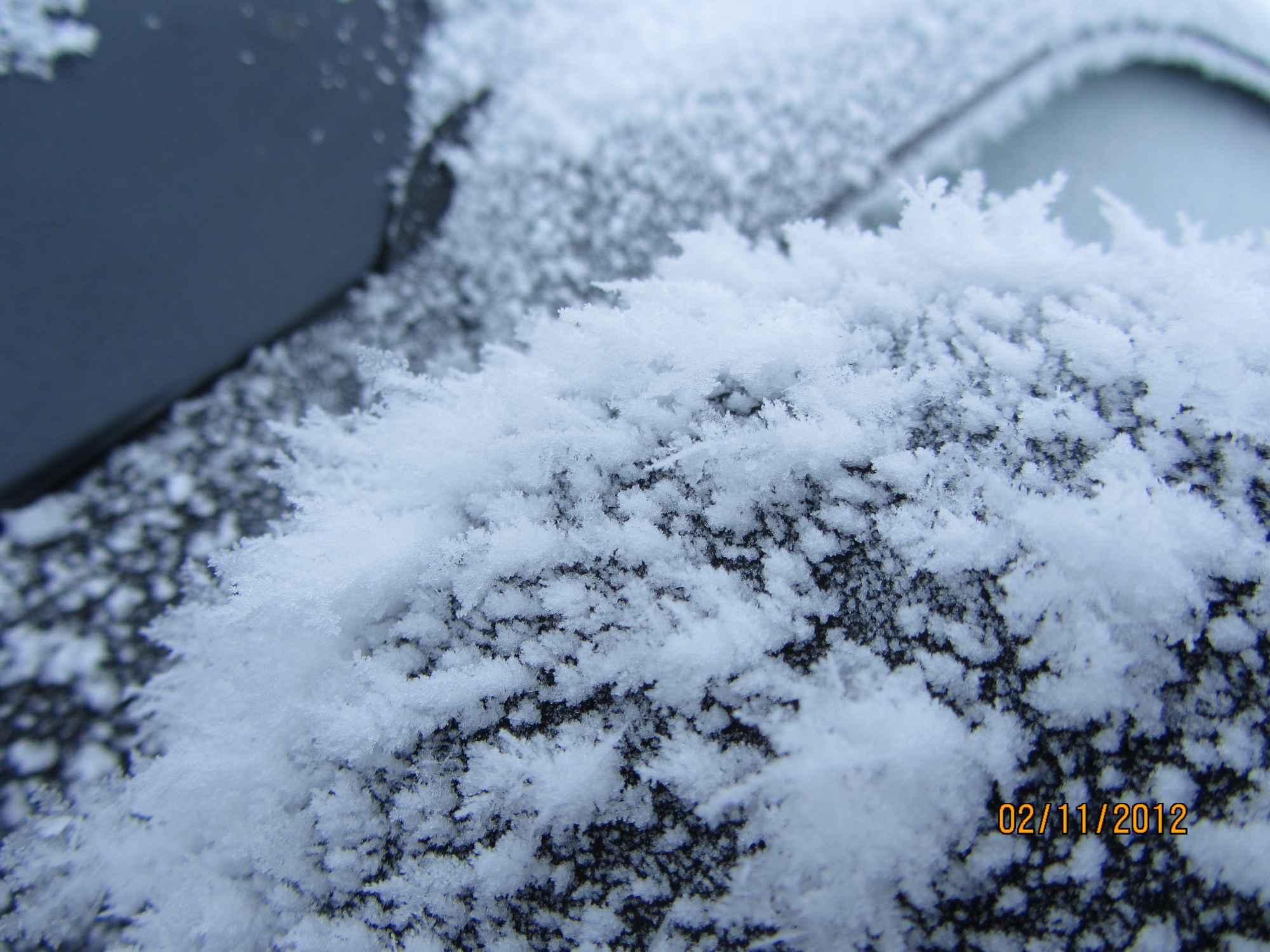
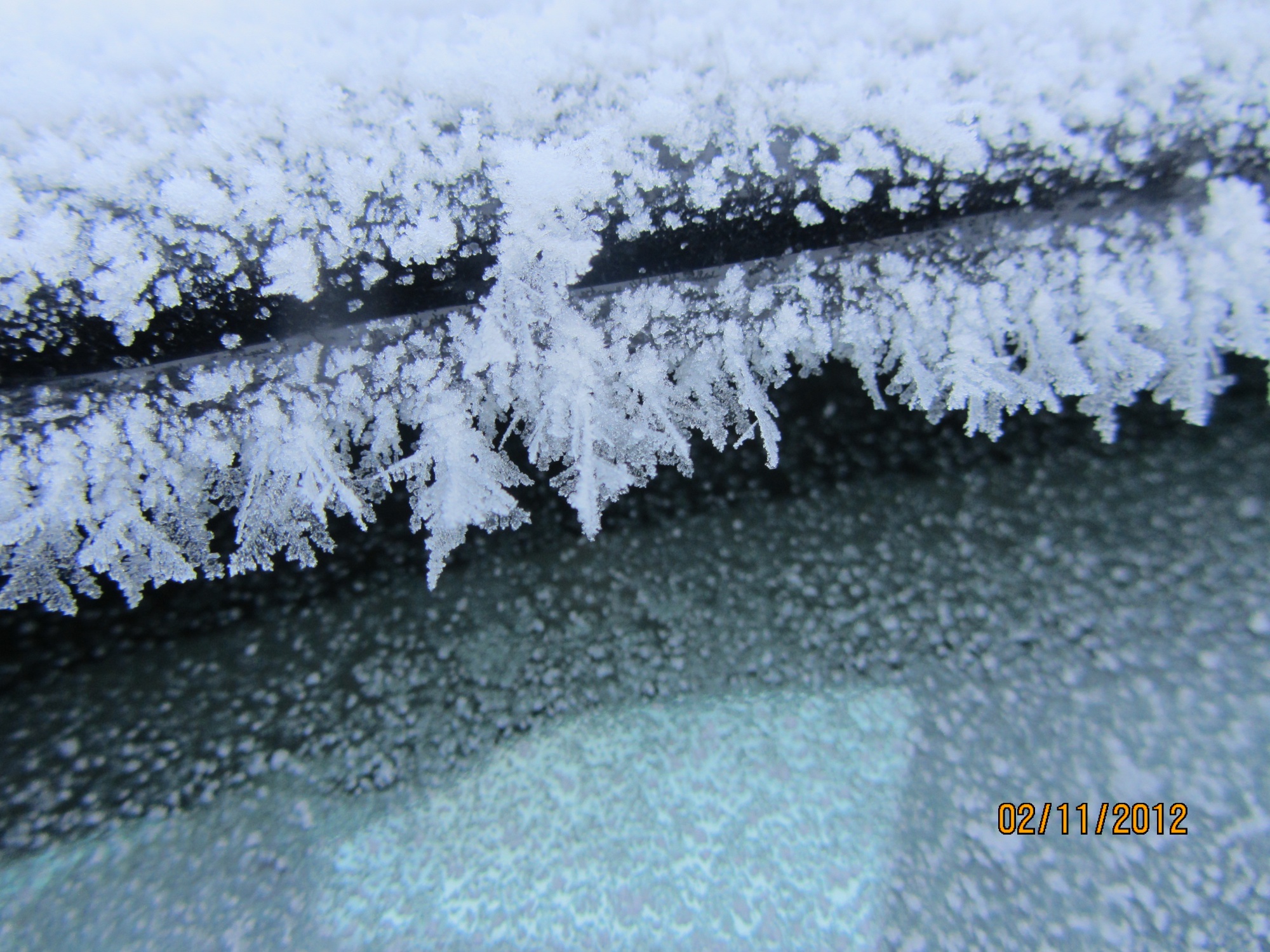
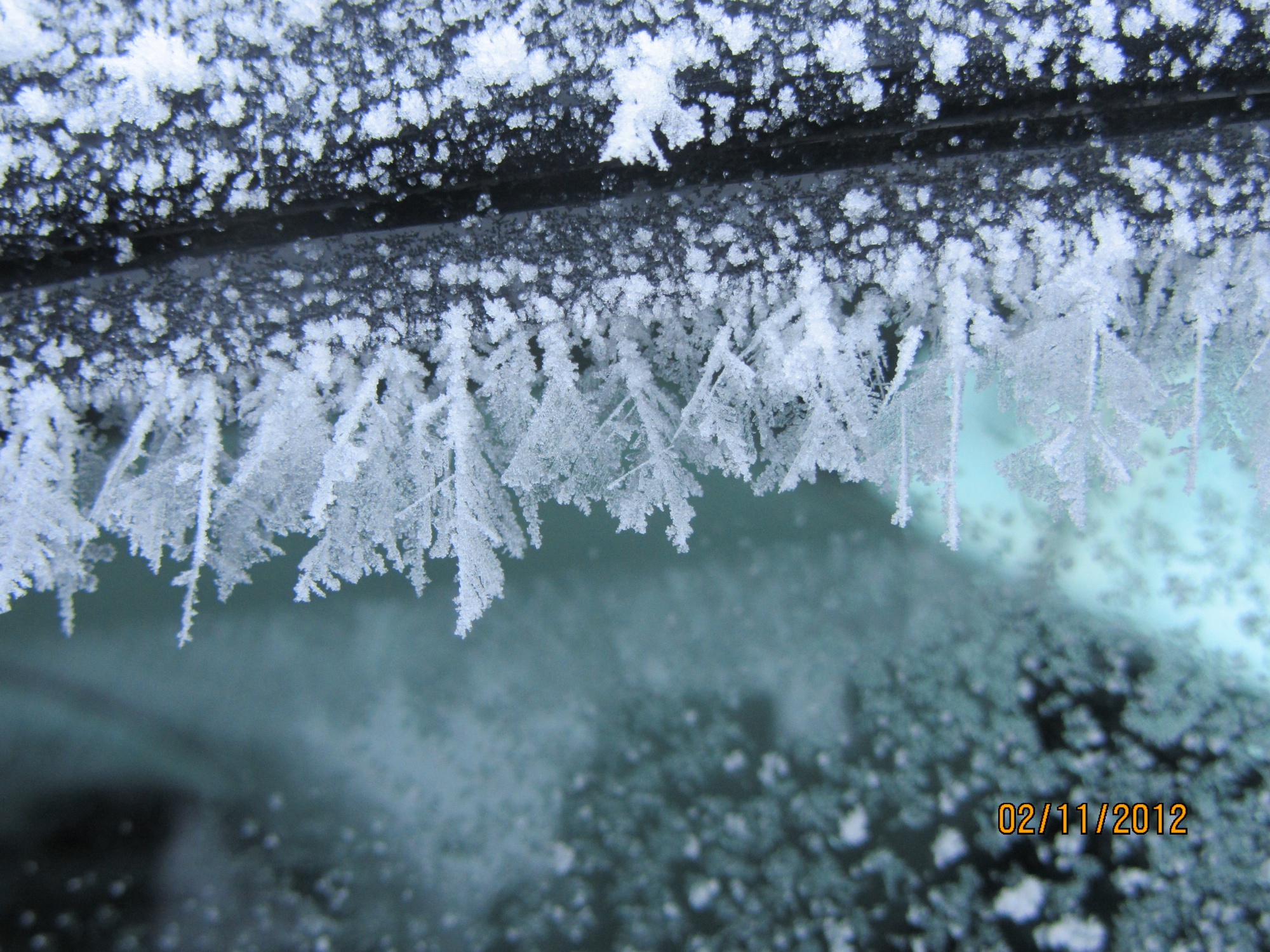
Last night, hoarfrost started building up on things.  By this afternoon, my car was covered in it.  Hoarfrost can be amazing, with long fern-like feathers growing off of surfaces.

Hoarfrost on the mirror.
Mirror close-up
Frost feathers I
Frost feathers II

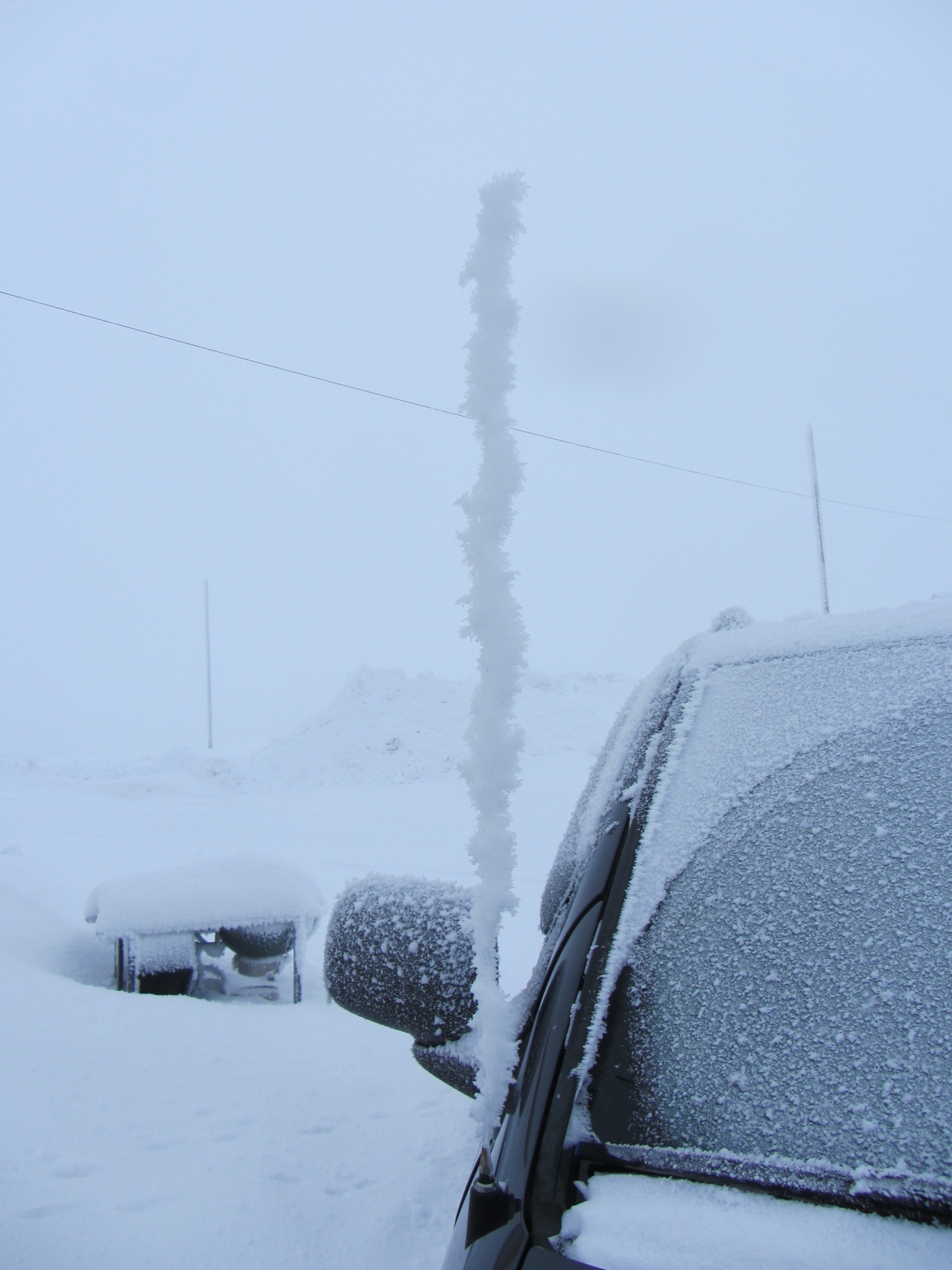
The best was the spiral effect the frost that grew on the antenna made.

Hoarfrost spiral on antenna


About those gray whales that got stuck at Barrow a few years back…

I’ve noticed I’ve been getting more hits on search terms relating to those whales, probably since the movie “Big Miracle” just was released.  So, since I’m kinda busy with the Super Bowl, I thought I’d put up a few links to the real story.

1) Bill Hess’s blog, where he is doing a series on the whole event.  Bill took what were probably the first professional pictures of the whales, including some may probably recognize.  This features a lot of Bill’s really fine photographs.

2) An article in the Fairbanks New-Miner which has interviews with many of the folks in Barrow who were involved in the original event, including biologist Geoff Carroll.

3) An article in the Anchorage Daily News by Richard Mauer, who covered the original story and hauled out his notes to write this one.

Last Call for Papers: The Connected Arctic–An Alaska Anthropological Association symposium sponsored by the Arctic Conference

I wound up agreeing to help organize a session at the upcoming Alaska Anthropological Association meeting in Seattle.  Long story about Seattle, but we have gone to Whitehorse, YT once or twice, so leaving Alaska is not a first.

Anyway, the deadline to submit sessions (including paper lists) is this Friday, so I though I’d put a description up here, since the AnthroAlaska list seems to be a bit slow showing up (although it might be my email).  We have room for a few more papers and are being fairly expansive in our interpretation of the topic.  If you are interested, the description and directions for how to participate follow:

Although the Arctic tends to be viewed as a place apart, both in the sociocultural sense and as a research area, the first has never been true, and the second is becoming less so.  This symposium will look at the Connected Arctic from both perspectives.

Papers on any aspect of trade and/or travel (pre-or post-contact) from one or more disciplinary perspectives are welcome, as long as they involve the Arctic.  We are interested in both specific case studies and methodological works.

We also welcome in papers dealing with aspects of connected Arctic research, including virtual repositories which can be used from multiple locations, shared databases, digital teaching and outreach tools, and social media.

N.B.  People wishing to submit papers are asked submit the paper abstract directly to the meeting organizers by the deadline of February 3, using the Alaska Anthropological Association meeting website form:  https://catalyst.uw.edu/webq/survey/fitzhugh/139716 .  Note you will need to register for the meeting first.  Please put “The Connected Arctic” in the space on the form.  The symposium is not on the website list of symposia yet, but we have been assured that does not matter, since sessions are due the same day.  Please also send your name and at least a paper title (preferably with the abstract) directly to one of the organizers:  Anne Jensen (anne.jensen@uicscience.org), Herbert Maschner (maschner@isu.edu ) or Owen Mason (geoarch85@gmail.com ).

This was going to be a good post…

Well, I’ve gotten 3 of the six papers off to the editors, either in final form or waiting for review, and the big one on Late Western Thule (I think that’s what I’m calling it, pending any requests from the editors to change it for consistency in the volume) is coming along.  Right now it’s way too long, still missing a couple of topics, and in need of serious cutting & some illustrations.  So I don’t feel quite so guilty about writing anything not strictly part of the paper.

That was going to be the start of a good (nay, dare I say great) catchup post.  However, it has been very cold in Barrow, the rest of the family is in Juneau, and I have been trying not to use too much water because the trucks that bring it and the trucks that haul the sewage don’t work well below -30°F.  Alas, apparently I used so little water that the bathroom sink drain froze up (there is sort of a design flaw in the drain & I don’t think they ran the heat trace (heated wires along pipes to keep them from freezing) far enough), although thankfully the tub & toilet still are working.  So I think I have to go try to remedy the situation now :-(.

The child is out

Just a short post, because I’m home celebrating my birthday (mostly by coughing–the cold has moved to my chest).

The child is completely out of the parka and pantaloons (Murdoch’s term), and Shawn was able to examine the remains.  No change in the age estimate.

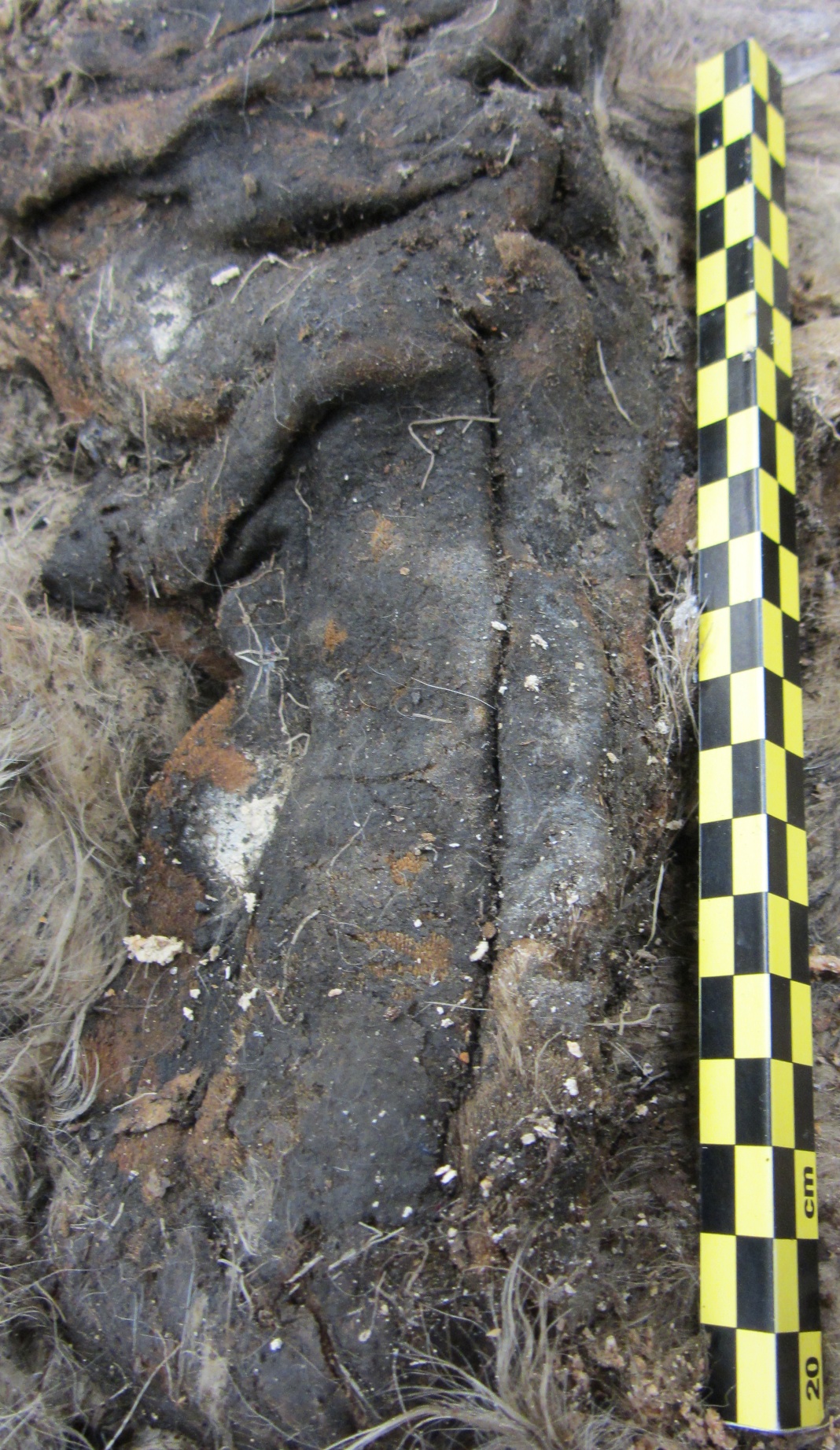
I was able to get some pictures of the boot part of the pantaloons.  They look like they may have been made from leg skin (something with shorter finer hair than the main part of a caribou hide), with separate soles.

Sole of the left boot

There was a seam up the middle of the vamp on each boot.  The boots seem to have been sewn to the pants, which were of caribou hide.

Seam up the vamp

More tomorrow.

Physical anthroplogy underway

Shawn Miller, the physical anthropology PhD student (and University of Utah anatomy instructor) who examines and records the data on the human remains from Nuvuk prior to their reburial, is here.  He has been working on the multiple burial with an intact box that we excavated in early July.  It is looking like there were two primary individuals, probably both men.  The juvenile elements could all have come from the same individual, Shawn thinks, so there may have only been three people in this burial.

It is looking like one of the adults has signs of porotic hyperostosis and cribra orbitalia.  These have generally been considered as signs of iron-deficiency anemia and a diet lacking in animal food-sources, but recently it has been suggested that this may be incorrect (Walker et al. 2009).  Certainly that would seem unlikely for someone living at Nuvuk, as there really was almost nothing available there but animal food.  It will be interesting to get the dates for the individual, who was apparently more recent, since there was reportedly considerable starvation after Yankee whalers decimated the bowhead stocks.

I went to get the coffins that we had in stock.  UIC RE Maintenance folks had made us a bunch, since it is easiest to cut a whole lot of standard size pieces at once.  Unfortunately, things seem to have been moved around in the warehouse where they were stored, and we seem to be short a few boxes and quite a few lids.  The ones I found were scattered in several locations.  I was able to find enough for the individuals in the burial, and will see about getting some new lids made later this week.

Education, Culture & the Past

I just got back from the local library, where I went for a talk by Aviâja Egede Lynge on Mental Decolonization in Greenland.  Aviâja is a really great speaker, with a graduate degree in social anthropology, who is working on the process of changing the school system to be truly Greenlandic in nature.  If you ever get a chance to hear her talk, take it.

The talk was about the lingering effects of the Danish colonization of Greenland.  A benign colonization, perhaps, but that brings its own issues.  A very complex problem.  Much of it is probably the same in any area that has been colonized, other aspects are perhaps specific to this particular case.

Gravel moving accomplished, & then football

Friday we got the gravel moved.  If you remember, the site looked like this:

Gravel pile on the Ipiutak structure

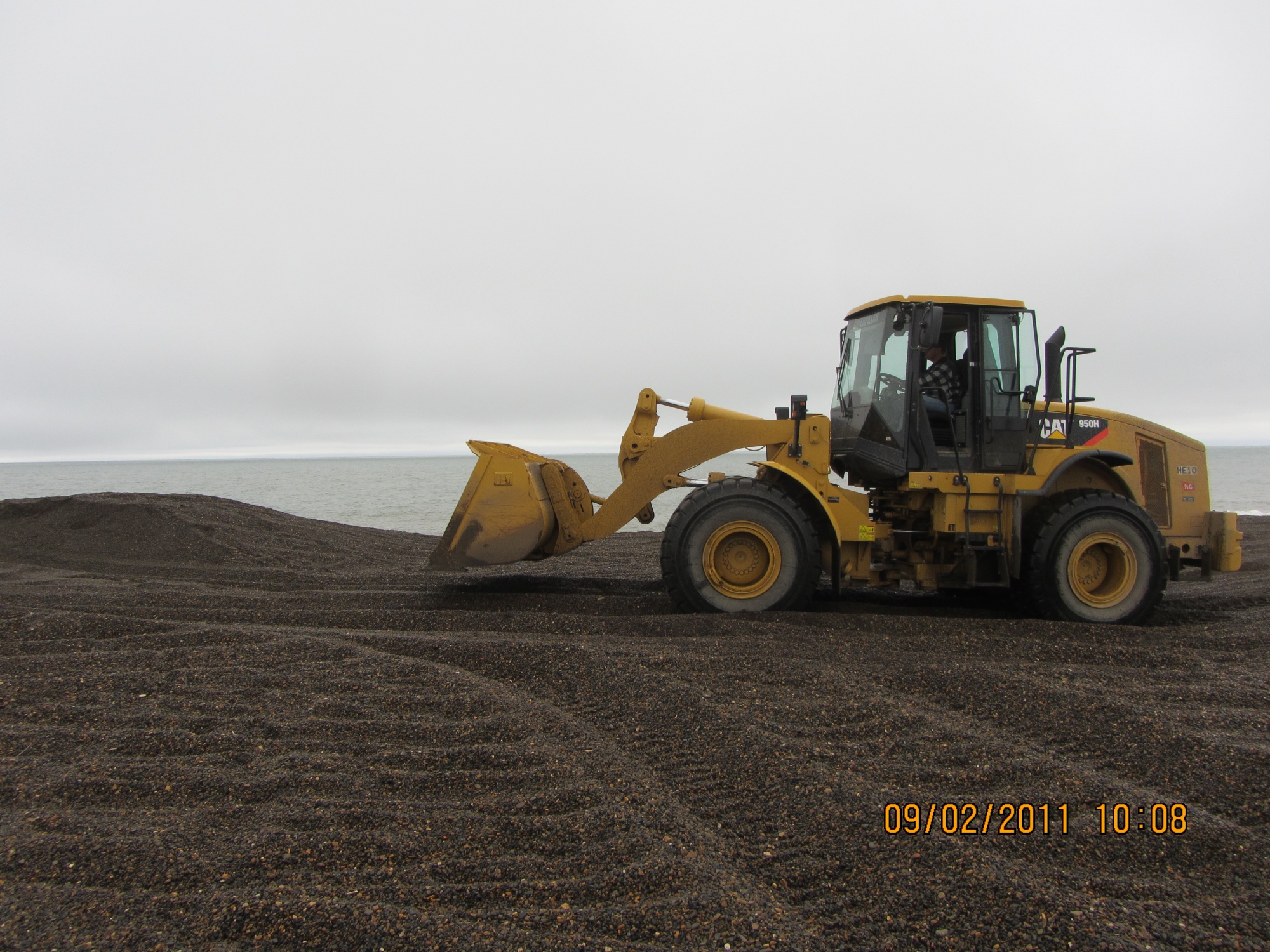
Not exactly conducive to a quick recovery excavation, especially since it’s mostly going to be volunteer labor, the students being back at school and all.  It had been looking pretty grim on the heavy equipment front, but Ilisaġvik College came through with a reasonable rental on their new Case loader, and Walter Brower & I headed out around 9AM.

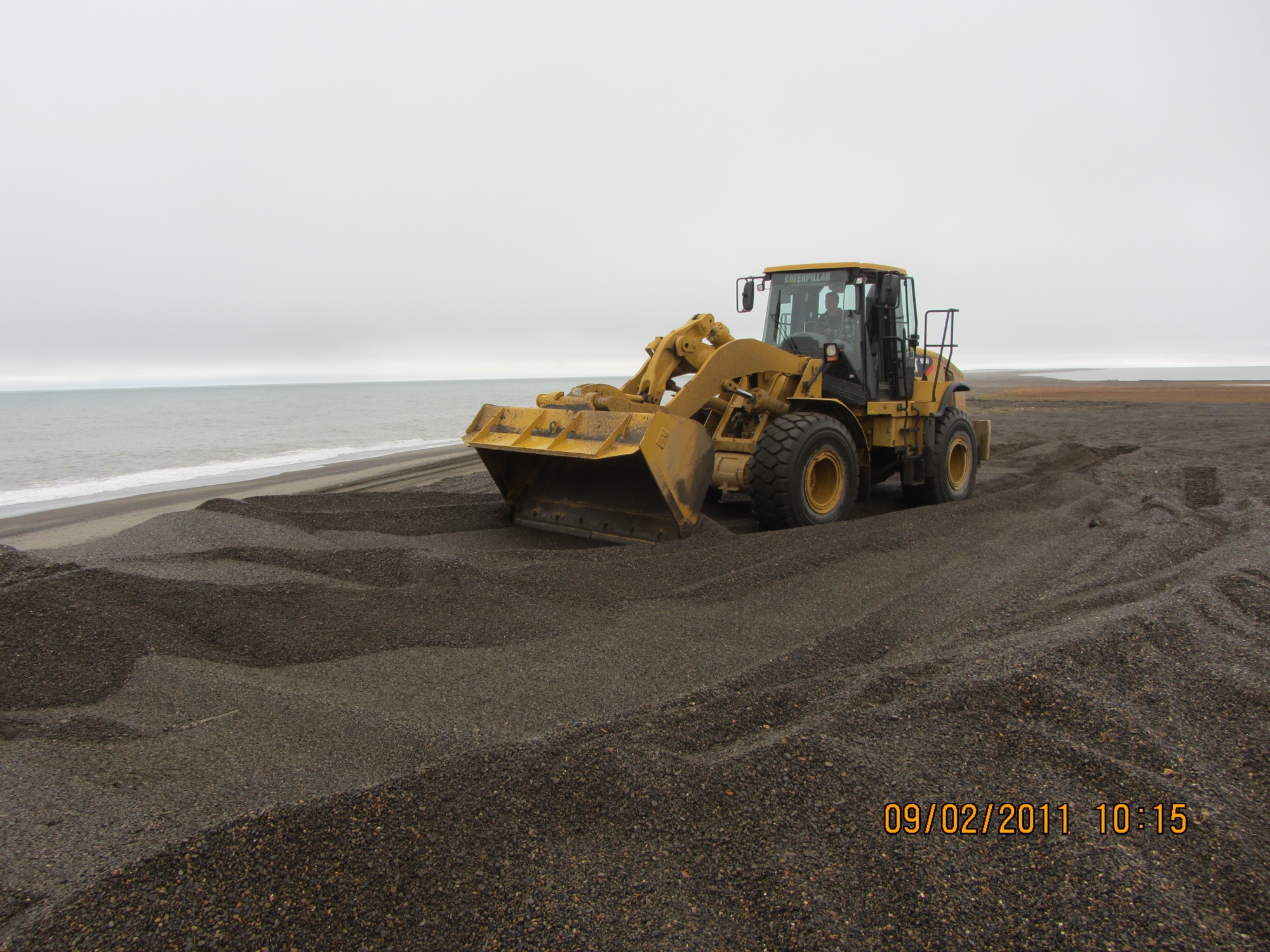
Getting there took a while, but shortly after 10 we were at work.  The loader has extra wide tires, and reputedly is not very good in snow, but it did fine in the gravel.

Starting work


Backdragging.

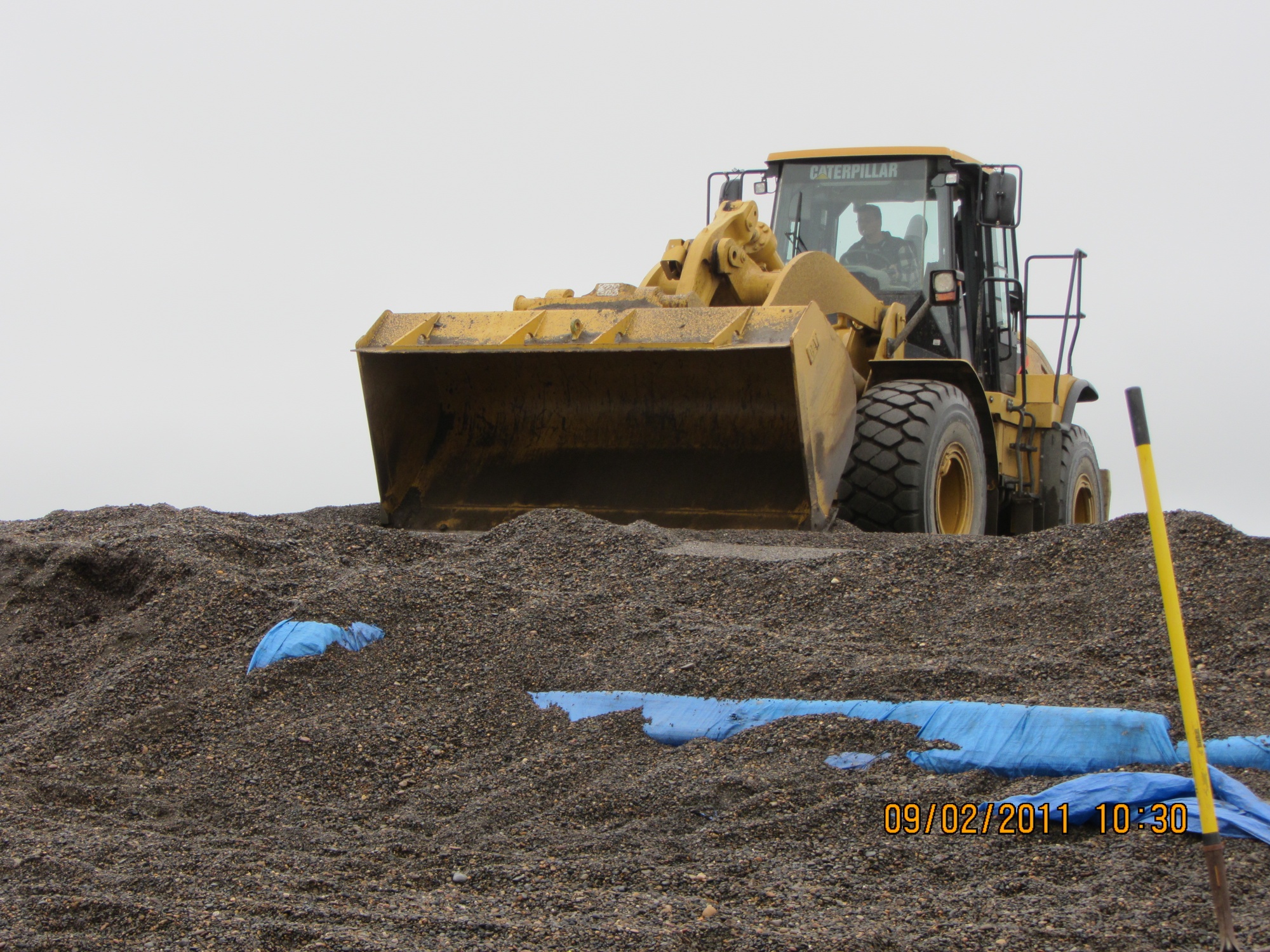
Backdragging proved effective and minimized the need to drive on top of the feature.  We were able to take it down to less than 1 foot above the surface, so it will be a lot less work this week & next weekend.

Finishing touches.
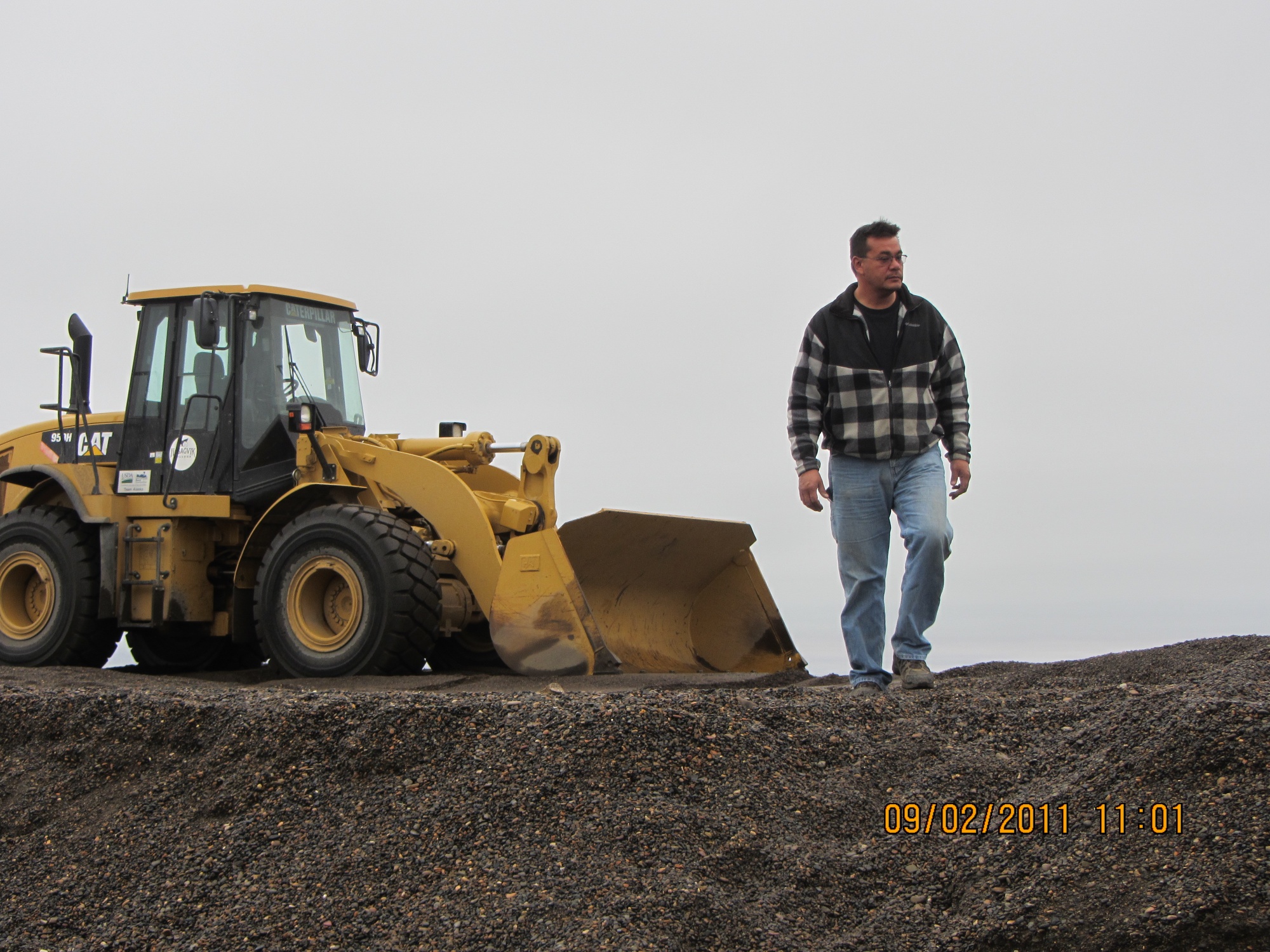
Walter checking the results.
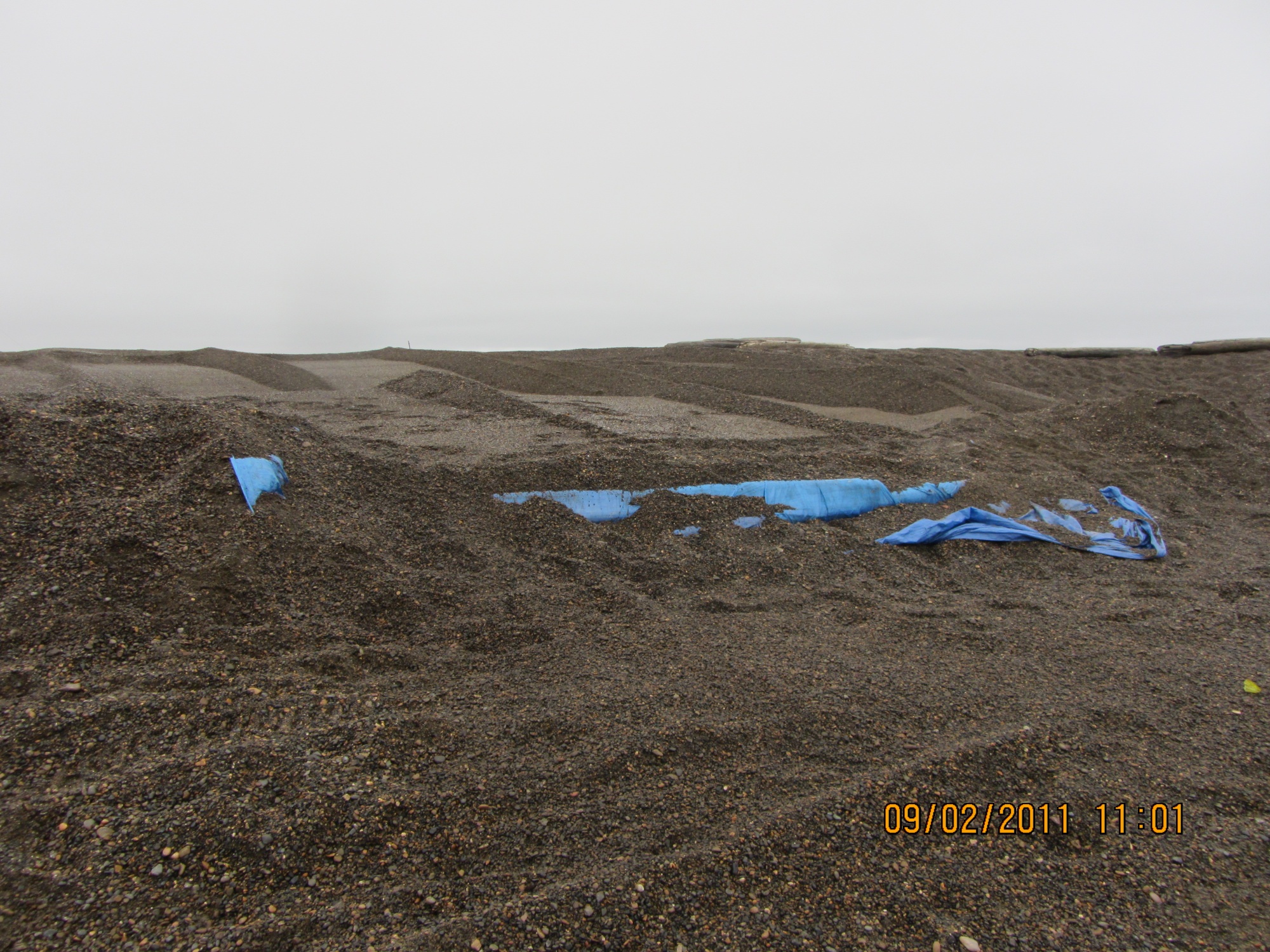
Final result--a great improvement.

All in all, a great improvement.

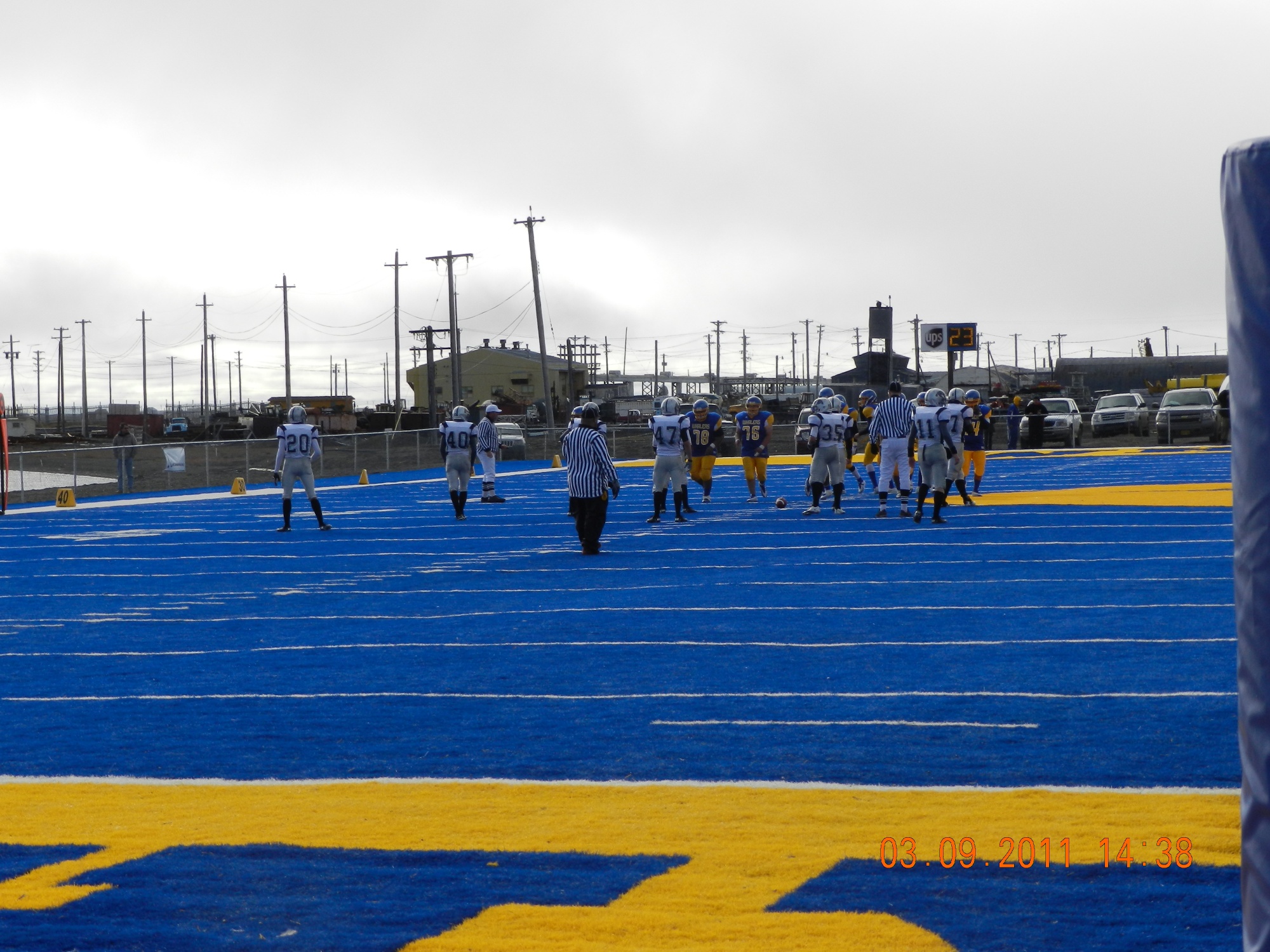
The next day Barrow played Nikiski in football. Both schools are in the Greatland Conference, and Nikiski is a perennial football powerhouse.  Barrow had never beaten them.

Cathy Parker Field
Football beside the Arctic Ocean. Whalers #24 (in motion to the left of the frame) is Trace Hudson, who works on the Nuvuk Project when he's not playing football.

Barrow fixed that.

Final score. No, I have no idea why there is 3:24 on the clock; the game was over.