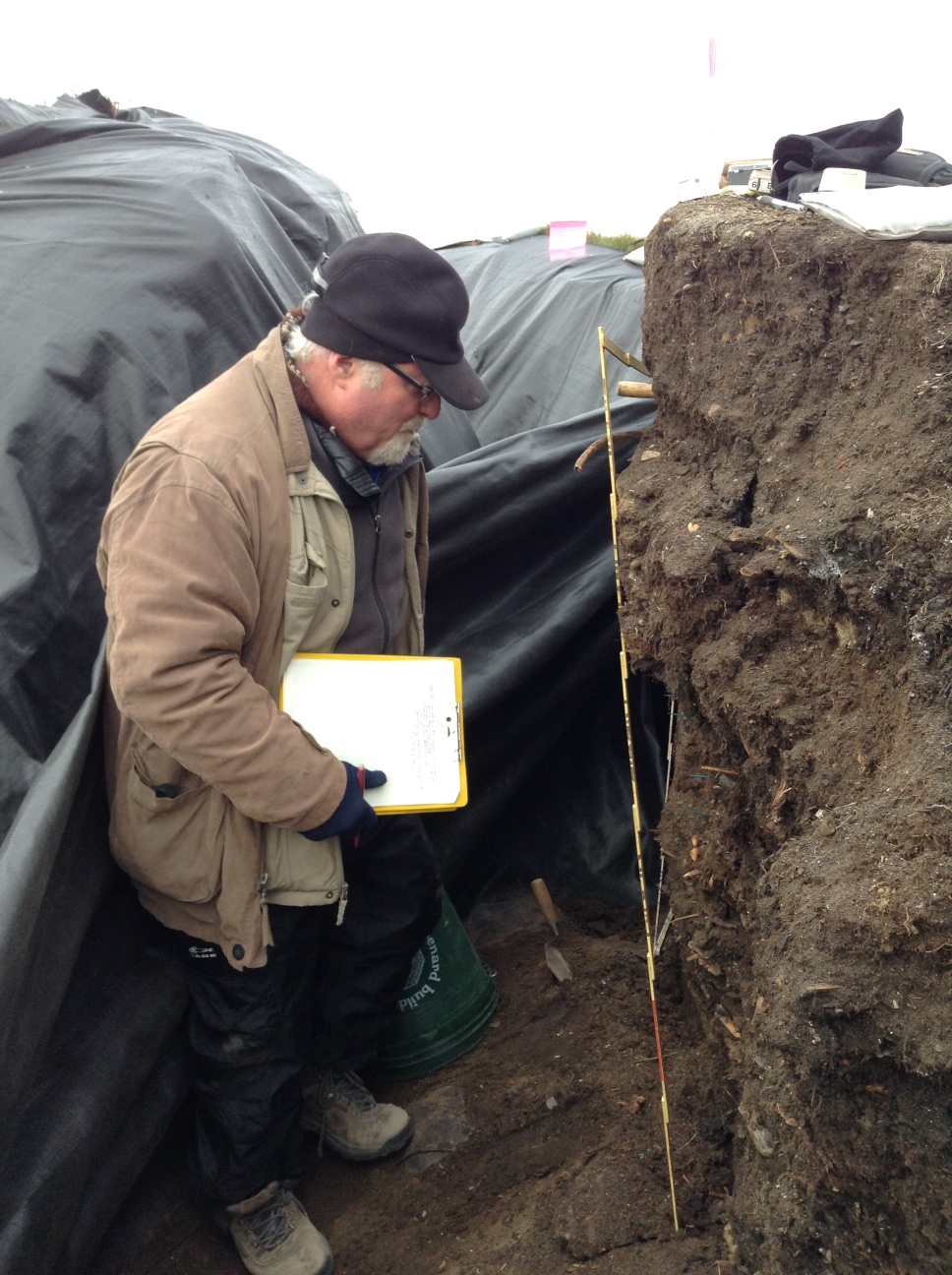
We went to work in earnest today. Owen went to work on recording the stratigraphy of the profile we had chosen for the column sample (CS 1). I had him marking the bottom of each level so we could continue excavation even after he went to sleep. Anne Garland and Laura kept working on the tests on the mound with the monument. The SW quad of the 1×1 came down on a cryoturbated sterile layer. There was metal throughout the cultural levels. We expanded northward to examine some wood in that wall.
Owen Mason examining the profile of CS 1.
Meanwhile, I set up the transit and began shooting in the CS 1 profile, as well as the bluff edge. The NW quad of TU 1 had similar results, so we put some 50x50s closer to the bluff edge to see if we could find datable material and the edge of the feature.
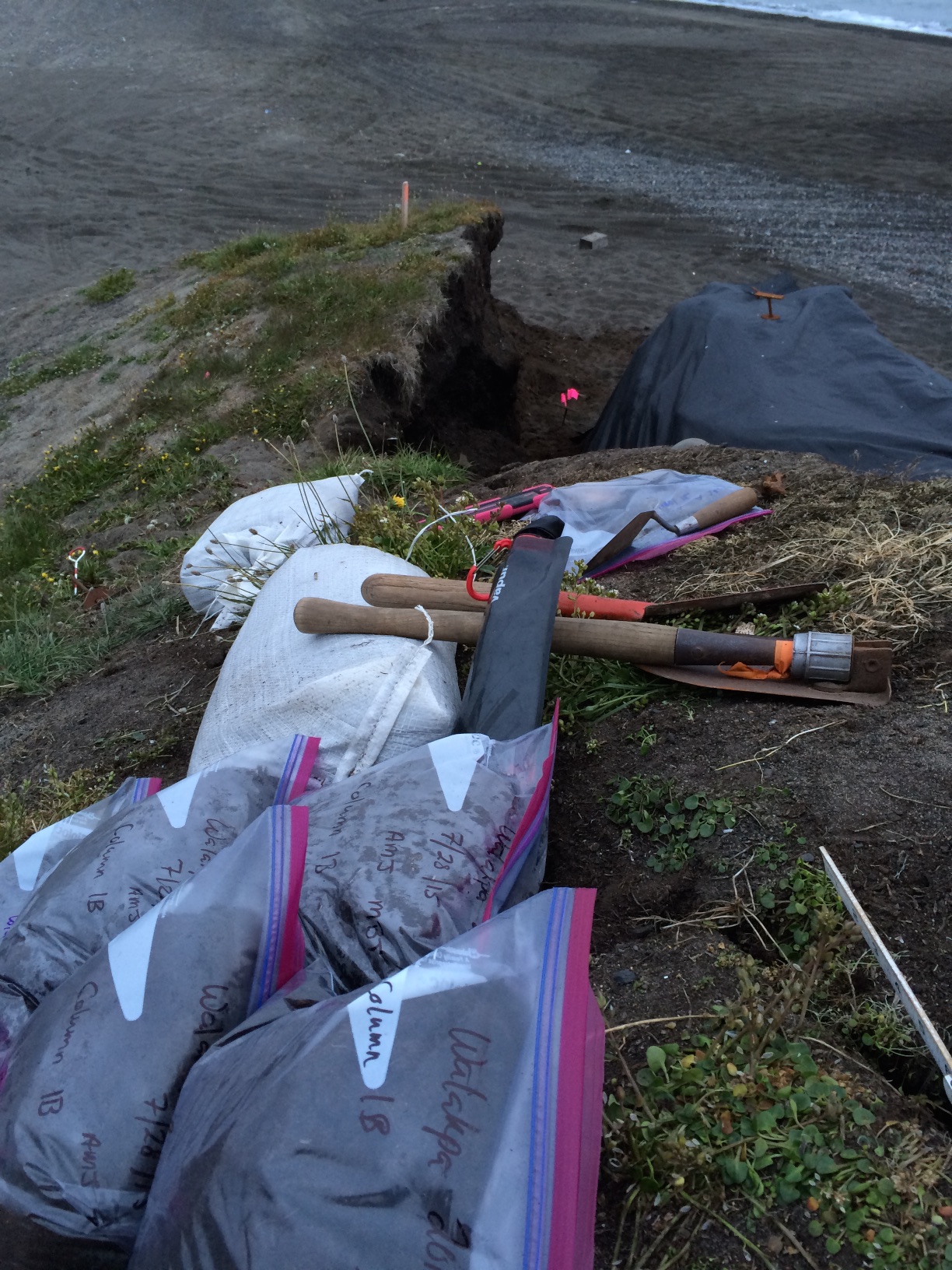
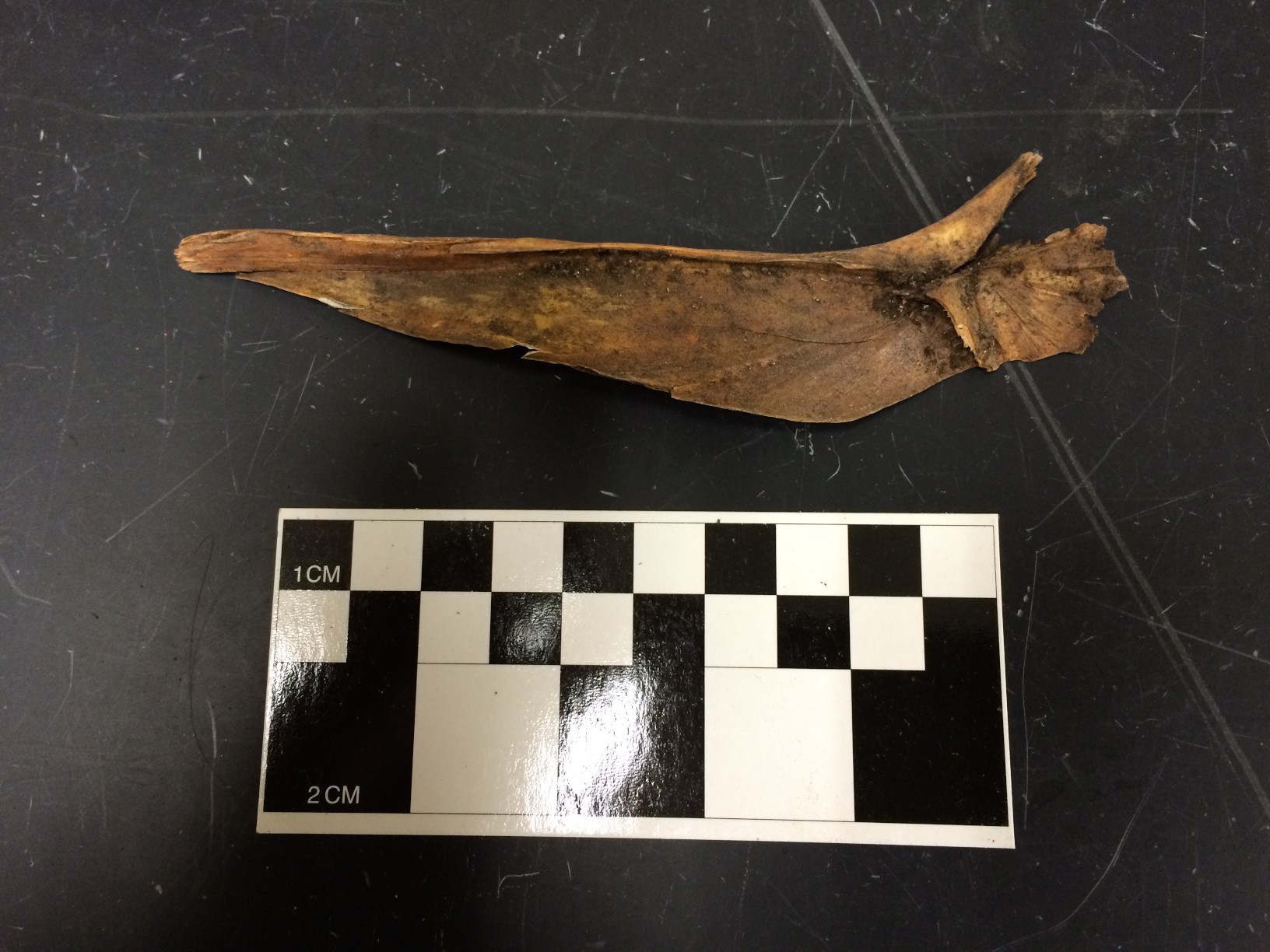
Mary Beth Timm and I took naps, so we could stay up late and work on the CS 1 profile. After dinner, we shot in the upper levels of the CS 1 profile, as well as a polar bear jaw that was exposed in Level 12, so that it would not get stepped on. Mary Beth & I started excavating CS 1. We are excavating in natural stratigraphic levels, with any level that is more than 5 cm in depth broken into 5 cm sub-levels. One gallon from each 5 cm is being kept as a bulk sample, and we are screening the remainder.
Midnight double selfie. Anne & Mary Beth at work on CS 1.
We kept going until it go so dark that we really couldn’t see the soil colors, which was around 2 AM. We had accomplished a fair bit, so we headed off to bed.
Results of our labor.Off to bed.
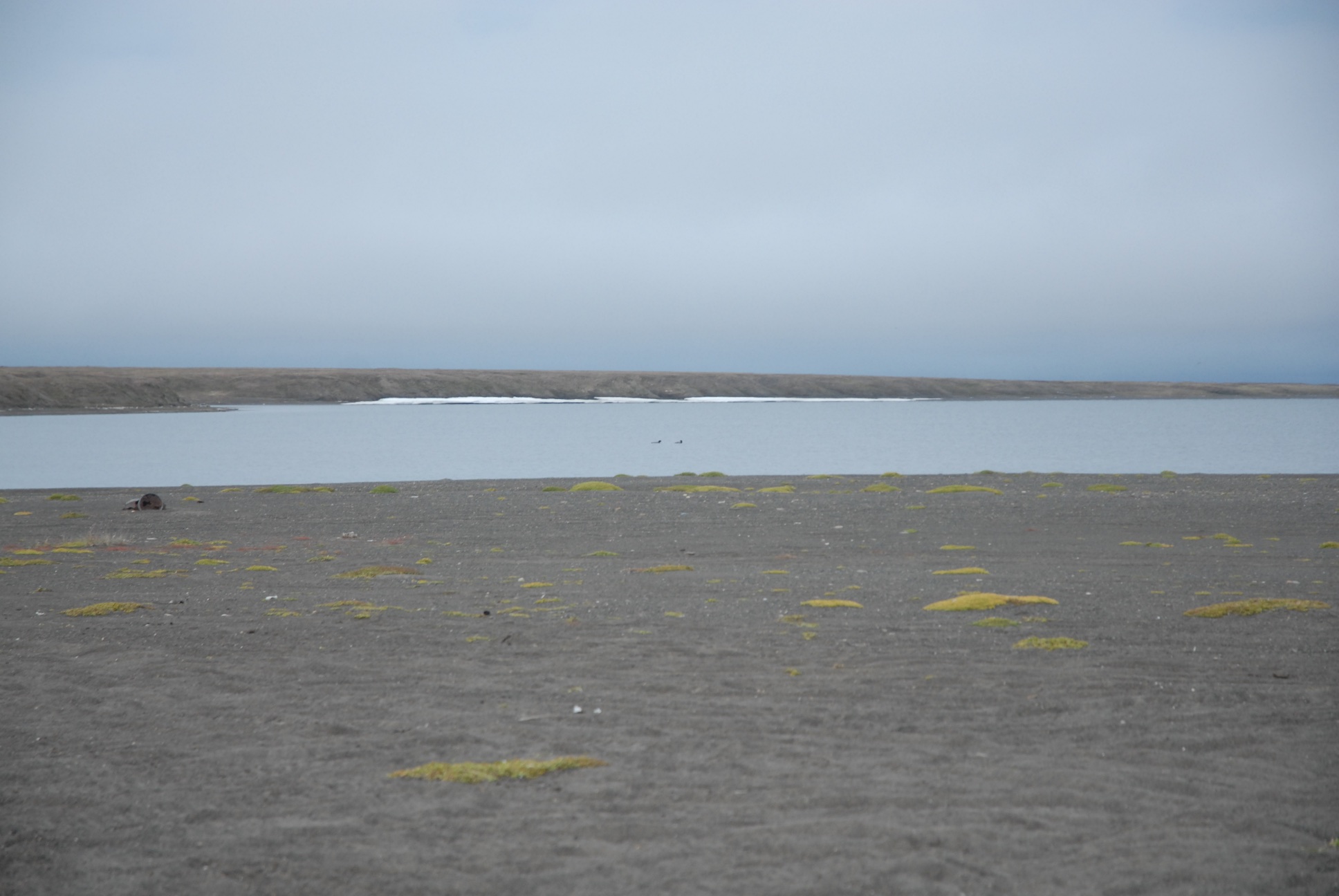
The weather is often best at night. It was really beautiful. A pair of loons was swimming on the lagoon.
Jeff Rasic from the National Park Service, along with Rebekah DeAngelo from Yale and her grad student Brooke Luokkala are in town to do some work, along with Laura Crawford, at the Birnirk National Historic Landmark site, which is on UIC lands (and yes, the actual name of the place is Piġniq, but the site has been written about as Birnirk, so I’m using that name for the site). Becky and Brooke got in Sunday, after travel from the east coast, and Jeff got in yesterday. However, the weather was pretty bad, so we postponed real fieldwork until today.
I did see them in the field briefly yesterday. I had to take a quick trip to the point to check on something for UIC Lands. On the way back, I met them near the Birnirk site, unfortunately a bit stuck in gravel. They were successfully extracted and continued their tour of Barrow.
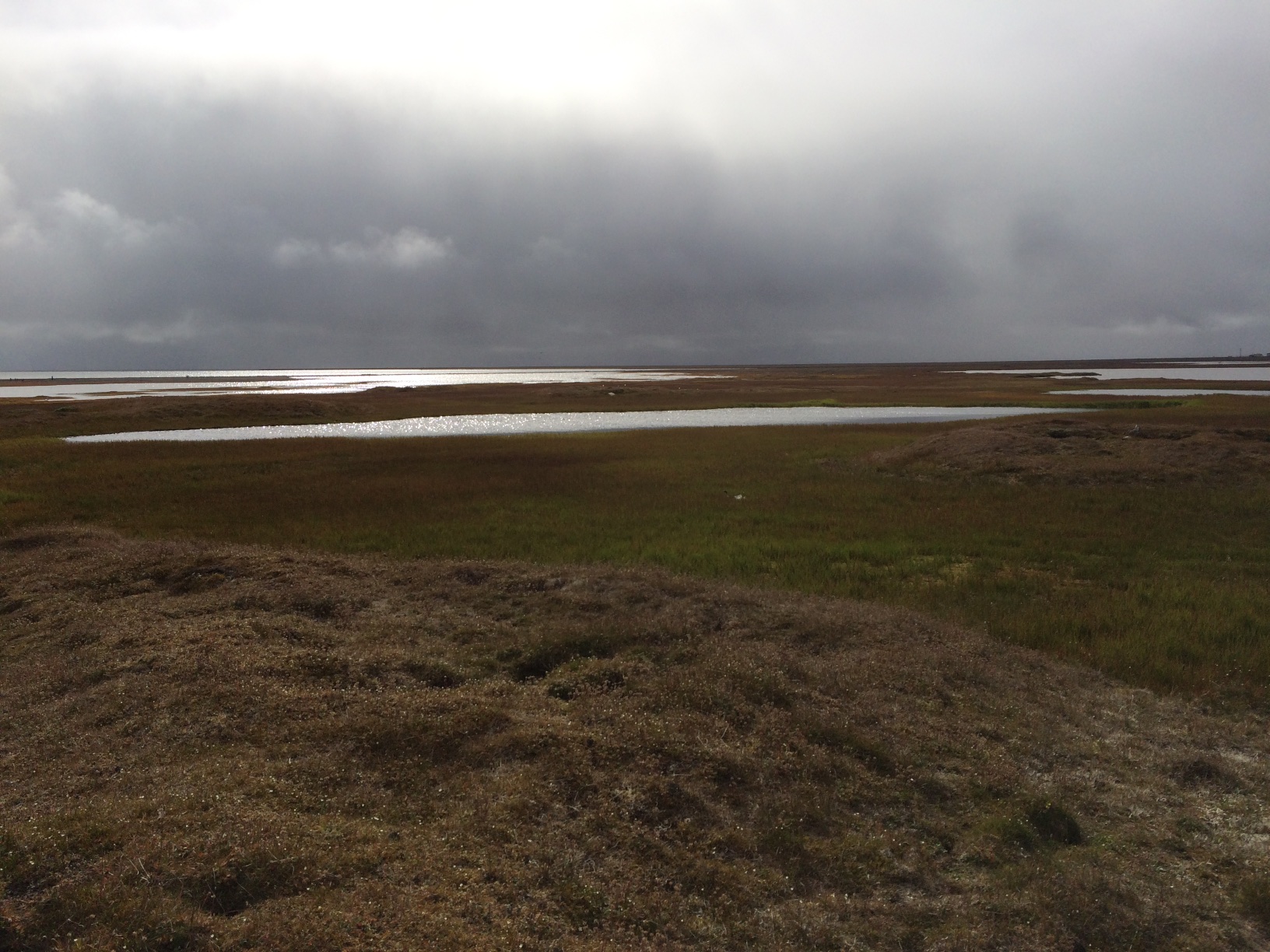
Today we went out to Birnirk. We looked at all the mounds, Jeff got GPS points on mounds and other reference points, and Laura did quite a bit of coring. I flagged the perimeter of a “box” that we hope to have some of Craig Tweedie’s crew do detailed DGPS measurements on. That data can be used to make a contour map of the site, which can then be compared to the map James Ford made in the early 1950s, when he was there with Carter. It should be interesting to see how much sea level has changed. It clearly has risen since the earliest houses were occupied, and even since the early aerial photos, but the question is, how much?
Sun on water at Birnirk.Part of the crew visiting one of the mounds at Birnirk.
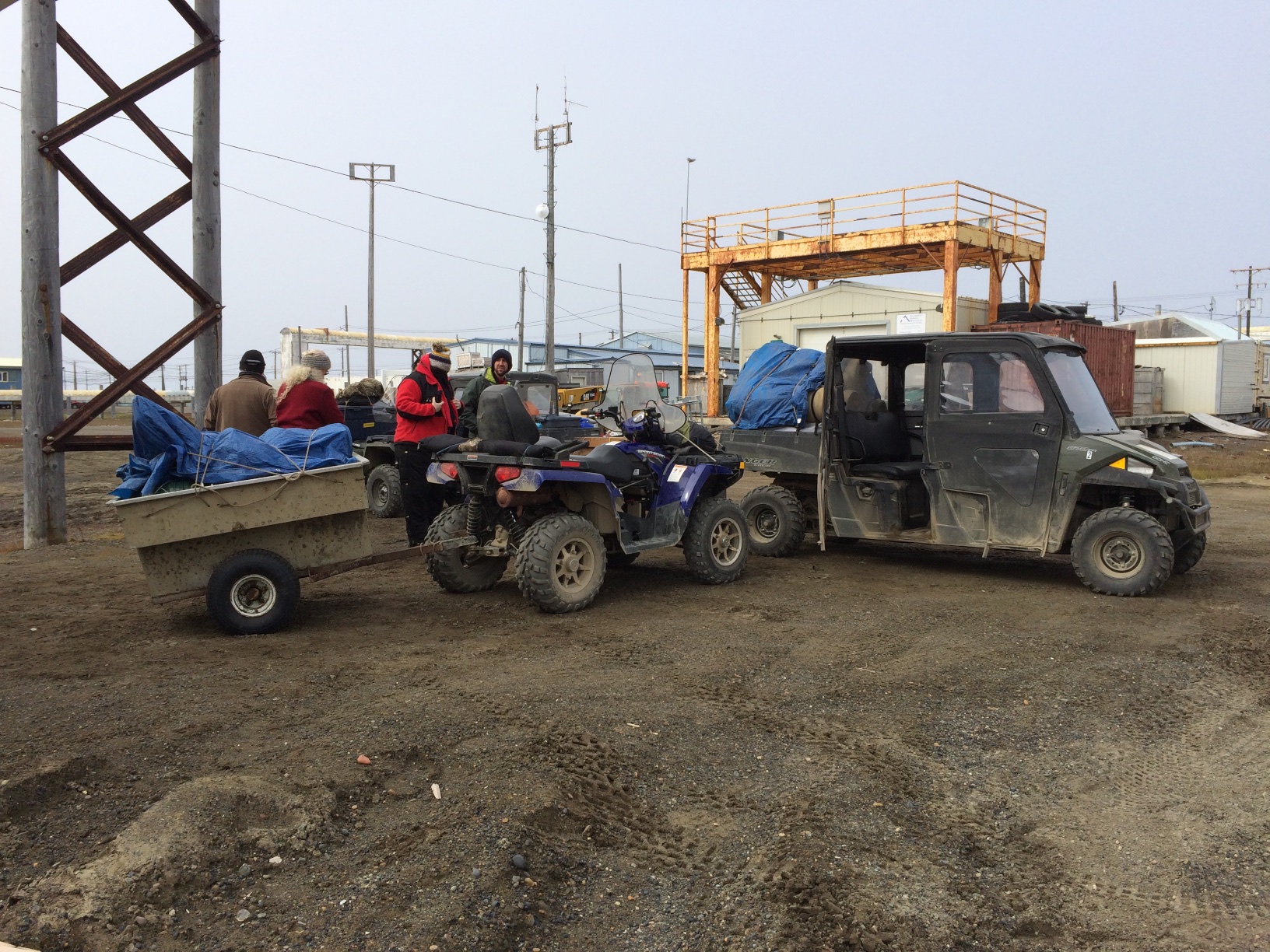
The crew (Owen Mason, Anne Garland, Mary Beth Timm, Laura Crawford and myself) gathered out at NARL, at a small yellow warehouse. We were using UIC Science archaeological gear. IHLC & Ilisagvik College let us use some tents, sleeping pads & kitchen gear. We managed to get everything packed into side-by-sides and trailers and headed off to Walakpa with Sean Gunnells, Oona Edwardsen and Ray Kious of the UICS logistics staff who weren’t otherwise occupied.
Loading up to head to Walakpa
We got to Walakpa around 2PM. We got camp set up, with a slight hitch because some of the tents had not been repacked properly when last used. However, the logistics staff dealt with it, and headed back to town.
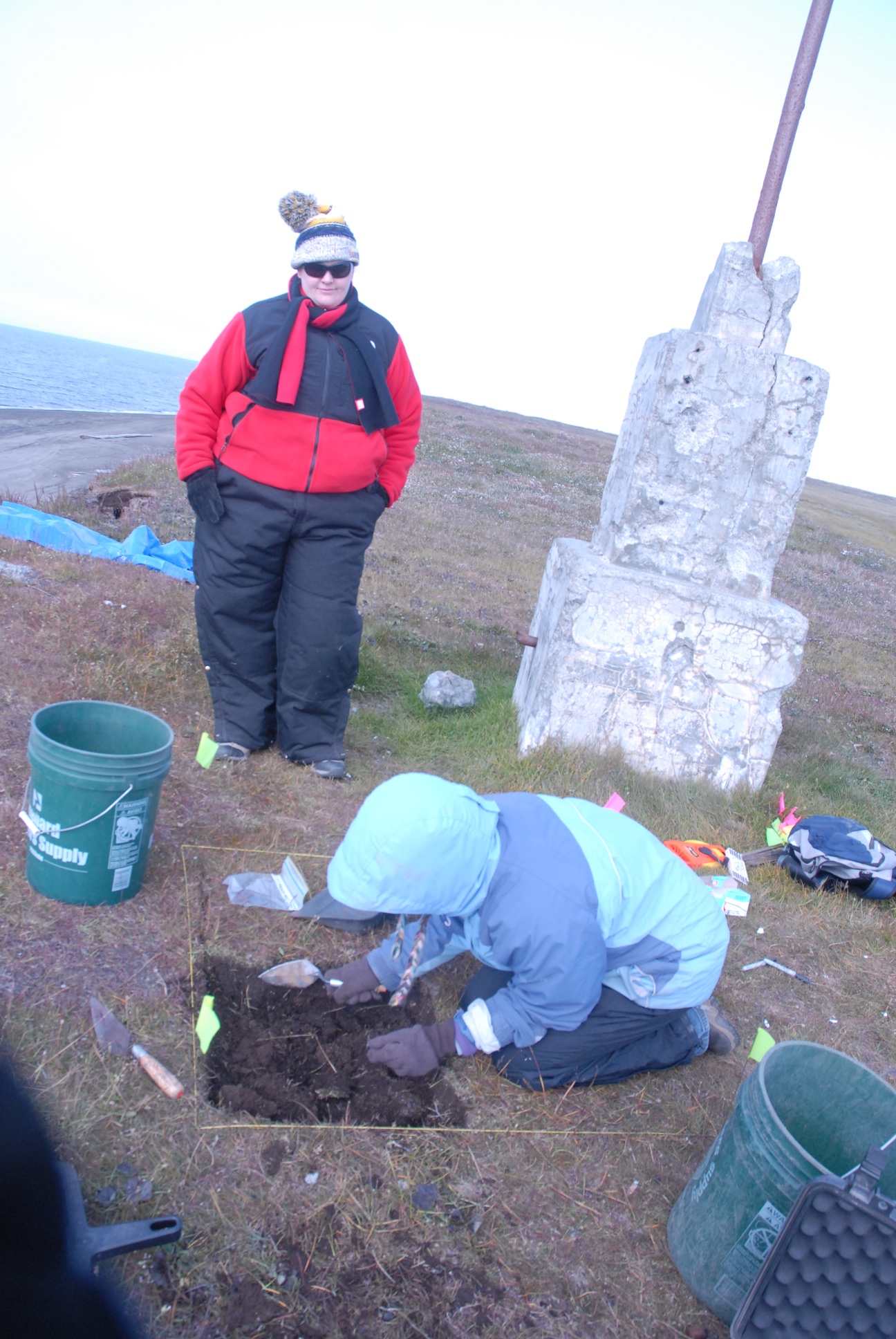
We uncovered portions of the bluff so that we could examine the profiles and decide where we want to take the column sample. While walking the beach examining the bluff profiles, we noticed that there was a cultural layer exposed in the mound with one of the two monuments on it. Anne Garland laid out a 1×1 meter test, well back from the edge of the bluff, to see if it continued across the mound.
Laura Crawford excavating the SW quadrant of a 1×1 while Mary Beth Timm looks on. View NE along the coast toward Barrow.
It was clear that we couldn’t safely do a profile in the central area where the meat cache had been, since there was still an overhang. In addition, some of the geotextile fabric protecting the site was pinned by collapse of bluffs, preventing its removal. Eventually, after cleaning profiles on either side of the overhang, we picked a spot and Owen went to work on a detailed drawing.
We had visitors in the early morning, a young couple whose ATV had a flat, and were hoping that we had a tire pump. Unfortunately, we didn’t, so they headed on up the coast with both of them on one side of the ATV.
We’re back from Walakpa, most of the gear is cleaned up and put away, and initial sample processing is done. We couldn’t post from the field, so I’m going to put the posts up a day at a time.
After a rather long, drawn-out saga, everything is in place and I can draw on funds so I can work on the WALRUS project. The delays have been really frustrating for everyone involved. Once I get the interns on board in Barrow, we’ll get back to going through the faunal material we have there for walrus samples.
We are trying to get samples from a wide range of sites. Since the sampling is destructive, we don’t want to use artifacts if that can be avoided. Ideally we want unmodified walrus parts, bone or tooth, or if we can’t get enough of them, manufacturing discards. As a fallback, we may wind up sampling things like shovels or bola weights, assuming we can get the museum’s permission, since they are common types of artifacts, and not diagnostic (or something that is likely to be displayed). We currently can’t use tusk parts, since there have been no modern studies to compare their chemistry to that of bones and teeth, so interpretation of results would be problematic. (If any carvers would be able to contribute some scraps from tusks along with a sample of bone and/or a tooth from the same animal, it would be a really big help). We are also looking for caribou or some terrestrial plant material from the same place in the site for radiocarbon dating, since marine mammals incorporate old carbon and the dates are hard to interpret.
More recent archaeological projects tend to have excavated faunal material in the same way as everything else, with decent stratigraphic control, and also tend to have brought it back from the field. However, in the early days, that was not often the case. Even if material was brought back, it often wasn’t cataloged in any detail, so reports are almost no help in figuring out if there is any walrus to be had in archaeological collections. A bit of walrus shows up in catalogs, but most of it is in the form of artifacts. A lot of walrus artifacts (particularly bone, since ivory was clearly an item of trade) suggests that the inhabitants of a site were hunting walrus, so the potential for walrus parts to exist in the collection is there.
Many of the classic sites on the coast of Alaska have strong indications that walrus were being caught by the people who lived there, but they were excavated decades ago, and finding suitable samples in the collections was not something that could just be done by getting someone to pull a particular bag or catalog number. It pretty much requires looking through mixed lots of artifacts and bags of bones. So I’m in Fairbanks doing just that.
We are mostly working in the museum, but it is closed on the weekend, so we got permission to bring a collection of faunal material to the PI (Nicole Misarti)’s lab, and we went through it yesterday. It took some doing, but we got though it, and should have plenty of samples. It was an adventure. We had 24 boxes, most of them full of bags like this:
Nicole holds a bag from which the bones on the tray burst forth (like a scene from Alien) when she took it out of the outer bag. Sadly, these were almost all ringed seal parts. Other bags from that box are on the right.
Not all of the bags were correctly labeled, or at least the labels often didn’t specify species, just element, so we had to look.
We found a few other interesting things in the process, including this really large fish bone from Point Hope.
Really big fish bone.The other side of the really big fish bone.
I’m pretty sure it’s some sort of cod (Gadid) but exactly what sort? It’s really big. If I have time, I’ll talk to the curator of fish, but the mission is walrus samples at the moment.
When we first started archaeological work at Nuvuk, it took a while to find a physical anthropologist who was willing to work with the human remains here in Barrow. Dennis O’ Rourke and his team were willing to do that. Dennis came up to Barrow to speak to the community and the Elders to get their permission. His lab works with genetic studies as well as skeletal material, and he asked if they would be interested in allowing ancient DNA studies on the remains from Nuvuk. The Elders were not only interested in those studies, they suggested that the group undertake a program of modern DNA studies across the North Slope as well. They developed a proposal to do just that, and once it was funded, research got underway, with resident of all seven North Slope communities contributing samples.
The analysis took a while. The team traveled to all the villages to collect the data and returned to present the results to North Slope residents before they were published. Finally, thefirst paper based on the project is published! It is based on looking at mitochondrial DNA, which is inherited only from your mother. It is present in many more copies than the more familiar (to most people) nuclear DNA, and therefore is often studied in archaeological situations, since all the extra copies make it more likely that some of it will survive.
The short version is that the modern DNA results support the North Slope as the source for the populations that migrated to the eastern Arctic, both the Neoeskimo (ancestors of today’s Inuit/Inupiat people) and the earlier Paleoeskimo. This fits well with the picture from the archaeological data.
Jennifer Raff is senior author, with Margarita Rzhetskaya, Justin Tackney and Geoff Hayes as co-authors.
This paper has gotten picked up by a number of science news sources.
Edit: 4/30/15 Fixed a link that WP had put an ellipsis in the middle of the link. It should work now.
I spent much of Friday in the lab, selecting items from Walakpa to send off for radiocarbon dating. We had a reasonable set of samples from 2013 and funds to run the dates, but given that that entire area is gone, I wanted to get some idea of how old some of what was exposed this fall is. That meant I had to make some choices about what got sent and what didn’t.
We had managed to collect several caribou bones, but most of them were ex situ (not in their original location). There are also several samples of plant material from known locations which are much more likely to be informative. Everything had been frozen as soon as it came in from the field due to the aggressive mold we had had to deal with last year. For carbon dating, the lab needs to have a certain minimum weight to work with (varies by each type of material), which means that the samples had to be thawed enough to allow them to be split, cleaned, and dried enough to make sure that the weights were accurate.
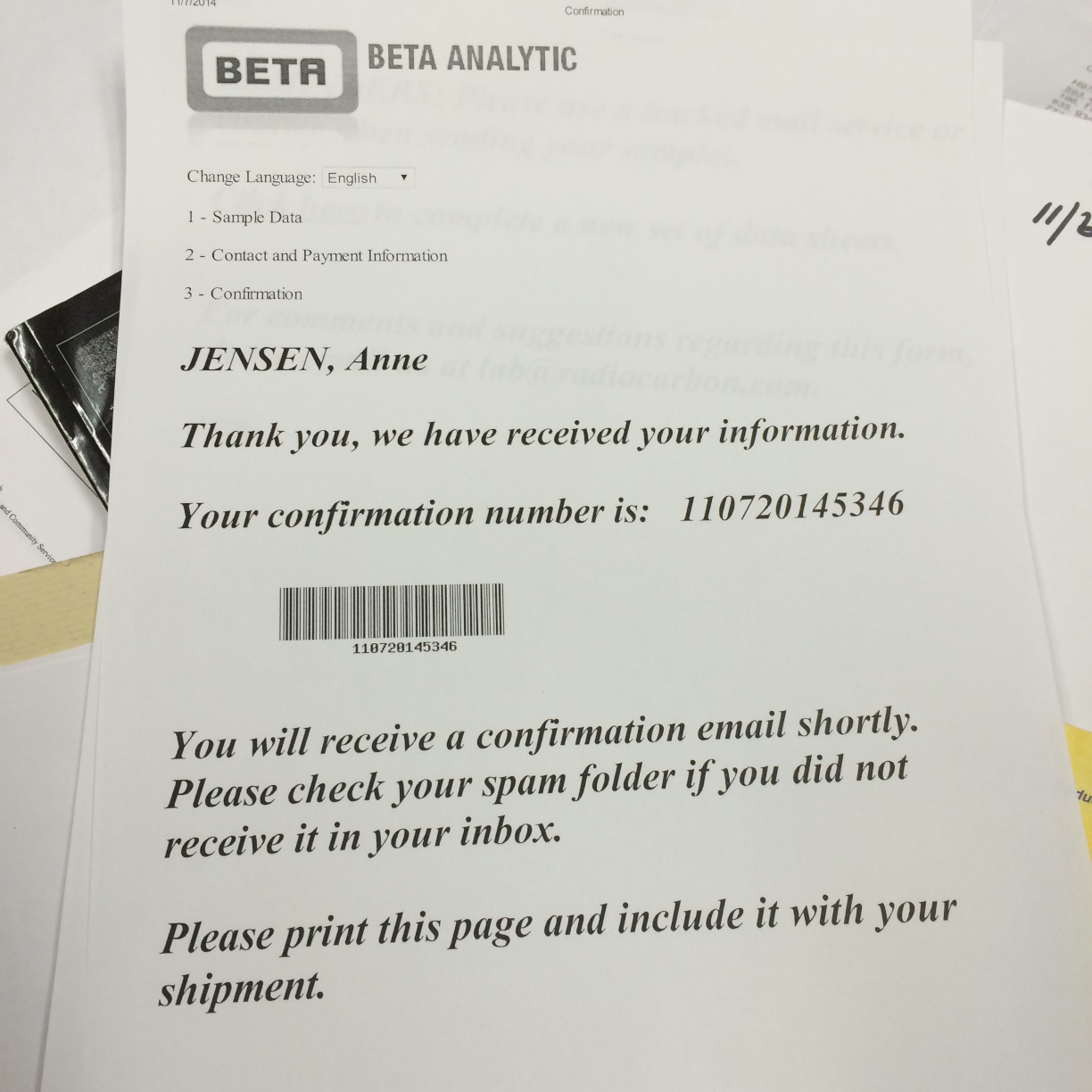
Beta Analytic has got a slick new sample submission interface that I had never used before. It has a few quirks, which meant that I had to quadruple check the submissions to fix things. I got better at it, so . In the end, it prints out a barcoded form that you put in the package with the samples.
By the time I finished, it was too late to mail the samples on Friday. The US Post Office in Barrow doesn’t have any counter service on Saturdays, so they’ll get mailed on Monday.
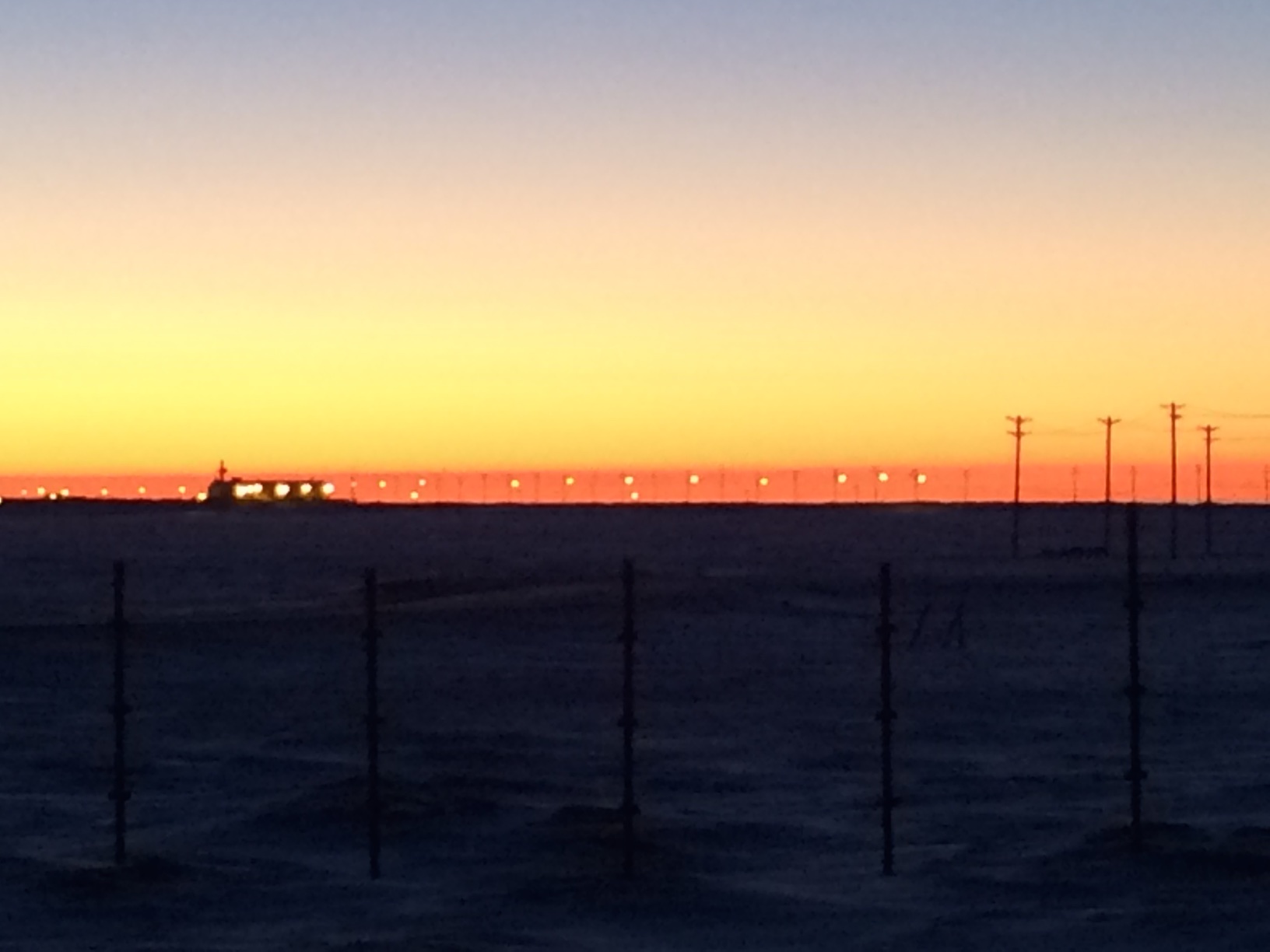
As a result, I didn’t get to see much of the sun that day. It is almost time for it to go down for the winter, and we’ve had so much cloudy weather this year, it was a pity to miss a rare sunny day. By the time I had finished, the sun was down, and this was the view from the BARC.
WALRUS – Walrus Adaptability and Long-term Responses; Using multi-proxy data to project Sustainability
——————-
We are seeking students (high school or college) to work in the archaeological laboratory on artifacts as part of several NSF-funded research projects. The lab crew will be working on processing artifacts excavated at Nuvuk, Walakpa and other North Slope sites.
This will involve cleaning (gently), sorting, marking, cataloging and preparing some items for transfer to a long-term repository. We will also be going through and sorting some frozen organic samples from an earlier project in Barrow that have been sent back from New York State.
We also will be attempting to find walrus bones in these collections for analysis at UAF. There is a possibility for student travel in connection with that project.
You do not need any prior experience; we can train you. Many archaeology crew members start as high school students. Once you learn how to do the work, scheduling can be very flexible. If you have skills in drawing, photography, or data entry, we can really use your help as well! Starting wages will depend on experience and qualifications.
To apply, send a resume and cover letter to Anne Jensen, anne.jensen@uicscience.org as soon as possible. You can use the contact form below for questions.
I have gotten far enough along in getting over the back surgery that I finally have enough energy to do things that are not strictly essential for work or staying fed. So we are ramping things up in the lab.
We are looking for a few more people to work in the lab here in Barrow, joining the current crew on weekdays or weekends. Due to the source of funding, these folks will need to be high school or college students. We are also looking for volunteers. I will post the announcements on here a static page and also as posts.
We aren’t sure yet if we will have funds available to do fieldwork this summer, but we are hopeful. If we do get into the field this summer, people who have lab experience will have priority for fieldwork jobs.
If you are interested, please contact me ASAP. Please pass this on to anyone you know who might be interested.







 Out of Ice and Time