Back Home Again–Finally

The conference wound up on Saturday with a really interesting circumpolar archaeozoology session, organized by Max Friesen of the University of Toronto.  I’ll do another post about the papers; this one is about coming home.  A bunch of us went out to dinner at a restaurant on a little square up Rue Lacépéde from Rue Monge.

The next day I started home.  My flight was late in the day, so I had a while to hang around Charles De Gaulle (the airport), which resulted in spending money at the duty-free shops on chocolates (for Glenn) and perfume (for me).  The Air France flight had really good food, and was even a bit early into JFK.  Passport control and US customs were the usual slow lines winding around like snakes, but eventually I made my way (by train) to the place where the hotel shuttles stop and got to the room.  A few glitches with the card keys (apparently their machine is on its last legs and only one of 3 worked) and I was able to sleep.

I had to get up quite early Monday, which wasn’t such a chore since I was still on Paris time, since my flight was at 7AM.  While checking in, I discovered that what had appeared as a JFK-ANC flight actually stopped in Salt Lake City.  And that’s where the trouble started.

We arrived in a perfectly good plane, a bit early, and were told that we were going to change planes.  They re-boarded us an hour or so later on the new plane, closed the doors, and discovered that an engine light was on.  They replaced a part, took the jet-way away, tested the engine, put the jet-way back, did something else, took the jet-way away, tested the engine, put the jet-way back, went looking for some other parts, found them, started replacing them, decided that they should deplane us because one of the parts was hard to get at and it would take a while  (they didn’t know that until they started doing the work?  what kind of mechanics are these?),  but we could leave larger luggage on board to speed re-boarding.  They handed us $6 meal vouchers and told us not to leave the boarding area (where there was only one place to get food for 100+ people).  Several hours later, it was clear that I would not be making my connection in ANC to go to Barrow.

When I went up to get re-booked, they were not able to find me a seat from ANC to Barrow until Wednesday.  I had them book it anyway, so I didn’t wind up having to wait even longer.  Eventually, they had us go on the plane five at a time to get the stuff we’d left there, and then sent us to another gate with another plane.  We finally made it to ANC about 4.5 hours late.  A few of us were stuck overnight, but at least the large contingent of senior citizens from the Midwest heading for a cruise ship didn’t miss their sailing.

It took them quite a while working on my ticket, and in the end they took my email and emailed me the itinerary later.  I did wind up standing around so long that when it was time for hotel vouchers, I’d checked the room availability, and was able to get them to put me in the Millennium, which has a decent restaurant and a gift shop that sells T-shirts (which I needed since I didn’t want to do laundry), instead of the Puffin Inn.  I think the problem was that they managed to book me on a Tuesday flight to Fairbanks, with a layover until the Barrow flight arrived, but hadn’t canceled the Wednesday reservation, so the prices weren’t coming out right, and the poor fellow didn’t have a calculator and was having to do all the math by hand.  They handed me more meal vouchers (which didn’t go that far in ANC in the summer) and off I went to catch the shuttle.

The flights on Tuesday went smoothly, Glenn was there to meet the plane, and my bag was one of the first out, so it was only about a 45 minute wait.  We then went over to the library where there was a BASC-sponsored talk going on, to hear the rest of the program, and pick up our daughter and an archaeologist friend, Rick Reanier, who is in Barrow getting ready to do some survey for Shell Oil down the coast.

Naturally, the first couple of days back have been a zoo.  One client has a procedure where they need to get letters estimating how much you are likely to charge them until the end of the fiscal year (September 30) so they can move money around.  The person who does that is going on vacation, so they needed this done ASAP.  So I made those letters, only to have them discover they didn’t have enough money in the projects to do that, and they didn’t have time before the woman left to move the money.  So I had to rewrite the letters to fit their budget!  I really don’t know why they don’t just do it themselves…  That took most of the last 2 days.

In between rewrites, I had a group of Secretary Salazar’s staffers (he’s in Barrow holding a public hearing) tour my lab while touring the building.  Fortunately, they were busy so the tour was brief.  Then I had a regular teleconference with clients, which I got called out of to go and photograph a very large tooth for a local man, Matu.   We think it may be a saber-tooth cat.  Photos have been forwarded to various paleontologists & mammologists, and we await the verdict.
Very neat website about Science and Barrow

Barrow is a pretty interesting place in terms of the sheer amount and variety of science that gets done here, as it has been since the 1st International Polar Year (IPY).  It can be hard keeping track of it even if you live here and are a scientist.  We don’t have a local newspaper reporter, and the radio station can no longer afford a full-time reporter, so there is no local source of science stories for the general public.

Many scientists want to let people know what they are doing, and what they are learning by it, but there are a number of barriers (another post for another day).  One way is blogging.  On bigger hard-science projects, websites and more are possible, since the cost of people to take care of them is really a tiny  portion of the project budget.

A recent project called OASIS really takes this to another level.  Dr. Paul Shepson, the PI, actually built in an author to write about the project, and things grew from there.  Peter Lourie, the author, has written two children’s’ books and has moved on to multimedia.  They’ve made a really neat website, which has video from a number of scientists who work in Barrow.  There’s a lot from various folks on the OASIS project, but also from people who live in Barrow, like Fran Tate of Pepe’s, whaling captain Eugene Brower and even me.  I actually got interviewed twice, because the sound on the first set got messed up, so I had to do it all over again when Peter came up again!

Definitely worth checking out.

Here’s hoping the plane makes it in tonight…

…because Shawn Miller, the physical anthropologist who will be documenting the human remains excavated at Nuvuk this summer, is supposed to be on it. The weather has been rather unfortunate of late, and a number of flights have tried to land, only to be turned back by visibility below minimums, thanks to the fact that the folks who sited the Will Rogers-Wiley Post Memorial Airport seem to have picked the foggiest spot they could find. A lot of folks have gone back and forth between Anchorage or Fairbanks and Barrow a couple of times by now (and you don’t get frequent flier miles for that).

We’ve got the lab all ready, and Laura is getting Shawn’s equipment (various digital measuring devices) out in case he wants to get an early start.  Once he’s done, we can arrange the reburial.

Meanwhile…

While the dental extern was busy in the lab, Laura was there to help her find things, answer questions, and so forth. I was busy with other things.

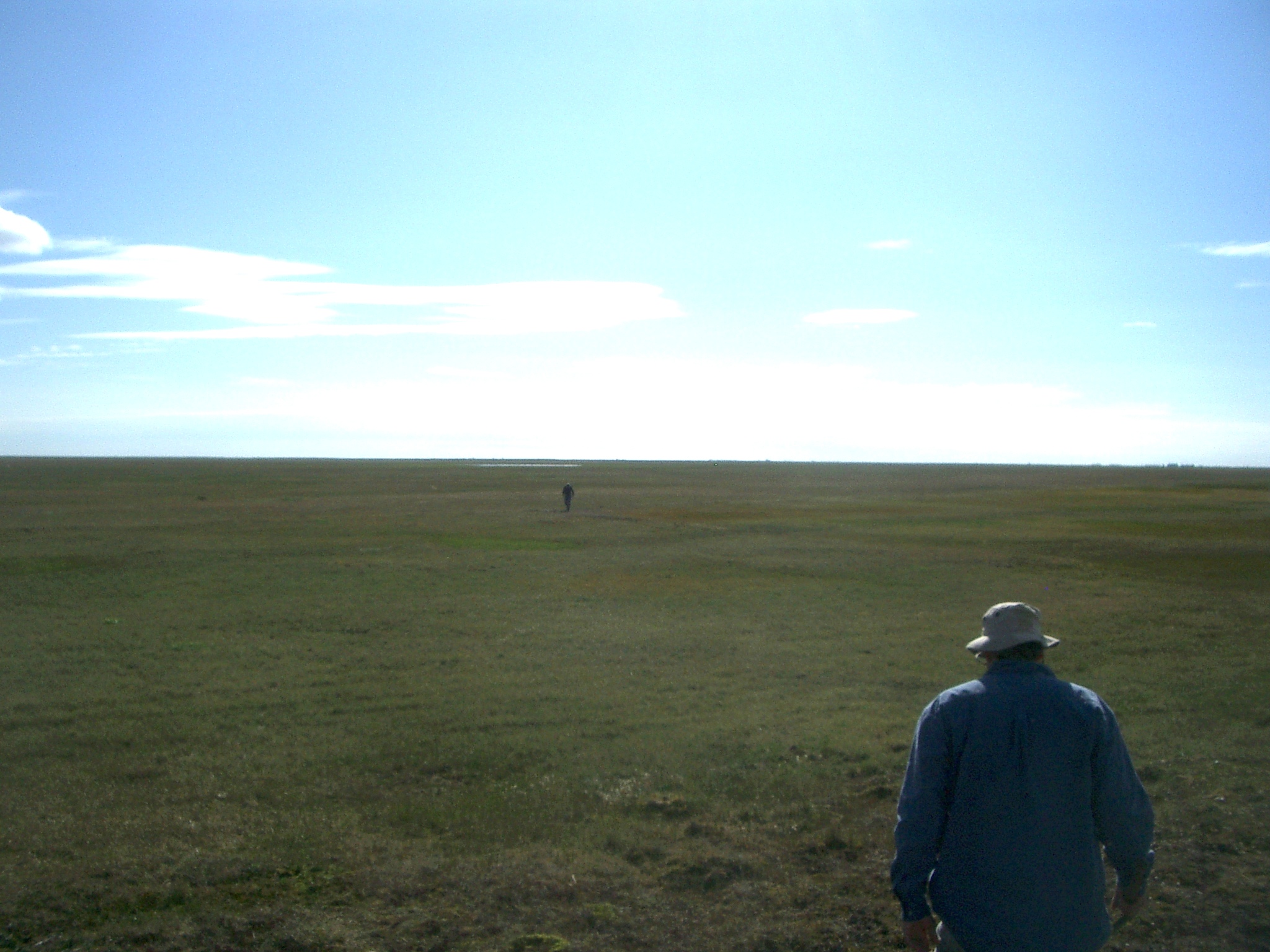
A couple of Navy archaeologists (yes, the US Navy has archaeologists) were in Barrow last week to look at a tract that the Navy may be transferring to UIC, the Barrow village corporation, to get an idea of what needs to be done to comply with cultural resource protection laws prior to transferring Federal land. Neither of them has any Arctic experience, and they stopped by my office to pick my brain a bit. The next day they were doing a few STPs on an old beach ridge on the tract, and asked if I’d like to join them. It was a warm sunny day, with not much wind, and therefore many mosquitos. I hiked our from my office building to meet them, we checked out the area a bit & I hiked back. Other than all the bugs, it was great.

Navy archaeologists David Grant and Bruce Larson surveying.

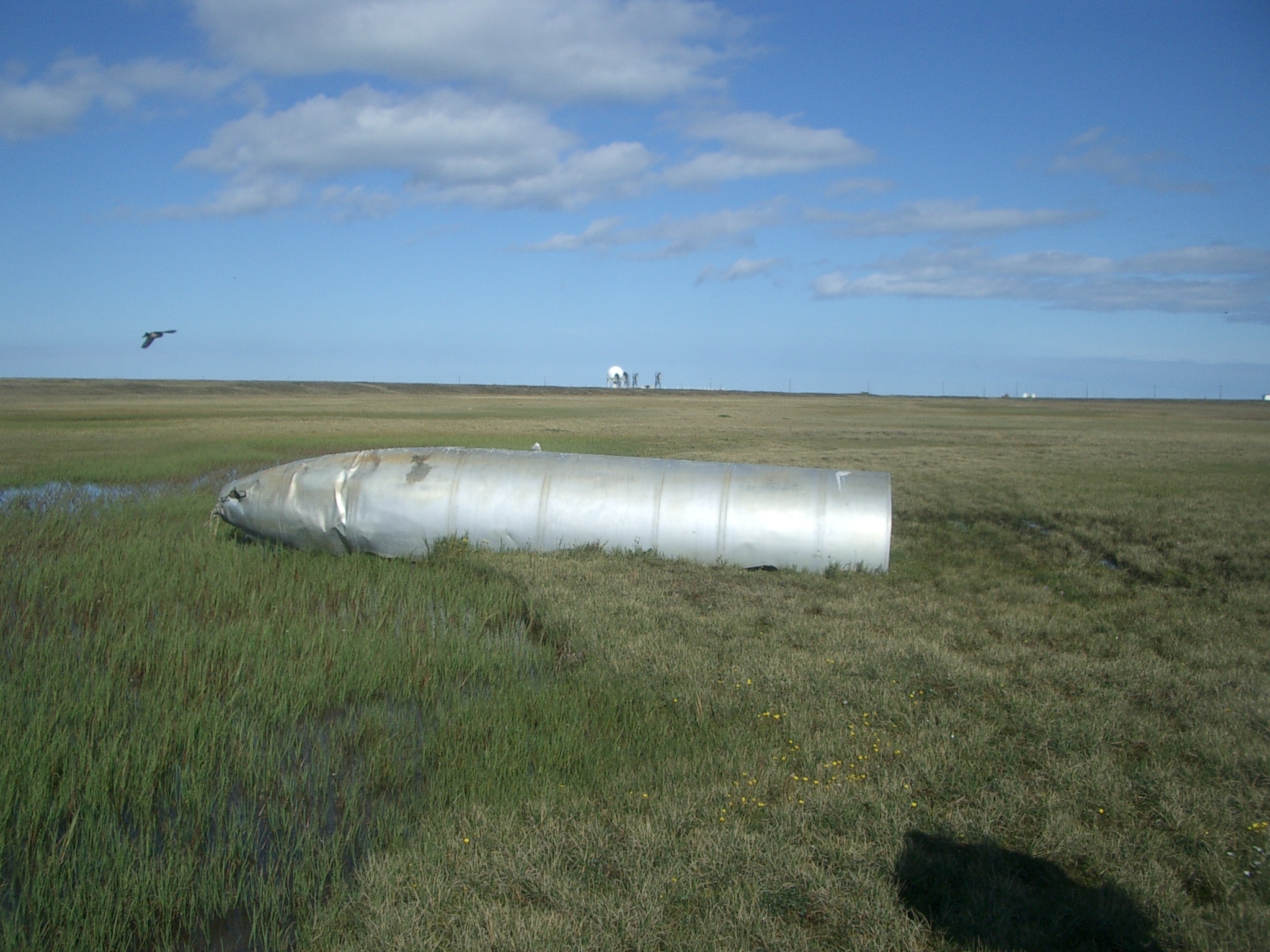
We didn’t find anything cultural that was older than NARL, but we did find a couple very old gravel beaches. We did find some stakes that had probably marked research plots, and a big aluminum object that looked like an aircraft part. It had some cable attached to the front, as if someone had been trying to tow it. Apparently they gave up.  If you happen to recognize this, please let me know and I’ll pass the information on.

Large aluminum mystery object on Navy tract.

The next day I got a call from the City of Barrow. They run the cemeteries, and had been getting reports that a coffin was partially open. They had checked, and indeed a coffin had been frost-heaved and was damaged. They asked if I could come over when they moved the person into a new coffin. We decided to do it the next afternoon, after they got the new coffin built.

Fortunately, the old coffin wasn’t damaged except for a bit of the lid, so we were able to get the dirt off to make it lighter without disturbing the remains. The City crew was able to lift the entire box out and place it in the new larger coffin. It was a tight fit, because the old coffin had been covered with canvas that was nailed on, but that wasn’t clear when they had measured for the new box! Luckily they had left a bit of space, so they were able to pry a bit and get it in. I got the canvas that had frozen in out so it could go along.  I’d mostly been there in case the coffin was fragile and we had to transfer the individual, to make sure that nothing got left, but that wasn’t needed.

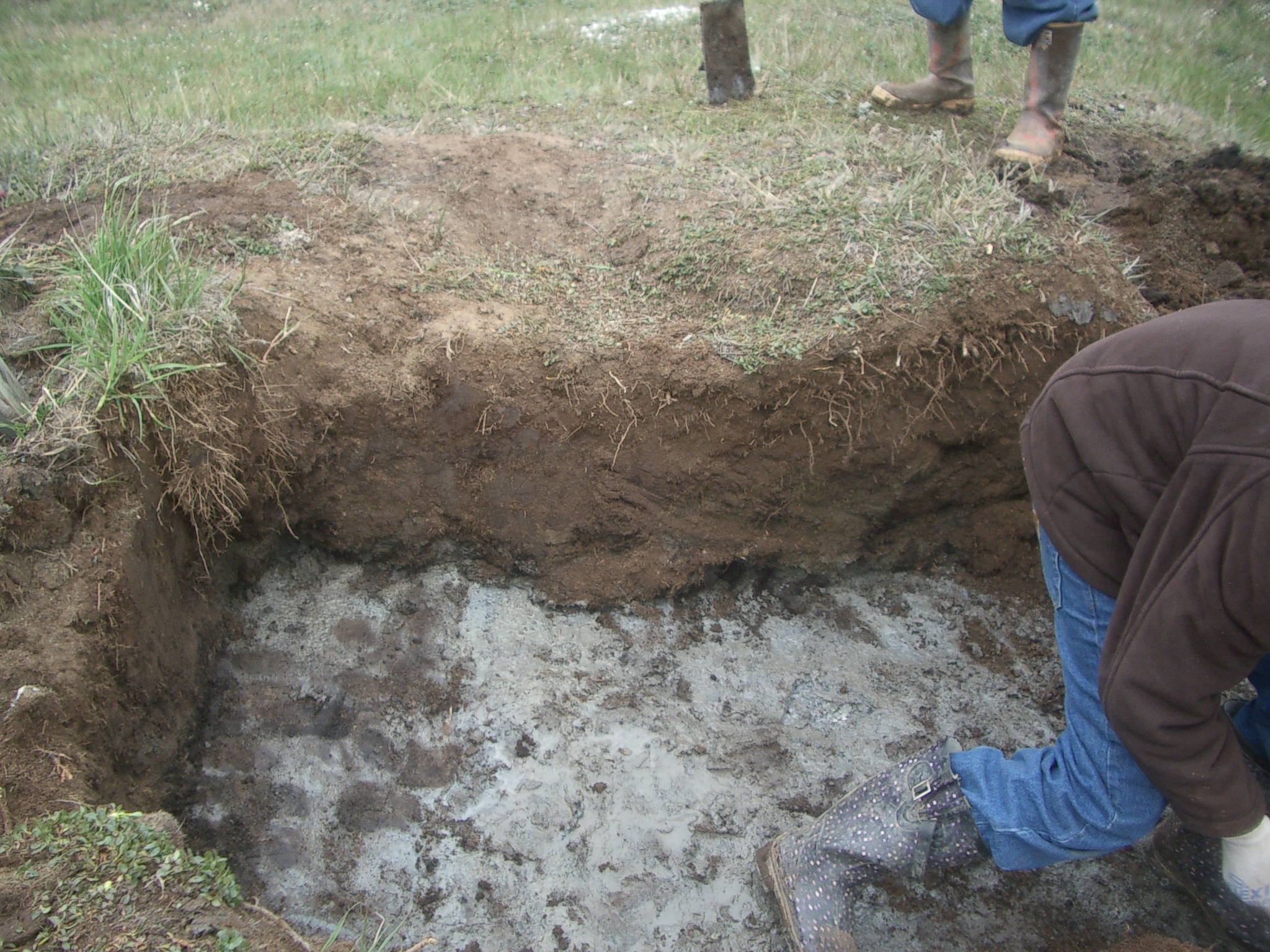
Once the coffin was out of the grave, the idea was to dig it a bit deeper, and then rebury the person. The soil profile was pretty interesting. There was clay (which generally is deposited on the bottom of bodies of still water) very close to the surface, despite the fact that the grave was on a mound. Apparently the permafrost has pushed it up a good bit, although it may have been deposited when sea level was higher than today.

Permanently frozen clay exposed in grave in Barrow cemetery.

The crew did what they could with shovels, but thaw was not that deep, as you can see from the picture above, so they were going to get a compressor and jack hammer, to really get the grave deeper, when I left.  If not, frost heaving would just bring the box up again in a few years.

The deceased see a dentist

This week, the individuals we excavated this summer saw a dentist.  This is not as silly as it may sound.

The various individuals whose burials we excavate at Nuvuk are not kept in a museum somewhere for future study.  That is the way things were done in the past, but nowadays that is not acceptable to most descendant communities (people who consider themselves descended from the individuals whose remains are in question).  There are laws specifically to protect Native American graves, as well as laws which protect all graves regardless of the ethnic origin of the occupant.  This is a good thing, but it does mean that either research has to be completed very quickly, or new ways to save data for future research need to be found.

The current residents of Barrow, some of whom are the children of people who grew up at Nuvuk, generally think people should be left where they were buried, absent a pressing reason to move them.  In general, I agree.  My primary research interests don’t involve digging up burials, which makes it odd that I’ve been involved in excavating over 70 of them at Nuvuk over the years.  The thing is, the point is eroding, and if the graves aren’t excavated and moved, their occupants will wind up in the ocean.  So there is an urgent reason to be doing these excavations.

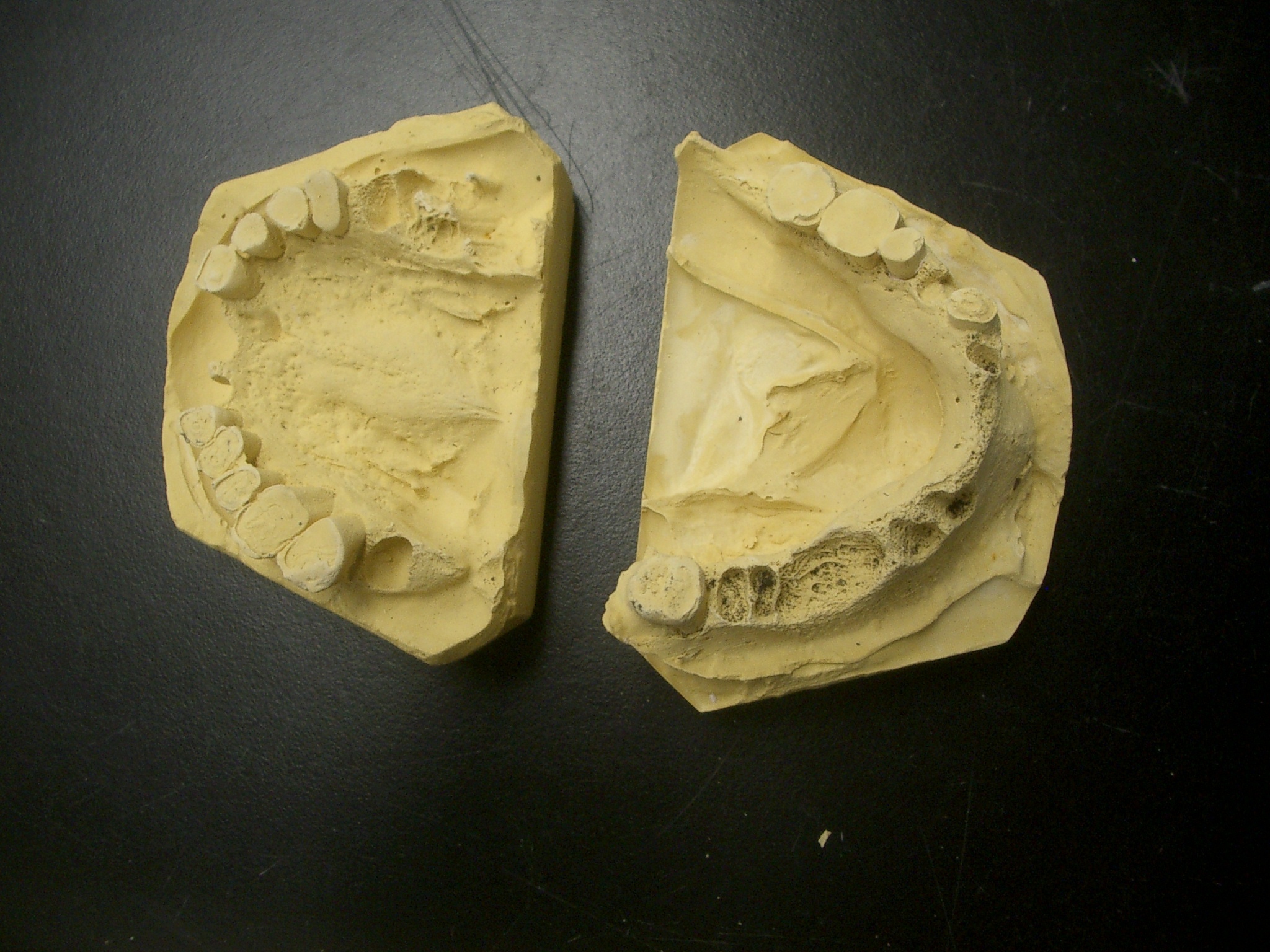
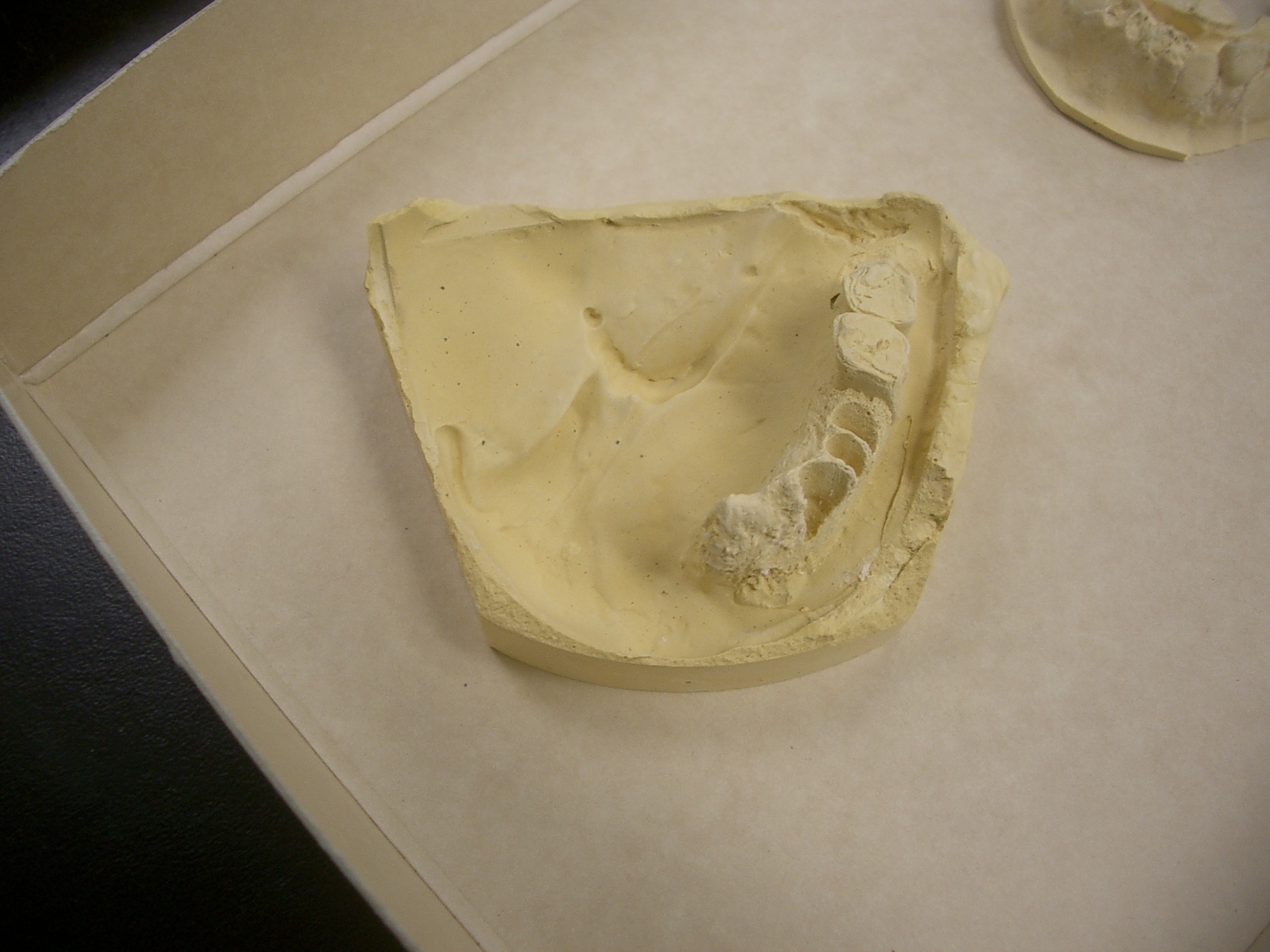
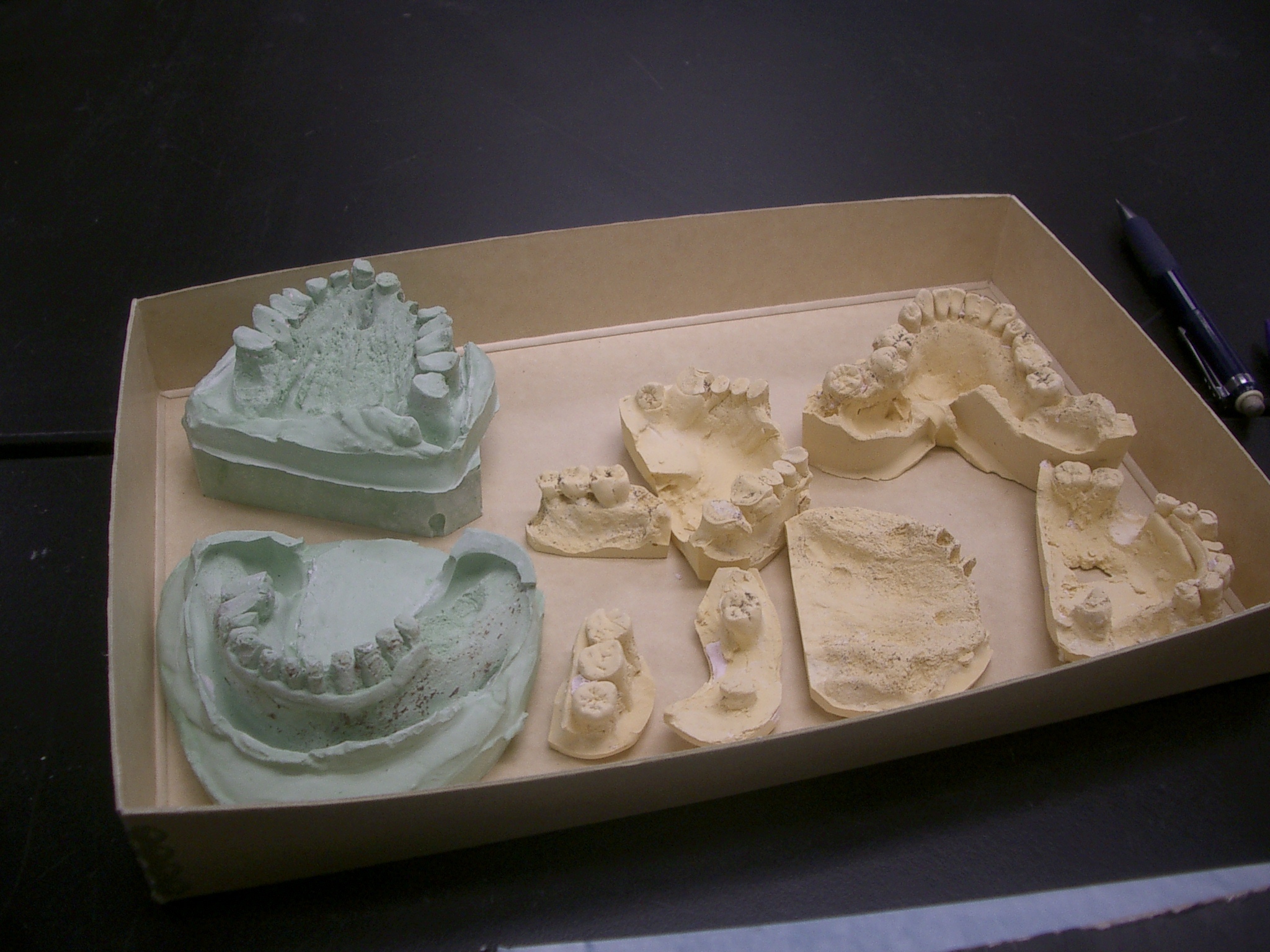
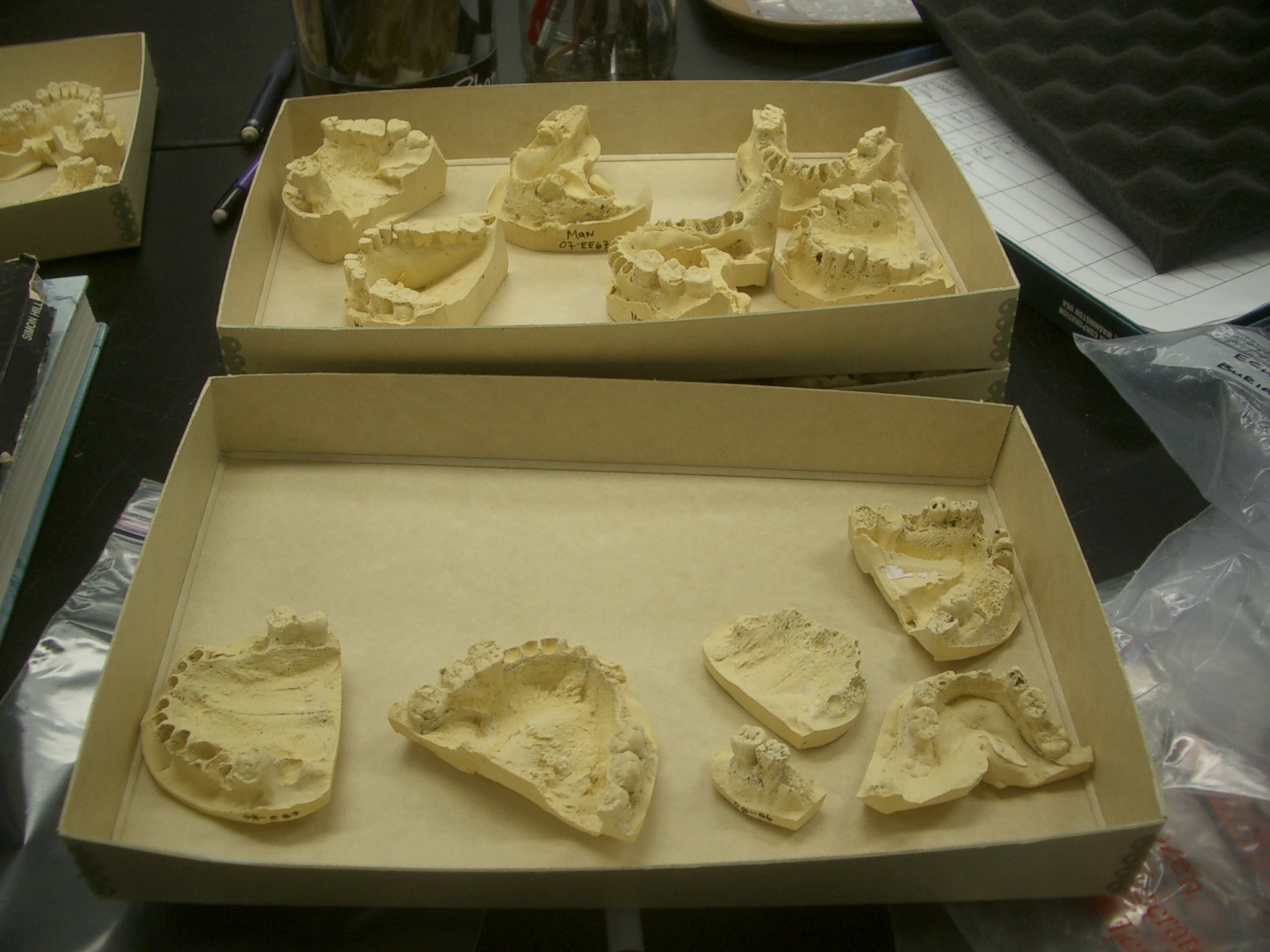
Since they are happening, most folks in Barrow agree that it makes sense to learn as much as we can about the individuals, prior to reburying them in the Barrow cemetery.   I’ve mentioned that a rib is saved for aDNA extraction, which takes place in Dennis O’Rourke’s lab at the University of Utah.  Everything else happens in Barrow.  For a number of years, the Dental Clinic at Samuel Simmonds Memorial Hospital has sent one or more dental externs (dental students who have come to Barrow to get practical experience in the clinic) to work with the Nuvuk Archaeology Project for a day or two at a time.  Sometimes they have come to the field with us, but their primary role has been in the lab, where they examined the teeth of the various individuals whose remains we have recovered.  In addition to recording the teeth on standard dental charts, including information on disease and anomalies, they have made casts of the teeth, just like the ones dentists make of live patients in their offices.  The idea came Amanda Gaynor-Ashley, DDS, until recently head of the dental clinic, who was visiting the lab a few years ago and noticed that some of the skulls had unusual dental patterns that looked just like those she was seeing on patients in the chairs at the clinic.  Dentition (shape and arrangement of the teeth) is highly heritable (it runs in families).  Since the individuals we were looking at were going to be reburied, Mandy suggested trying to cast their teeth.  It worked well, and each since the externs have done it for the individuals excavated that year.  Even after they are buried, we will have an accurate representation of their teeth for future researchers.

Casts of upper and lower jaws of 10A927
Cast of all that remained of 10A928's tooth rows

Since we started doing this, I stumbled across a mention of a collection of dental casts of living Barrow residents which was made by a researcher in the 1950s.  It apparently still exists, so the casts we are making as part of the NAP may well have an important place in a future research project.

Some of the casts from previous years.
More of the casts.

Later this week, Shawn Miller, the physical anthropologist from the University of Utah will arrive.  We will have to get the casts put away before that to give him maximum space to work.

“Today it’s like heaven!”

Yesterday the weather was very nice, our first real summer day, just in time for a site visit by a number of Barrow Elders with family ties to Nuvuk. A fine time was had by all.

Today the weather started out even better, if possible. It was sunny, with blue sky and blue ocean, and so little wind that we actually had mosquitos. We finished one of the two burials we were working on around lunch, just as it started to cloud up. The other burial was done around 3 pm, and we started shooting in and backfilling STPs. Both burials were quite interesting,and both had harpoon heads as grave goods, which we haven’t had since the first burial.

Laura and the students went in early, since there really wasn’t enough for everyone to do, and Laura had to catch a plane to California for her sister-in-law’s wedding this weekend. Dennis, Jenny, Ron, Richard the bear guard and I stayed out to finish. We had a slight delay due to transit battery issues, and a dry fine mist rolled in. We managed to shoot in everything, including some delicate surface artifacts from portions of the site we haven’t reached yet, which are being collected to avoid damage from traffic. Ron and Richard even backfilled a lot of the remaining STPs! The students are very lucky…

Tomorrow we’ll have part of the crew in the lab, and the rest will go out to finish backfilling and haul gear back to the road, where they will meet Jenny in the project truck, who will haul the gear back to the lab for cleaning and storage. It’s very satisfying (and quite a relief) to actually have accomplished what I wanted & have all the data collected a day AHEAD!!

A Late Cold Evening

It’s 10: 27  PM and I just got into the office from the field.  It was too windy to dig this morning (again!) so we didn’t head out until after lunch.  It was still pretty windy and cold (the high was 36 F and the wind didn’t drop below 20 mph until the last couple hours.

We managed to finish one burial today.  The students went home at the usual time, and Jenny, Laura, Ron & I (and the bear guards Michael and Richard) stayed out until we were done.  It was the grave of a very large man, who had a number of interesting things buried with him.  More about that, and pictures in a future post.

The data is downloaded, so I am going home for dinner & bed.

Neither wind nor snow: Excavating burials under less than ideal conditions, even for Nuvuk

Conditions at Nuvuk are never ideal for excavation of burials, or most other features, really.  The matrix (soil) is mostly loose gravel, so things don’t stay put too well and it is very easy to undercut or otherwise displace things before their position is accurately recorded.  We have learned to take lots of photos, and record things with the transit as they are exposed, and that works fairly well.  This past week was particularly challenging.

We started the week with 3 burials located through shovel testing.  Two of them were very close together, so they could not be excavated at the same time.  It would confuse the EDM data recording program, and the excavators would get in each other’s way.  So we picked two that were separated by a good distance, and got them ready to excavate on Monday.  It was really windy, and one of the burials had a bit of vegetation on top of it.  In the Arctic, vegetation dies back each winter, but the dead stuff doesn’t decay, it just stays there.  Once you start excavating and cut the vegetation loose, it can start blowing around.  Some of the crew wore goggles to excavate.

Dennis, Trina, Trace and Heather excavate the surface levels of a grave in a high wind.

Needless to say, the construction of good windbreaks at both units was a priority.  After that, life was a bit more pleasant for the excavators.  On Tuesday we went to work in earnest.  With excavation at both burials, I was busy on the transit.  Both of my experienced transit operators were excavating, and things had to move so fast that it was not a training day.

Excavation going on at two burials, as seen from the transit. I took the picture during the brief sunny period after the snow squalls were over.

One of the burials seemed to have an intact wood frame around most of it.  Oddly, when we finished the excavation, the lower body seemed to have been undisturbed, but the upper body was mostly missing.  The grave was fairly shallow, and in the past explorers, anthropologists and others are known to have collected surface human remains, especially skulls, for museums.  Most of those individuals have been repatriated and reburied, so it is possible that is what happened to the upper body.  It is also possible that someone dug a hole and scattered the remains unknowingly.  The osteologist will look at any human skeletal elements that have been found on the surface nearby to see if they are part of this individual and reunite the elements before the reburial.  We were able to finish that burial on Tuesday.  Unfortunately, this was not the burial that was close to the other burial, so the excavators had to switch to STPs.

The other burial took longer.  Once we got the vegetation off without anyone wrecking their eyes, we came down on several patches of charcoal, as well as most of the bones of a bird (probably a duck, although I need to look more closely in the lab to be sure).  We spent a good deal of time defining the charcoal, prior to taking C14 samples for possible dating.  In the end, it looked like maybe someone had made a fire and cooked a bird over the grave (probably not knowing it was there).  The charcoal pattern was a bit odd for just a fire, and I think that the grave could have had some wooden framing elements which had been ignited by the fire on top of them, and smoldered into charcoal in place.  So it’s not clear what dating the charcoal will date.

Two of the charcoal patches in the process of being defined.

As we continued excavating, it became clear that the individual’s bones were well-preserved, but were very jumbled.  It appears that they may have been dug up, possibly even at another location, and then reburied in a hole where we found them.  From the soil and the amount of vegetation over the grave, it is clear that this happened quite some time ago, possibly hundreds of years ago, perhaps well before the bonfire.  Because of the jumbling, it took a very long time to document and removed the remains, and we weren’t able to finish until Wednesday morning.

Once we got done with that burial, we immediately started getting ready to excavate the other burial nearby (within about 3 meters).  I programmed a unit into the data recording software, and the crew started to work.  First order of business was a windbreak, since it was still windy.  We also tested several vegetated area we had reached at the end of last season and chosen not to test because they were really high probability burials and we would not have had time to excavate them.  Two were negative, and the third turned out to be positive.  We assigned it a number, set up a windbreak, and went to work on that one as well.  It just kept getting windier.

On Thursday, I didn’t get to the site until after noon, due to the radio show, so the crew worked on STPs and getting one of the burials ready to start shooting in artifacts as soon as I got there.  This burial turned out to have a lot of artifacts, especially the “burial rocks”  which we find in many of the burials, so we didn’t finish.  With the small crew and bad weather on Friday, we will have to finish Monday.

We see this much sun in December (although it snows a bit more…)

It has pretty much been overcast all week.  The sun is not visible, although at times the clouds have thinned enough that it was fairly bright.  Coupled with constant strong wind, and mixing in fog, rain showers, and a half-day of snow squalls, the weather has been unfortunate, to say the least.  Despite all that, we managed to completely excavate two more burials, and start a third, as well as dig a whole bunch of STPs.

On Thursday, I stayed in town in the morning to take part in a call-in radio show on  KBRW, the local public (in the best way) radio station, about the graves at Nuvuk, ancient and modern, and the issues about vehicle traffic and erosion, as well as some broader discussion of similar issues in the other North Slope villages.  Delbert Rexford, UIC Land Chief, some of whose ancestors lived and are buried at Nuvuk, organized the show, which went in a time slot normally used by the North Slope Borough Health Department.  They had a cancellation, so we filled in.  We also had Wesley Aiken, a respected local elder, Patuk Glenn, from IHLC (the Inupiat History Language and Culture Commission), Vera Williams from NVB (the Native Village of Barrow–the local tribal government) realty department, and Heather Dingman from the Health Department.  It went well, and we got several callers, including one who called to say they appreciated the work the NAP has been doing with the students, which was nice to hear.  Thanks to Seismic Isaac Tuckfield for engineering, and letting us run over the time slot a bit.

Once we were done, I headed back home to put on the warm gear, and Dennis O’Rourke (who’d been catching up on manuscripts since no burial excavation that might require sampling was happening when I wasn’t there) and I headed out to Nuvuk.  On the way, we ran into Mike and Patsy Aamodt.  Mike has a set net near the site, and he and Patsy often stop and see how things are going.  One of their nieces, Jackie, worked on the project for several years.  Anyway, Mike has finally been getting fish (they’re late here like everywhere else in Alaska this year) and he asked if I would like one.  Of course, yes, so he said he’d drop it off in my qanitchat (Arctic entryway, or stoop for those of you from upstate NY).  When I got home, there were 3 lovely fresh chum salmon in a bag, so they needed to be taken care of right away.

Friday was still somewhat windy, with fairly serious rain for Barrow.  Since the wind had changed direction, we would have had to move the windbreak before we could even start work, and our crew was very small.  Flora left for firefighter training in Fairbanks (yeah, Flora!) and a couple of others were out for the day for various reasons, so we decided it was more sensible to do a lab day.  That was a good thing, since I was having a minor freezer space crisis at home, and so I invited the non-local project members (AKA the grown-ups) plus Laura (& her husband Bryan and baby Violet) over to eat one of the fish for dinner.  Jenny Raff contributed a fine salad, and beverages were provided by Laura & Bryan & Dennis.  A fine time was had by all.

Today I went to the BASC Saturday Schoolyard talk, which featured a NOAA LTjg talking about hydrography (actually a very interesting talk) and then added all the week’s transit data to the catalog, updated the lab computer, and spent some time plotting the data and checking IDs for the radiocarbon dates I got in this week.  After I finished that, I was going to head home and get the pictures ready to post on the week’s progress int he field.  I’ve fallen a bit behind since standing in the cold wind at the transit for much of the day does take it out of you a bit, and then one tends to get really sleepy when one gets back into a warm building.   However, I got a call from an archaeologist friend from Anchorage who brought her 17-year-old son to Barrow as a field trip for his Alaska Studies class (very cool), so I met them for dinner at Osaka, the local sushi restaurant (which is quite good).  Just got back, as they are heading for Nuvuk on the Aarigaa Tours van tour.  I’ll have to get the pictures ready for a descriptive post tomorrow.