Pain; or why I should probably learn to say no occasionally

I haven’t been posting here much lately, but it isn’t because I haven’t been writing anything.  In fact, I’ve been doing almost nothing but write, and my carpal tunnel has been acting up so badly that I’ve pretty much been trying to rest my hands.  Over the past year, I’ve  gotten  invitations to contribute papers to several interesting volumes.  I’ve sent in various abstracts for papers at meetings, some of which led on to proposed volumes.  Then I actually submitted abstracts to a couple of proposed volumes I heard about from my husband or various listservs.  All of them had deadlines well in the future, and I didn’t expect all of them to be of interest to the editors anyway.

But no one turned any of the abstracts down, and I had a more successful field season than expected, which lead to the RAPID proposal to NSF to salvage the Ipiutak structure, which took time to organize and execute.  Then the person in the parka turned out to have more than a parka, which meant more time for documenting things.  So now I have a bunch (by bunch I mean 6) of papers due by mid-January, along with a review, a short presentation for a meeting next week (which the organizers just asked be emailed to them by Thursday, a week before the talk!), travel for that meeting and another one, both in some way connected to developing repositories that are responsive to communities of origin, a proposal, Thanksgiving, Christmas shopping and travel to and from New York State for Christmas!  Yikes!  What in the name of caution was I thinking?

I don’t have much trouble doing papers for meetings.  I tried to avoid the cognitive traps of PowerPoint (Tufte 1993), and use lots of pictures, and I’ve spent a fair bit of time in Toastmasters, so I can get up and talk.  This is not a surprise to those who know me :-).

I can even write (via keyboard or voice recognition) fairly quickly, thanks to Freshman English at Bryn Mawr College.  Having to have x pages handed in by 9AM Monday morning come hell or high water concentrates the mind wonderfully.  However, actual papers, with proper references, formatted as required by the particular journal or publisher, take a bit more time.  I’ve got one paper submitted, four in various stages of writing (one of which the research for is continuing but almost done), and will start the talk for the meeting tomorrow.  My hands and wrists hurt a lot.  So does my head, now that I think about it.
Check out what’s Open Access for Open Access Week


More Publishers Going Open Access for Open Access Week- 23 journals so far | Doug’s Archaeology.

Thanks to Doug for this roundup.  Among the journals:  Journal of Field Archaeology and Environmental Archaeology.  A good way to get hold of  nice PDFs of those articles you need to refer to that were published before you (or the library) got their subscription.

An update on the child

I’ve more or less recovered from whatever I had, so I’ve actually got some energy to post.  Herewith a quick update on the person in the parka and the skin clothes, etc that accompanied her (I’m no sure the person is a girl, but I need to pick a pronoun.

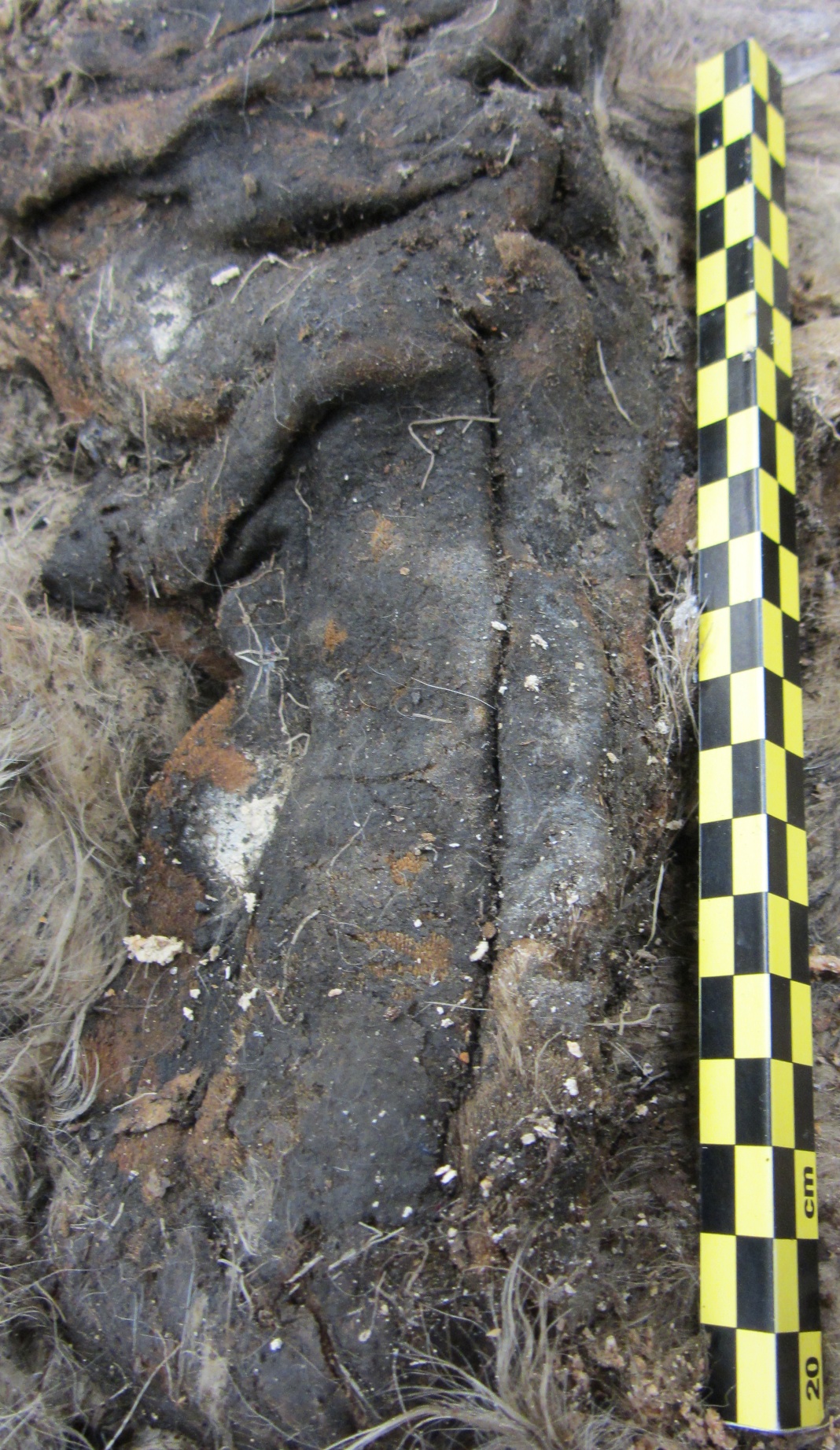
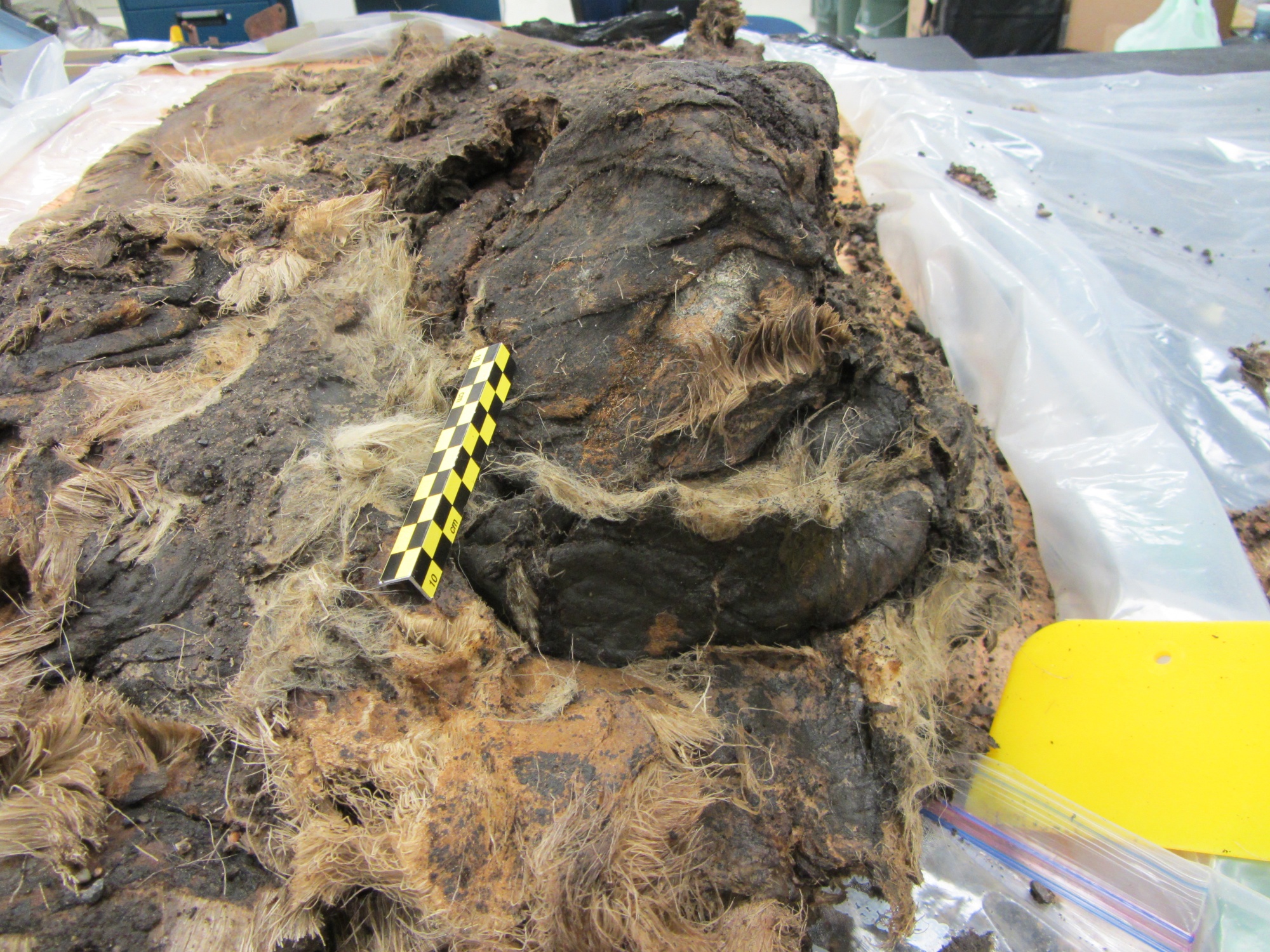
I was able to get the pantaloons off, although the legs fell apart.  The boot part was apparently made from either leg skins or fawn skins.  The waist seems to be have been made out of something similar, maybe as a waistband.  The main part of the pants is regular caribou hide, which has much longer thicker hair.  Since the waistband was wrapped around a belt made from a piece of hide, perhaps the regular caribou was too thick and inflexible to be suitable.

Fragment of belt, just above the photo scale.

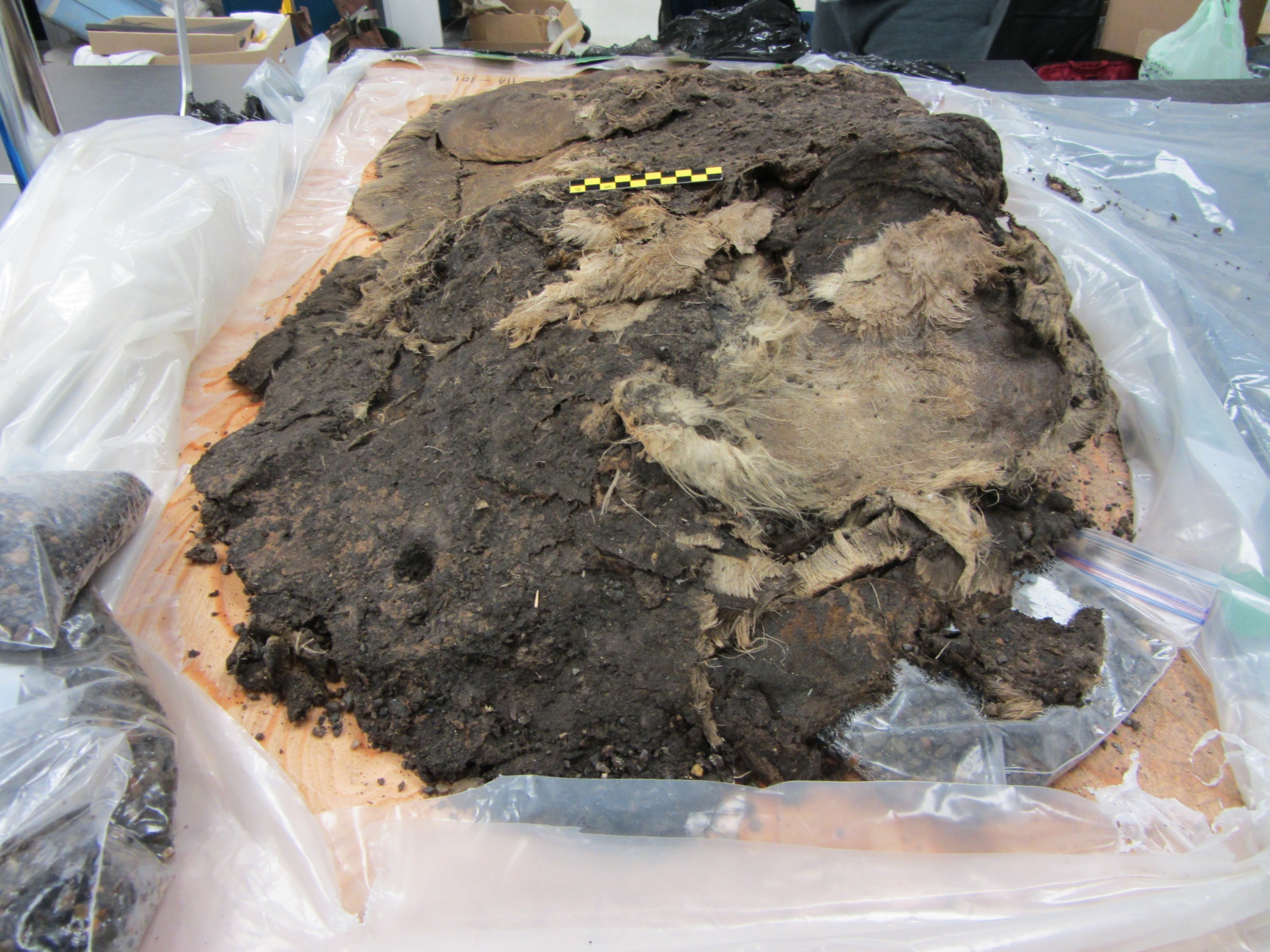
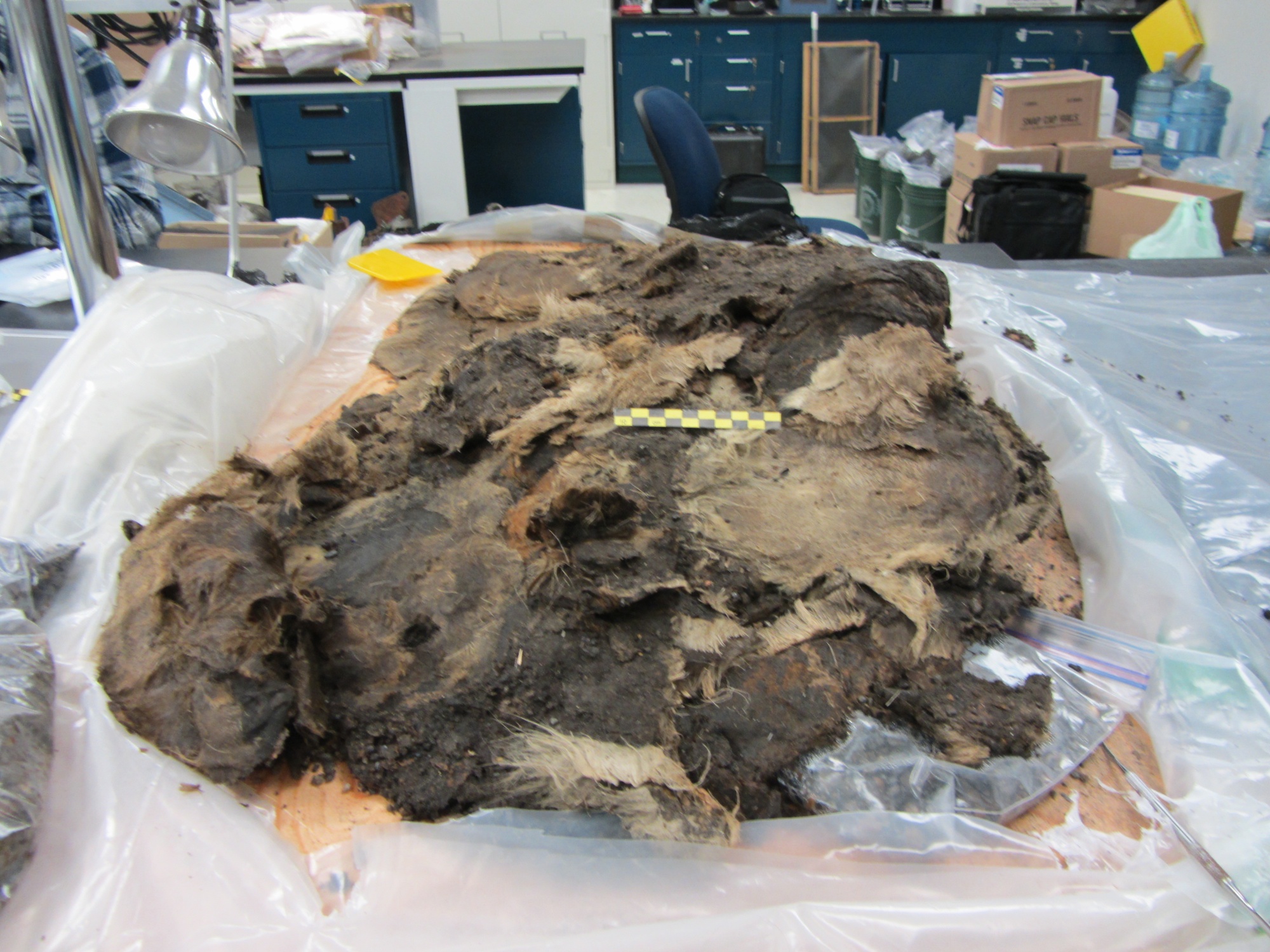
The back of the parka was about 10-15 cm longer (I can’t be more precise since the preservation was not perfect), and looked like it may have had a rounded hem.  As far as I could see, there were no seams.  According to Murdoch (which seems to be out of print again except in print-on-demand), children’s parka didn’t have back seams, but I am waiting on a couple of other books on skin clothing, and a few more experienced skin sewers opinions.

Back of parka. Outside of garment (after it was flipped). Shoulders at top.

It took a bit of doing to get a look at the back, since it was fairly well stuck to the caribou hide underneath.  I ended up getting Shawn to help me.  We got a piece of Visqueen underneath the whole thing, very carefully, put plastic on top of it, and then put a piece of plywood on top to stabilize everything, held the plastic tight to the wood, and flipped everything.  It worked well, and we were able to use the same method for the sewn wolf-skin item (still unidentified).

The wolf-skin has a lot of seams.  Some bits are badly preserved or very badly matted, so it’s not clear what it used to be.  However, a number of the smaller pieces that have been sewn together are still pretty much intact.  I tried putting a picture of it onto my iPad, and opening it with Omnigraffle, so I could try drawing on the seam.  I’m hoping that it will make it easier to understand, and that maybe someone will recognize what those pieces go to.  I know this can work, since Bertha Leavitt was able to identify that the little girl from Ukkuqsi was buried with a kayak cover (among other things) based on the shape of a couple of pieces of sewn boat cover skins.

I’m still working on the drawings a bit to clean them up, and I’ll put them up on a separate page when they’re ready.

I also managed to finish a review today, and to get a bit done on a paper that I owe some folks.  Both are actually for the same journal, different issues.

Folks were out whaling, and Panigeo crew took a whale, which is probably nearly done being butchered by now (judging by Jimmy Nukapigak’s Facebook updates :-)) .  There was supposed to be one or maybe two more possibly struck, but I’m not sure yet.  The weather is supposed to get worse, so I hope they get in soon.

Manis Mastodon: 13,800 years old give or take

This is a pretty interesting story.  There have been several sites that seem to predate Clovis, but there has been considerable resistance to their acceptance.  The Manis Mastodon seems to be a pretty solid case based on many lines of evidence.  Really, Clovis-first bites the dust.  And for the folks saying “well, it’s reeeealy early Clovis”  that seems to be stretching the meaning of “Clovis” so far it’s meaningless.

Manis Mastodon: a 13,800 year old Archaeological Site on the Northwest Coast | Northwest Coast Archaeology.

The child is out

Just a short post, because I’m home celebrating my birthday (mostly by coughing–the cold has moved to my chest).

The child is completely out of the parka and pantaloons (Murdoch’s term), and Shawn was able to examine the remains.  No change in the age estimate.

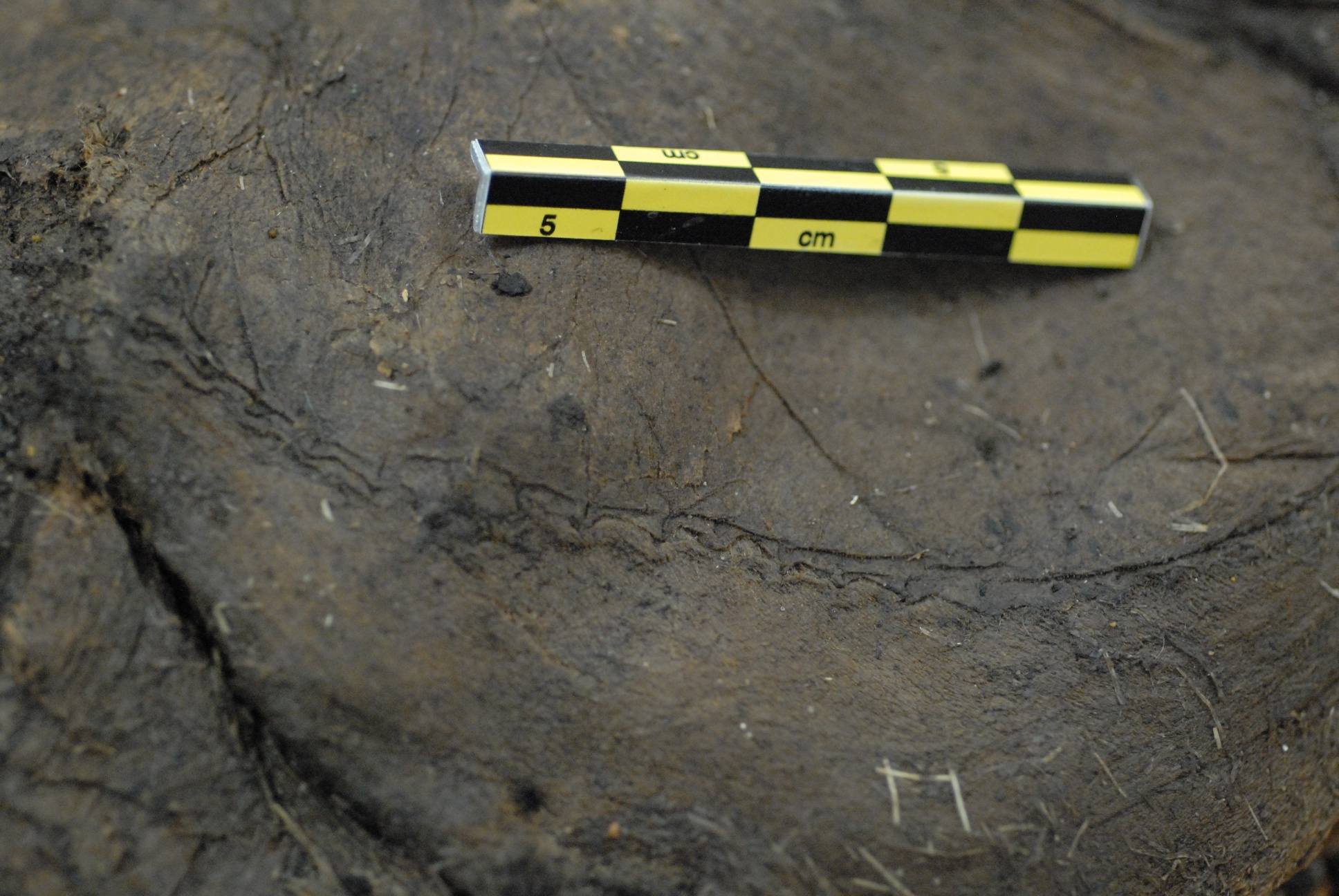
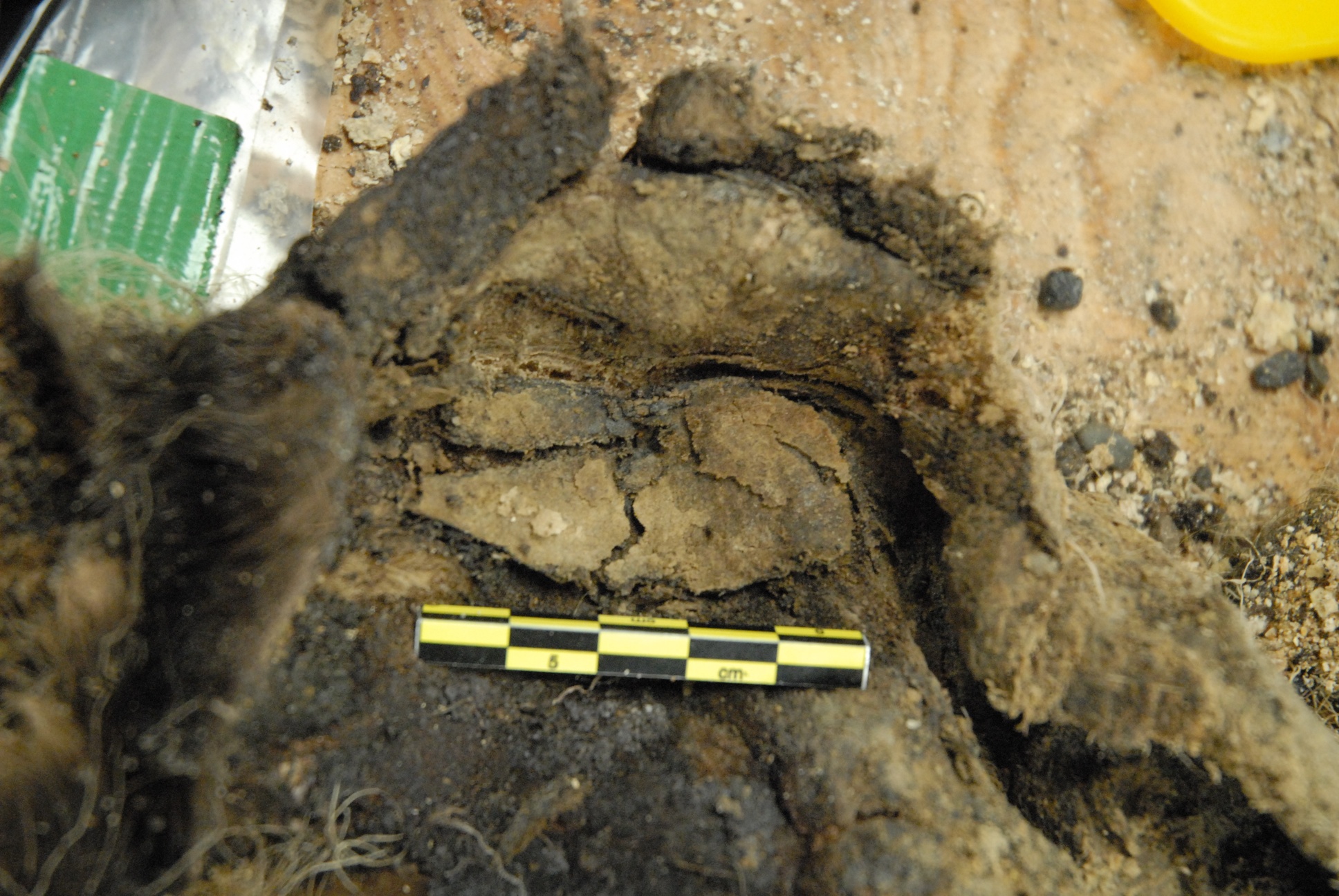
I was able to get some pictures of the boot part of the pantaloons.  They look like they may have been made from leg skin (something with shorter finer hair than the main part of a caribou hide), with separate soles.

Sole of the left boot

There was a seam up the middle of the vamp on each boot.  The boots seem to have been sewn to the pants, which were of caribou hide.

Seam up the vamp

More tomorrow.

Halfway done

I’m about halfway done getting the child out of the parka.  Fannie Akpik came out to look at the stitches.  She agreed with Qaiyaan and me that the stitching on the parka looked like waterproof seams, even though it is clearly caribou, which isn’t normally waterproof.  I took some samples to test for presence of marine mammal oil, which might have helped make it water-resistant anyway.

Stitches on the parka

I’m trying to video the whole “excavation” process, both to document it and to serve as a backup to notes & bag labels.  I’ve reversed the photostand I have, and put it on a lab bench with the camera mount at the tippy top, overhanging the person on the sheet of plywood.  I can just get the camera high enough to get the whole thing in the shot.  I use a stepladder to get up and down to work on it.  The only problem is that there is no low battery warning, so it just dies, which it did a couple of times yesterday.  Today we started setting alarms on our phones to check the camera, so that more or less solved that problem.  I haven’t been able to download the card yet.  The SD card readers at work are getting touchy, and my Mac at home said it couldn’t read the card.  The camera sees files, so maybe I need to hook it up directly.

Lab setup for documentation. Camera at upper right center. The child is under the plastic on the lab bench.

While looking at the wolf, we noticed that some of the pieces were cut with a rounded edge, and Fannie, who is Nuvukmuit (that’s the preferred spelling in their dialect, not Nuvugmiut) herself, thought it could be related to the rounded tail on the atikłuks they make for their dance group today.  Later I found another seam where wolf had been sewn to caribou.

Fur side of the wolf. Amazingly well-preserved!
Backside of the wolf, showing the stitching. It's a regular whip stitch. The sinew is still preserved.

It’s amazing how nice the stitching is, especially since they were done with a bone needle.

Starting to take the person out of the parka

If you remember, last summer we excavated a burial which had some well-reserved fur and hide, including a parka.  We put in a freezer (thanks to NSB Wildlife Department and Cyd Hanns in particular), and late last week we brought it to the lab.  It took a bit longer to thaw than I thought, so we were only able to start today.  Some of the folks I’d hoped could look at the skin sewing since the furs aren’t in great shape and some of the sinew thread (ivalu) has dissolved are out-of-town for the Alaska Federation of Natives (AFN) Annual Meeting and related event, but Shawn is here, and it wouldn’t be right to keep the person around just to study.

So I set up a video camera, and am using two other cameras, one with a macro lens to record stitching and so forth, and another for overall shots.  Plus I’m taking a lot of samples, and notes as well.

The bundle of furs before we started.

I got started, with a bit of help from Shawn.  He still had one other person to deal with, so I went on without him for a bit.  Qaiyaan Harcharek, and Lottie Jones, from the Inupiat History, Language and Culture Commission staff came by.  Lottie had to get back to the office, but Qaiyaan, who has a degree in Anthropology, came back and we worked on the person until after 5:30.

The first bit of the caribou hide wrapping unfolded at lower left.

What we were able to figure out so far is that the person was laid on a caribou hide, so of which was wrapped up around the lower legs and over the left side.  It’s possible that it may also have been over the right side and decayed so badly it wasn’t recoverable.  I’ve got to go back and look at the pictures and notes from the excavation.  Once we got part of the hide unwrapped, it was clear there was another kind of hair present.  Caribou have long, fairly straight hollow hairs that don’t taper very much.  There was a lot of much finer, tapering hair, which had matted down.  We were discussing what this might be, and had guessed at maybe wolf when Qaiyaan and Lottie had to head back to town.

Further unfolded, with what turns out to be wolf beside the photo scale.

I kept unfolding layers of furry hide, and all of a sudden, there were long dark guard hairs showing.  One more fold, and there was a very well-preserved patch of what is obviously wolf (if you’ve seen wolf skins, anyway).  It actually feels very much like my wolf ruff, which was probably running around 5 years ago, even though this one must have been dead for hundreds of years.  We don’t have a date yet, but wolf should be good for dating.  So that mystery was solved.

Shawn was able to look at the remains of the cranium, which had not been as well-preserved, and the person seems to be a child of 4-6 years or so.  We all have kids, and it made us sad to think how this child’s parents must have felt.

We still don’t know what the wolf was.  It has stitching, but it seems to just be wrapped around the legs.  The child is wearing what appear to be skin-in caribou boots, which may actually go all the way to the waist, sort of like hip-waders.  The wolf doesn’t seem to be over-pants, especially as the hair side is in.  Maybe we can figure that out tomorrow.

Physical anthroplogy underway

Shawn Miller, the physical anthropology PhD student (and University of Utah anatomy instructor) who examines and records the data on the human remains from Nuvuk prior to their reburial, is here.  He has been working on the multiple burial with an intact box that we excavated in early July.  It is looking like there were two primary individuals, probably both men.  The juvenile elements could all have come from the same individual, Shawn thinks, so there may have only been three people in this burial.

It is looking like one of the adults has signs of porotic hyperostosis and cribra orbitalia.  These have generally been considered as signs of iron-deficiency anemia and a diet lacking in animal food-sources, but recently it has been suggested that this may be incorrect (Walker et al. 2009).  Certainly that would seem unlikely for someone living at Nuvuk, as there really was almost nothing available there but animal food.  It will be interesting to get the dates for the individual, who was apparently more recent, since there was reportedly considerable starvation after Yankee whalers decimated the bowhead stocks.

I went to get the coffins that we had in stock.  UIC RE Maintenance folks had made us a bunch, since it is easiest to cut a whole lot of standard size pieces at once.  Unfortunately, things seem to have been moved around in the warehouse where they were stored, and we seem to be short a few boxes and quite a few lids.  The ones I found were scattered in several locations.  I was able to find enough for the individuals in the burial, and will see about getting some new lids made later this week.

Ipiutak structure done!

We managed to finish with the Ipiutak structure today. As is customary in archaeological excavations, something interesting showed up at the last minute.

My computer at home seems to be dead, which is why I haven’t been posting and why there will be no pictures until tomorrow. It’s hard to get photos off a Nikon D200 onto an iPad. So, more tomorrow…