What came before we were so rudely interrupted by Mother Nature

Things got rather busy around here, since I hadn’t actually been planning to be in the field, and had several other things going at work that required some time and attention.  Combined with rather chilly weather and a commute that did my no-longer-fused spine no favors, I wound up putting sleep ahead of updating the blog.  Now that the fieldwork is done & I’m getting everything else caught up, time for an update on what happened before the season ended.

We managed to get quite a bit accomplished before the weather stopped us.  Fortunately, the entrances to the lagoons closed up, and we generally had less trouble getting to the site in September, thank goodness!  In the end, we had just hit frozen ground at the back corner of the excavation when everything started freezing up.  This is good, since that means everything behind/below that should still be in great shape if erosion doesn’t get to it before we can.  We actually had some really lovely days.  And enough wind so no bugs!

Lagoon and tent on a nice day.
Lagoon and tent on a nice day, as seen from the excavation.

The floor that we had encountered in the south end of the trench cleaned up nicely.  There had been a pot in the corner, but all that was left was a pile of smashed sherds.  The digging of the pit that someone had put in above it had probably smashed what was left.  Near where the arrow shafts were found was an area of floor so soaked with marine mammal oil that you could actually wipe it off of one patch of floor.  It seems most likely that this was a tent floor, since there was no evidence of structure otherwise, and it was not far enough below the surface for a semi-subterranean house.

Probable tent floor after cleaning.  Pot was located in the lower left corner, left of the stick.  The oil patch surrounds the North arrow.
Probable tent floor after cleaning. Pot was located in the lower left corner, left of the stick. The oil patch surrounds the North arrow.

The house (at least I think it was a house) proved very complex.  The small area we were able to open was not big enough to let me see what was going on well enough to be definite.  However, there seem to have been several floors.  We were not able to get down to them before freeze up, but we determined that there were several layers of midden (trash deposit) on them, so it would appear that the house must have been abandoned and reused, rather than just rebuilt.
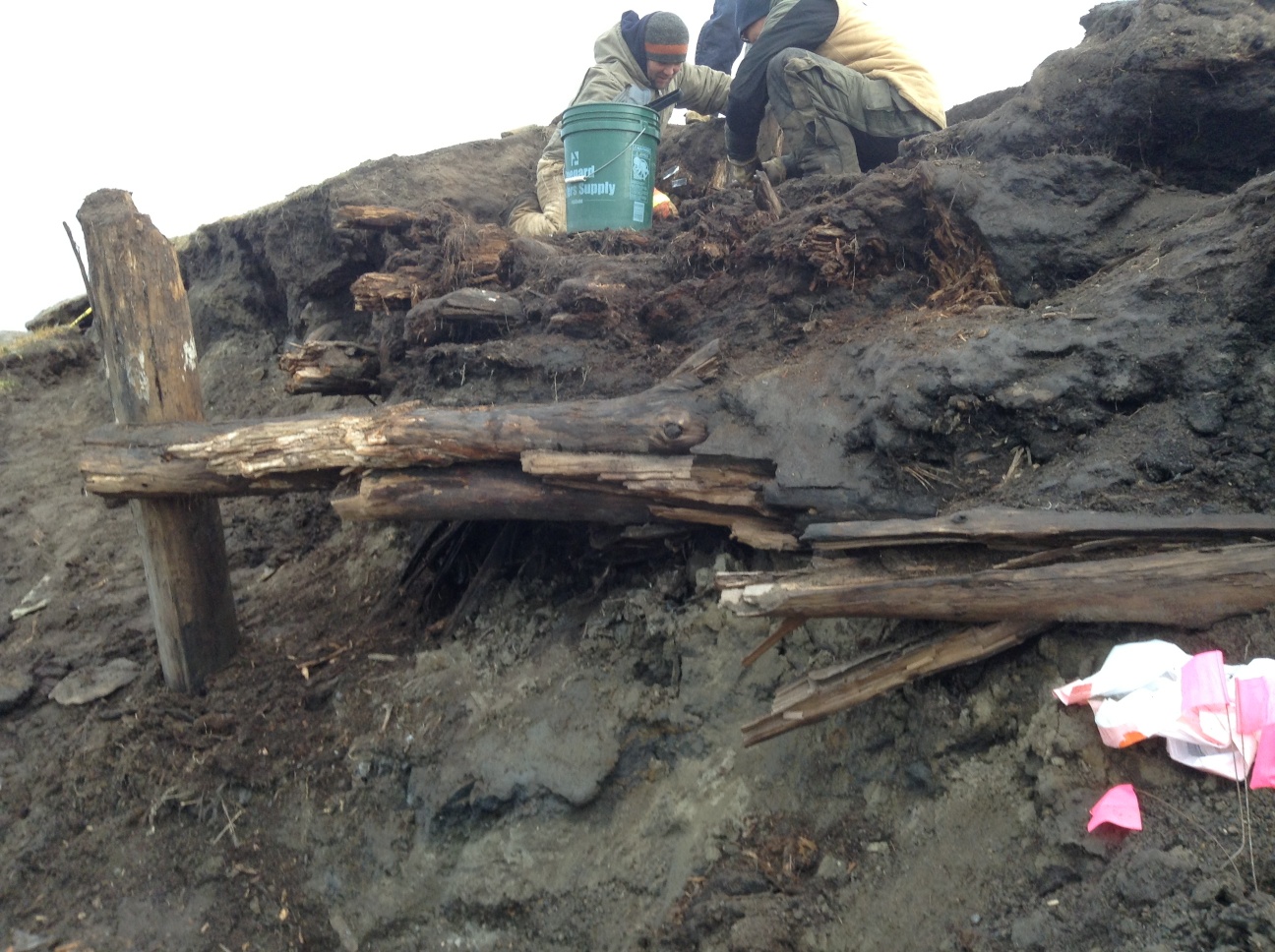
VIew from the side showing
View from the side showing several layers of floor logs above the sill logs & below the green bucket.

At some point in the sequence, it looks like the structure may have had a meat cache pit (sort of the forerunner of today’s ice cellars) in it.  There was a distinct line of hardened red marine mammal oil
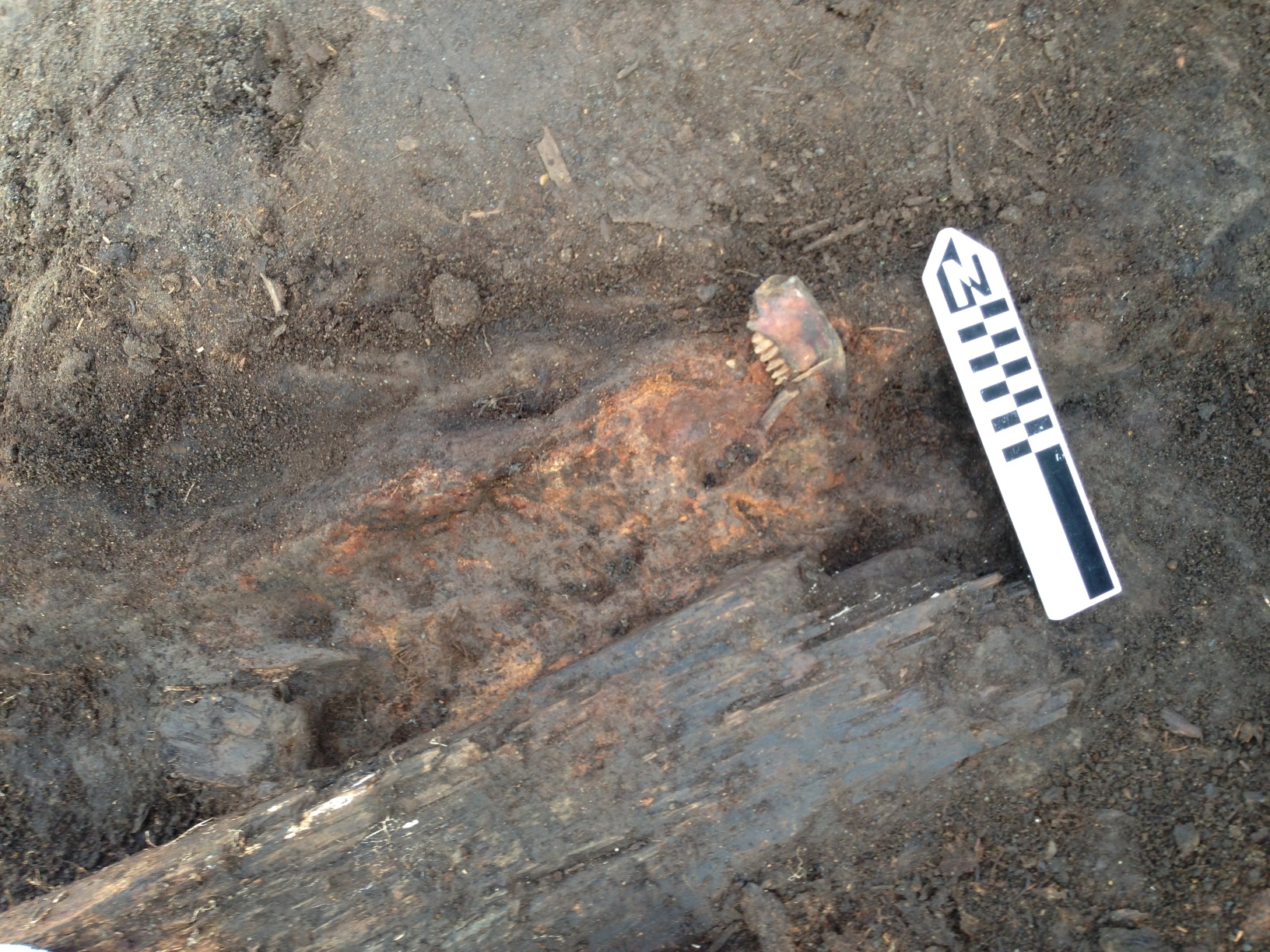
IMG_0754
North edge of the meat pit. Caribou jaw lying along the sloping side just to the left of the North arrow. The red oil layer continued under the plank.  The north logs were above the edge of the pit, but there was a layer of midden in between, so they were not associated.
IMG_0068
Another view of the red oil level underneath some logs (possibly 2 separate floors). Notice the seal scapula used as a chock under the plank on the right.
IMG_0065
Another view of the red oil layer showing it sloping up to the right. Note that the apparent sill logs for the main structure are below what is visible in the picture.

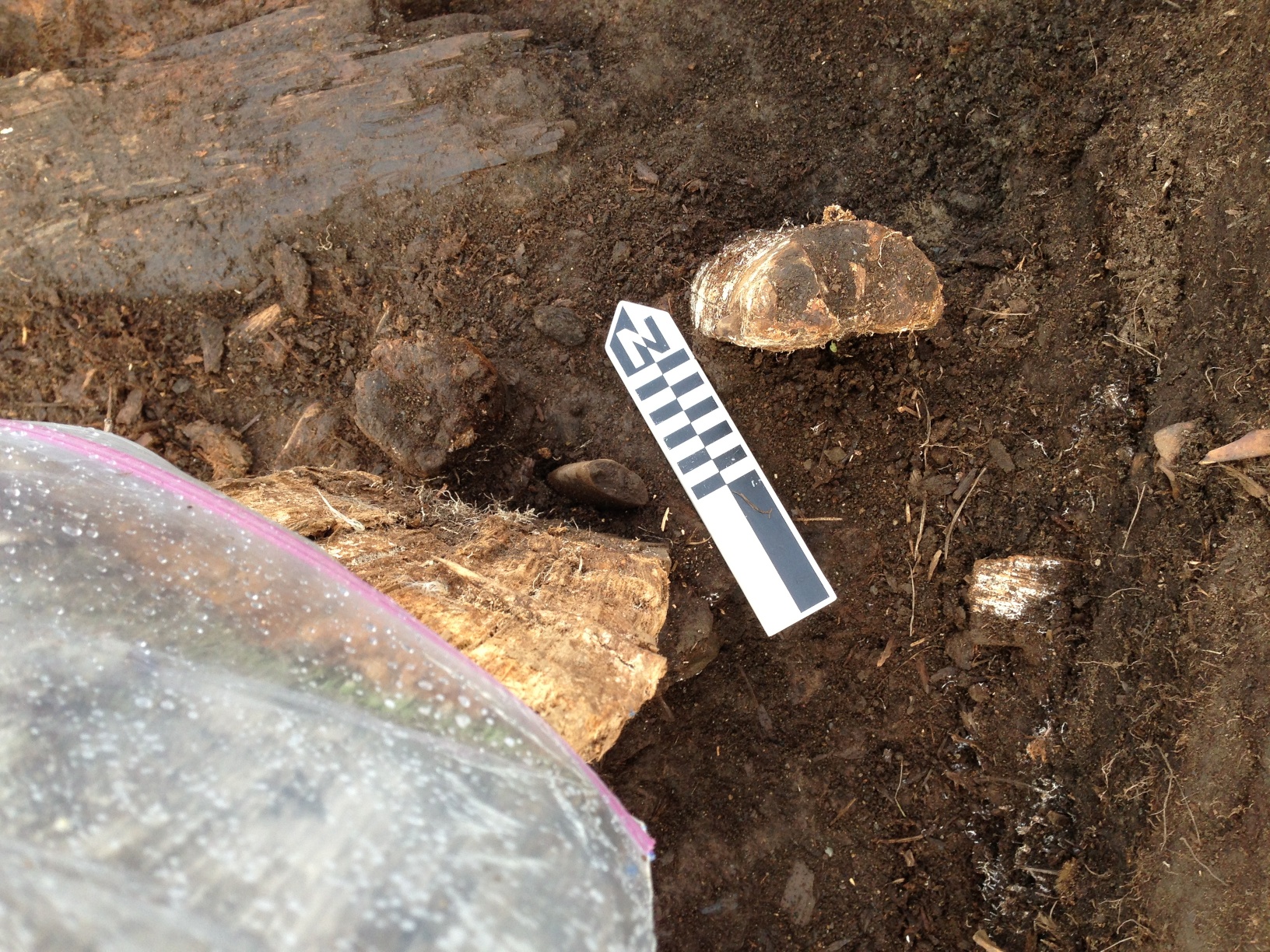
We got all the way to the bottom of the large post in the northern half of the trench.  It turned out to be a later addition, dug into an existing midden, and chocked with a seal sacrum, a walrus vertebra and a broken pick head.  There were two smaller (and apparently earlier) posts very close to it, one of which had a deposit of shell next to it.  That will be interesting if we can ID any of them.
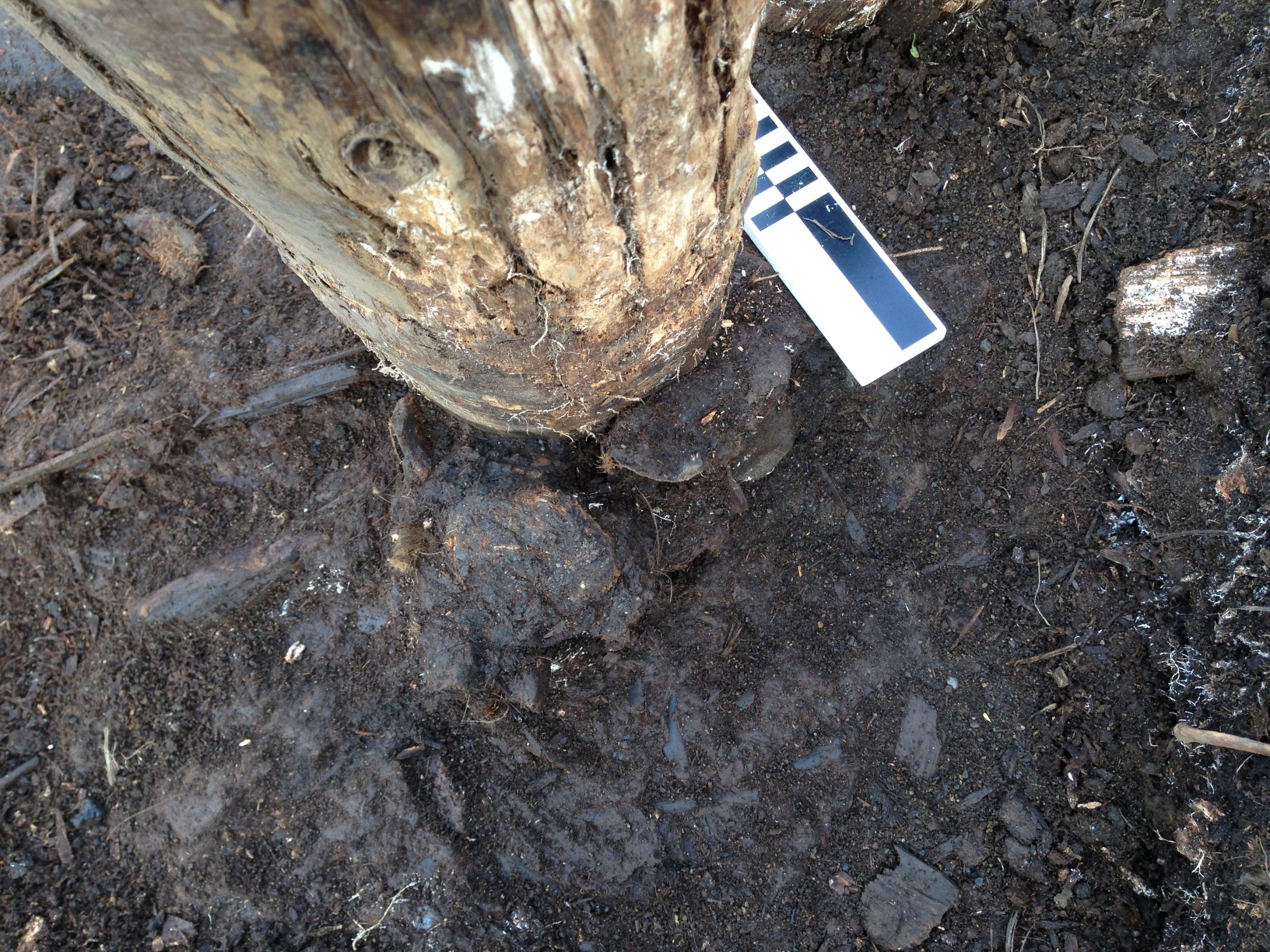
Post, showing sacrum and vertebra used as chocks.
Post with pick used as chock at base to left of North arrow.
A view of the excavation.  NO, the wall was not curved; this is a raw iPhone panorama shot, & that happens.  Our walls are straighter than that!
A view of the excavation before the post and north logs came out.  NO, the wall was not curved; this is a raw iPhone panorama shot, & that happens. Our walls are straighter than that!


Enhanced by Zemanta

Winter comes

We had been working as fast as we could on the structures at Walakpa.  Given how far north we are, “Winter is coming!” pretty much applies as soon as it starts thawing in spring.  We had a fair bit of windy weather, so it wasn’t pleasant working conditions, but the ambient temperature was generally above freezing, so the ground remained soft, and we were able to continue excavation.

The batteries on the transit were not happy, and we pretty much needed to have one charging at all times, or risk shut-down until we could charge a battery.  The batteries are a bit old, and need to be re-celled or replaced, but since I hadn’t expected to be excavating this summer, that was scheduled to happen over the coming winter, which left us a bit handicapped.

But then, last Monday, there was a dusting of snow on the ground in the morning, and it didn’t melt.  Further south in Alaska, snow on the tops of the mountains is often called “Termination Dust” since its appearance signals the beginning of the end of the summer season.  And so it was here.

I had started accumulating materials to protect the site over the weekend.  UIC Construction had some surplus damaged materials in their yard which would otherwise have just gone to the dump, and they were kind enough to donate them to the cause.  Monday, we started hauling them down to Walakpa.

A dusting of snow on the site & the beach in the morning
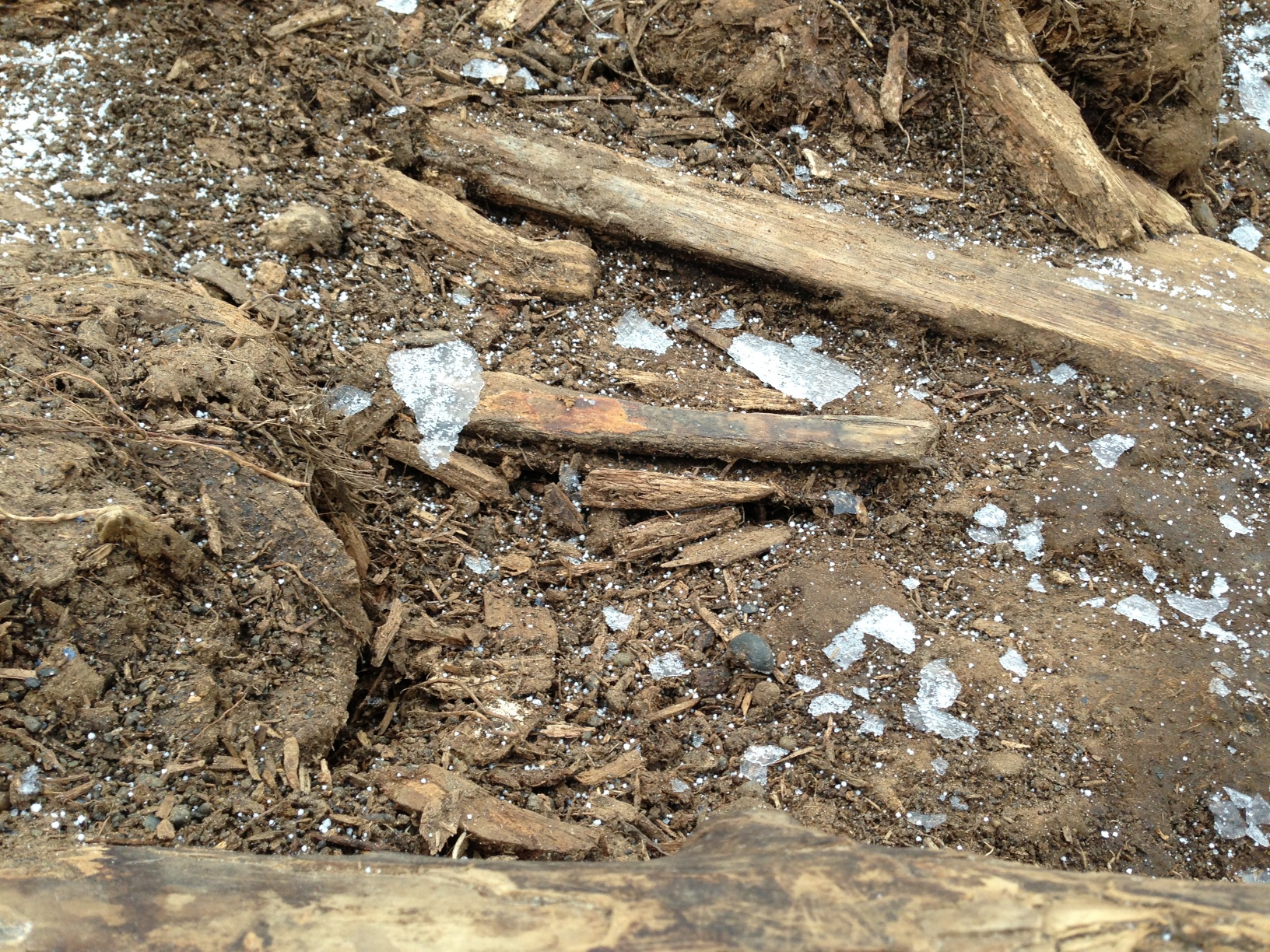
Shards of ice from the tarp after the site was uncovered.

We kept digging, since the ground wasn’t frozen.  The next morning, there was a lot more snow on the beach, and the ground was really stiff although we did manage to dig a bit more and screen all but two buckets.

We met a polar bear on the way down to the site.  It was tired, resting on the beach, but was so wary that it got up and moved before we could detour around it so it could rest.

More snow on the beach.  And a tired polar bear, who was none too happy when we showed up on ATVs.
More snow on the beach. And a tired polar bear, who was none too happy when we showed up on ATVs.

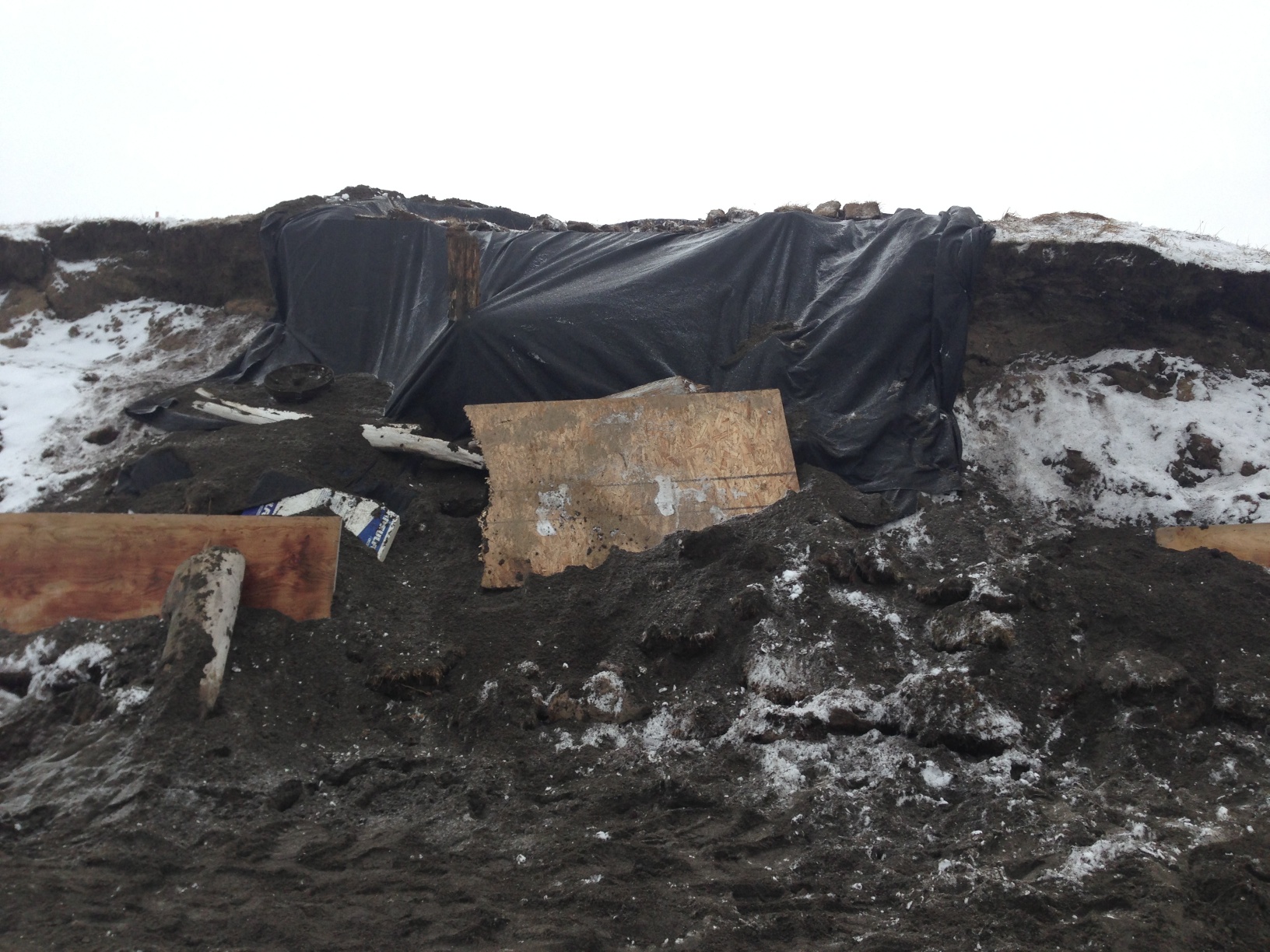
We put particle board along the erosion face of the site, and gathered sods from the beach to stack up to hold them in place.  We also used upright driftwood to help hold this in place.  By the end of the day, I concluded that things were freezing to the point where only a pickax would move dirt, which would sort of defeat the purpose  of archaeological excavation, so we started hauling gear back to town that night.

We allowed the site to freeze more the next day, and Thursday we went down to put the site to bed & take down the tent.

We put a layer of whiteboard insulation on the top and front of the site, and then covered it with geotextile fabric, fastened in place with spikes.  Then we covered that with the original sods which had been saved.

Excavation surface covered by whtieboard.
Excavation surface covered by whiteboard.
Protecting the site with particleboard, geotextile, sod and driftwood.
Protecting the site with particle board, geotextile, sod and driftwood.
Sod back on the site.

Once we had that taken care of, the gear had to be packed up and the tent taken down.  We spray painted the hubs of the Arctic Oven frame so the next folks who set it up will have an easier time of it than we did doing it without instructions.

Tent & fly are packed and Jason Thomas is disassembling the frame.
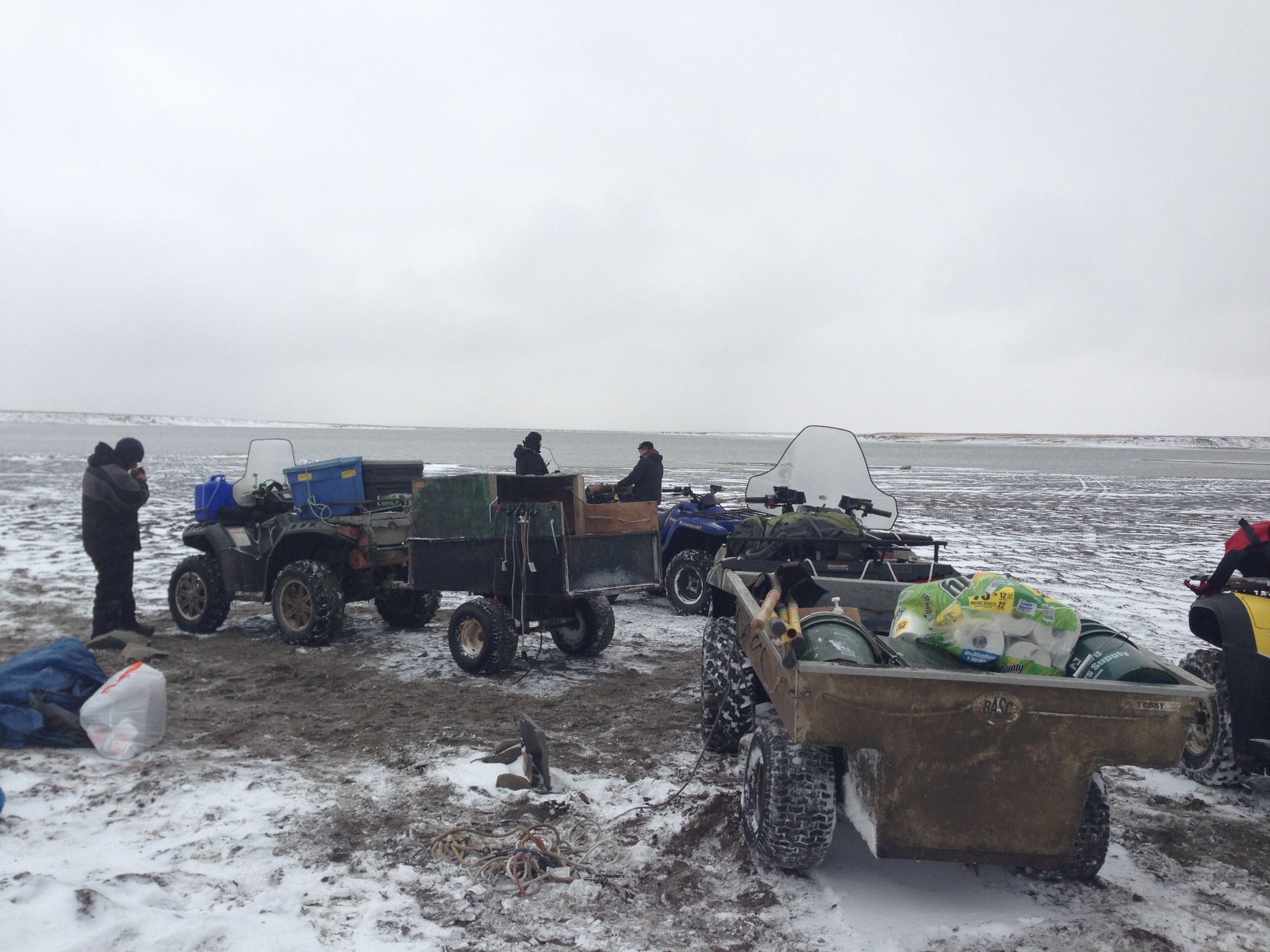
Packing the trailers.  Riley Kalayauk brought his trailer down too, so we had 2.
Packing the trailers. Riley Kalayauk brought his trailer down too, so we had 2.
Happy hard-working crew ready to head home.

Now all we can do is hope and pray that there are no storms before the ocean freezes up that generate waves big enough to reach the site, and if there are, that they don’t last long enough to destroy the protection that we built.  If we are fortunate, it will still be there next year, and we can learn more.

Enhanced by Zemanta