Visits to zoological collections

I am in Seattle for the Alaska Anthropological Association meetings.  Today was spent primarily in tours of the Burke Museum’s zoological collections (in the morning) and the marine mammal collections at NMML (in the afternoon).  The Burke has pretty impressive collections, especially when you add in the off-site material, and NMML has a good range as well.  After the tours, Jeff Bradley of the Burke took me to their off-site storage to look at whale mandibles.

I’ve been trying to track down whale mandibles ever since I was sent a picture of one from Cape Krusenstern and I saw one at Cape Espenberg that didn’t look like bowheads.  I didn’t think they were grey whales either, but I’m not as familiar with their skeletons.  There are bowhead skulls in front of every school in Barrow (& my daughter attended all three), the college, the library/heritage center, the city hall and the North Slope Borough building, as well as miscellaneous other sites around town, so I know bowhead jaws when I see them.

I found a couple that looked like possible matches, or at least members of the same family, so that is progress.  The Burke has pretty restrictive photo policies (they hold a lot of art, so the policies are based on that), which means I can’t put any photos up here without permission.  It would take days  & several person-hours of work at both ends, so I’m not going to try for a blog post.

Now off to bed so I can be bright-eyed & bushy-tailed (or at least halfway coherent) for our session tomorrow.  I don’t have to give any papers until afternoon, but still…  The other organizers have papers in the morning, so I’m guessing I’ll be moderating….  We’re only winging it a little 🙂
Trading Skins & Oil

I’ve been working on talks for the session on the Connected Arctic at next week’s Alaska Anthropological Association meeting in Seattle. My family was in Juneau lobbying, so I had some free time.  I’m almost done with the one about the trade networks  which moved large quantities of oil, blubber & baleen from the coast to be exchanged for caribou & sheep products from the interior.  By volume, this greatly exceeded  the amount of metal, jade and similar items that also moved through these networks.  For some reason, the skin & oil trade has received less attention from archaeologists, although it has been documented ethnographically.  In fact, it seems to have been a necessity for sustained interior occupation.  I’ve been trying to make a good visual presentation, which takes a bit of doing.  I think it should be done tomorrow.

I would have been done earlier if I hadn’t had to spend some time on sorting out some safety issues. The local phone company is installing a microwave link to carry  internet for science, and the best spot is on the BARC, apparently on the tower where the radar is.  For some reason, they didn’t think the FOUR signs on the locked door to the tower warning of possible radiation hazards and giving the numbers to contact someone who could  make sure the radar was disabled before they went up on the tower meant THEM.  The locked gate at the bottom of the tower deck stairway didn’t faze them either.  Fortunately the radar was off, so no one got hurt.  However, the radar can be activated remotely, so going up on the tower, even if you think you saw the radar was off when you went by the controls, is a really STUPID idea.  Since they presumably will need to go up there again to finish the setup and for periodic maintenance, it was necessary to impress on them (management, not just the crew) that they need to call and get an OK every time.  The excuse was that they’d talked to the building owner (who I’m sure approved putting stuff up there in concept, but never told them it was OK to ignore warning signs while doing it!)  If people would just read and think….

Frost and flags

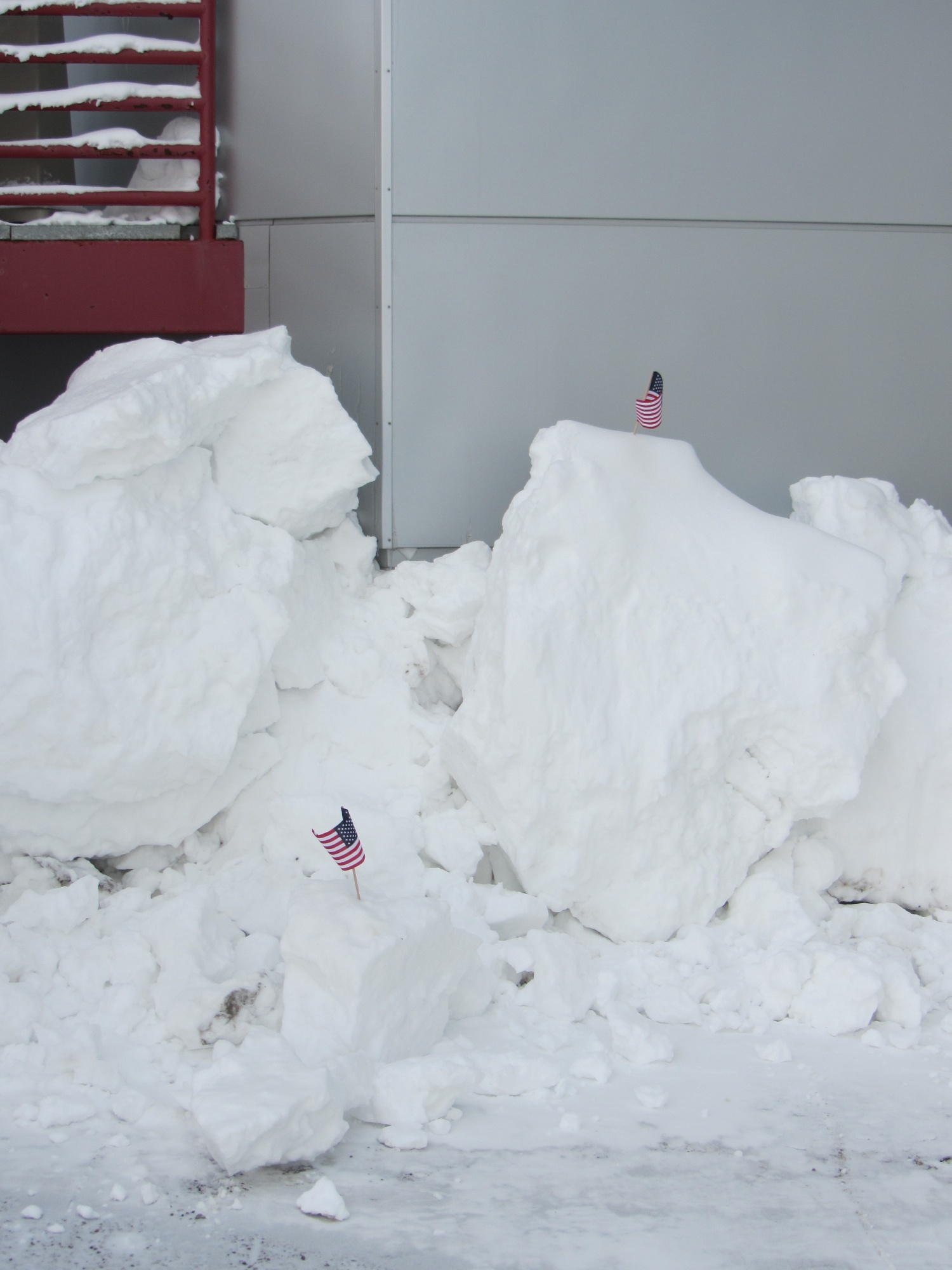
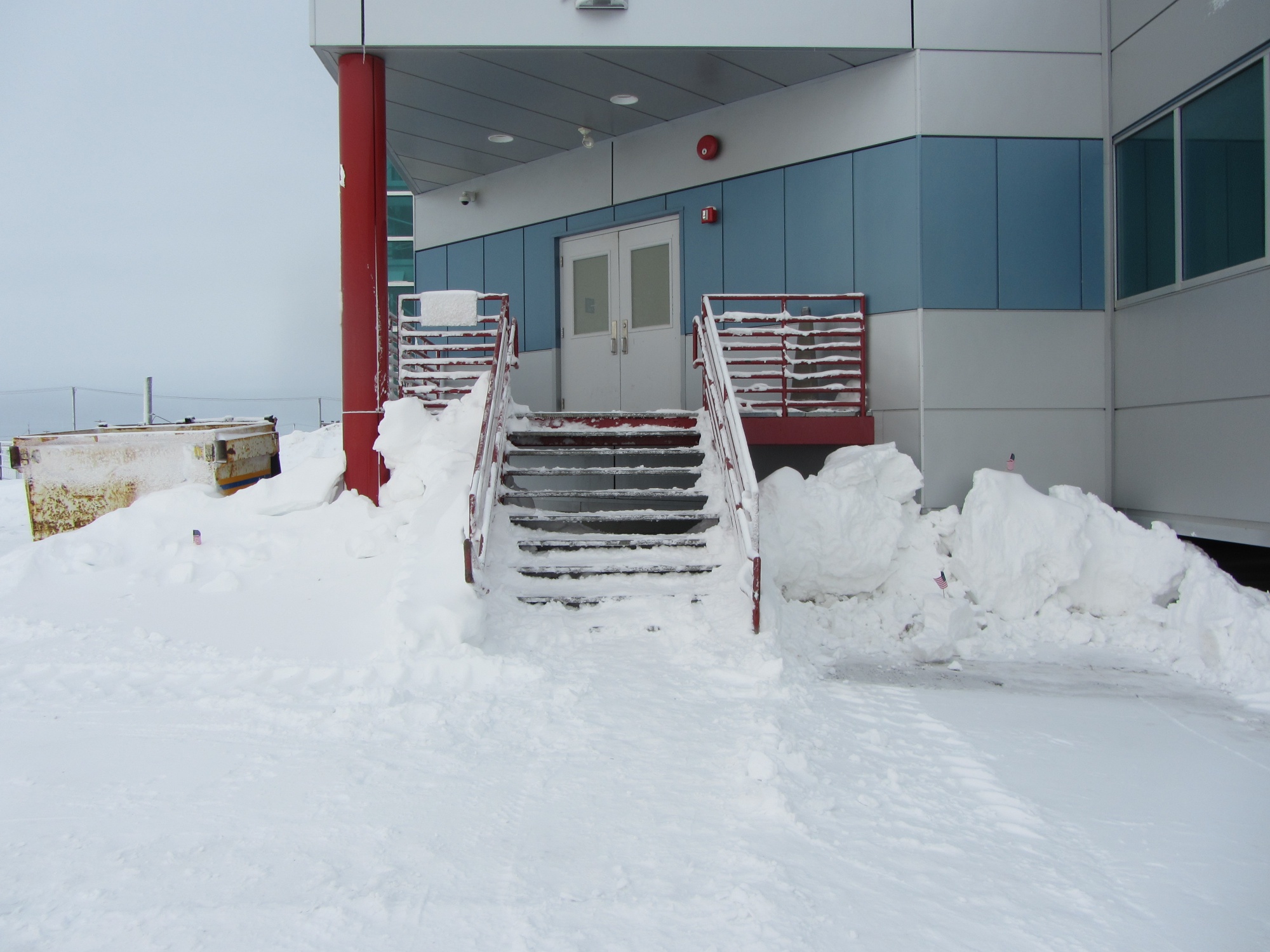
I was walking into the BARC (where I have my office and lab) after lunch the other day, when I came upon this scene:

Flags at the BARC

A closer look:

Flags at the BARC II

Who put them there, or why, we do not know.  But there they were and are.

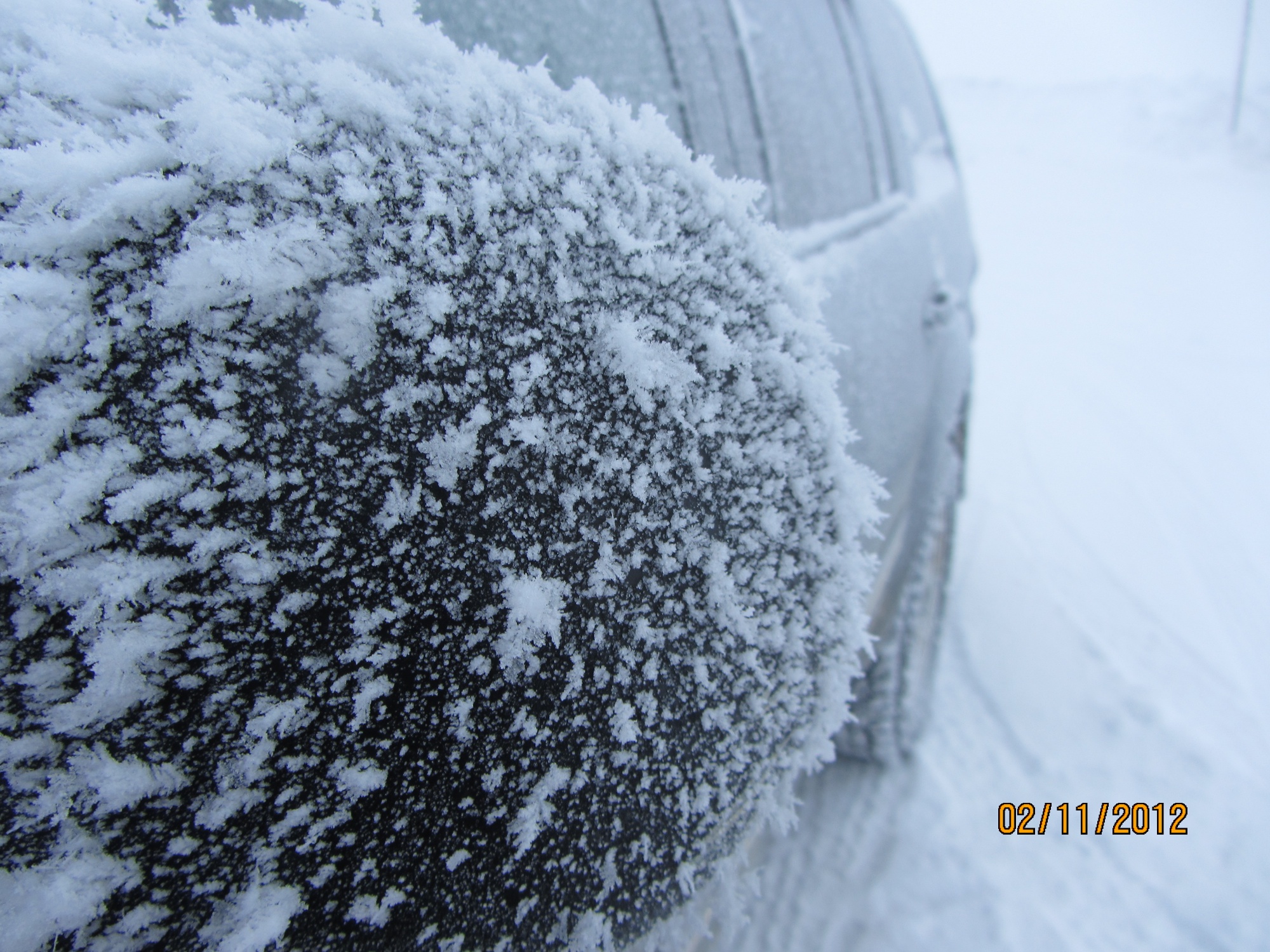
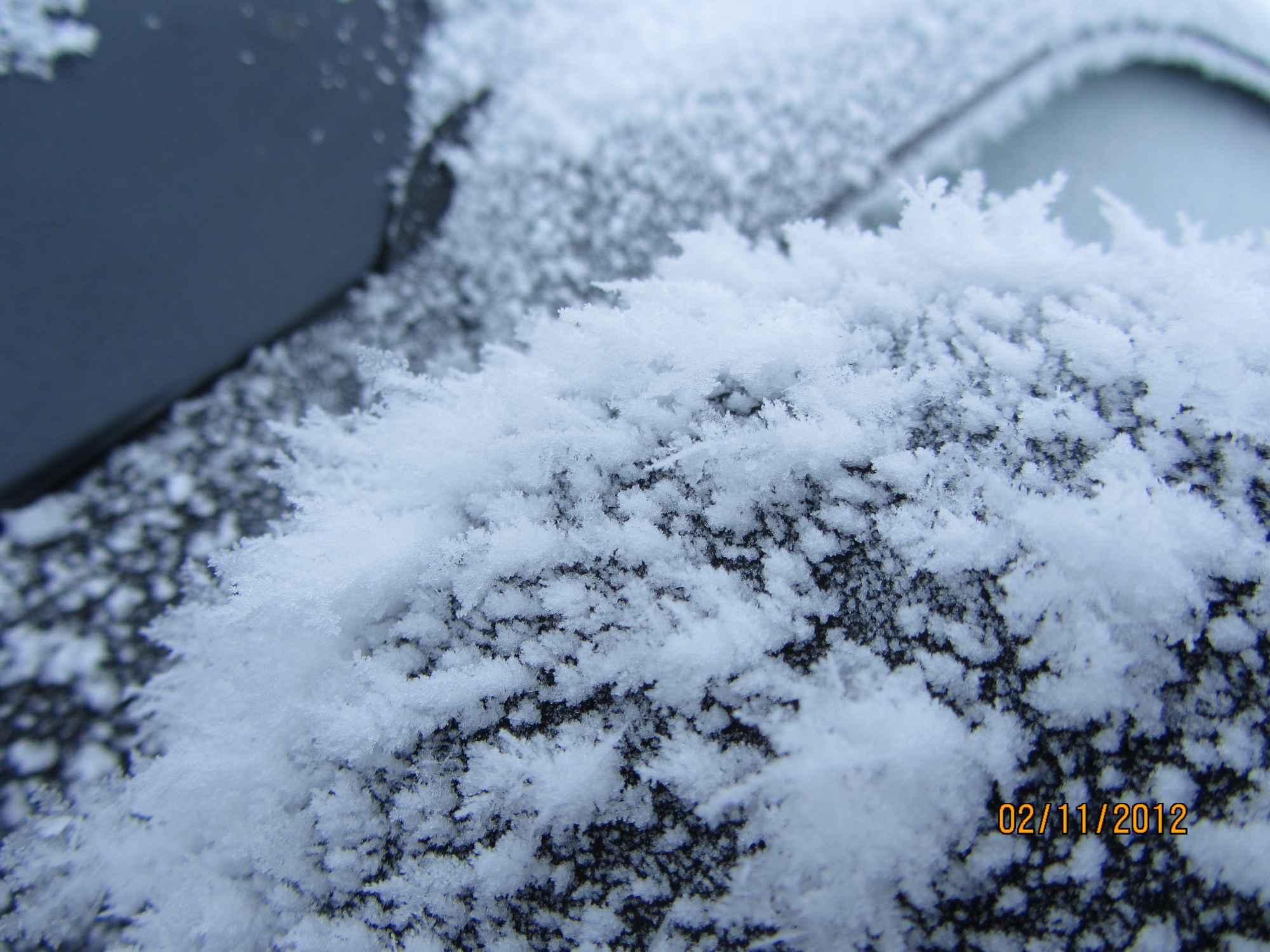
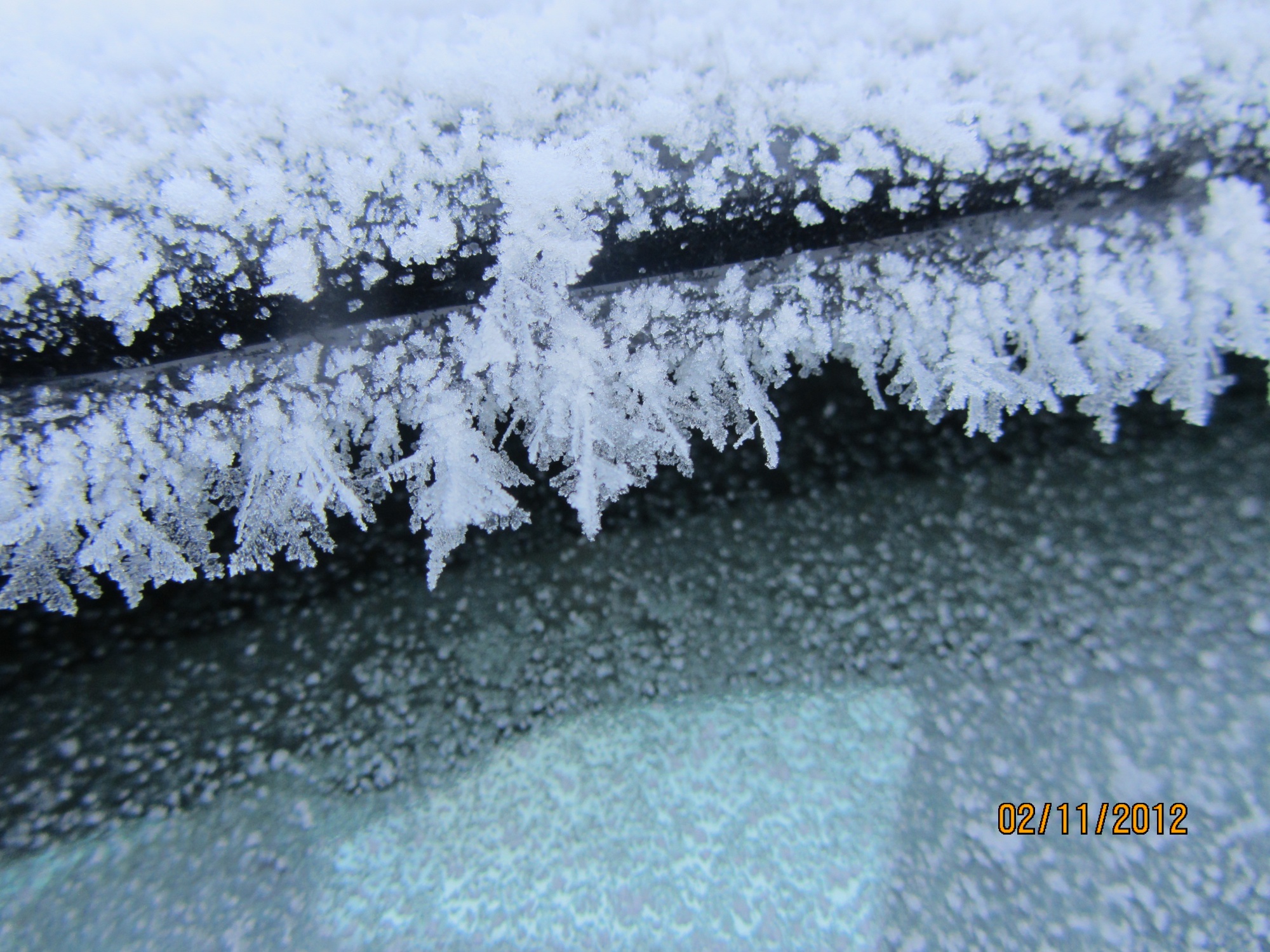
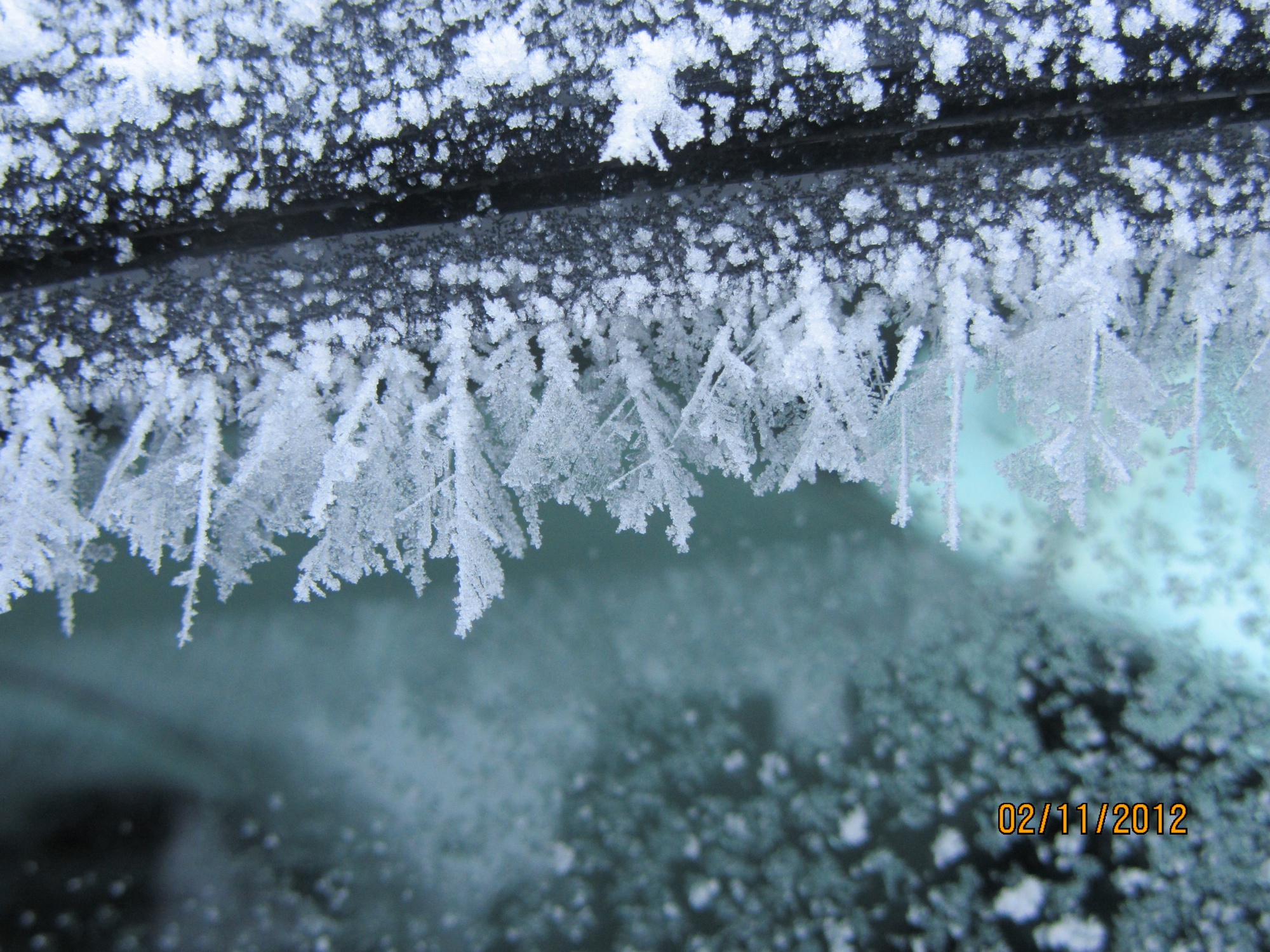
Last night, hoarfrost started building up on things.  By this afternoon, my car was covered in it.  Hoarfrost can be amazing, with long fern-like feathers growing off of surfaces.

Hoarfrost on the mirror.
Mirror close-up
Frost feathers I
Frost feathers II

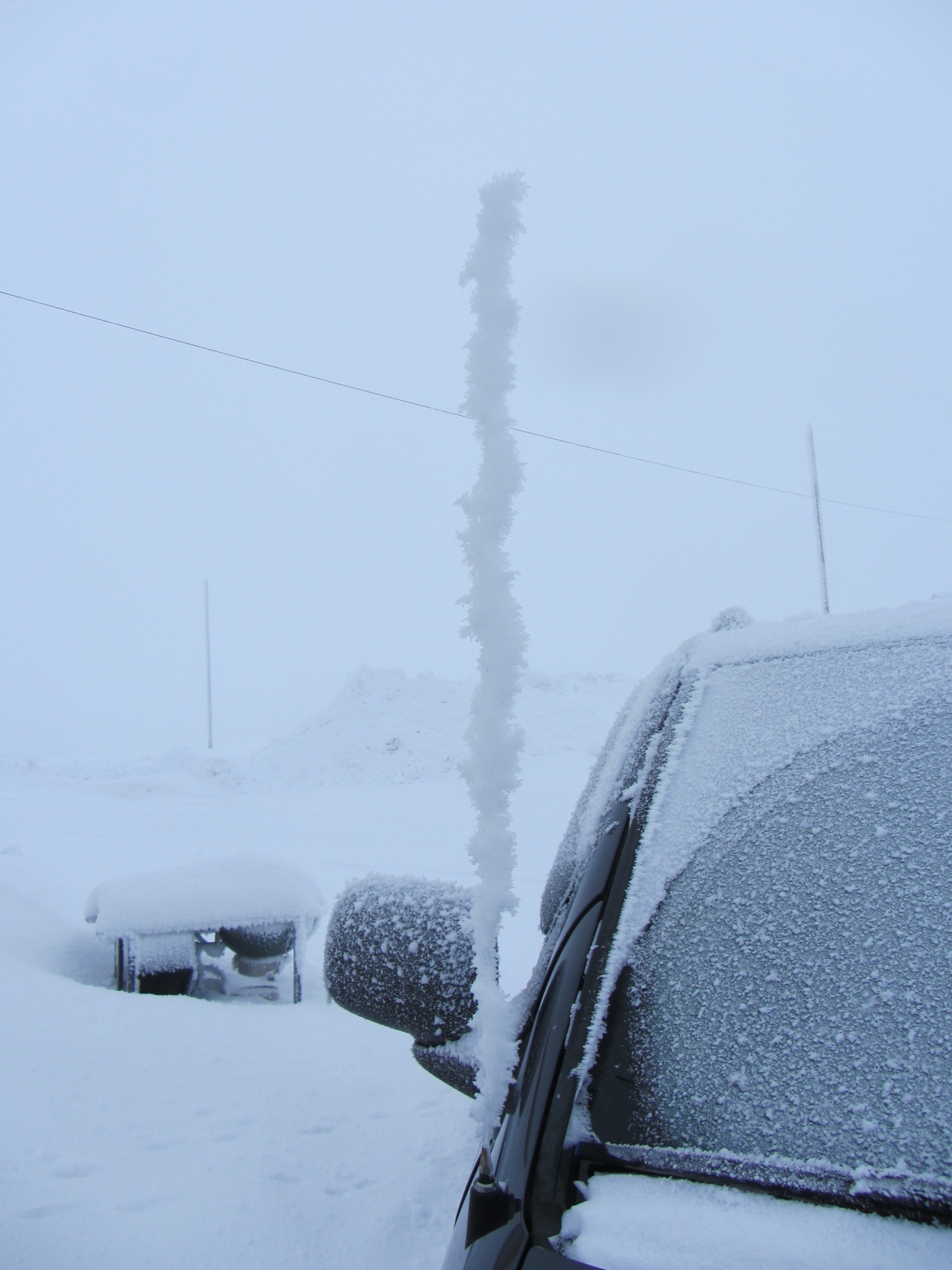
The best was the spiral effect the frost that grew on the antenna made.

Hoarfrost spiral on antenna


Chipping away at things

I’ve been chipping away at a bunch of things.  The main ones are the big Late Western Thule chapter and an associated project which involve evaluating every Birnirk & later C14 date I can get hold from Alaska, to see which ones hold up (a number that are cited a lot are really early solid carbon dates!) and what exactly was dated.  In some cases, what was dated was in a different house from the “diagnostic” which is purportedly being dated, and there is no a priori reason to think the houses are contemporaneous.  It may have been the best that could be done at the time, but some revision is needed here.  Once those are done, I can finish the two other papers I am working on.

We got the symposium for the Alaska Anthropological Association meeting more or less put together, pending any additional papers submitted as general papers that the organizers may send us, and next week we’ll just have to decide on an order so the conference organizers can get their materials to the printer in good time.

I’ve also been invited to be a speaker at a small conference on Sustainability and Heritage in Kirkwall, Orkney which is sort of the main kick-off for a Research Coordination Network (RCN) on Global Long-Term Ecodynamics in which I am fortunate enough to be involved.  I’ve never been to Orkney, but I love the Shetlands, so I’m looking forward to it.  There are some great people involved, and we’re trying to do some really interesting things involving the use of archaeological data to illuminate questions about long-term sustainability.  I actually owe them an abstract by tomorrow (which it actually is in Orkney), so I better get to it.

About those gray whales that got stuck at Barrow a few years back…

I’ve noticed I’ve been getting more hits on search terms relating to those whales, probably since the movie “Big Miracle” just was released.  So, since I’m kinda busy with the Super Bowl, I thought I’d put up a few links to the real story.

1) Bill Hess’s blog, where he is doing a series on the whole event.  Bill took what were probably the first professional pictures of the whales, including some may probably recognize.  This features a lot of Bill’s really fine photographs.

2) An article in the Fairbanks New-Miner which has interviews with many of the folks in Barrow who were involved in the original event, including biologist Geoff Carroll.

3) An article in the Anchorage Daily News by Richard Mauer, who covered the original story and hauled out his notes to write this one.

Last Call for Papers: The Connected Arctic–An Alaska Anthropological Association symposium sponsored by the Arctic Conference

I wound up agreeing to help organize a session at the upcoming Alaska Anthropological Association meeting in Seattle.  Long story about Seattle, but we have gone to Whitehorse, YT once or twice, so leaving Alaska is not a first.

Anyway, the deadline to submit sessions (including paper lists) is this Friday, so I though I’d put a description up here, since the AnthroAlaska list seems to be a bit slow showing up (although it might be my email).  We have room for a few more papers and are being fairly expansive in our interpretation of the topic.  If you are interested, the description and directions for how to participate follow:

Although the Arctic tends to be viewed as a place apart, both in the sociocultural sense and as a research area, the first has never been true, and the second is becoming less so.  This symposium will look at the Connected Arctic from both perspectives.

Papers on any aspect of trade and/or travel (pre-or post-contact) from one or more disciplinary perspectives are welcome, as long as they involve the Arctic.  We are interested in both specific case studies and methodological works.

We also welcome in papers dealing with aspects of connected Arctic research, including virtual repositories which can be used from multiple locations, shared databases, digital teaching and outreach tools, and social media.

N.B.  People wishing to submit papers are asked submit the paper abstract directly to the meeting organizers by the deadline of February 3, using the Alaska Anthropological Association meeting website form:  https://catalyst.uw.edu/webq/survey/fitzhugh/139716 .  Note you will need to register for the meeting first.  Please put “The Connected Arctic” in the space on the form.  The symposium is not on the website list of symposia yet, but we have been assured that does not matter, since sessions are due the same day.  Please also send your name and at least a paper title (preferably with the abstract) directly to one of the organizers:  Anne Jensen (anne.jensen@uicscience.org), Herbert Maschner (maschner@isu.edu ) or Owen Mason (geoarch85@gmail.com ).